
Material handling equipment manufacturer Columbus McKinnon (NASDAQ:CMCO) reported Q4 CY2025 results beating Wall Street’s revenue expectations, with sales up 10.5% year on year to $258.7 million. Its non-GAAP profit of $0.62 per share was 6.6% above analysts’ consensus estimates.
Is now the time to buy Columbus McKinnon? Find out by accessing our full research report, it’s free.
Columbus McKinnon (CMCO) Q4 CY2025 Highlights:
- Revenue: $258.7 million vs analyst estimates of $245.7 million (10.5% year-on-year growth, 5.3% beat)
- Adjusted EPS: $0.62 vs analyst estimates of $0.58 (6.6% beat)
- Adjusted EBITDA: $39.8 million vs analyst estimates of $36.1 million (15.4% margin, 10.3% beat)
- Operating Margin: 6.3%, down from 10.9% in the same quarter last year
- Free Cash Flow Margin: 6.4%, up from 2.6% in the same quarter last year
- Backlog: $341.6 million at quarter end, up 15.2% year on year
- Market Capitalization: $646.5 million
"Our team delivered double-digit sales, order and EPS growth in the quarter, ahead of our expectations as we executed on commercial initiatives and continued to benefit from U.S. demand stabilization," said David J. Wilson, President and Chief Executive Officer.
Company Overview
With 19 different brands across the globe, Columbus McKinnon (NASDAQ:CMCO) offers material handling equipment for the construction, manufacturing, and transportation industries.
Revenue Growth
Examining a company’s long-term performance can provide clues about its quality. Any business can put up a good quarter or two, but the best consistently grow over the long haul. Luckily, Columbus McKinnon’s sales grew at a decent 9% compounded annual growth rate over the last five years. Its growth was slightly above the average industrials company and shows its offerings resonate with customers.
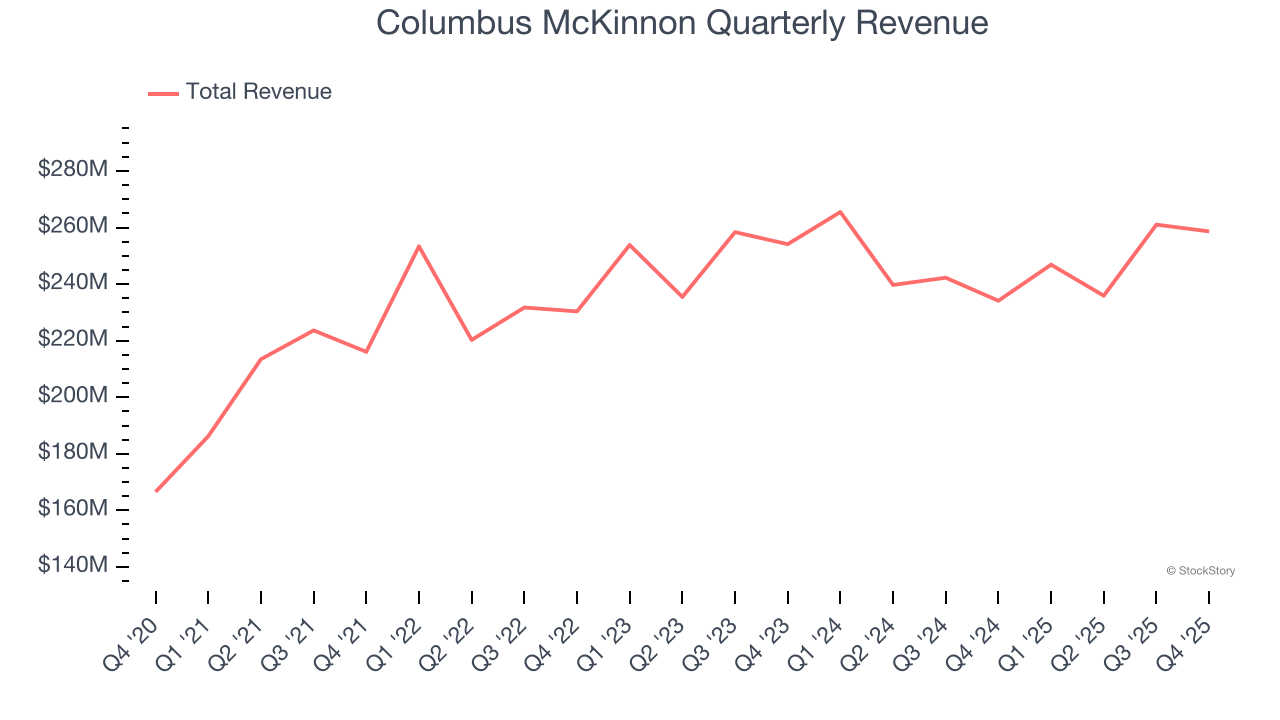
Long-term growth is the most important, but within industrials, a half-decade historical view may miss new industry trends or demand cycles. Columbus McKinnon’s recent performance shows its demand has slowed as its revenue was flat over the last two years. 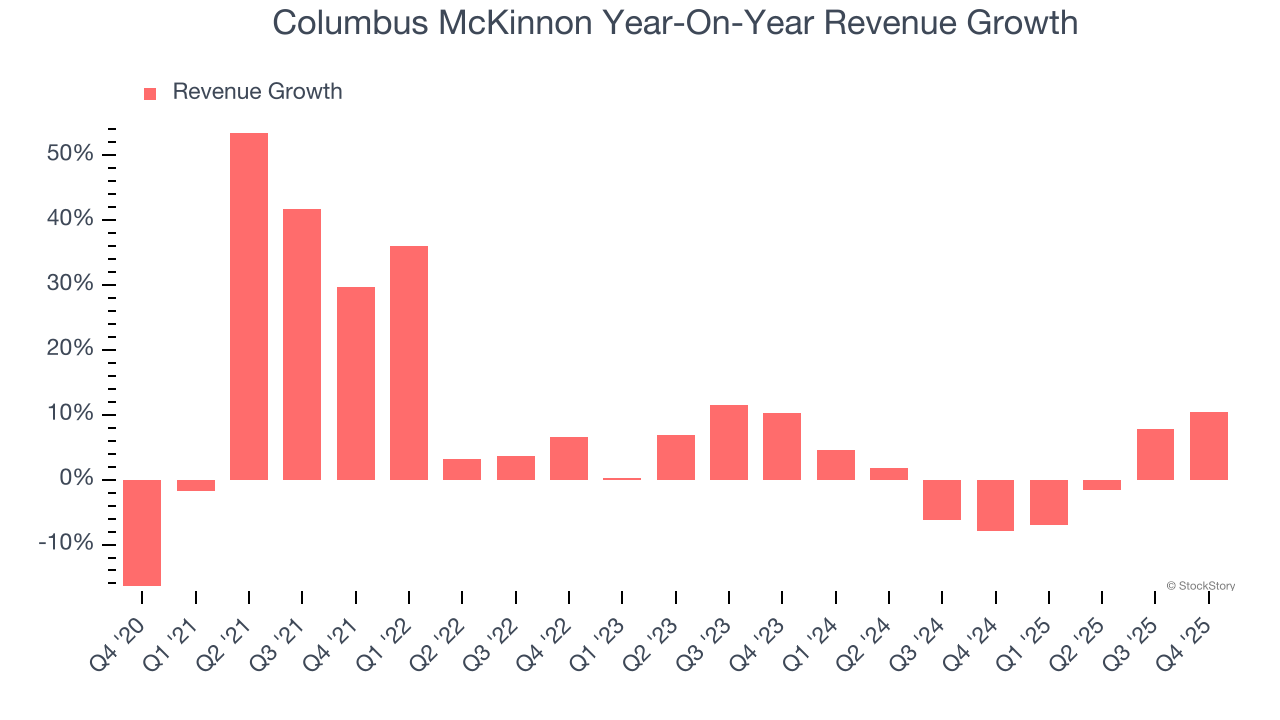
Columbus McKinnon also reports its backlog, or the value of its outstanding orders that have not yet been executed or delivered. Columbus McKinnon’s backlog reached $341.6 million in the latest quarter and averaged 15.2% year-on-year growth over the last two years. Because this number is better than its revenue growth, we can see the company accumulated more orders than it could fulfill and deferred revenue to the future. This could imply elevated demand for Columbus McKinnon’s products and services but raises concerns about capacity constraints. 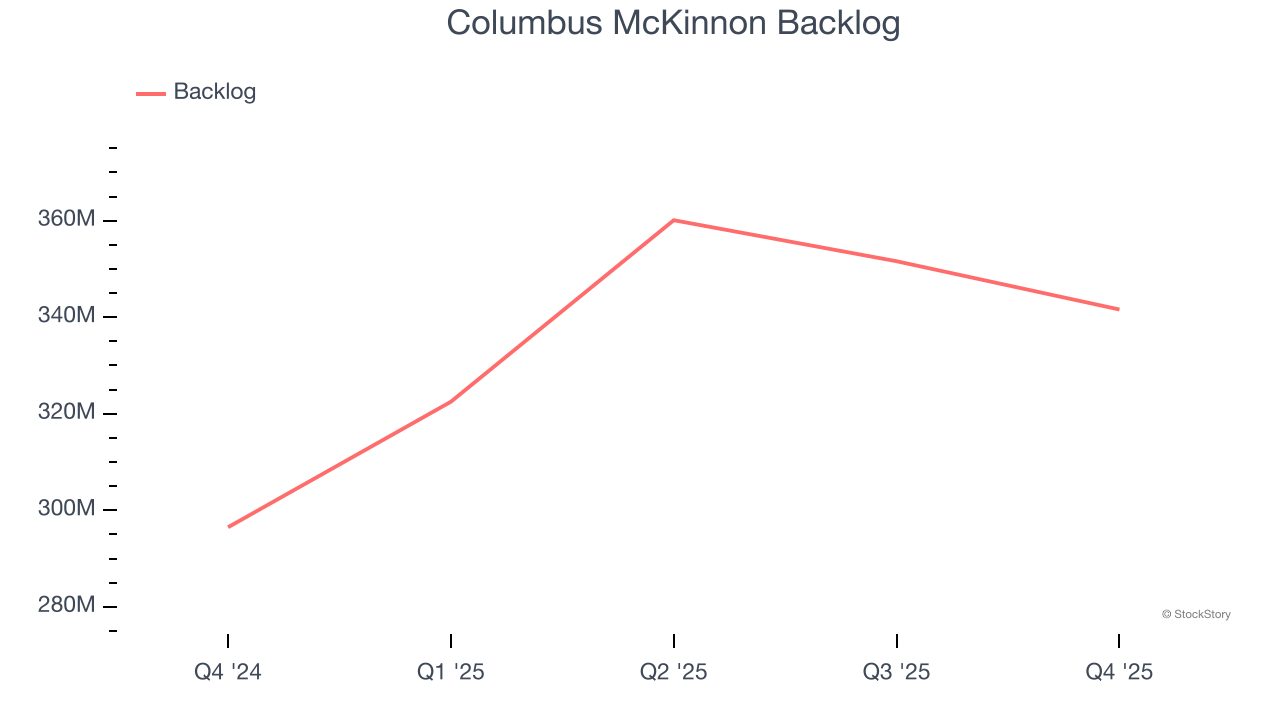
This quarter, Columbus McKinnon reported year-on-year revenue growth of 10.5%, and its $258.7 million of revenue exceeded Wall Street’s estimates by 5.3%.
Looking ahead, sell-side analysts expect revenue to grow 3% over the next 12 months. Although this projection indicates its newer products and services will catalyze better top-line performance, it is still below the sector average.
Microsoft, Alphabet, Coca-Cola, Monster Beverage—all began as under-the-radar growth stories riding a massive trend. We’ve identified the next one: a profitable AI semiconductor play Wall Street is still overlooking. Go here for access to our full report.
Operating Margin
Operating margin is one of the best measures of profitability because it tells us how much money a company takes home after procuring and manufacturing its products, marketing and selling those products, and most importantly, keeping them relevant through research and development.
Columbus McKinnon has done a decent job managing its cost base over the last five years. The company has produced an average operating margin of 9.1%, higher than the broader industrials sector.
Analyzing the trend in its profitability, Columbus McKinnon’s operating margin decreased by 1.9 percentage points over the last five years. This raises questions about the company’s expense base because its revenue growth should have given it leverage on its fixed costs, resulting in better economies of scale and profitability.
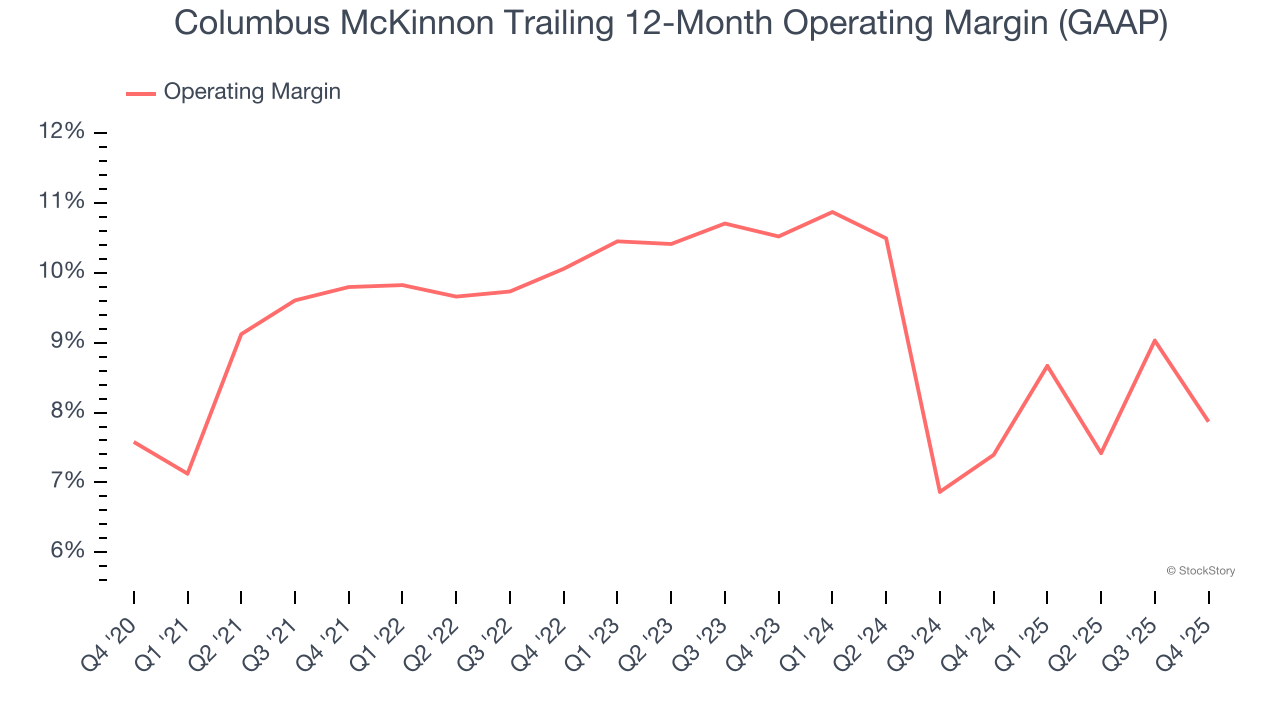
This quarter, Columbus McKinnon generated an operating margin profit margin of 6.3%, down 4.7 percentage points year on year. Since Columbus McKinnon’s operating margin decreased more than its gross margin, we can assume it was less efficient because expenses such as marketing, R&D, and administrative overhead increased.
Earnings Per Share
Revenue trends explain a company’s historical growth, but the long-term change in earnings per share (EPS) points to the profitability of that growth – for example, a company could inflate its sales through excessive spending on advertising and promotions.
Columbus McKinnon’s EPS grew at a remarkable 13.4% compounded annual growth rate over the last five years, higher than its 9% annualized revenue growth. However, we take this with a grain of salt because its operating margin didn’t improve and it didn’t repurchase its shares, meaning the delta came from reduced interest expenses or taxes.
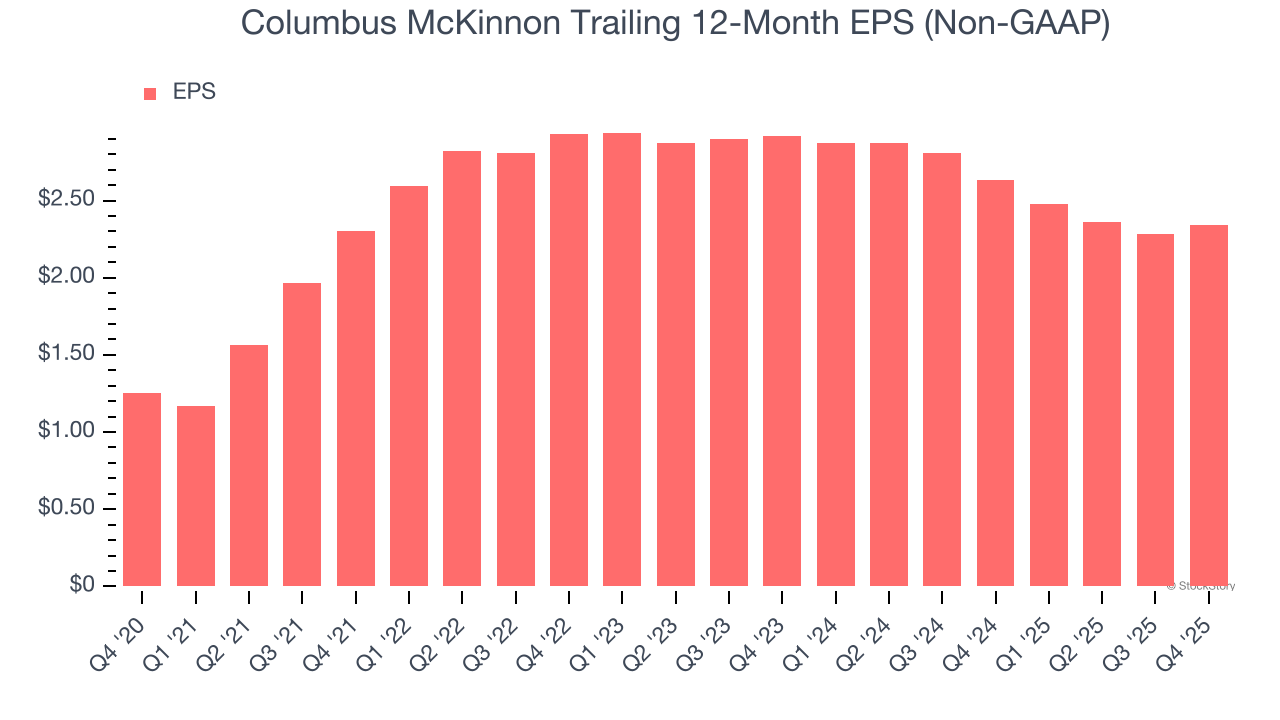
Like with revenue, we analyze EPS over a shorter period to see if we are missing a change in the business.
Columbus McKinnon’s two-year annual EPS declines of 10.5% were bad and lower than its flat revenue.
Diving into the nuances of Columbus McKinnon’s earnings can give us a better understanding of its performance. Columbus McKinnon’s operating margin has declined over the last two years. This was the most relevant factor (aside from the revenue impact) behind its lower earnings; interest expenses and taxes can also affect EPS but don’t tell us as much about a company’s fundamentals.
In Q4, Columbus McKinnon reported adjusted EPS of $0.62, up from $0.56 in the same quarter last year. This print beat analysts’ estimates by 6.6%. Over the next 12 months, Wall Street expects Columbus McKinnon’s full-year EPS of $2.34 to grow 18.1%.
Key Takeaways from Columbus McKinnon’s Q4 Results
We were impressed by how significantly Columbus McKinnon blew past analysts’ EBITDA expectations this quarter. We were also excited its revenue outperformed Wall Street’s estimates by a wide margin. Zooming out, we think this quarter featured some important positives. The stock remained flat at $23.11 immediately following the results.
Columbus McKinnon had an encouraging quarter, but one earnings result doesn’t necessarily make the stock a buy. Let’s see if this is a good investment. We think that the latest quarter is only one piece of the longer-term business quality puzzle. Quality, when combined with valuation, can help determine if the stock is a buy. We cover that in our actionable full research report which you can read here (it’s free).