
What a brutal six months it’s been for Hertz. The stock has dropped 31% and now trades at $5.46, rattling many shareholders. This may have investors wondering how to approach the situation.
Is there a buying opportunity in Hertz, or does it present a risk to your portfolio? Check out our in-depth research report to see what our analysts have to say, it’s free.
Why Do We Think Hertz Will Underperform?
Even though the stock has become cheaper, we're cautious about Hertz. Here are three reasons you should be careful with HTZ and a stock we'd rather own.
1. Sales Volumes Stall, Demand Waning
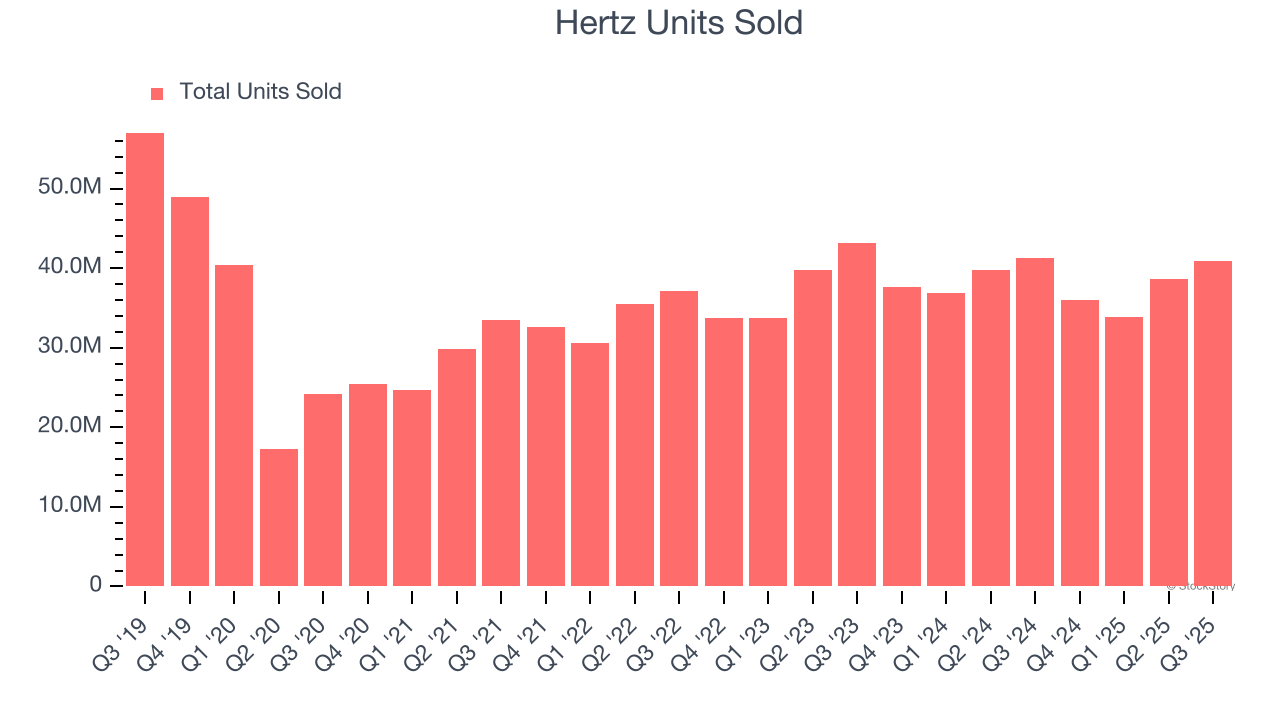
Revenue growth can be broken down into changes in price and volume (the number of units sold). While both are important, volume is the lifeblood of a successful Ground Transportation company because there’s a ceiling to what customers will pay.
Over the last two years, Hertz failed to grow its units sold, which came in at 40.88 million in the latest quarter. This performance was underwhelming and implies there may be increasing competition or market saturation. It also suggests Hertz might have to lower prices or invest in product improvements to accelerate growth, factors that can hinder near-term profitability.
2. New Investments Fail to Bear Fruit as ROIC Declines
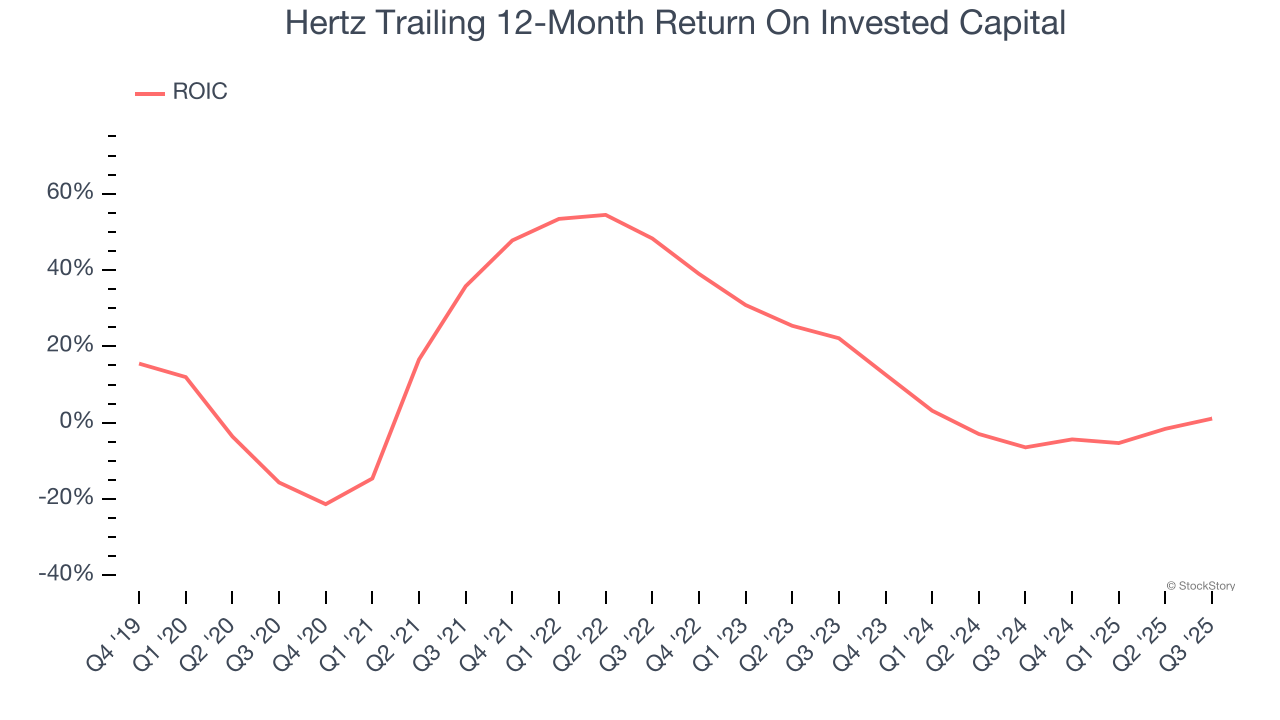
A company’s ROIC, or return on invested capital, shows how much operating profit it makes compared to the money it has raised (debt and equity).
We like to invest in businesses with high returns, but the trend in a company’s ROIC is what often surprises the market and moves the stock price. Over the last few years, Hertz’s ROIC has unfortunately decreased significantly. We like what management has done in the past, but its declining returns are perhaps a symptom of fewer profitable growth opportunities.
3. High Debt Levels Increase Risk
As long-term investors, the risk we care about most is the permanent loss of capital, which can happen when a company goes bankrupt or raises money from a disadvantaged position. This is separate from short-term stock price volatility, something we are much less bothered by.
Hertz’s $20.52 billion of debt exceeds the $1.55 billion of cash on its balance sheet. Furthermore, its 9× net-debt-to-EBITDA ratio (based on its EBITDA of $2.05 billion over the last 12 months) shows the company is overleveraged.
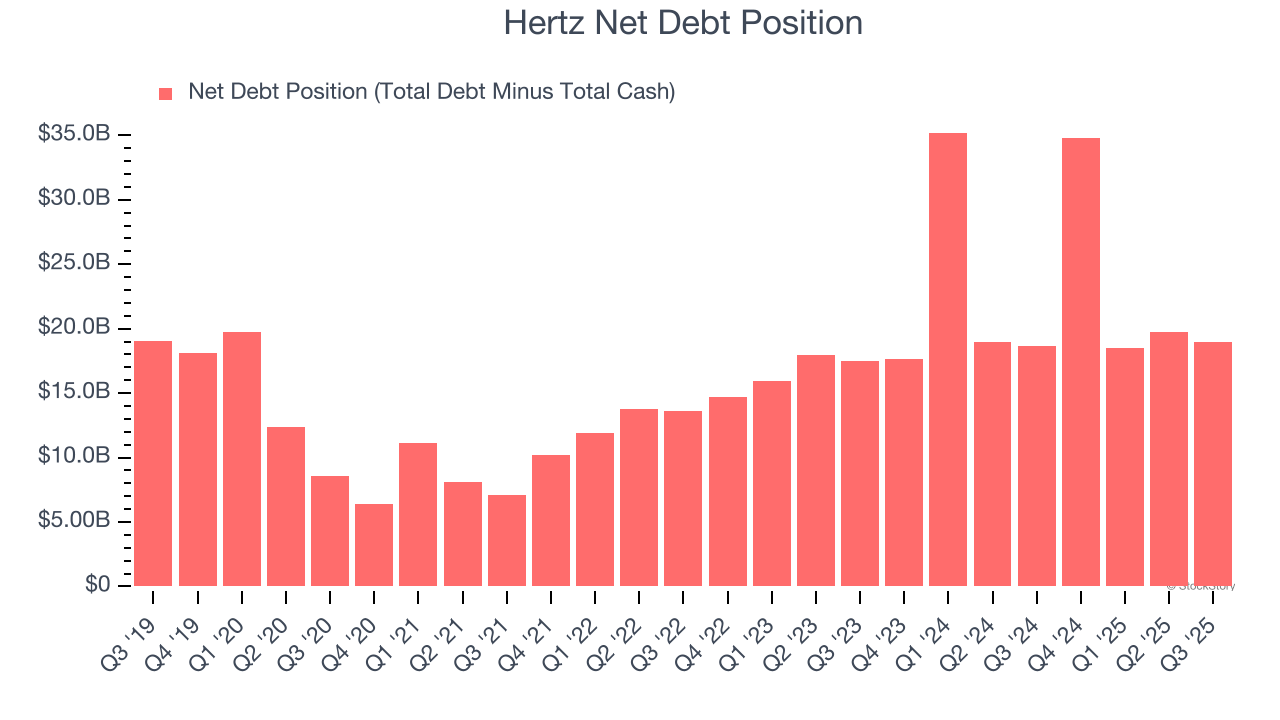
At this level of debt, incremental borrowing becomes increasingly expensive and credit agencies could downgrade the company’s rating if profitability falls. Hertz could also be backed into a corner if the market turns unexpectedly – a situation we seek to avoid as investors in high-quality companies.
We hope Hertz can improve its balance sheet and remain cautious until it increases its profitability or pays down its debt.
Final Judgment
Hertz doesn’t pass our quality test. After the recent drawdown, the stock trades at 107× forward EV-to-EBITDA (or $5.46 per share). This valuation tells us it’s a bit of a market darling with a lot of good news priced in - we think other companies feature superior fundamentals at the moment. We’d suggest looking at a safe-and-steady industrials business benefiting from an upgrade cycle.
High-Quality Stocks for All Market Conditions
Check out the high-quality names we’ve flagged in our Top 5 Strong Momentum Stocks for this week. This is a curated list of our High Quality stocks that have generated a market-beating return of 244% over the last five years (as of June 30, 2025).
Stocks that have made our list include now familiar names such as Nvidia (+1,326% between June 2020 and June 2025) as well as under-the-radar businesses like the once-small-cap company Exlservice (+354% five-year return). Find your next big winner with StockStory today.