
Looking back on non-discretionary retail stocks’ Q3 earnings, we examine this quarter’s best and worst performers, including Sprouts (NASDAQ:SFM) and its peers.
Food is non-discretionary because it's essential for life (maybe not those Oreos?), so consumers naturally need a place to buy it. Selling food is a notoriously tough business, however, as the costs of procuring and transporting oftentimes perishable products and operating stores fit to sell those products can be high. Competition is also fierce because the alternatives are numerous. While online competition threatens all of retail, grocery is one of the least penetrated because of the nature of the product. Still, we could be one startup or innovation away from a paradigm shift.
The 8 non-discretionary retail stocks we track reported a satisfactory Q3. As a group, revenues along with next quarter’s revenue guidance were in line with analysts’ consensus estimates.
In light of this news, share prices of the companies have held steady as they are up 1.1% on average since the latest earnings results.
Sprouts (NASDAQ:SFM)
Playing on the secular trend of healthier living, Sprouts Farmers Market (NASDAQ:SFM) is a grocery store chain emphasizing natural and organic products.
Sprouts reported revenues of $2.2 billion, up 13.1% year on year. This print fell short of analysts’ expectations by 1.1%. Overall, it was a mixed quarter for the company with a decent beat of analysts’ EBITDA estimates but a slight miss of analysts’ revenue estimates.
"We are opening stores nationwide, and our strategy continues to resonate with our target customers, resulting in strong third quarter performance," said Jack Sinclair, chief executive officer of Sprouts Farmers Market.
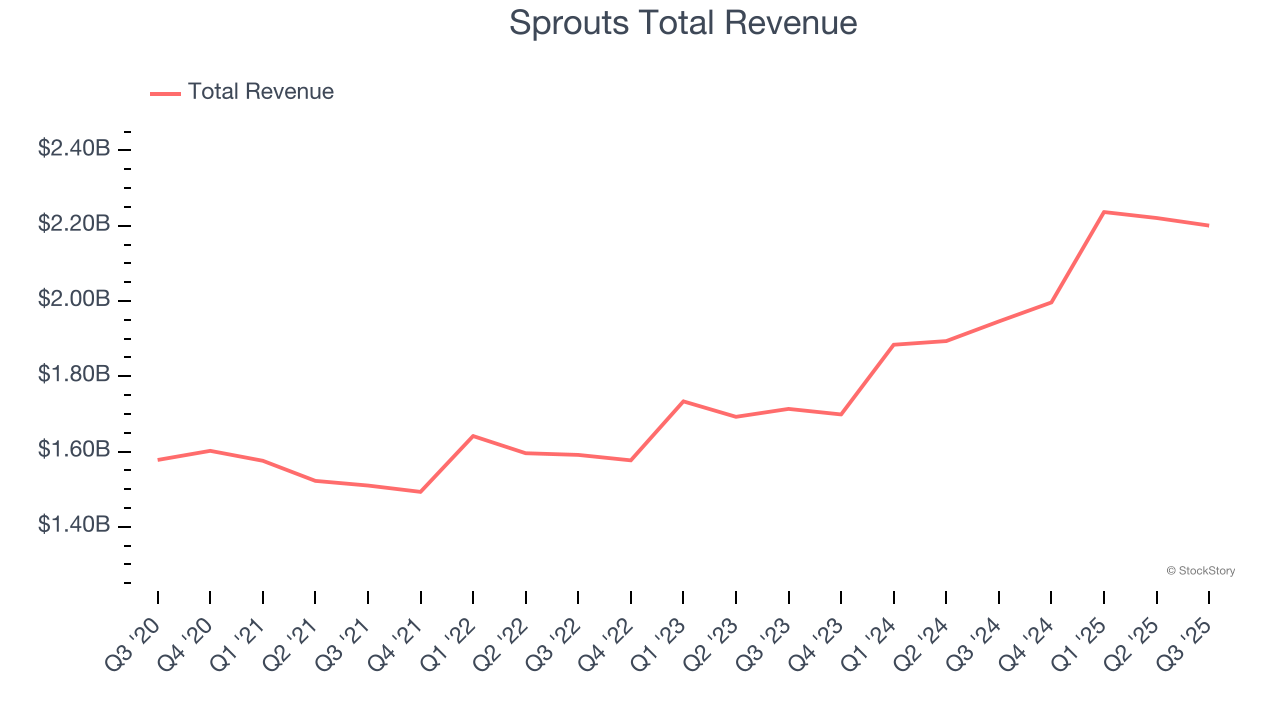
Sprouts pulled off the fastest revenue growth but had the weakest performance against analyst estimates of the whole group. Still, the market seems discontent with the results. The stock is down 20.8% since reporting and currently trades at $85.40.
Is now the time to buy Sprouts? Access our full analysis of the earnings results here, it’s free for active Edge members.
Best Q3: Dollar General (NYSE:DG)
Appealing to the budget-conscious consumer, Dollar General (NYSE:DG) is a discount retailer that sells a wide range of household essentials, groceries, apparel/beauty products, and seasonal merchandise.
Dollar General reported revenues of $10.65 billion, up 4.6% year on year, in line with analysts’ expectations. The business had an exceptional quarter with a beat of analysts’ EPS and EBITDA estimates.
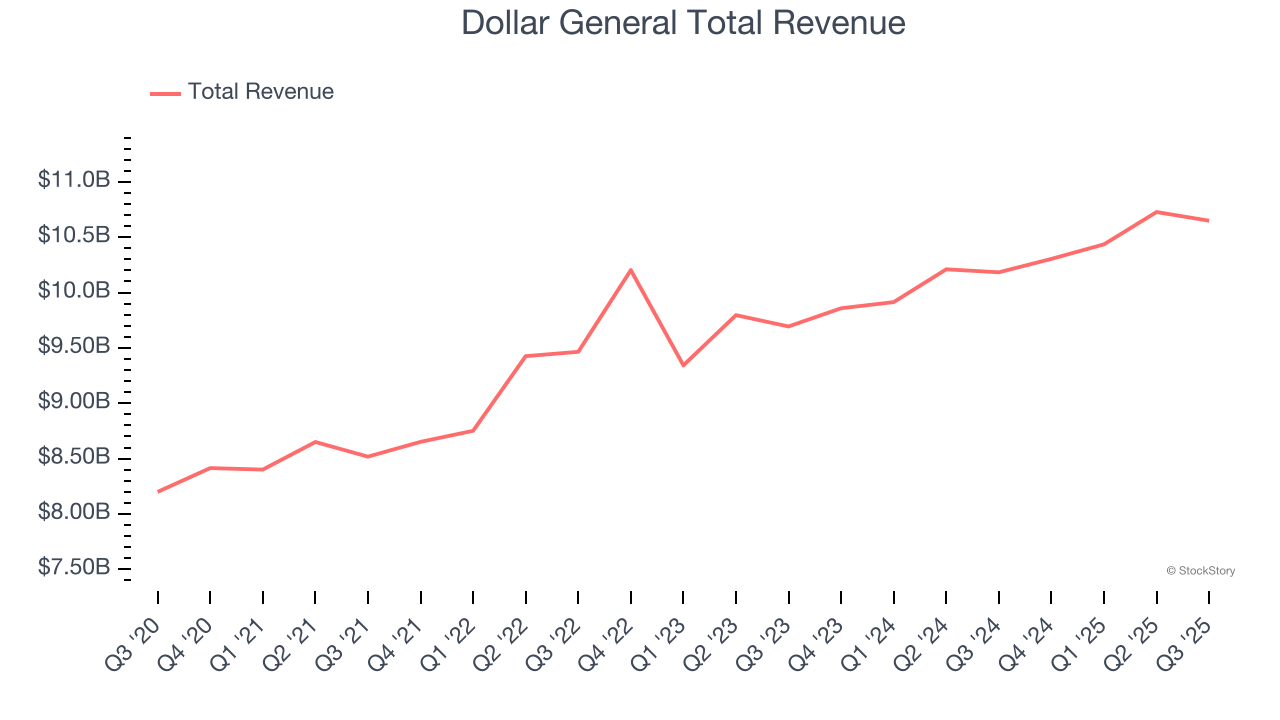
The market seems happy with the results as the stock is up 20.8% since reporting. It currently trades at $132.74.
Is now the time to buy Dollar General? Access our full analysis of the earnings results here, it’s free for active Edge members.
Weakest Q3: Grocery Outlet (NASDAQ:GO)
Due to its differentiated procurement and buying approach, Grocery Outlet (NASDAQ:GO) is a discount grocery store chain that offers substantial discounts on name-brand products.
Grocery Outlet reported revenues of $1.17 billion, up 5.4% year on year, falling short of analysts’ expectations by 0.8%. It was a mixed quarter as it posted a beat of analysts’ EPS estimates but full-year EBITDA guidance missing analysts’ expectations.
As expected, the stock is down 19.9% since the results and currently trades at $11.35.
Read our full analysis of Grocery Outlet’s results here.
Target (NYSE:TGT)
With a higher focus on style and aesthetics compared to other large general merchandise retailers, Target (NYSE:TGT) serves the suburban consumer who is looking for a wide range of products under one roof.
Target reported revenues of $25.27 billion, down 1.6% year on year. This result met analysts’ expectations. More broadly, it was a mixed quarter as it also logged full-year EPS guidance beating analysts’ expectations but a significant miss of analysts’ EBITDA estimates.
Target had the slowest revenue growth among its peers. The stock is up 4.3% since reporting and currently trades at $92.35.
Read our full, actionable report on Target here, it’s free for active Edge members.
Costco (NASDAQ:COST)
Designed to be a one-stop shop for the suburban consumer, Costco (NASDAQ:COST) is a membership-only retail chain that sells groceries, apparel, toys, and household items, often in bulk quantities.
Costco reported revenues of $86.16 billion, up 8.1% year on year. This number was in line with analysts’ expectations. Taking a step back, it was a mixed quarter as it also recorded an impressive beat of analysts’ gross margin estimates but a slight miss of analysts’ EBITDA estimates.
The stock is down 5.2% since reporting and currently trades at $895.29.
Read our full, actionable report on Costco here, it’s free for active Edge members.
Market Update
Thanks to the Fed’s rate hikes in 2022 and 2023, inflation has been on a steady path downward, easing back toward that 2% sweet spot. Fortunately (miraculously to some), all this tightening didn’t send the economy tumbling into a recession, so here we are, cautiously celebrating a soft landing. The cherry on top? Recent rate cuts (half a point in September 2024, a quarter in November) have propped up markets, especially after Trump’s November win lit a fire under major indices and sent them to all-time highs. However, there’s still plenty to ponder — tariffs, corporate tax cuts, and what 2025 might hold for the economy.
Want to invest in winners with rock-solid fundamentals? Check out our Hidden Gem Stocks and add them to your watchlist. These companies are poised for growth regardless of the political or macroeconomic climate.
StockStory’s analyst team — all seasoned professional investors — uses quantitative analysis and automation to deliver market-beating insights faster and with higher quality.