
As the Q3 earnings season wraps, let’s dig into this quarter’s best and worst performers in the beauty and cosmetics retailer industry, including Ulta (NASDAQ:ULTA) and its peers.
Beauty and cosmetics retailers understand that beauty is in the eye of the beholder, but a little lipstick, nail polish, and glowing skin also help the cause. These stores—which mostly cater to consumers but can also garner the attention of salon pros—aim to be a one-stop personal care and beauty products shop with many brands across many categories. E-commerce is changing how consumers buy cosmetics, so these retailers are constantly evolving to meet the customer where and how they want to shop.
The 4 beauty and cosmetics retailer stocks we track reported a satisfactory Q3. As a group, revenues beat analysts’ consensus estimates by 0.7%.
Luckily, beauty and cosmetics retailer stocks have performed well with share prices up 16.1% on average since the latest earnings results.
Best Q3: Ulta (NASDAQ:ULTA)
Offering high-end prestige brands as well as lower-priced, mass-market ones, Ulta Beauty (NASDAQ:ULTA) is an American retailer that sells makeup, skincare, haircare, and fragrance products.
Ulta reported revenues of $2.86 billion, up 12.9% year on year. This print exceeded analysts’ expectations by 5.2%. Overall, it was an exceptional quarter for the company with a solid beat of analysts’ EBITDA estimates and an impressive beat of analysts’ revenue estimates.
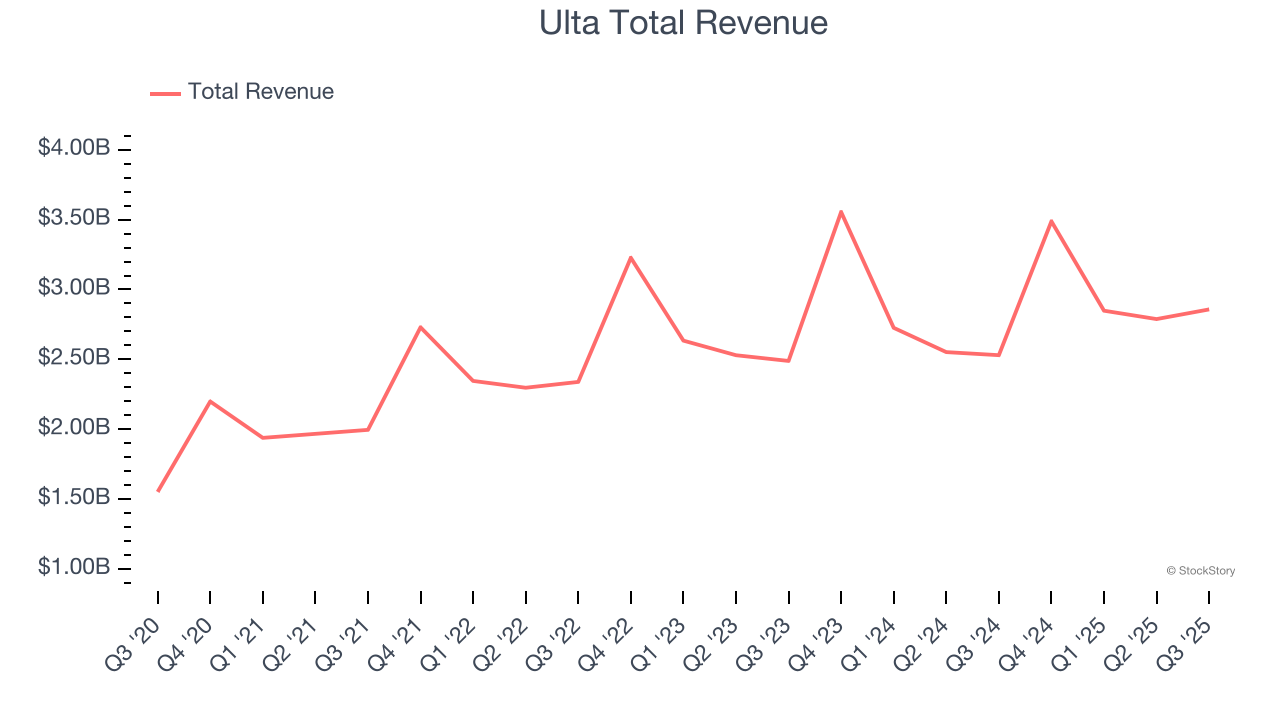
Ulta achieved the biggest analyst estimates beat and highest full-year guidance raise of the whole group. Unsurprisingly, the stock is up 21.3% since reporting and currently trades at $650.14.
Sally Beauty (NYSE:SBH)
Catering to both everyday consumers as well as salon professionals, Sally Beauty (NYSE:SBH) is a retailer that sells salon-quality beauty products such as makeup and haircare products.
Sally Beauty reported revenues of $947.1 million, up 1.3% year on year, outperforming analysts’ expectations by 1.6%. The business had a very strong quarter with a solid beat of analysts’ EBITDA and EPS estimates.
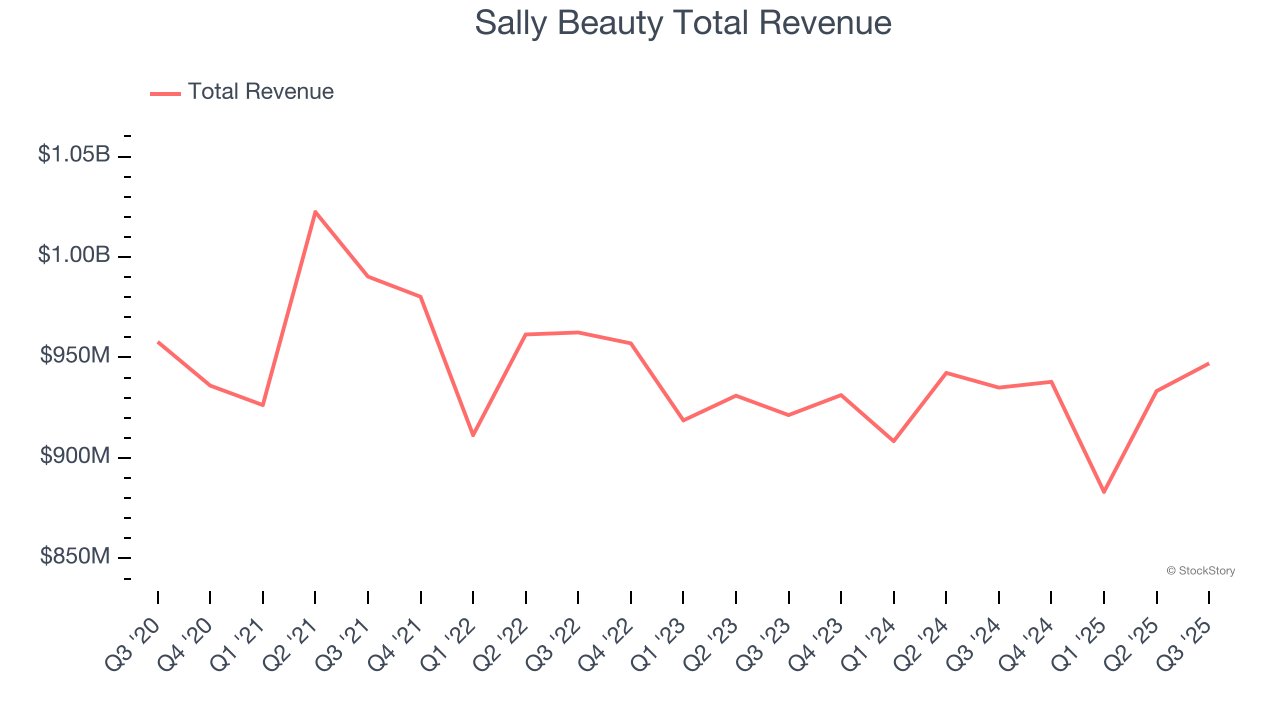
The market seems content with the results as the stock is up 3.7% since reporting. It currently trades at $15.22.
Is now the time to buy Sally Beauty? Access our full analysis of the earnings results here, it’s free for active Edge members.
Weakest Q3: Bath and Body Works (NYSE:BBWI)
Spun off from L Brands in 2020, Bath & Body Works (NYSE:BBWI) is a personal care and home fragrance retailer where consumers can find specialty shower gels, scented candles for the home, and lotions.
Bath and Body Works reported revenues of $1.59 billion, flat year on year, falling short of analysts’ expectations by 2.7%. It was a disappointing quarter as it posted full-year EPS guidance missing analysts’ expectations.
Bath and Body Works delivered the weakest performance against analyst estimates and slowest revenue growth in the group. Interestingly, the stock is up 4.3% since the results and currently trades at $21.94.
Read our full analysis of Bath and Body Works’s results here.
Warby Parker (NYSE:WRBY)
Founded in 2010, Warby Parker (NYSE:WRBY) designs, manufactures, and sells eyewear, including prescription glasses, sunglasses, and contact lenses, through its e-commerce platform and physical retail locations.
Warby Parker reported revenues of $221.7 million, up 15.2% year on year. This number lagged analysts' expectations by 1.2%. More broadly, it was a satisfactory quarter as it also logged a beat of analysts’ EPS estimates but full-year revenue guidance missing analysts’ expectations.
Warby Parker pulled off the fastest revenue growth but had the weakest full-year guidance update among its peers. The company reported 2.66 million active customers, up 9.5% year on year. The stock is up 35.3% since reporting and currently trades at $25.78.
Read our full, actionable report on Warby Parker here, it’s free for active Edge members.
Want to invest in winners with rock-solid fundamentals? Check out our Top 6 Stocks and add them to your watchlist. These companies are poised for growth regardless of the political or macroeconomic climate.
StockStory’s analyst team — all seasoned professional investors — uses quantitative analysis and automation to deliver market-beating insights faster and with higher quality.