Packaged foods company B&G Foods (NYSE:BGS) reported Q4 CY2024 results topping the market’s revenue expectations, but sales fell by 4.6% year on year to $551.6 million. The company expects the full year’s revenue to be around $1.92 billion, close to analysts’ estimates. Its non-GAAP profit of $0.31 per share was in line with analysts’ consensus estimates.
Is now the time to buy B&G Foods? Find out by accessing our full research report, it’s free.
B&G Foods (BGS) Q4 CY2024 Highlights:
- Revenue: $551.6 million vs analyst estimates of $546.5 million (4.6% year-on-year decline, 0.9% beat)
- Adjusted EPS: $0.31 vs analyst estimates of $0.30 (in line)
- Adjusted EBITDA: $86.08 million vs analyst estimates of $85.14 million (15.6% margin, 1.1% beat)
- Management’s revenue guidance for the upcoming financial year 2025 is $1.92 billion at the midpoint, in line with analyst expectations and implying -0.6% growth (vs -6.3% in FY2024)
- Adjusted EPS guidance for the upcoming financial year 2025 is $0.70 at the midpoint, beating analyst estimates by 4.9%
- EBITDA guidance for the upcoming financial year 2025 is $295 million at the midpoint, in line with analyst expectations
- Operating Margin: -46.6%, down from 7.2% in the same quarter last year
- Sales Volumes were down 2.2% year on year
- Market Capitalization: $533.6 million
Company Overview
Started as a small grocery store in New York City, B&G Foods (NYSE:BGS) is an American packaged foods company with a diverse portfolio of more than 50 brands.
Shelf-Stable Food
As America industrialized and moved away from an agricultural economy, people faced more demands on their time. Packaged foods emerged as a solution offering convenience to the evolving American family, whether it be canned goods or snacks. Today, Americans seek brands that are high in quality, reliable, and reasonably priced. Furthermore, there's a growing emphasis on health-conscious and sustainable food options. Packaged food stocks are considered resilient investments. People always need to eat, so these companies can enjoy consistent demand as long as they stay on top of changing consumer preferences. The industry spans from multinational corporations to smaller specialized firms and is subject to food safety and labeling regulations.
Sales Growth
Examining a company’s long-term performance can provide clues about its quality. Any business can put up a good quarter or two, but the best consistently grow over the long haul.
With $1.93 billion in revenue over the past 12 months, B&G Foods is a small consumer staples company, which sometimes brings disadvantages compared to larger competitors benefiting from economies of scale and negotiating leverage with retailers.
As you can see below, B&G Foods’s revenue declined by 2% per year over the last three years despite selling a similar number of units each year. We’ll explore what this means in the "Volume Growth" section.
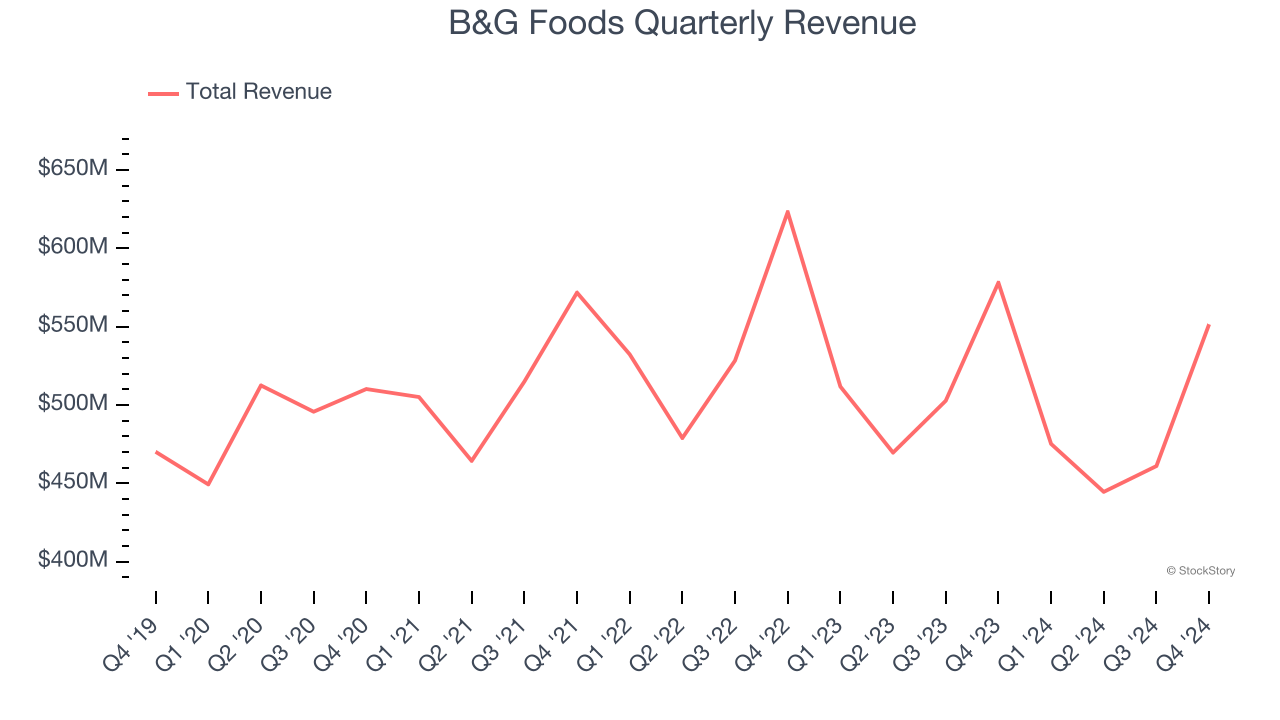
This quarter, B&G Foods’s revenue fell by 4.6% year on year to $551.6 million but beat Wall Street’s estimates by 0.9%.
Looking ahead, sell-side analysts expect revenue to remain flat over the next 12 months. While this projection indicates its newer products will fuel better top-line performance, it is still below average for the sector.
Unless you’ve been living under a rock, it should be obvious by now that generative AI is going to have a huge impact on how large corporations do business. While Nvidia and AMD are trading close to all-time highs, we prefer a lesser-known (but still profitable) stock benefiting from the rise of AI. Click here to access our free report one of our favorites growth stories.
Cash Is King
If you’ve followed StockStory for a while, you know we emphasize free cash flow. Why, you ask? We believe that in the end, cash is king, and you can’t use accounting profits to pay the bills.
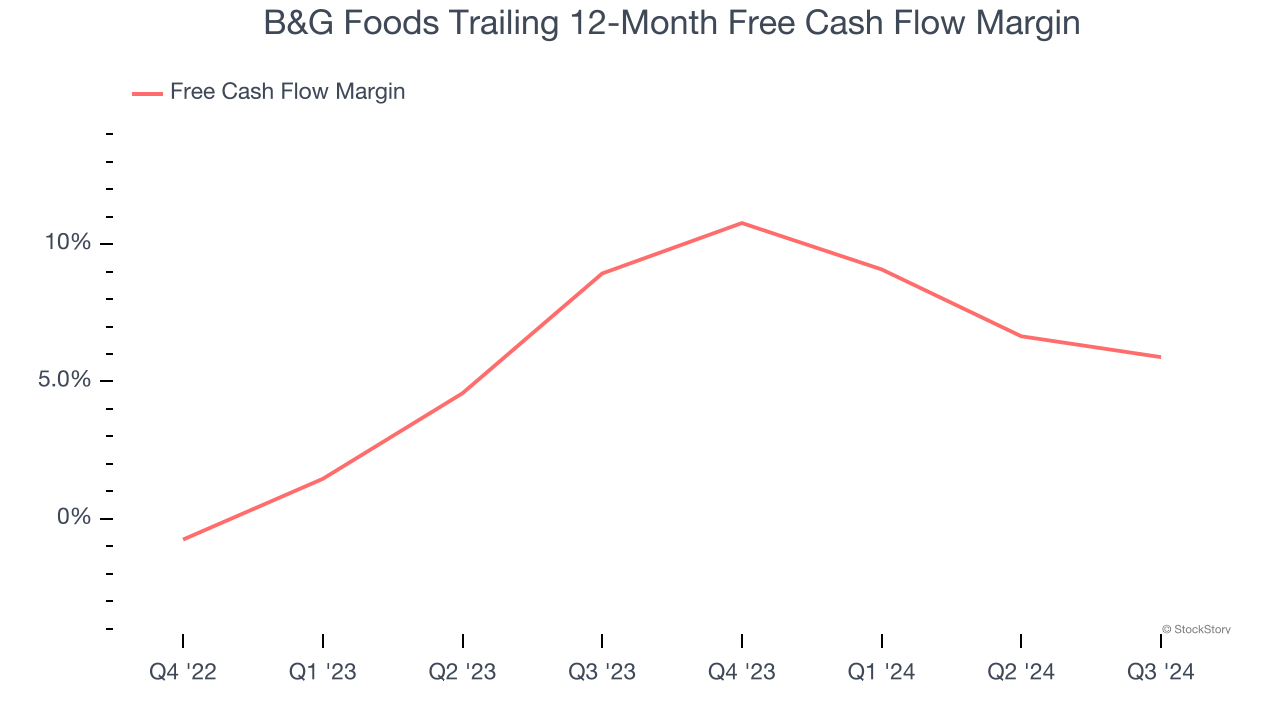
B&G Foods has shown impressive cash profitability, giving it the option to reinvest or return capital to investors. The company’s free cash flow margin averaged 7.4% over the last two years, better than the broader consumer staples sector. The divergence from its underwhelming operating margin stems from the add-back of non-cash charges like depreciation and stock-based compensation. GAAP operating profit expenses these line items, but free cash flow does not.
Key Takeaways from B&G Foods’s Q4 Results
We were impressed by how significantly B&G Foods blew past analysts’ gross margin expectations this quarter. We were also happy its revenue narrowly outperformed Wall Street’s estimates. Overall, this quarter had some key positives. The market seemed to focus on the negatives, and the stock traded down 2% to $6.70 immediately following the results.
Should you buy the stock or not? If you’re making that decision, you should consider the bigger picture of valuation, business qualities, as well as the latest earnings. We cover that in our actionable full research report which you can read here, it’s free.