
Over the past six months, Provident Financial Services has been a great trade, beating the S&P 500 by 6.6%. Its stock price has climbed to $20.26, representing a healthy 19.9% increase. This performance may have investors wondering how to approach the situation.
Is now the time to buy Provident Financial Services, or should you be careful about including it in your portfolio? Get the full stock story straight from our expert analysts, it’s free for active Edge members.
Why Is Provident Financial Services Not Exciting?
We’re glad investors have benefited from the price increase, but we're swiping left on Provident Financial Services for now. Here are three reasons we avoid PFS and a stock we'd rather own.
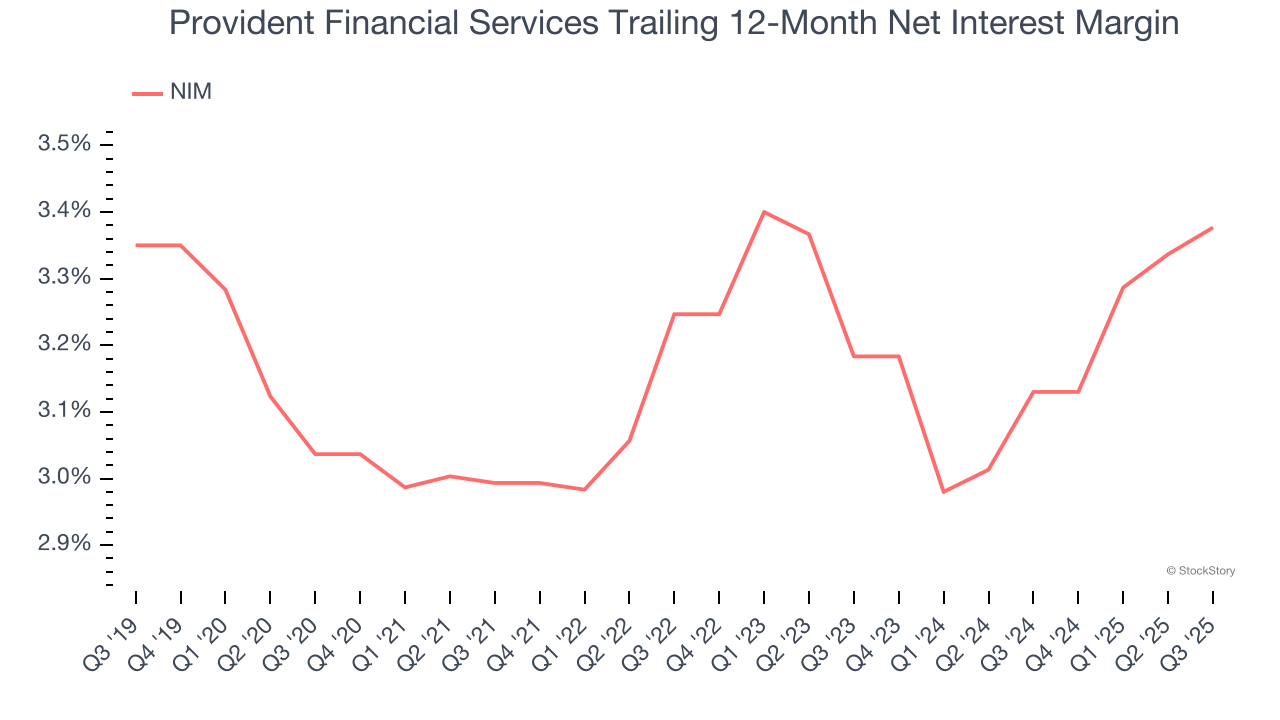
1. Low Net Interest Margin Reveals Weak Loan Book Profitability
The net interest margin (NIM) is a key profitability indicator that measures the difference between what a bank earns on its loans and what it pays on its deposits. This metric measures how efficiently one can generate income from its core lending activities.
Over the past two years, we can see that Provident Financial Services’s net interest margin averaged a subpar 3.3%, meaning it must compensate for lower profitability through increased loan originations.
2. Recent EPS Growth Below Our Standards
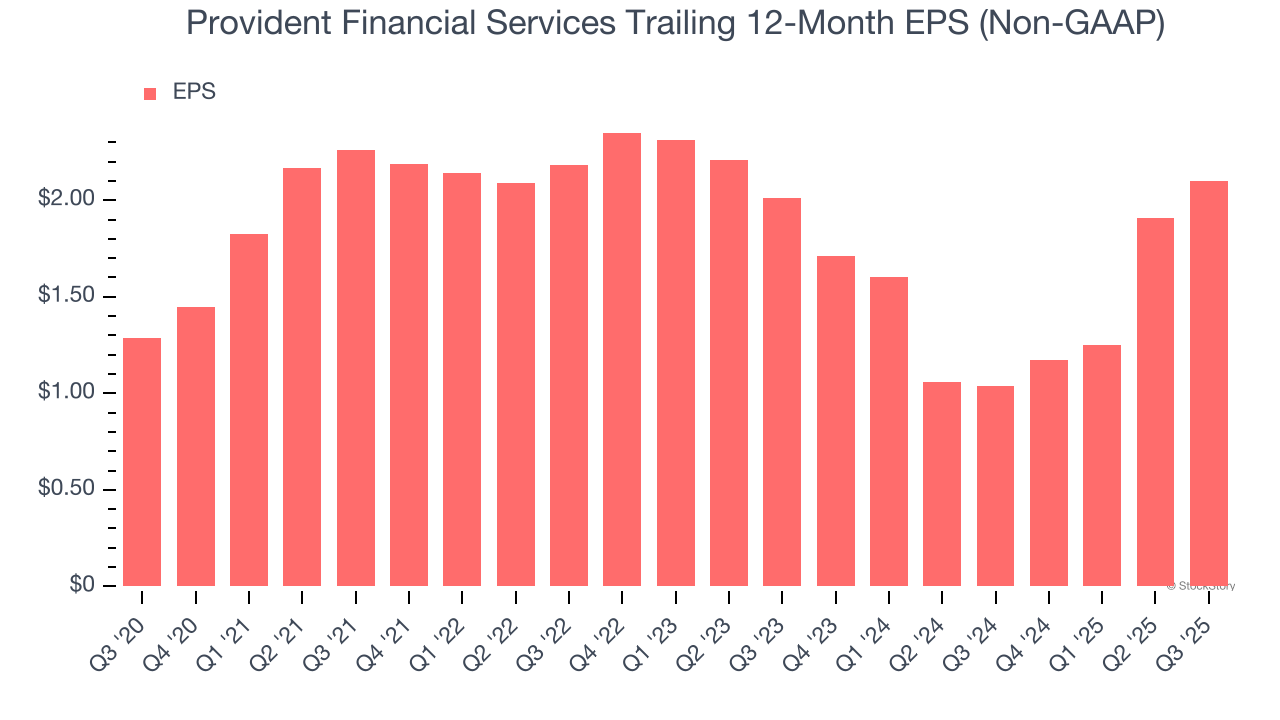
Although long-term earnings trends give us the big picture, we like to analyze EPS over a shorter period to see if we are missing a change in the business.
Provident Financial Services’s EPS grew at a weak 2.2% compounded annual growth rate over the last two years, lower than its 30.8% annualized revenue growth. This tells us the company became less profitable on a per-share basis as it expanded.
3. Declining TBVPS Reflects Erosion of Asset Value
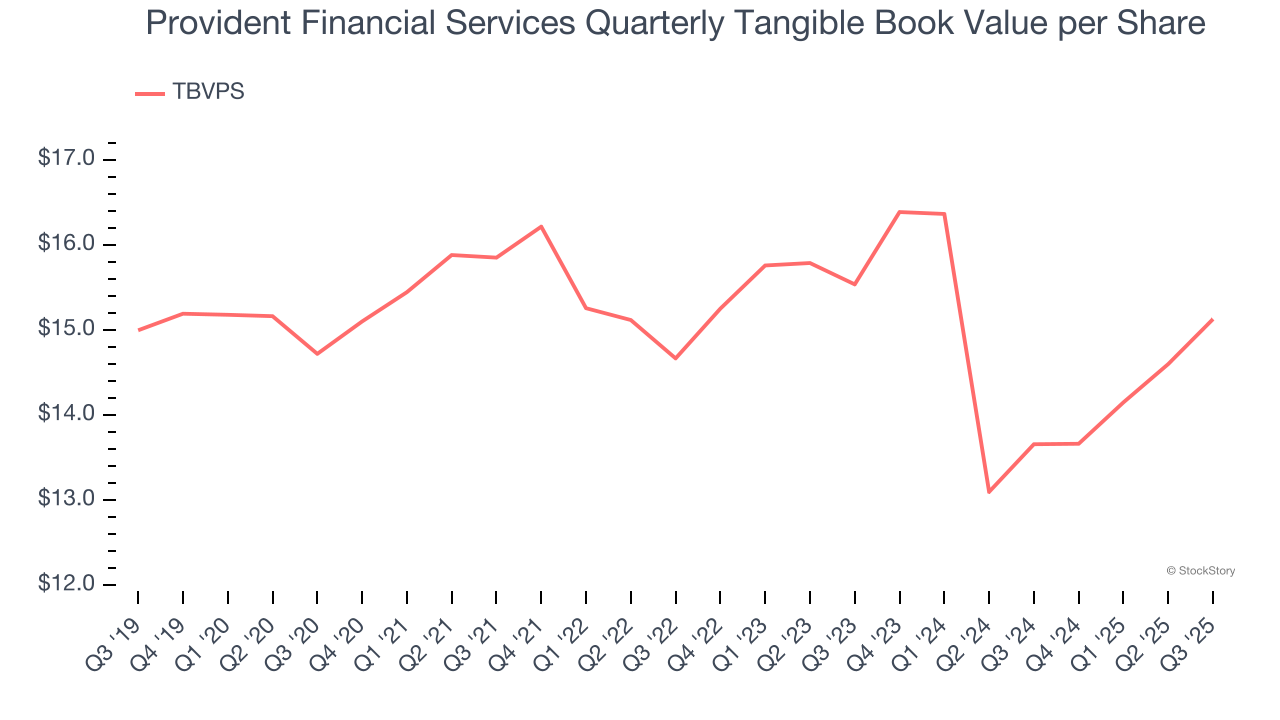
For banks, tangible book value per share (TBVPS) is a crucial metric that measures the actual value of shareholders’ equity, stripping out goodwill and other intangible assets that may not be recoverable in a worst-case scenario.
Provident Financial Services’s TBVPS was flat over the last five years, and the past two years paint an even worse picture as TBVPS declined at a -1.3% annual clip (from $15.54 to $15.13 per share).
Final Judgment
Provident Financial Services isn’t a terrible business, but it doesn’t pass our bar. With its shares beating the market recently, the stock trades at 1× forward P/B (or $20.26 per share). This valuation multiple is fair, but we don’t have much faith in the company. We're pretty confident there are more exciting stocks to buy at the moment. Let us point you toward one of our top software and edge computing picks.
Stocks We Like More Than Provident Financial Services
Your portfolio can’t afford to be based on yesterday’s story. The risk in a handful of heavily crowded stocks is rising daily.
The names generating the next wave of massive growth are right here in our Top 9 Market-Beating Stocks. This is a curated list of our High Quality stocks that have generated a market-beating return of 244% over the last five years (as of June 30, 2025).
Stocks that have made our list include now familiar names such as Nvidia (+1,326% between June 2020 and June 2025) as well as under-the-radar businesses like the once-micro-cap company Tecnoglass (+1,754% five-year return). Find your next big winner with StockStory today.