
Luxury furniture retailer RH (NYSE:RH) met Wall Streets revenue expectations in Q3 CY2025, with sales up 8.9% year on year to $883.8 million. On the other hand, next quarter’s revenue guidance of $873.3 million was less impressive, coming in 2.5% below analysts’ estimates. Its non-GAAP profit of $1.71 per share was 20.9% below analysts’ consensus estimates.
Is now the time to buy RH? Find out by accessing our full research report, it’s free for active Edge members.
RH (RH) Q3 CY2025 Highlights:
- Revenue: $883.8 million vs analyst estimates of $883.5 million (8.9% year-on-year growth, in line)
- Adjusted EPS: $1.71 vs analyst expectations of $2.16 (20.9% miss)
- Adjusted EBITDA: $155.8 million vs analyst estimates of $165.5 million (17.6% margin, 5.9% miss)
- Revenue Guidance for Q4 CY2025 is $873.3 million at the midpoint, below analyst estimates of $896.2 million
- Adj. Operating Margin Guidance for Q4 CY2025 is 13.0% at the midpoint (includes 370bps headwind from international expansion + tariffs), in line with analyst estimates if adding back those headwinds
- Operating Margin: 12%, in line with the same quarter last year
- Free Cash Flow was $83.03 million, up from -$95.99 million in the same quarter last year
- Market Capitalization: $2.95 billion
Company Overview
Formerly known as Restoration Hardware, RH (NYSE:RH) is a specialty retailer that exclusively sells its own brand of high-end furniture and home decor.
Revenue Growth
A company’s long-term performance is an indicator of its overall quality. Even a bad business can shine for one or two quarters, but a top-tier one grows for years.
With $3.41 billion in revenue over the past 12 months, RH is a small retailer, which sometimes brings disadvantages compared to larger competitors benefiting from economies of scale and negotiating leverage with suppliers.
As you can see below, RH struggled to generate demand over the last three years (we compare to 2019 to normalize for COVID-19 impacts). Its sales dropped by 2.9% annually despite opening new stores and expanding its reach.
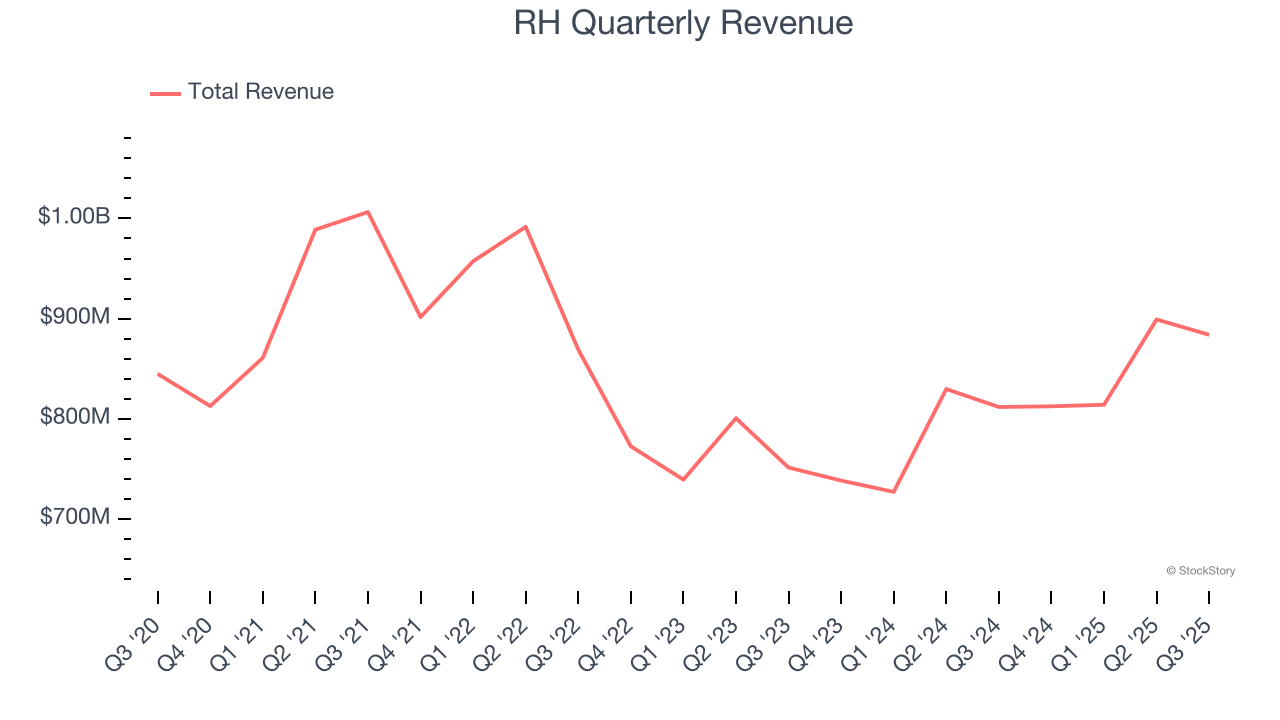
This quarter, RH grew its revenue by 8.9% year on year, and its $883.8 million of revenue was in line with Wall Street’s estimates. Company management is currently guiding for a 7.5% year-on-year increase in sales next quarter.
Looking further ahead, sell-side analysts expect revenue to grow 10.3% over the next 12 months, an acceleration versus the last three years. This projection is eye-popping and suggests its newer products will catalyze better top-line performance.
Software is eating the world and there is virtually no industry left that has been untouched by it. That drives increasing demand for tools helping software developers do their jobs, whether it be monitoring critical cloud infrastructure, integrating audio and video functionality, or ensuring smooth content streaming. Click here to access a free report on our 3 favorite stocks to play this generational megatrend.
Store Performance
Number of Stores
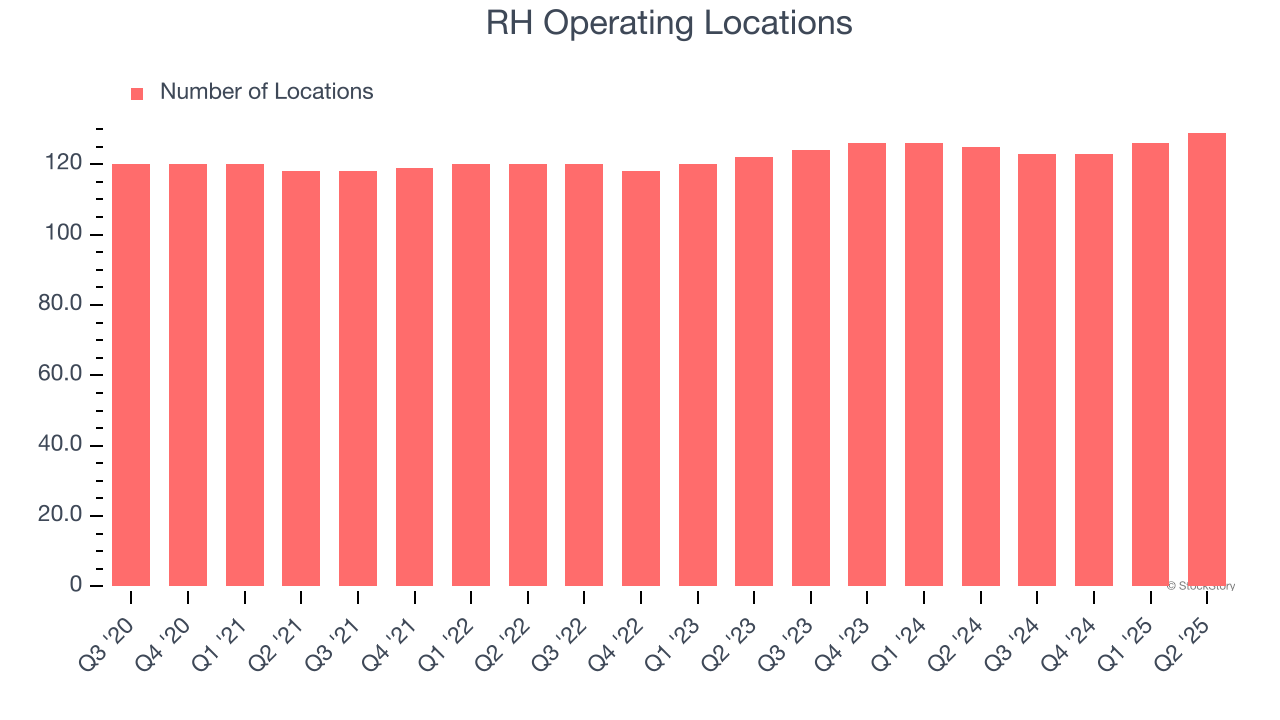
Over the last two years, RH has generally opened new stores, averaging 2% annual growth. This was faster than the broader consumer retail sector.
When a retailer opens new stores, it usually means it’s investing for growth because demand is greater than supply, especially in areas where consumers may not have a store within reasonable driving distance.
Note that RH reports its store count intermittently, so some data points are missing in the chart below.
Same-Store Sales
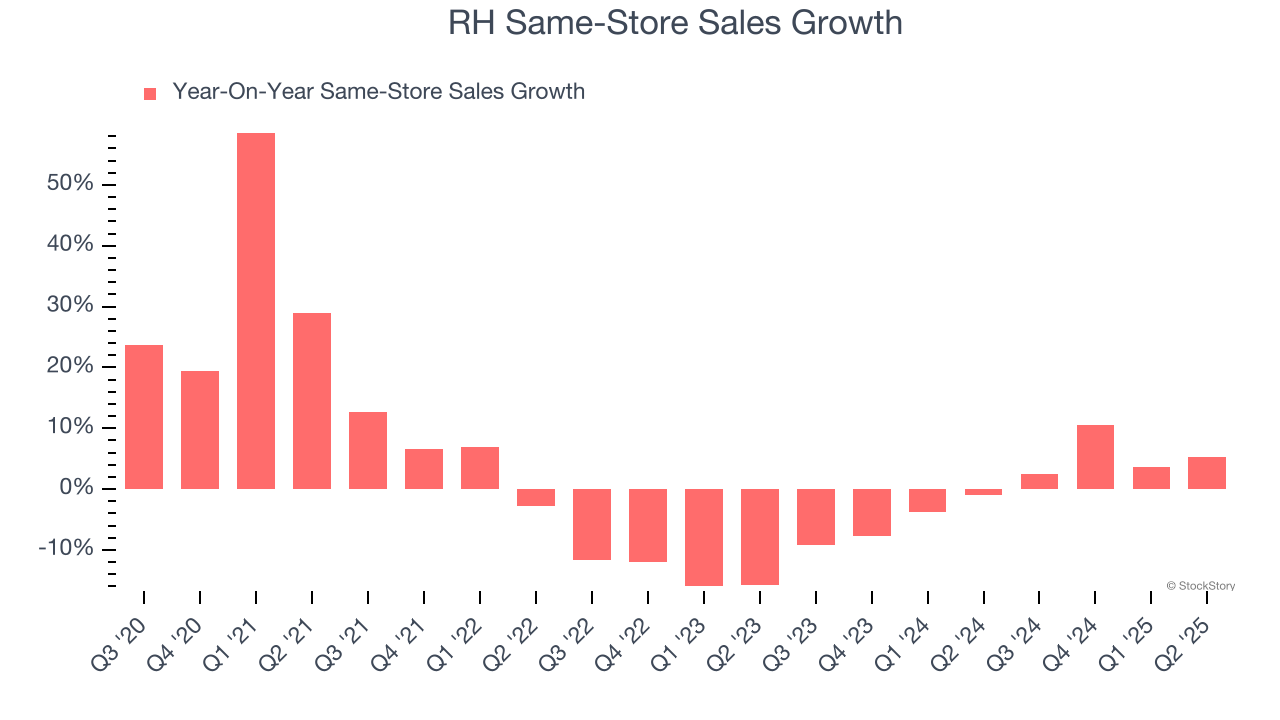
The change in a company's store base only tells one side of the story. The other is the performance of its existing locations and e-commerce sales, which informs management teams whether they should expand or downsize their physical footprints. Same-store sales is an industry measure of whether revenue is growing at those existing stores and is driven by customer visits (often called traffic) and the average spending per customer (ticket).
RH’s demand within its existing locations has been relatively stable over the last two years but was below most retailers. On average, the company’s same-store sales have grown by 1.3% per year. This performance suggests it should consider improving its foot traffic and efficiency before expanding its store base.
Note that RH reports its same-store sales intermittently, so some data points are missing in the chart below.
Key Takeaways from RH’s Q3 Results
Revenue was in line but EPS fell short of Wall Street’s estimates. Looking ahead, revenue guidance for next quarter missed, but adjusted operating margin met expectations when adding back the non-recurring costs of international expansion and tariffs. Overall, this quarter was mixed. The stock traded up 5.2% to $163.31 immediately following the results.
So do we think RH is an attractive buy at the current price? We think that the latest quarter is only one piece of the longer-term business quality puzzle. Quality, when combined with valuation, can help determine if the stock is a buy. We cover that in our actionable full research report which you can read here, it’s free for active Edge members.