
Over the past six months, TransUnion’s shares (currently trading at $79.02) have posted a disappointing 15.6% loss, well below the S&P 500’s 10% gain. This might have investors contemplating their next move.
Is there a buying opportunity in TransUnion, or does it present a risk to your portfolio? Check out our in-depth research report to see what our analysts have to say, it’s free.
Why Is TransUnion Not Exciting?
Even though the stock has become cheaper, we're cautious about TransUnion. Here are three reasons you should be careful with TRU and a stock we'd rather own.
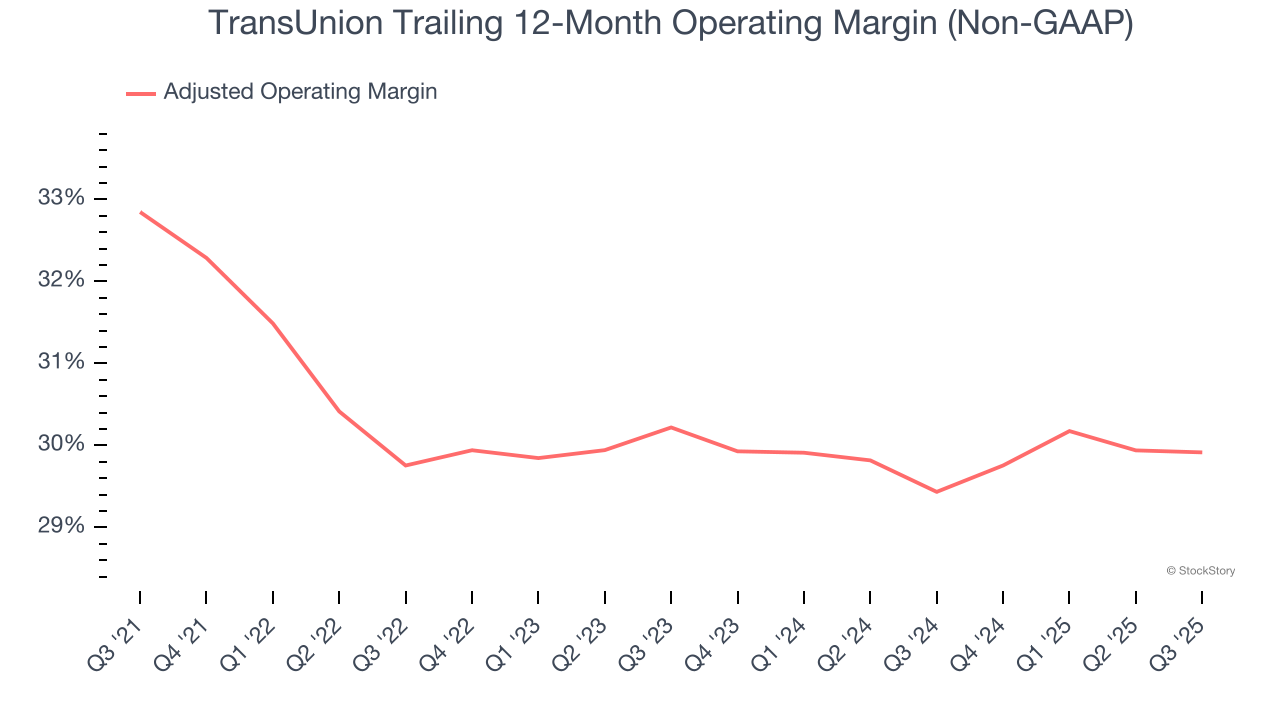
1. Shrinking Adjusted Operating Margin
Adjusted operating margin is one of the best measures of profitability because it tells us how much money a company takes home after subtracting all core expenses, like marketing and R&D. It also removes various one-time costs to paint a better picture of normalized profits.
Analyzing the trend in its profitability, TransUnion’s adjusted operating margin decreased by 2.9 percentage points over the last five years. This raises questions about the company’s expense base because its revenue growth should have given it leverage on its fixed costs, resulting in better economies of scale and profitability. Its adjusted operating margin for the trailing 12 months was 29.9%.
2. Free Cash Flow Margin Dropping
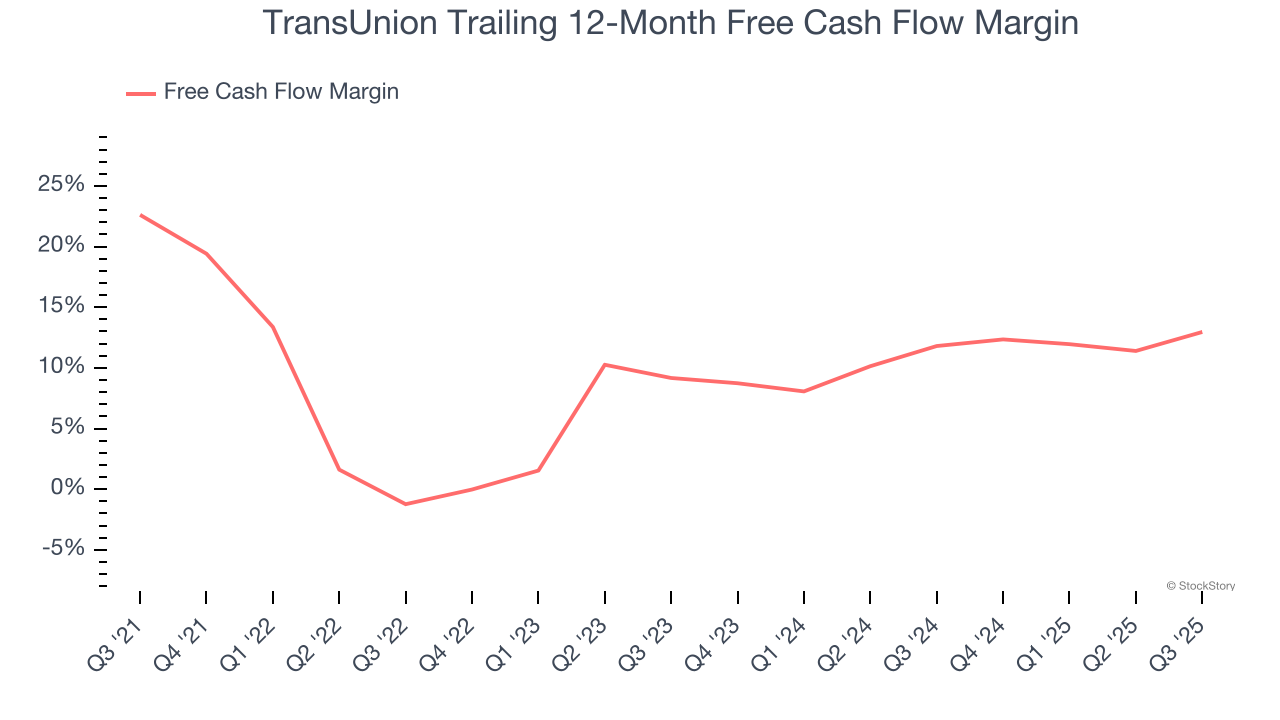
Free cash flow isn't a prominently featured metric in company financials and earnings releases, but we think it's telling because it accounts for all operating and capital expenses, making it tough to manipulate. Cash is king.
As you can see below, TransUnion’s margin dropped by 9.7 percentage points over the last five years. If its declines continue, it could signal increasing investment needs and capital intensity. TransUnion’s free cash flow margin for the trailing 12 months was 13%.
3. Previous Growth Initiatives Haven’t Impressed
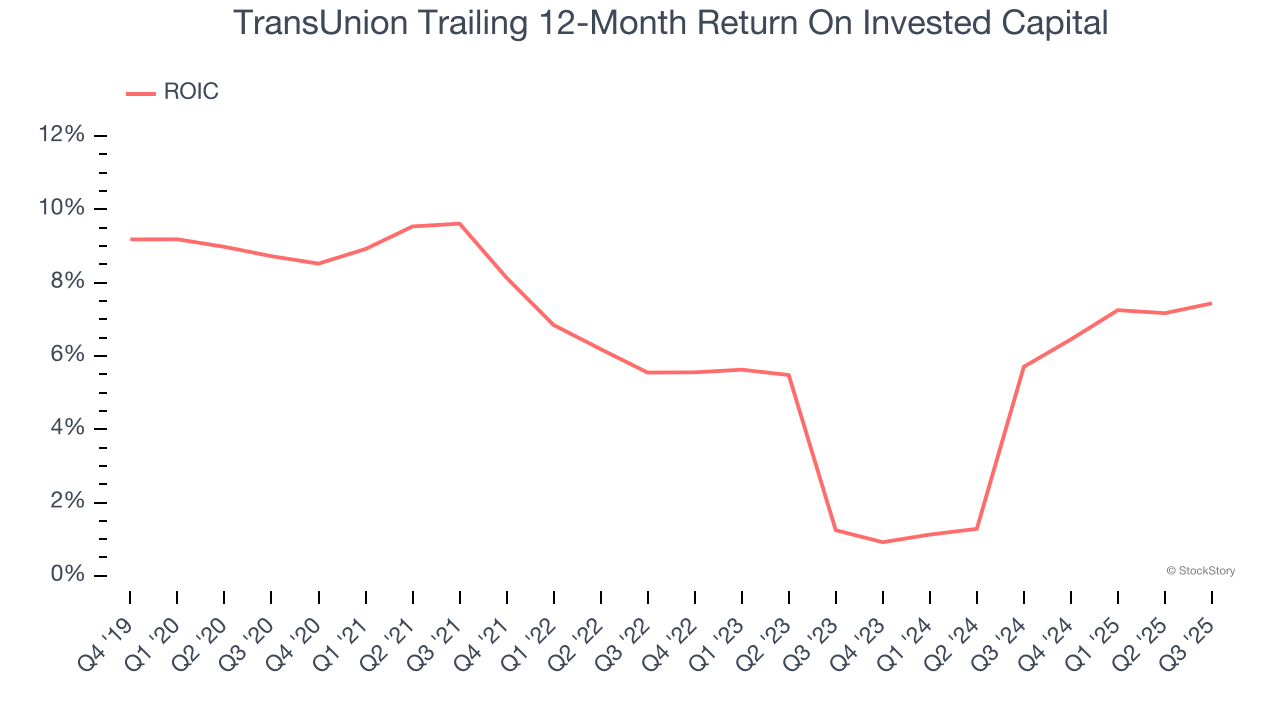
Growth gives us insight into a company’s long-term potential, but how capital-efficient was that growth? A company’s ROIC explains this by showing how much operating profit it makes compared to the money it has raised (debt and equity).
TransUnion historically did a mediocre job investing in profitable growth initiatives. Its five-year average ROIC was 5.9%, somewhat low compared to the best business services companies that consistently pump out 25%+.
Final Judgment
TransUnion isn’t a terrible business, but it isn’t one of our picks. After the recent drawdown, the stock trades at 17.4× forward P/E (or $79.02 per share). While this valuation is reasonable, we don’t really see a big opportunity at the moment. We're fairly confident there are better stocks to buy right now. Let us point you toward one of our top digital advertising picks.
Stocks We Would Buy Instead of TransUnion
Your portfolio can’t afford to be based on yesterday’s story. The risk in a handful of heavily crowded stocks is rising daily.
The names generating the next wave of massive growth are right here in our Top 5 Strong Momentum Stocks for this week. This is a curated list of our High Quality stocks that have generated a market-beating return of 244% over the last five years (as of June 30, 2025).
Stocks that have made our list include now familiar names such as Nvidia (+1,326% between June 2020 and June 2025) as well as under-the-radar businesses like the once-small-cap company Comfort Systems (+782% five-year return). Find your next big winner with StockStory today.