AutoZone (AZO)
We’re firm believers in AutoZone. Its high free cash flow margin and returns on capital show it can produce cash and invest it wisely.― StockStory Analyst Team


1. News




2. Summary
Why We Like AutoZone
Aiming to be a one-stop shop for the DIY customer, AutoZone (NYSE:AZO) is an auto parts and accessories retailer that sells everything from car batteries to windshield wiper fluid to brake pads.
- Disciplined cost controls and effective management have materialized in a strong operating margin
- Industry-leading 40.4% return on capital demonstrates management’s skill in finding high-return investments
- Collection of products is difficult to replicate at scale and leads to a stellar gross margin of 52.2%
AutoZone is a standout company. No coincidence the stock is up 209% over the last five years.
Is Now The Time To Buy AutoZone?



AutoZone’s stock price of $3,700 implies a valuation ratio of 23.8x forward P/E. This may not be a fire sale price, but a patient investor still stands to benefit over a multi-year holding period.
Do you like the business model and believe in the company’s future? If so, you can own a smaller position, as our work shows that high-quality companies outperform the market over a multi-year period regardless of valuation at entry.
3. AutoZone (AZO) Research Report: Q4 CY2025 Update
Auto parts and accessories retailer AutoZone (NYSE:AZO) met Wall Streets revenue expectations in Q4 CY2025, with sales up 8.2% year on year to $4.63 billion. Its GAAP profit of $31.04 per share was 4.2% below analysts’ consensus estimates.
AutoZone (AZO) Q4 CY2025 Highlights:
- Revenue: $4.63 billion vs analyst estimates of $4.65 billion (8.2% year-on-year growth, in line)
- EPS (GAAP): $31.04 vs analyst expectations of $32.40 (4.2% miss)
- Adjusted EBITDA: $932.4 million vs analyst estimates of $960.6 million (20.1% margin, 2.9% miss)
- Operating Margin: 16.9%, down from 19.7% in the same quarter last year
- Free Cash Flow Margin: 13.6%, similar to the same quarter last year
- Locations: 7,710 at quarter end, up from 7,387 in the same quarter last year
- Same-Store Sales rose 4.7% year on year (0.4% in the same quarter last year)
- Market Capitalization: $62.65 billion
Company Overview
Aiming to be a one-stop shop for the DIY customer, AutoZone (NYSE:AZO) is an auto parts and accessories retailer that sells everything from car batteries to windshield wiper fluid to brake pads.
While the company has a history of addressing the DIY customer’s needs, it also serves the professional mechanic. The company understands that these DIY mechanics may have varying levels of expertise in auto repair, so stores feature automotive expert sales associates who can help you find which tail light will fit your 2013 Toyota Camry SE, for example. There is also diagnostic testing to pinpoint exact issues. For the professional mechanic, Autozone offers rewards programs, commercial delivery options, and rental of specialized tools.
AutoZone stores are typically located in urban and suburban areas, with many stores situated along major roads and highways. The typical store is roughly 6,000 square feet and organized in a very logical way. Accessories such as floor mats and seat covers are usually near the entrance. Beyond that, there are sections for fluids, filters, brakes, batteries, and electrical, just to name a few.
In addition to its brick-and-mortar stores, AutoZone has an e-commerce presence that was launched in 1999. The company's website allows customers to browse and purchase products online, as well as access repair guides and instructional videos.
4. Auto Parts Retailer
Cars are complex machines that need maintenance and occasional repairs, and auto parts retailers cater to the professional mechanic as well as the do-it-yourself (DIY) fixer. Work on cars may entail replacing fluids, parts, or accessories, and these stores have the parts and accessories or these jobs. While e-commerce competition presents a risk, these stores have a leg up due to the combination of broad and deep selection as well as expertise provided by sales associates. Another change on the horizon could be the increasing penetration of electric vehicles.
Competitors offering auto parts and accessories include Advance Auto Parts (NYSE:AAP), O’Reilly Automotive (NASDAQ:ORLY), Genuine Parts (NYSE:GPC), and private company Pep Boys.
5. Revenue Growth
A company’s long-term sales performance can indicate its overall quality. Even a bad business can shine for one or two quarters, but a top-tier one grows for years.
With $19.29 billion in revenue over the past 12 months, AutoZone is one of the larger companies in the consumer retail industry and benefits from a well-known brand that influences purchasing decisions. However, its scale is a double-edged sword because there are only a finite number of places to build new stores, making it harder to find incremental growth. For AutoZone to boost its sales, it likely needs to adjust its prices or lean into foreign markets.
As you can see below, AutoZone grew its sales at a tepid 5.2% compounded annual growth rate over the last three years (we compare to 2019 to normalize for COVID-19 impacts), but to its credit, it opened new stores and increased sales at existing, established locations.
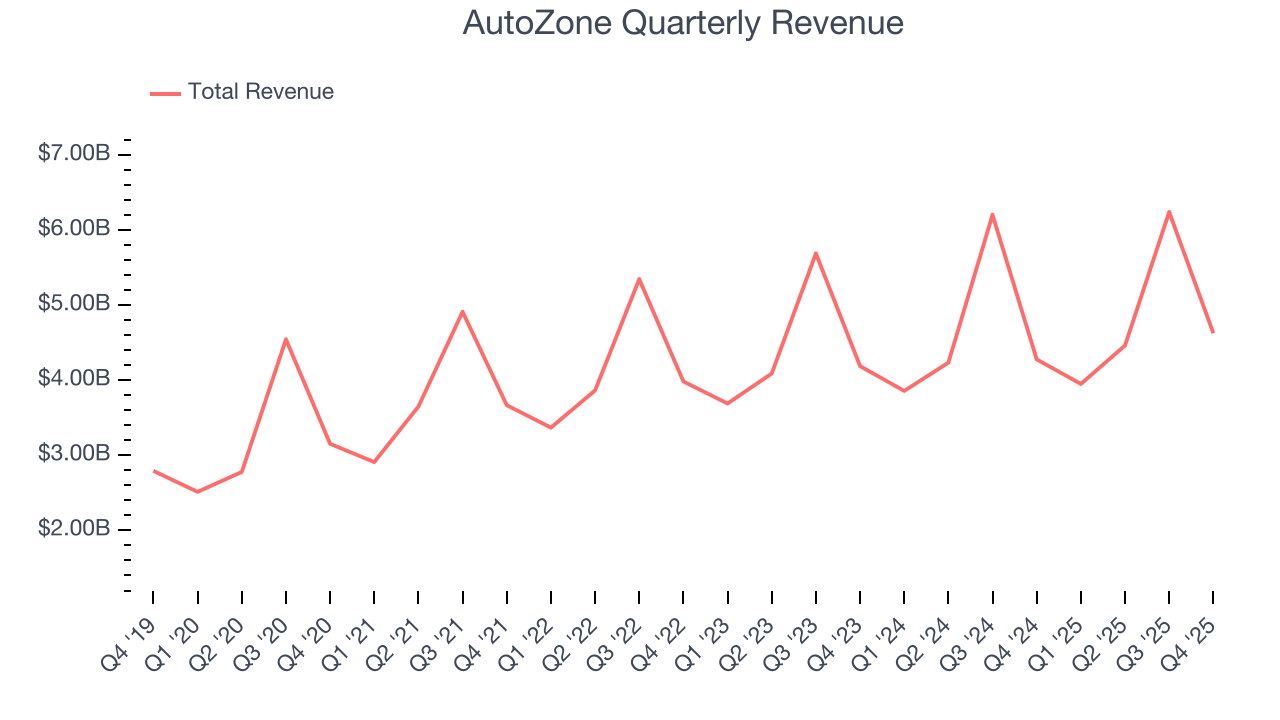
This quarter, AutoZone grew its revenue by 8.2% year on year, and its $4.63 billion of revenue was in line with Wall Street’s estimates.
Looking ahead, sell-side analysts expect revenue to grow 7.8% over the next 12 months, an acceleration versus the last three years. This projection is particularly noteworthy for a company of its scale and suggests its newer products will catalyze better top-line performance.
6. Store Performance
Number of Stores
The number of stores a retailer operates is a critical driver of how quickly company-level sales can grow.
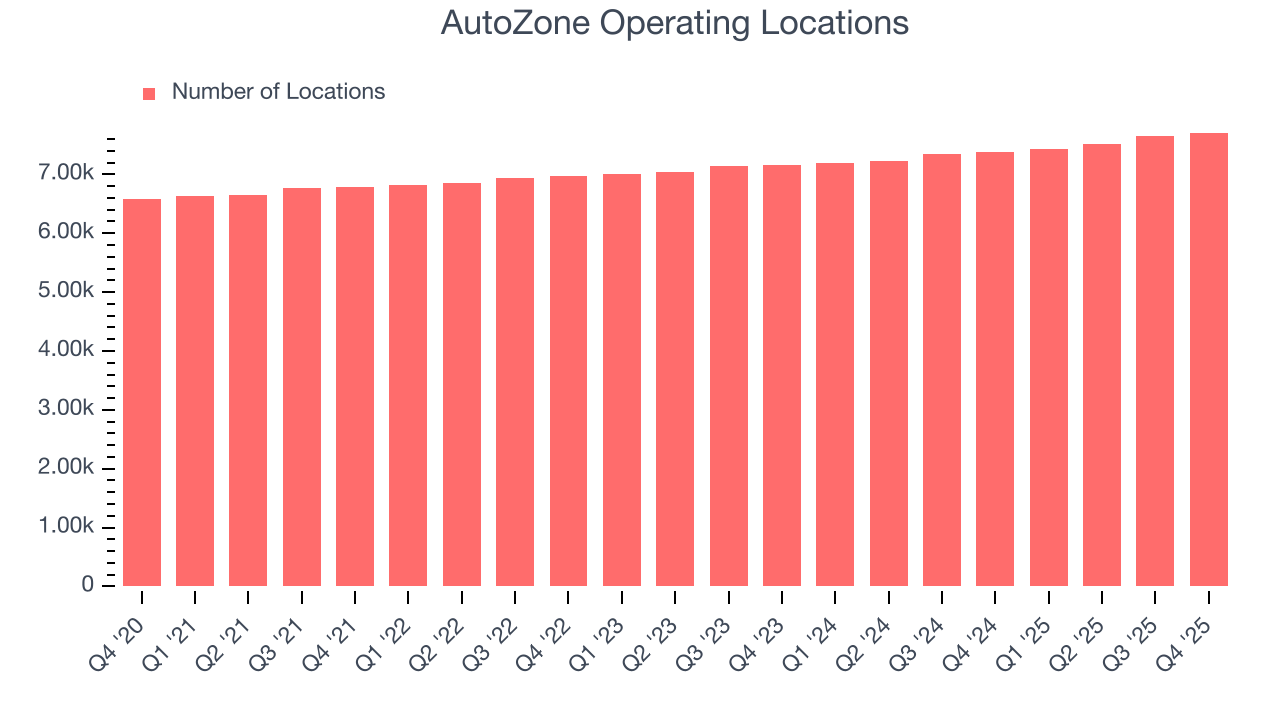
AutoZone sported 7,710 locations in the latest quarter. Over the last two years, it has opened new stores quickly, averaging 3.4% annual growth. This was faster than the broader consumer retail sector.
When a retailer opens new stores, it usually means it’s investing for growth because demand is greater than supply, especially in areas where consumers may not have a store within reasonable driving distance.
Same-Store Sales
The change in a company's store base only tells one side of the story. The other is the performance of its existing locations and e-commerce sales, which informs management teams whether they should expand or downsize their physical footprints. Same-store sales is an industry measure of whether revenue is growing at those existing stores and is driven by customer visits (often called traffic) and the average spending per customer (ticket).
AutoZone’s demand rose over the last two years and slightly outpaced the industry. On average, the company’s same-store sales have grown by 2.4% per year. This performance suggests its rollout of new stores could be beneficial for shareholders. When a retailer has demand, more locations should help it reach more customers and boost revenue growth.
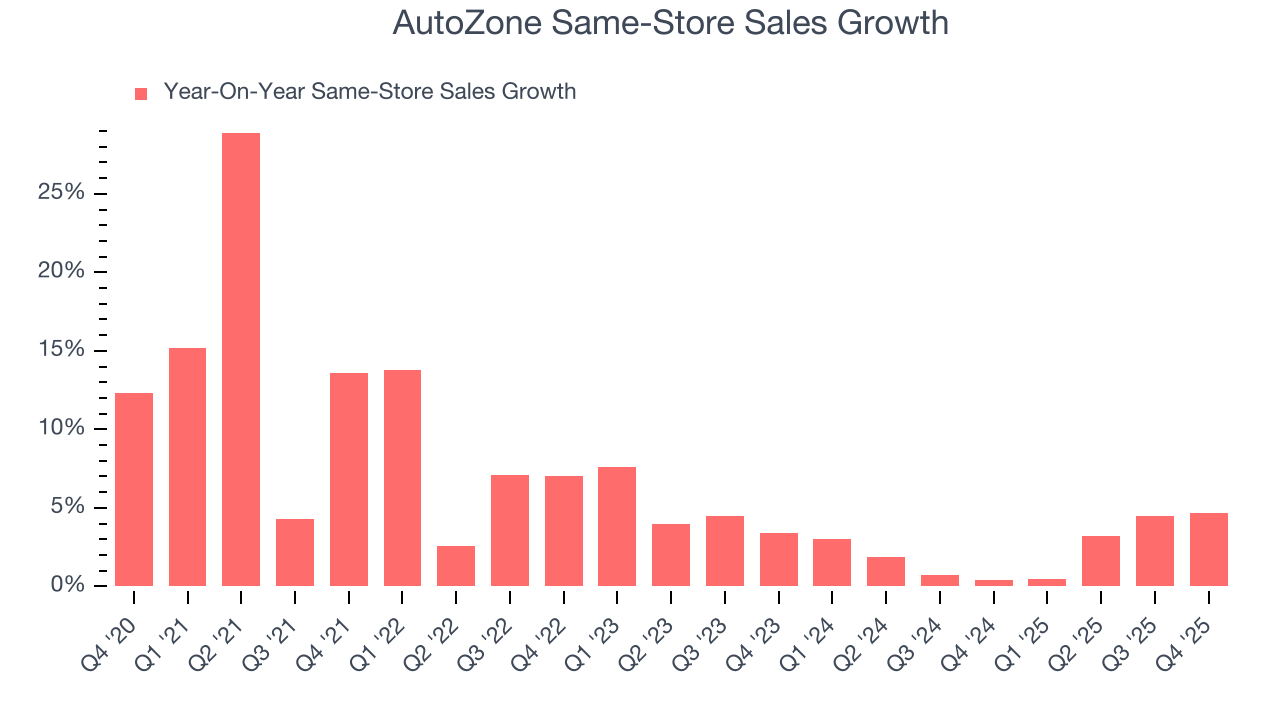
In the latest quarter, AutoZone’s same-store sales rose 4.7% year on year. This growth was an acceleration from its historical levels, which is always an encouraging sign.
7. Gross Margin & Pricing Power
Gross profit margins are an important measure of a retailer’s pricing power, product differentiation, and negotiating leverage.
AutoZone has best-in-class unit economics for a retailer, enabling it to invest in areas such as marketing and talent to grow its brand. As you can see below, it averaged an elite 52.6% gross margin over the last two years. That means AutoZone only paid its suppliers $47.37 for every $100 in revenue. 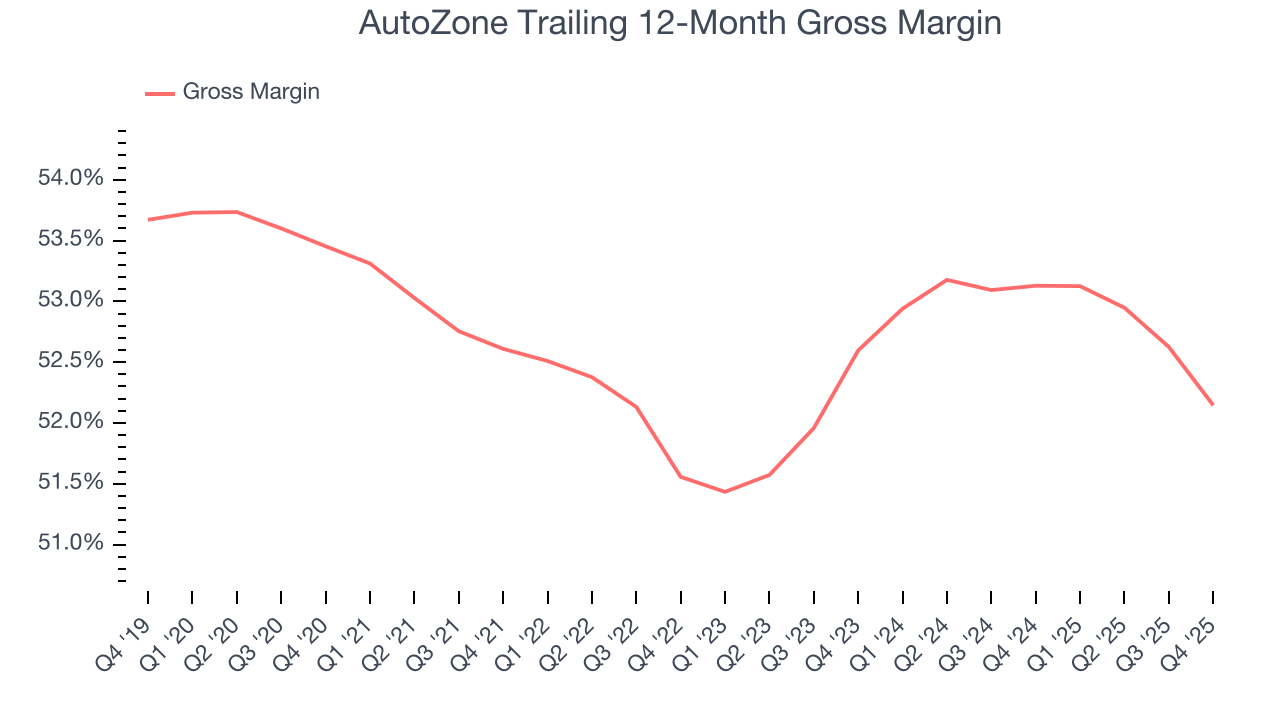
In Q4, AutoZone produced a 51% gross profit margin, marking a 2 percentage point decrease from 53% in the same quarter last year. Zooming out, the company’s full-year margin has remained steady over the past 12 months, suggesting it strives to keep prices low for customers and has stable input costs (such as labor and freight expenses to transport goods).
8. Operating Margin
AutoZone has been a well-oiled machine over the last two years. It demonstrated elite profitability for a consumer retail business, boasting an average operating margin of 19.4%. This result isn’t surprising as its high gross margin gives it a favorable starting point.
Analyzing the trend in its profitability, AutoZone’s operating margin decreased by 1.9 percentage points over the last year. This raises questions about the company’s expense base because its revenue growth should have given it leverage on its fixed costs, resulting in better economies of scale and profitability.
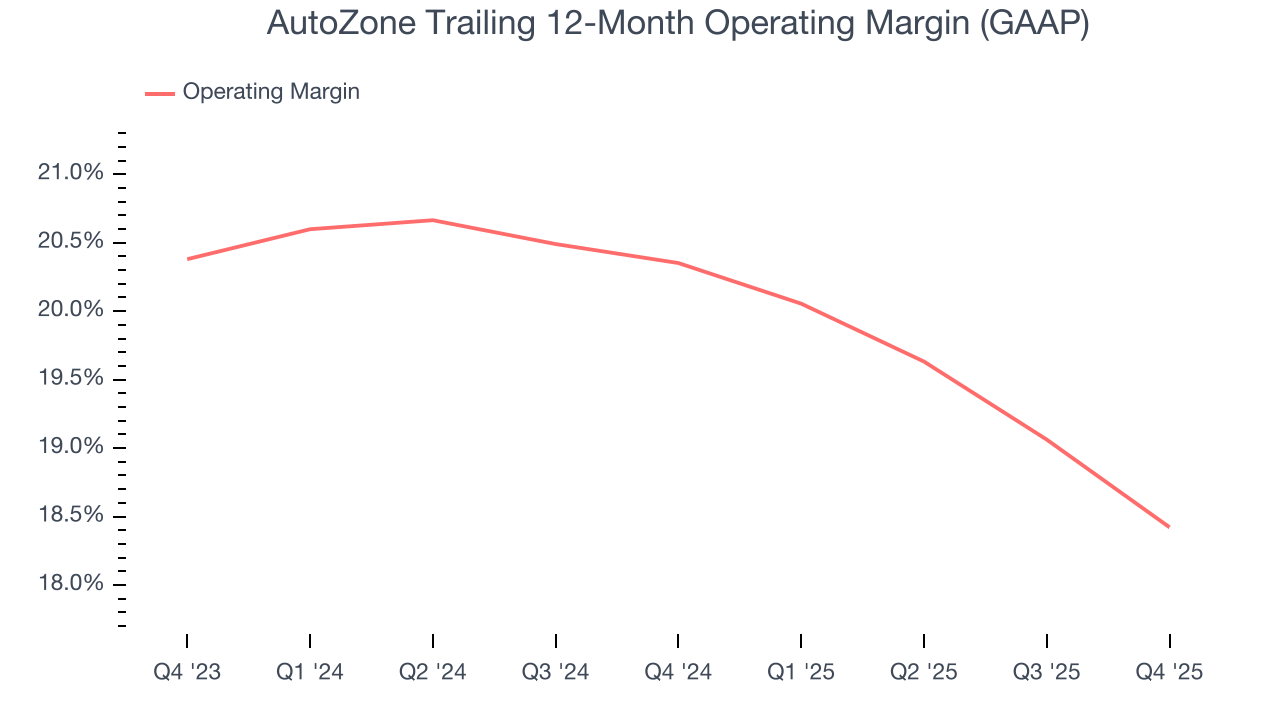
This quarter, AutoZone generated an operating margin profit margin of 16.9%, down 2.7 percentage points year on year. Since AutoZone’s operating margin decreased more than its gross margin, we can assume it was less efficient because expenses such as marketing, and administrative overhead increased.
9. Cash Is King
Although earnings are undoubtedly valuable for assessing company performance, we believe cash is king because you can’t use accounting profits to pay the bills.
AutoZone has shown robust cash profitability, driven by its attractive business model that enables it to reinvest or return capital to investors. The company’s free cash flow margin averaged 9.9% over the last two years, quite impressive for a consumer retail business.
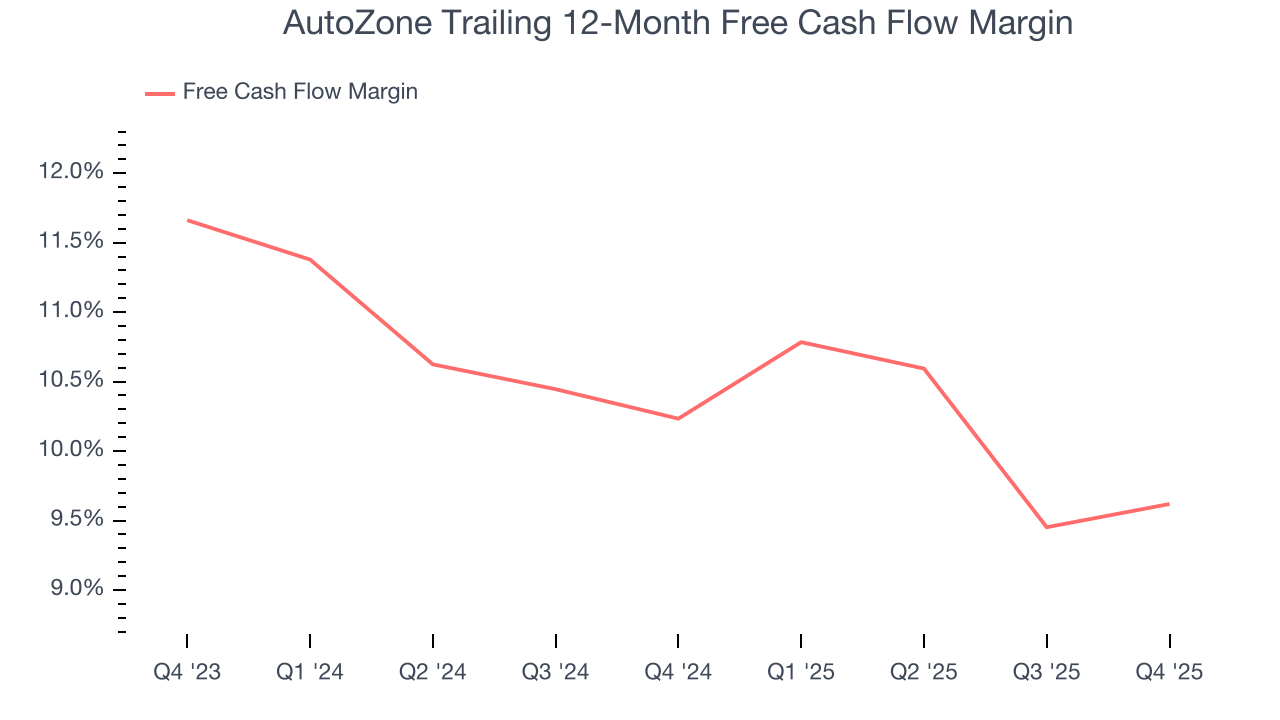
AutoZone’s free cash flow clocked in at $630 million in Q4, equivalent to a 13.6% margin. This cash profitability was in line with the comparable period last year and above its two-year average.
10. Return on Invested Capital (ROIC)
EPS and free cash flow tell us whether a company was profitable while growing its revenue. But was it capital-efficient? A company’s ROIC explains this by showing how much operating profit it makes compared to the money it has raised (debt and equity).
AutoZone’s five-year average ROIC was 40.5%, placing it among the best consumer retail companies. This illustrates its management team’s ability to invest in highly profitable ventures and produce tangible results for shareholders.
11. Balance Sheet Assessment
AutoZone reported $287.6 million of cash and $11.76 billion of debt on its balance sheet in the most recent quarter. As investors in high-quality companies, we primarily focus on two things: 1) that a company’s debt level isn’t too high and 2) that its interest payments are not excessively burdening the business.
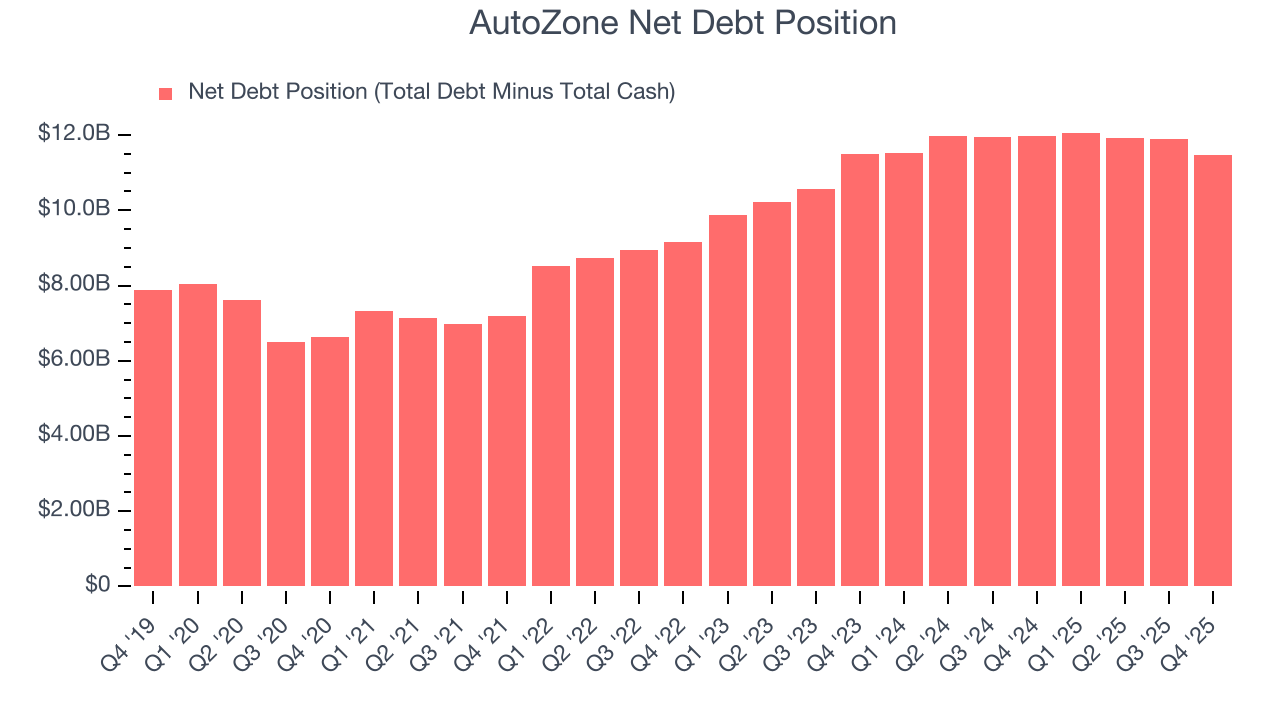
With $4.18 billion of EBITDA over the last 12 months, we view AutoZone’s 2.7× net-debt-to-EBITDA ratio as safe. We also see its $261.9 million of annual interest expenses as appropriate. The company’s profits give it plenty of breathing room, allowing it to continue investing in growth initiatives.
12. Key Takeaways from AutoZone’s Q4 Results
We struggled to find many positives in these results. Its EBITDA missed and its EPS fell short of Wall Street’s estimates. Overall, this quarter could have been better. The stock traded down 1.6% to $3,706 immediately after reporting.
13. Is Now The Time To Buy AutoZone?
Updated: January 24, 2026 at 9:34 PM EST
We think that the latest earnings result is only one piece of the bigger puzzle. If you’re deciding whether to own AutoZone, you should also grasp the company’s longer-term business quality and valuation.
AutoZone is a high-quality business worth owning. Although its revenue growth was a little slower over the last three years, its growth over the next 12 months is expected to be higher. And while its mediocre EPS growth over the last three years shows it’s failed to produce meaningful profits for shareholders, its impressive operating margins show it has a highly efficient business model. In addition, AutoZone’s stellar ROIC suggests it has been a well-run company historically.
AutoZone’s P/E ratio based on the next 12 months is 23.8x. There’s some optimism reflected in this multiple, but we don’t mind owning a high-quality business, even if it’s slightly expensive. Investments like this should be held patiently for at least three to five years as they benefit from the power of long-term compounding, which more than makes up for any short-term price volatility that comes with relatively high valuations.
Wall Street analysts have a consensus one-year price target of $4,213 on the company (compared to the current share price of $3,700).