
Vontier (VNT)
Vontier is up against the odds. Its poor sales growth and falling returns on capital suggest its growth opportunities are shrinking.― StockStory Analyst Team


1. News






2. Summary
Why We Think Vontier Will Underperform
A spin-off of a spin-off, Vontier (NYSE:VNT) provides electronic products and systems to the transportation, automotive, and manufacturing sectors.
- Annual sales declines of 2.1% for the past two years show its products and services struggled to connect with the market during this cycle
- Estimated sales for the next 12 months are flat and imply a softer demand environment
- Core business is underperforming as its organic revenue has disappointed over the past two years, suggesting it might need acquisitions to stimulate growth
Vontier’s quality doesn’t meet our bar. Our attention is focused on better businesses.
Why There Are Better Opportunities Than Vontier








At $36.88 per share, Vontier trades at 11.3x forward P/E. Yes, this valuation multiple is lower than that of other industrials peers, but we’ll remind you that you often get what you pay for.
Our advice is to pay up for elite businesses whose advantages are tailwinds to earnings growth. Don’t get sucked into lower-quality businesses just because they seem like bargains. These mediocre businesses often never achieve a higher multiple as hoped, a phenomenon known as a “value trap”.
3. Vontier (VNT) Research Report: Q3 CY2025 Update
Electronic equipment provider Vontier (NYSE:VNT) beat Wall Street’s revenue expectations in Q3 CY2025, but sales were flat year on year at $752.5 million. On the other hand, next quarter’s revenue guidance of $765 million was less impressive, coming in 2% below analysts’ estimates. Its non-GAAP profit of $0.78 per share was 1.5% above analysts’ consensus estimates.
Vontier (VNT) Q3 CY2025 Highlights:
- Revenue: $752.5 million vs analyst estimates of $747.3 million (flat year on year, 0.7% beat)
- Adjusted EPS: $0.78 vs analyst estimates of $0.77 (1.5% beat)
- Adjusted EBITDA: $172.8 million vs analyst estimates of $171.8 million (23% margin, 0.6% beat)
- Revenue Guidance for Q4 CY2025 is $765 million at the midpoint, below analyst estimates of $780.9 million
- Management slightly raised its full-year Adjusted EPS guidance to $3.18 at the midpoint
- Operating Margin: 18.9%, up from 17.5% in the same quarter last year
- Free Cash Flow Margin: 12%, down from 13.8% in the same quarter last year
- Organic Revenue was flat year on year vs analyst estimates of flat growth (22.9 basis point beat)
- Market Capitalization: $6.27 billion
Company Overview
A spin-off of a spin-off, Vontier (NYSE:VNT) provides electronic products and systems to the transportation, automotive, and manufacturing sectors.
Vontier traces its roots back to its parent company, Fortive (NYSE:FTV), which was spun off from Danaher (NYSE:DHR) in 2016. Vontier was established in 2020 as an independent entity to focus on the mobility and transportation sector and has since expanded.
Specifically, Vontier’s products focus on transportation systems, precision instruments, and automation solutions. In transportation, Vontier offers vehicle detection sensors and electronic tolling platforms. Precision instruments include sensors and tools for measurement in manufacturing processes while its automation solutions offer robotic systems and motion control devices. In essence, the company helps its clients move, measure, and automate in their respective industries.
Vontier sells its products through direct sales, distributors, and partnerships. The company engages in long-term supply agreements and service contracts with companies and government agencies. Vontier's contracts often include recurring maintenance and support services, ensuring sustained revenue streams and strong customer relationships. Additionally, the company offers customized solutions and volume discounts for large-scale projects, particularly in fleet management and fuel dispensing systems.
4. Internet of Things
Industrial Internet of Things (IoT) companies are buoyed by the secular trend of a more connected world. They often specialize in nascent areas such as hardware and services for factory automation, fleet tracking, or smart home technologies. Those who play their cards right can generate recurring subscription revenues by providing cloud-based software services, boosting their margins. On the other hand, if the technologies these companies have invested in don’t pan out, they may have to make costly pivots.
Competitors offering similar products include Honeywell (NYSE:HON), Samsara (NYSE:IOT), and Parker-Hannifin (NYSE:PH).
5. Revenue Growth
Reviewing a company’s long-term sales performance reveals insights into its quality. Any business can have short-term success, but a top-tier one grows for years. Regrettably, Vontier’s sales grew at a sluggish 2.9% compounded annual growth rate over the last five years. This fell short of our benchmarks and is a poor baseline for our analysis.
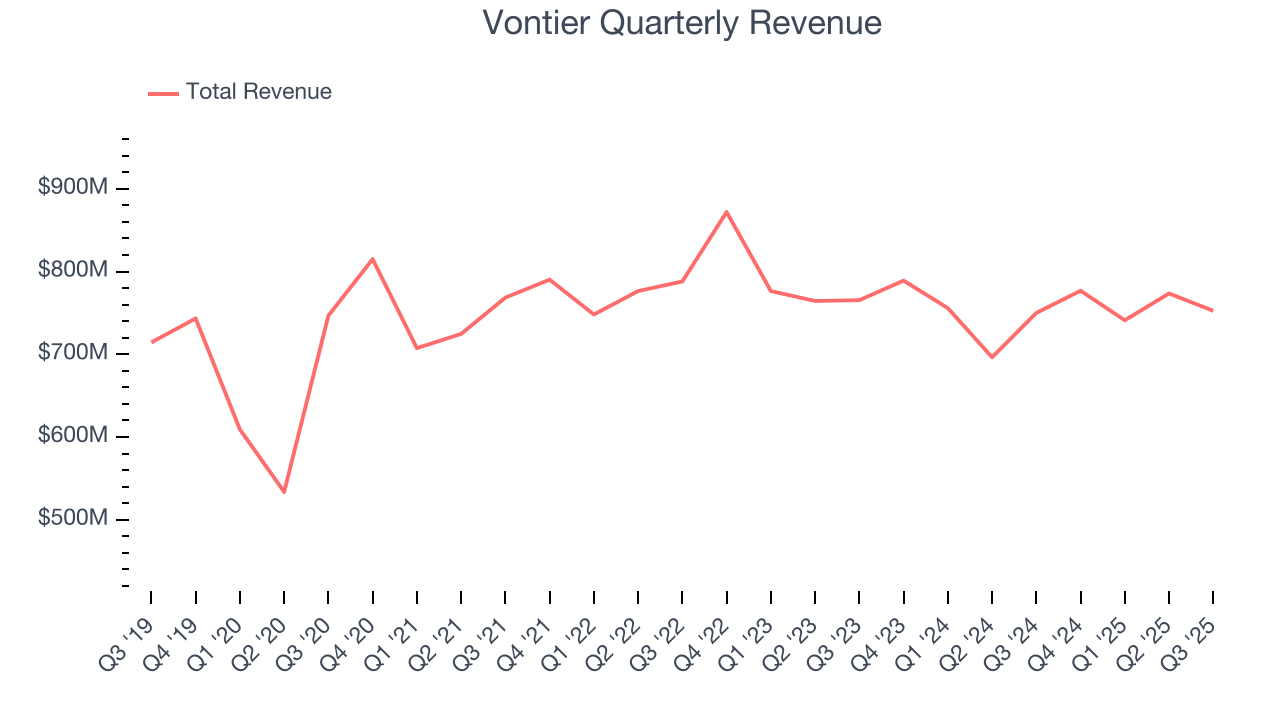
We at StockStory place the most emphasis on long-term growth, but within industrials, a half-decade historical view may miss cycles, industry trends, or a company capitalizing on catalysts such as a new contract win or a successful product line. Vontier’s performance shows it grew in the past but relinquished its gains over the last two years, as its revenue fell by 2.1% annually. Vontier isn’t alone in its struggles as the Internet of Things industry experienced a cyclical downturn, with many similar businesses observing lower sales at this time. 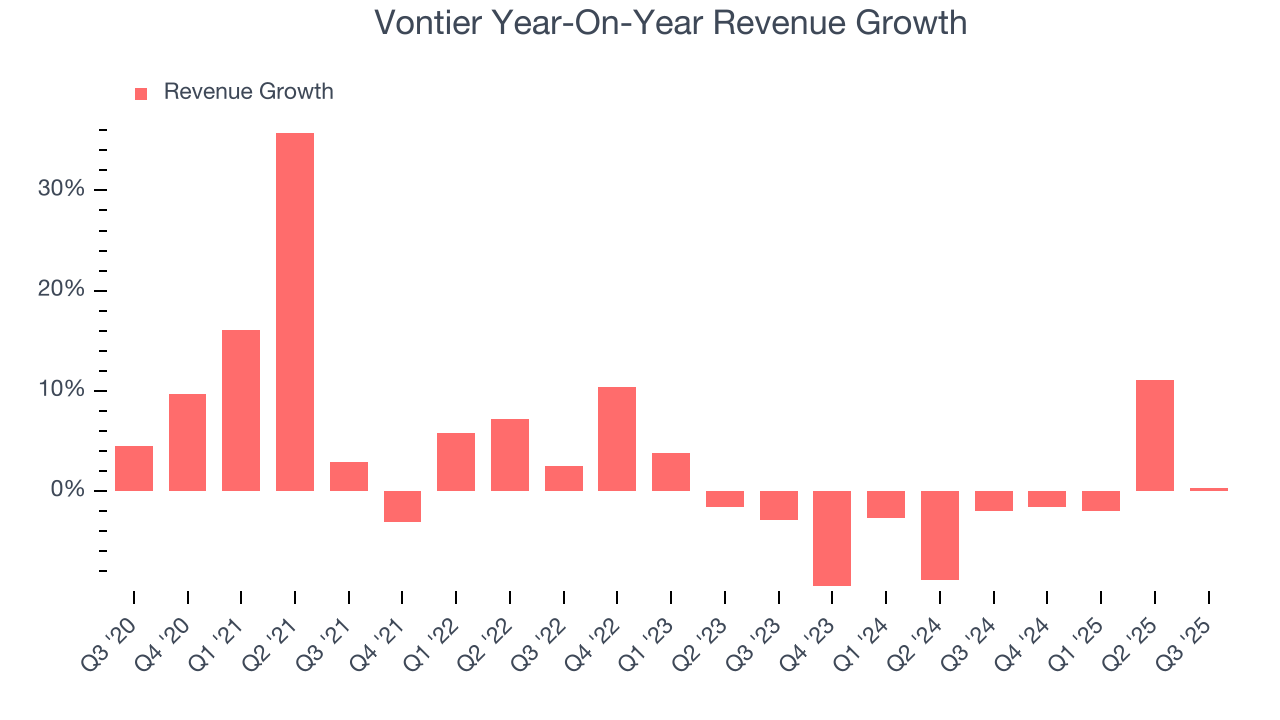
Vontier also reports organic revenue, which strips out one-time events like acquisitions and currency fluctuations that don’t accurately reflect its fundamentals. Over the last two years, Vontier’s organic revenue averaged 1.3% year-on-year growth. Because this number is better than its two-year revenue growth, we can see that some mixture of divestitures and foreign exchange rates dampened its headline results. 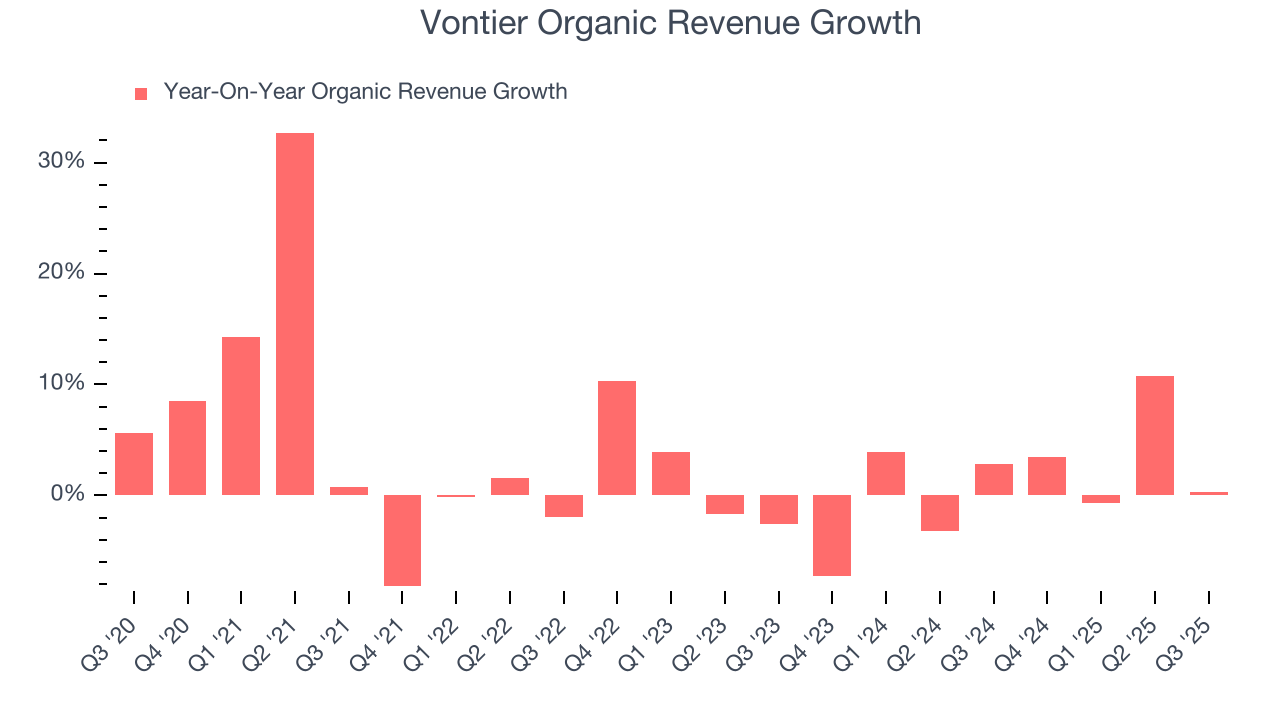
This quarter, Vontier’s $752.5 million of revenue was flat year on year but beat Wall Street’s estimates by 0.7%. Company management is currently guiding for a 1.5% year-on-year decline in sales next quarter.
Looking further ahead, sell-side analysts expect revenue to grow 4% over the next 12 months. Although this projection suggests its newer products and services will catalyze better top-line performance, it is still below the sector average.
6. Gross Margin & Pricing Power
Vontier has best-in-class unit economics for an industrials company, enabling it to invest in areas such as research and development. Its margin also signals it sells differentiated products, not commodities. As you can see below, it averaged an elite 46.1% gross margin over the last five years. Said differently, roughly $46.14 was left to spend on selling, marketing, R&D, and general administrative overhead for every $100 in revenue. 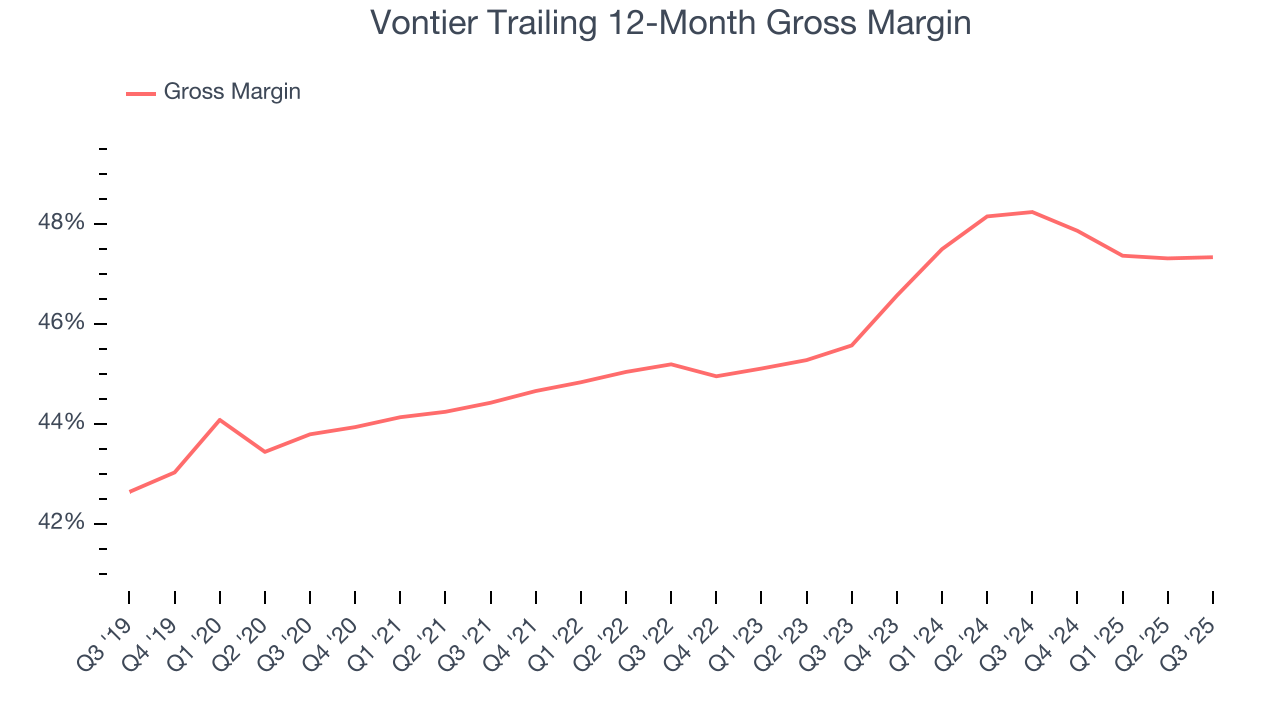
Vontier produced a 47.3% gross profit margin in Q3, in line with the same quarter last year. Zooming out, the company’s full-year margin has remained steady over the past 12 months, suggesting its input costs (such as raw materials and manufacturing expenses) have been stable and it isn’t under pressure to lower prices.
7. Operating Margin
Vontier has been a well-oiled machine over the last five years. It demonstrated elite profitability for an industrials business, boasting an average operating margin of 18.4%. This result isn’t surprising as its high gross margin gives it a favorable starting point.
Analyzing the trend in its profitability, Vontier’s operating margin decreased by 1.5 percentage points over the last five years. This raises questions about the company’s expense base because its revenue growth should have given it leverage on its fixed costs, resulting in better economies of scale and profitability.
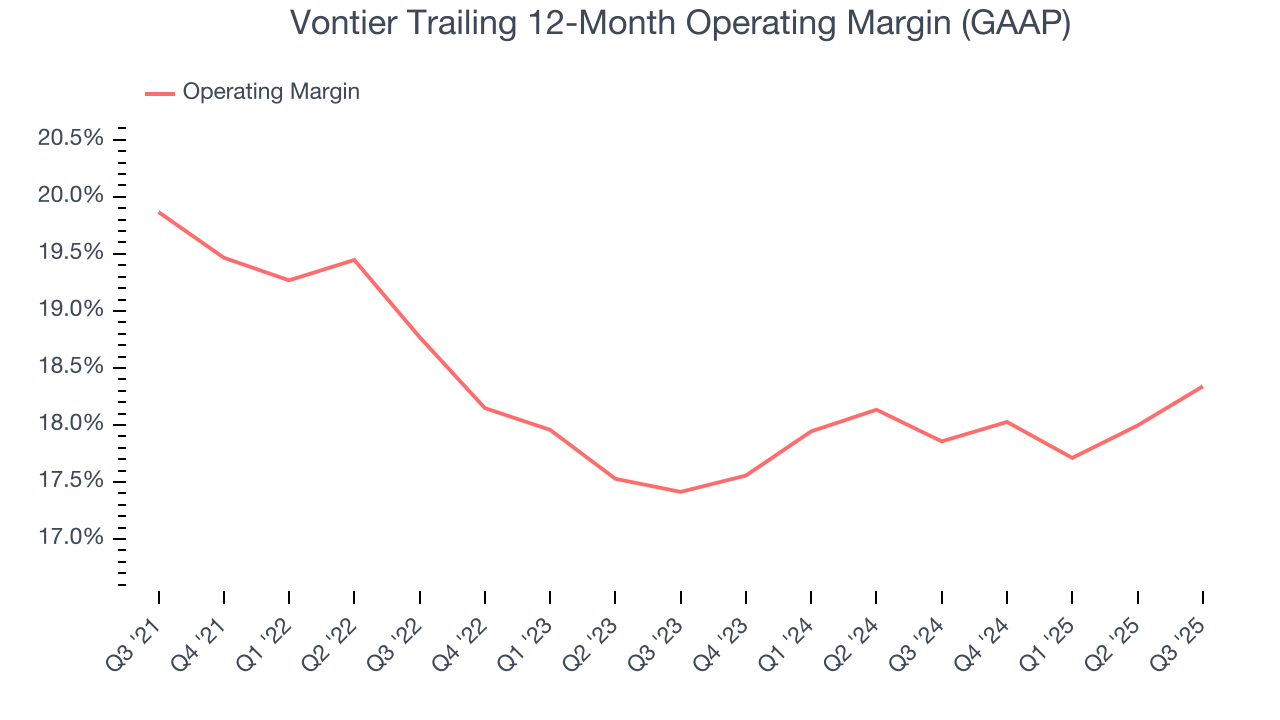
In Q3, Vontier generated an operating margin profit margin of 18.9%, up 1.4 percentage points year on year. The increase was encouraging, and because its operating margin rose more than its gross margin, we can infer it was more efficient with expenses such as marketing, R&D, and administrative overhead.
8. Earnings Per Share
We track the long-term change in earnings per share (EPS) for the same reason as long-term revenue growth. Compared to revenue, however, EPS highlights whether a company’s growth is profitable.
Vontier’s full-year EPS grew at a weak 1.9% compounded annual growth rate over the last four years, worse than the broader industrials sector.
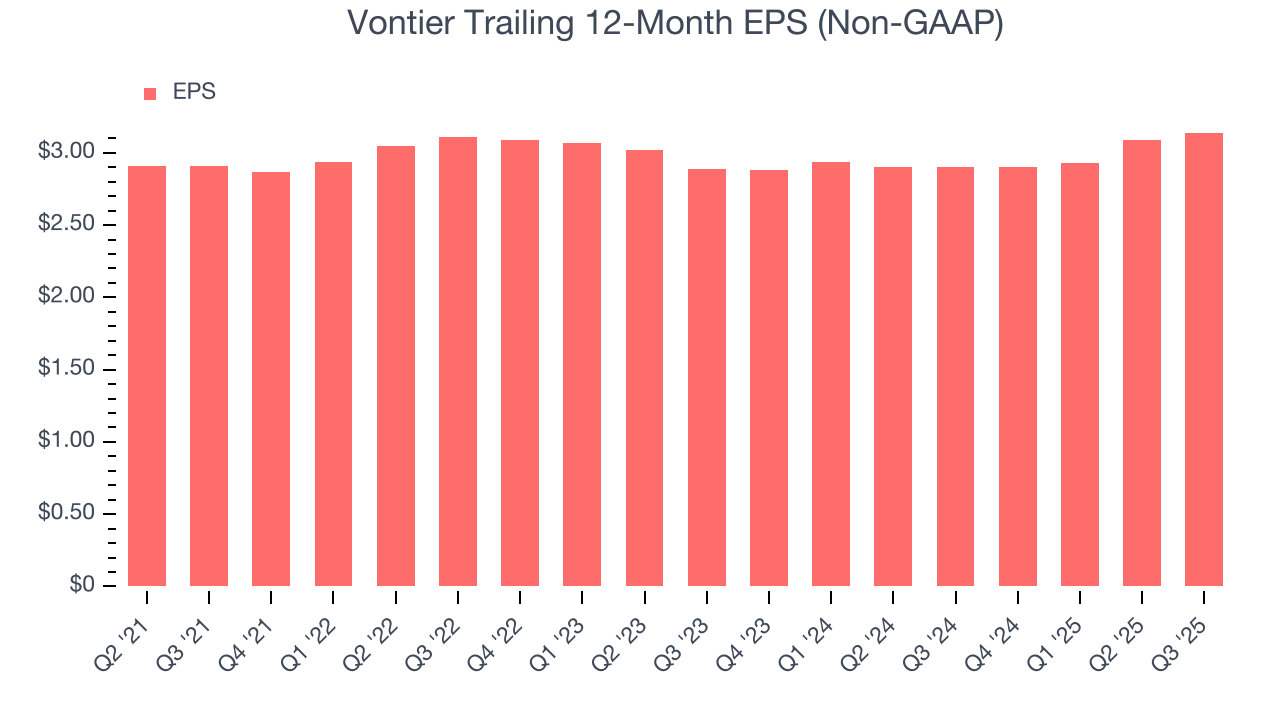
Like with revenue, we analyze EPS over a shorter period to see if we are missing a change in the business.
Vontier’s EPS grew at an unimpressive 4.2% compounded annual growth rate over the last two years. On the bright side, this performance was higher than its 2.1% annualized revenue declines and tells us management adapted its cost structure in response to a challenging demand environment.
We can take a deeper look into Vontier’s earnings to better understand the drivers of its performance. A two-year view shows that Vontier has repurchased its stock, shrinking its share count by 5.4%. This tells us its EPS outperformed its revenue not because of increased operational efficiency but financial engineering, as buybacks boost per share earnings. 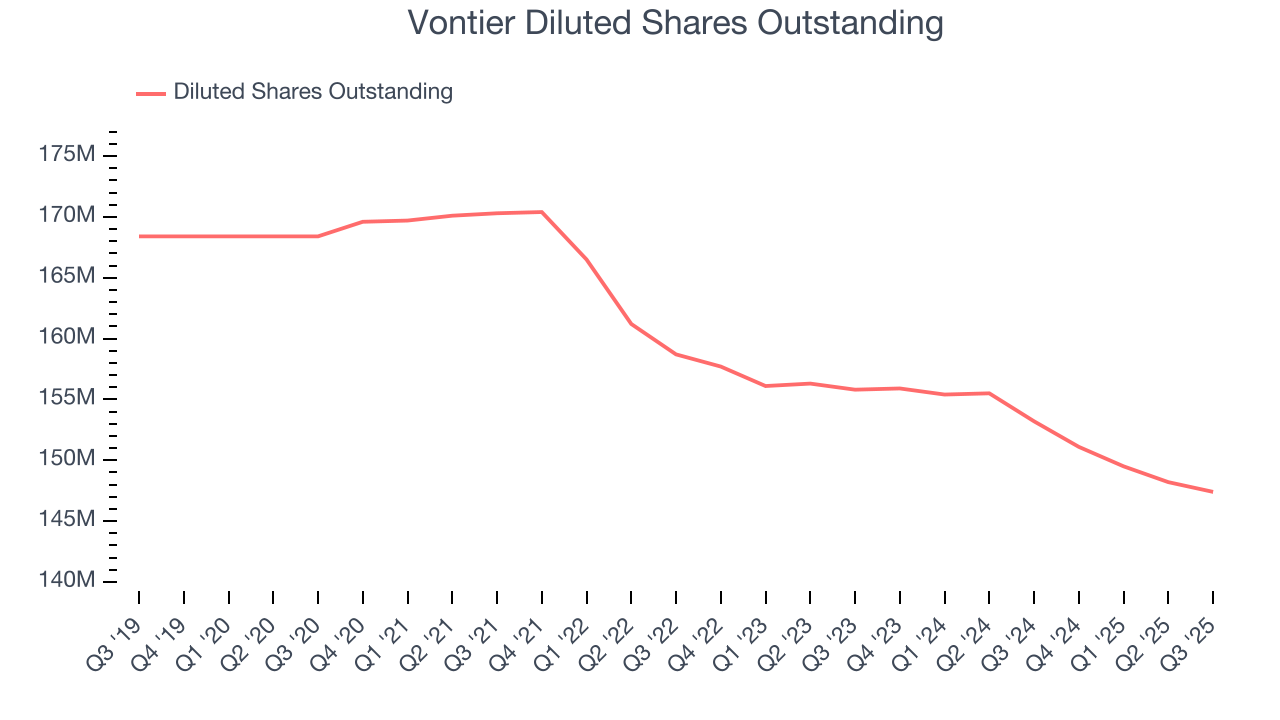
In Q3, Vontier reported adjusted EPS of $0.78, up from $0.73 in the same quarter last year. This print beat analysts’ estimates by 1.5%. Over the next 12 months, Wall Street expects Vontier’s full-year EPS of $3.14 to grow 9.4%.
9. Cash Is King
Free cash flow isn't a prominently featured metric in company financials and earnings releases, but we think it's telling because it accounts for all operating and capital expenses, making it tough to manipulate. Cash is king.
Vontier has shown robust cash profitability, enabling it to comfortably ride out cyclical downturns while investing in plenty of new offerings and returning capital to investors. The company’s free cash flow margin averaged 12.4% over the last five years, quite impressive for an industrials business.
Taking a step back, we can see that Vontier’s margin dropped by 3.3 percentage points during that time. It may have ticked higher more recently, but shareholders are likely hoping for its margin to at least revert to its historical level. If the longer-term trend returns, it could signal increasing investment needs and capital intensity.
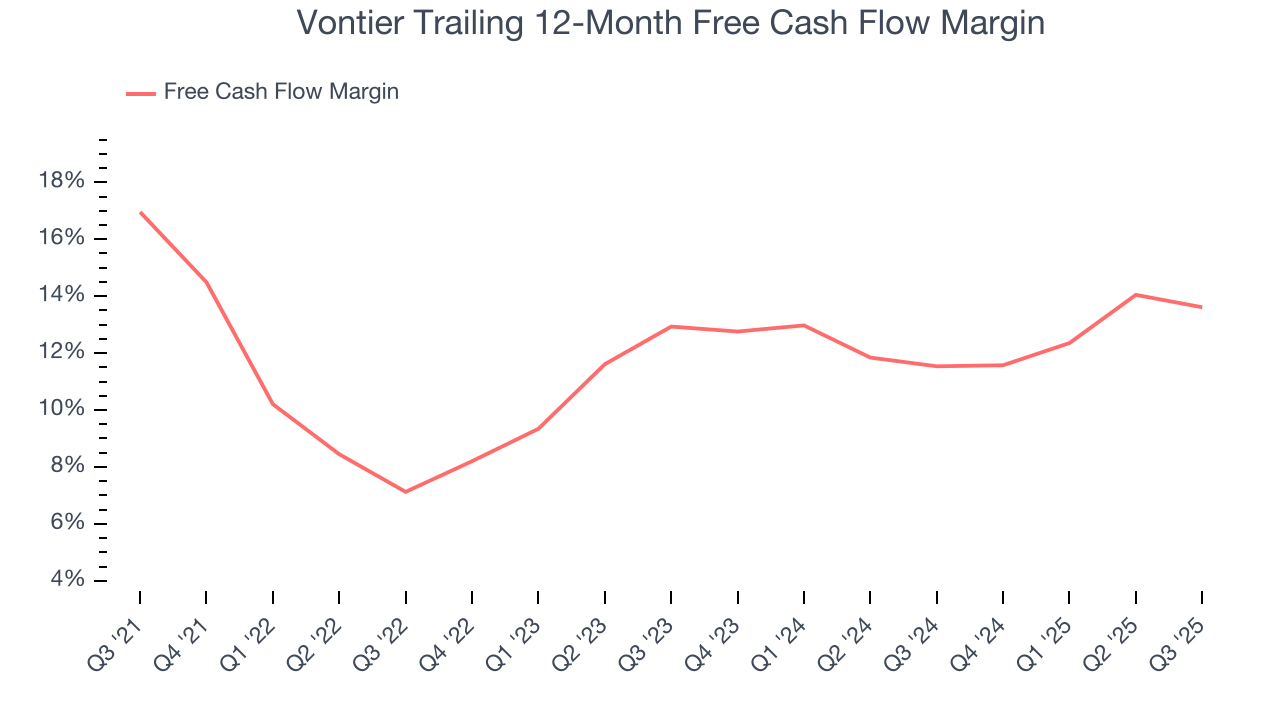
Vontier’s free cash flow clocked in at $90.3 million in Q3, equivalent to a 12% margin. The company’s cash profitability regressed as it was 1.8 percentage points lower than in the same quarter last year, suggesting its historical struggles have dragged on.
10. Return on Invested Capital (ROIC)
EPS and free cash flow tell us whether a company was profitable while growing its revenue. But was it capital-efficient? A company’s ROIC explains this by showing how much operating profit it makes compared to the money it has raised (debt and equity).
Although Vontier hasn’t been the highest-quality company lately because of its poor revenue and EPS performance, it historically found a few growth initiatives that worked out well. Its five-year average ROIC was 17.4%, impressive for an industrials business.
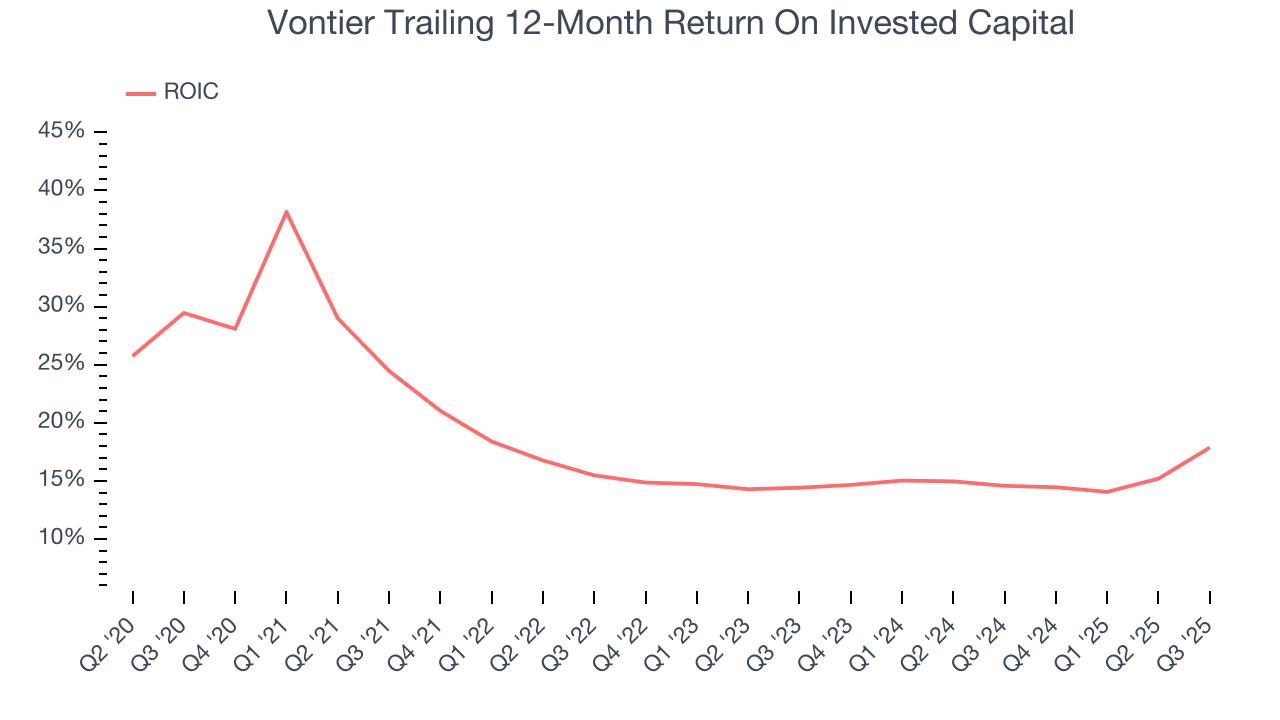
We like to invest in businesses with high returns, but the trend in a company’s ROIC is what often surprises the market and moves the stock price. Over the last few years, Vontier’s ROIC averaged 3.8 percentage point decreases each year. We like what management has done in the past, but its declining returns are perhaps a symptom of fewer profitable growth opportunities.
11. Balance Sheet Assessment
Vontier reported $433.8 million of cash and $2.13 billion of debt on its balance sheet in the most recent quarter. As investors in high-quality companies, we primarily focus on two things: 1) that a company’s debt level isn’t too high and 2) that its interest payments are not excessively burdening the business.
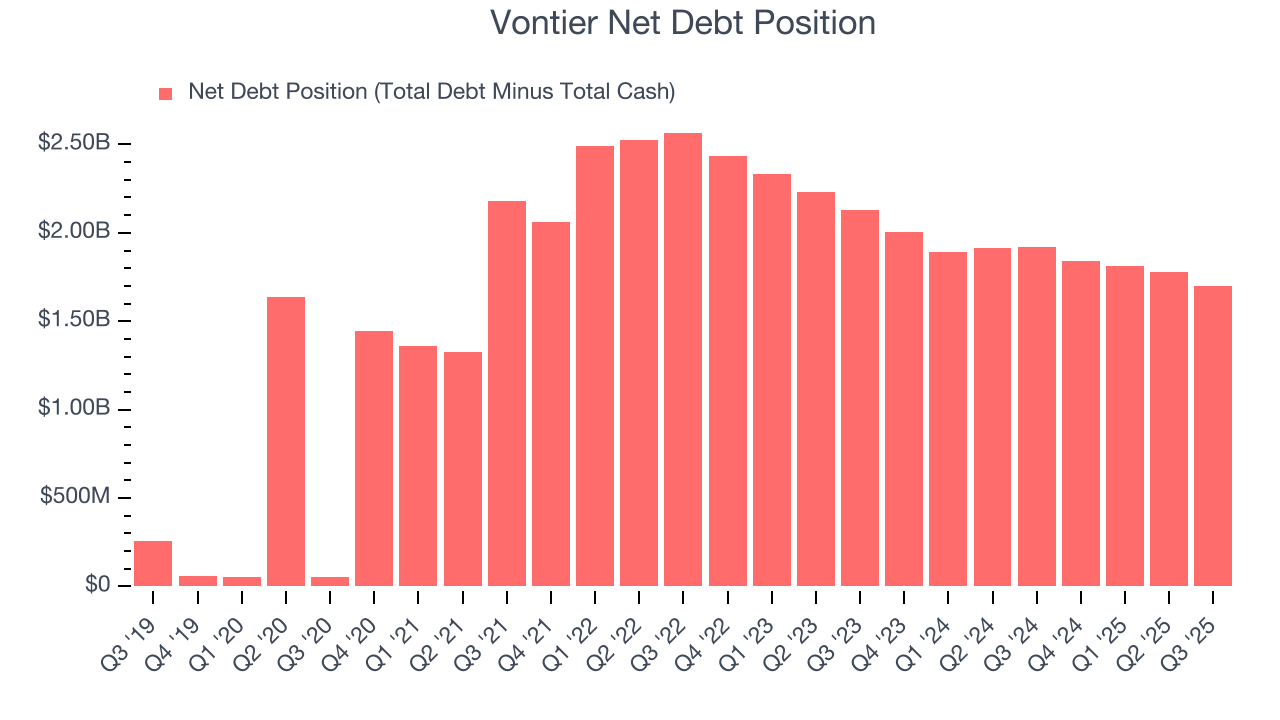
With $706 million of EBITDA over the last 12 months, we view Vontier’s 2.4× net-debt-to-EBITDA ratio as safe. We also see its $34.4 million of annual interest expenses as appropriate. The company’s profits give it plenty of breathing room, allowing it to continue investing in growth initiatives.
12. Key Takeaways from Vontier’s Q3 Results
It was good to see Vontier narrowly top analysts’ revenue expectations this quarter. On the other hand, its EPS guidance for next quarter missed and its revenue guidance for next quarter fell short of Wall Street’s estimates. The guidance is nudging analysts and investors to lower their forward projections. The stock traded down 3.7% to $41.20 immediately following the results.
13. Is Now The Time To Buy Vontier?
Updated: January 24, 2026 at 11:00 PM EST
Before investing in or passing on Vontier, we urge you to understand the company’s business quality (or lack thereof), valuation, and the latest quarterly results - in that order.
We see the value of companies helping their customers, but in the case of Vontier, we’re out. First off, its revenue growth was weak over the last five years, and analysts expect its demand to deteriorate over the next 12 months. And while its admirable gross margins indicate the mission-critical nature of its offerings, the downside is its diminishing returns show management's prior bets haven't worked out. On top of that, its organic revenue growth has disappointed.
Vontier’s P/E ratio based on the next 12 months is 11.3x. This valuation is reasonable, but the company’s shaky fundamentals present too much downside risk. There are better investments elsewhere.
Wall Street analysts have a consensus one-year price target of $46.23 on the company (compared to the current share price of $36.88).
Although the price target is bullish, readers should exercise caution because analysts tend to be overly optimistic. The firms they work for, often big banks, have relationships with companies that extend into fundraising, M&A advisory, and other rewarding business lines. As a result, they typically hesitate to say bad things for fear they will lose out. We at StockStory do not suffer from such conflicts of interest, so we’ll always tell it like it is.