Monster (MNST)
Monster is in a league of its own. Its high free cash flow margin and returns on capital show it can produce cash and invest it wisely.― StockStory Analyst Team


1. News


2. Summary
Why We Like Monster
Founded in 2002 as a natural soda and juice company, Monster Beverage (NASDAQ:MNST) is a pioneer of the energy drink category, and its Monster Energy brand targets a young, active demographic.
- Successful business model is illustrated by its impressive operating margin, and its profits increased over the last year as it scaled
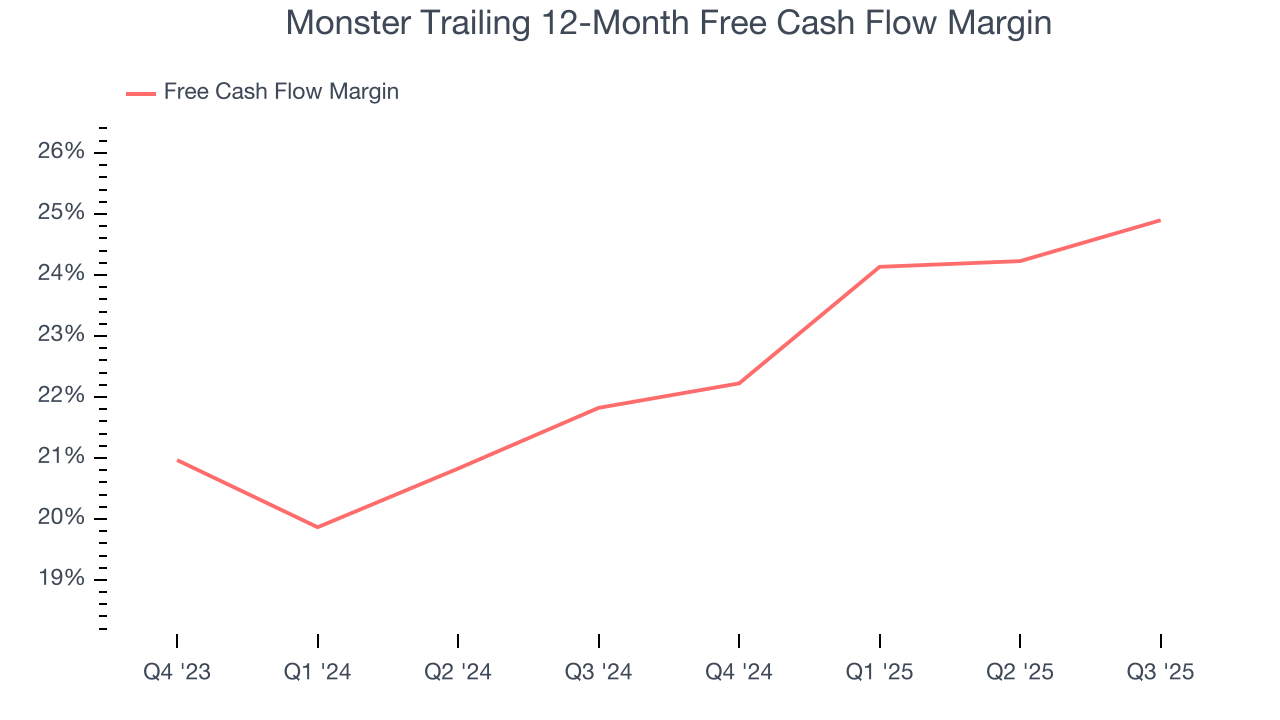
- Strong free cash flow margin of 23% gives it the option to reinvest, repurchase shares, or pay dividends, and its rising cash conversion increases its margin of safety
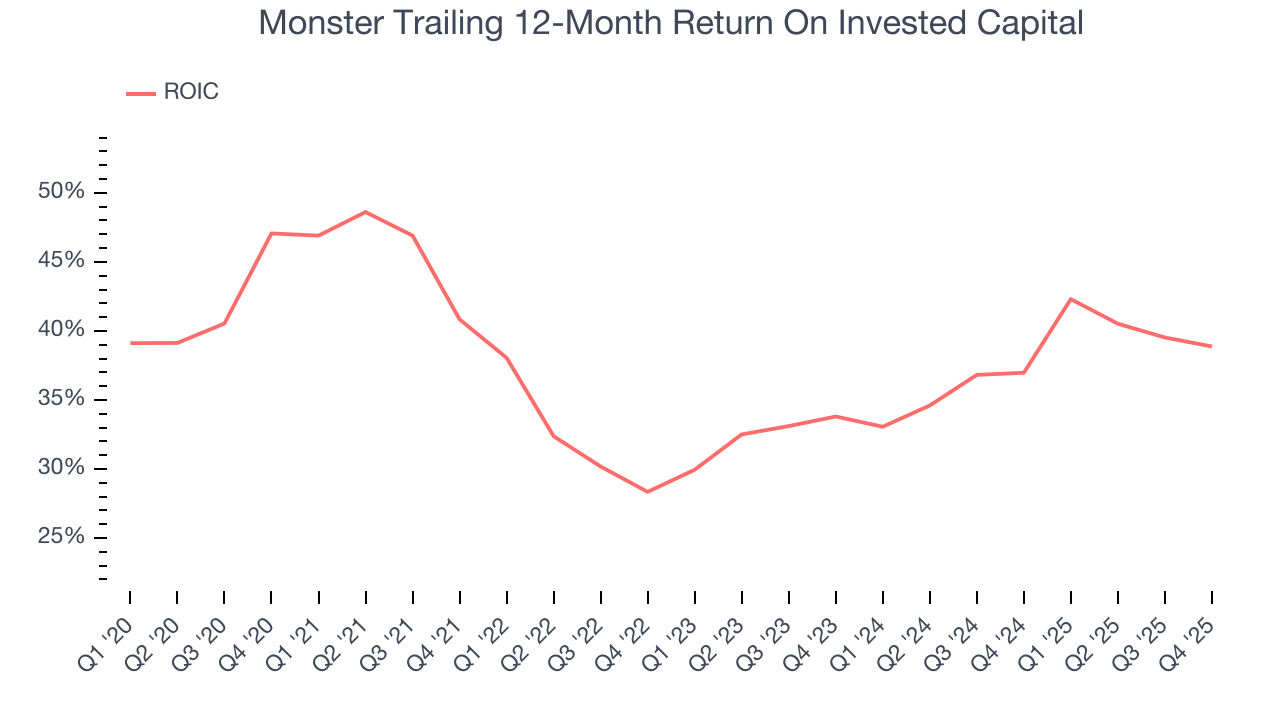
- Market-beating returns on capital illustrate that management has a knack for investing in profitable ventures, and its returns are growing as it capitalizes on even better market opportunities
Monster is at the top of our list. This is easily one of the top consumer staples stocks.
Is Now The Time To Buy Monster?



Monster is trading at $74.30 per share, or 32.8x forward P/E. There’s no arguing the market has lofty expectations given its premium multiple.
Are you a fan of the business model? If so, you can own a smaller position, as high-quality companies tend to outperform the market over a long-term period regardless of entry price.
3. Monster (MNST) Research Report: Q4 CY2025 Update
Energy drink company Monster Beverage (NASDAQ:MNST) reported Q4 CY2025 results beating Wall Street’s revenue expectations, with sales up 17.6% year on year to $2.13 billion. Its non-GAAP profit of $0.51 per share was 4.7% above analysts’ consensus estimates.
Monster (MNST) Q4 CY2025 Highlights:
- Revenue: $2.13 billion vs analyst estimates of $2.04 billion (17.6% year-on-year growth, 4.6% beat)
- Adjusted EPS: $0.51 vs analyst estimates of $0.49 (4.7% beat)
- Operating Margin: 25.5%, up from 21% in the same quarter last year
- Market Capitalization: $83.45 billion
Company Overview
Founded in 2002 as a natural soda and juice company, Monster Beverage (NASDAQ:MNST) is a pioneer of the energy drink category, and its Monster Energy brand targets a young, active demographic.
The energy drink category was new and catered to a niche demographic early in the company’s history. Its beverages sought to disrupt the huge soda market as consumers began to shy away from drinks with too much sugar. Monster helped create and capitalized on the demand for better-for-you functional beverages.
The unique selling proposition of Monster Beverage is a reliable energy source with a refreshing taste. This is achieved through a proprietary blend of caffeine, taurine, B vitamins, and herbal extracts. Monster also partners with popular and alternative sports to further cement the brand image as one for active lifestyles, not couch potatoes who want something to wash down some fast food with.
Monster Beverage's products have achieved widespread distribution over time and can be found on the shelves of convenience stores, gas stations, supermarkets, and mass merchandise retailers. Sports arenas, movie theaters, and other venues also sell Monster's products. Lastly, the company launched its e-commerce platform in 2015, allowing consumers to purchase beverages and merchandise directly from their website.
4. Beverages, Alcohol, and Tobacco
These companies' performance is influenced by brand strength, marketing strategies, and shifts in consumer preferences. Changing consumption patterns are particularly relevant and can be seen in the rise of cannabis, craft beer, and vaping or the steady decline of soda and cigarettes. Companies that spend on innovation to meet consumers where they are with regards to trends can reap huge demand benefits while those who ignore trends can see stagnant volumes. Finally, with the advent of the social media, the cost of starting a brand from scratch is much lower, meaning that new entrants can chip away at the market shares of established players.
Competitors that offer energy drinks or alternatives to energy drinks include Rockstar Energy from PepsiCo (NASDAQ:PEP), Coca-Cola Energy and Full Throttle from Coca-Cola (NYSE:KO), and Celsius (NASDAQ:CELH).
5. Revenue Growth
Reviewing a company’s long-term sales performance reveals insights into its quality. Any business can have short-term success, but a top-tier one grows for years.
With $8.29 billion in revenue over the past 12 months, Monster is one of the larger consumer staples companies and benefits from a well-known brand that influences purchasing decisions.
As you can see below, Monster’s sales grew at a decent 9.5% compounded annual growth rate over the last three years. This shows its offerings generated slightly more demand than the average consumer staples company, a helpful starting point for our analysis.
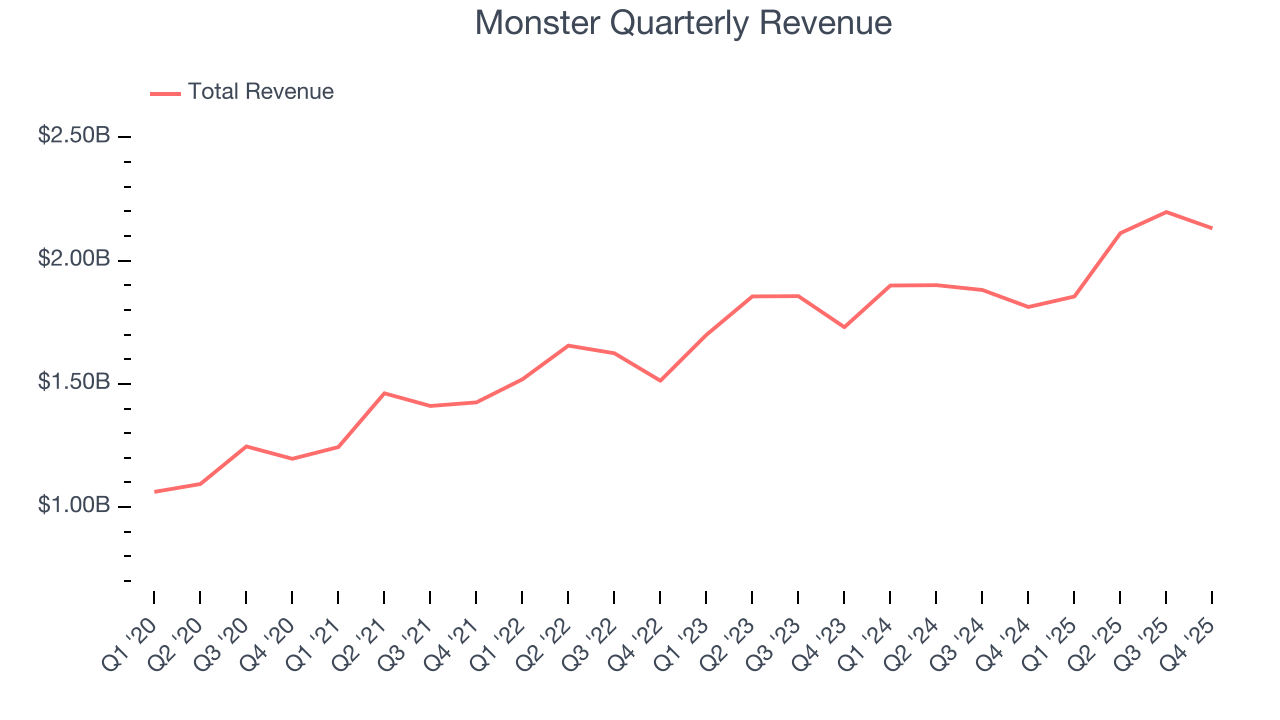
This quarter, Monster reported year-on-year revenue growth of 17.6%, and its $2.13 billion of revenue exceeded Wall Street’s estimates by 4.6%.
Looking ahead, sell-side analysts expect revenue to grow 8.4% over the next 12 months, similar to its three-year rate. Still, this projection is noteworthy and indicates the market is forecasting success for its products.
6. Gross Margin & Pricing Power
All else equal, we prefer higher gross margins because they usually indicate that a company sells more differentiated products, has a stronger brand, and commands pricing power.
Monster has best-in-class unit economics for a consumer staples company, enabling it to invest in areas such as marketing and talent. As you can see below, it averaged an elite 55% gross margin over the last two years. That means Monster only paid its suppliers $45.01 for every $100 in revenue. 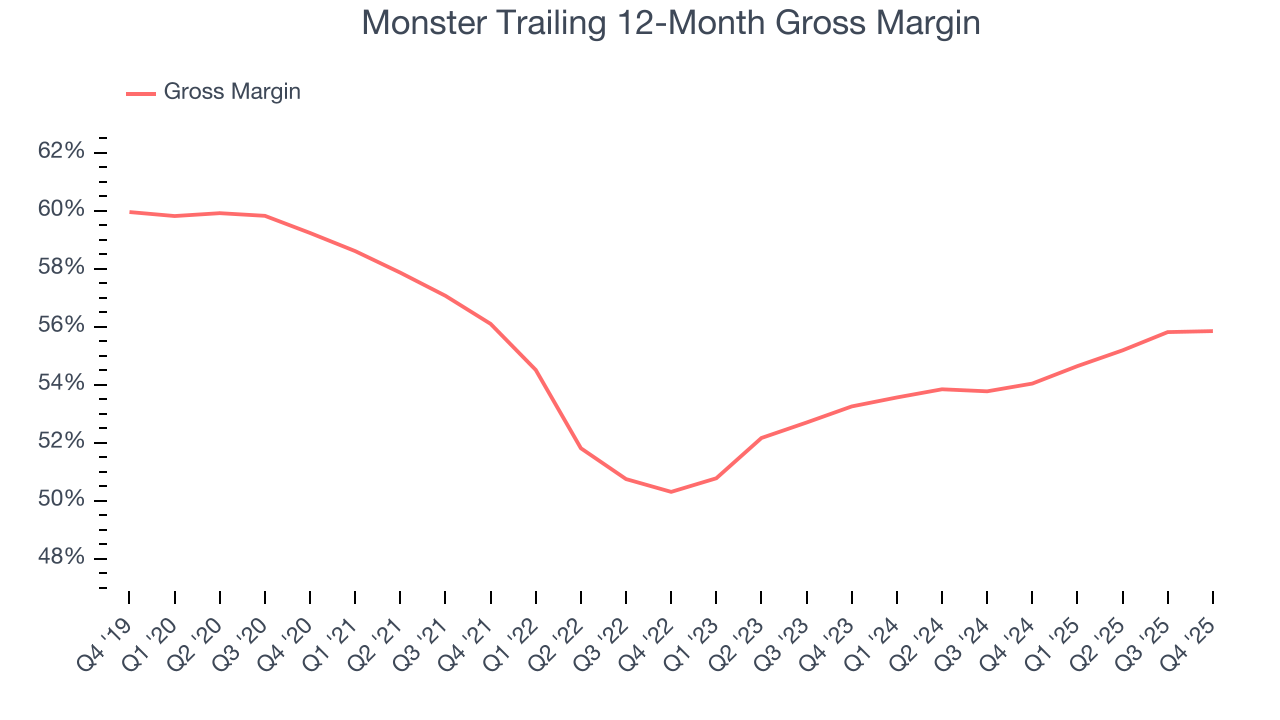
This quarter, Monster’s gross profit margin was 55.5%, in line with the same quarter last year. On a wider time horizon, Monster’s full-year margin has been trending up over the past 12 months, increasing by 1.8 percentage points. If this move continues, it could suggest better unit economics due to more leverage from its growing sales on the fixed portion of its cost of goods sold (such as manufacturing expenses).
7. Operating Margin
Operating margin is a key measure of profitability. Think of it as net income - the bottom line - excluding the impact of taxes and interest on debt, which are less connected to business fundamentals.
Monster has been a well-oiled machine over the last two years. It demonstrated elite profitability for a consumer staples business, boasting an average operating margin of 27.7%. This result isn’t surprising as its high gross margin gives it a favorable starting point.
Analyzing the trend in its profitability, Monster’s operating margin rose by 3.7 percentage points over the last year, as its sales growth gave it operating leverage.
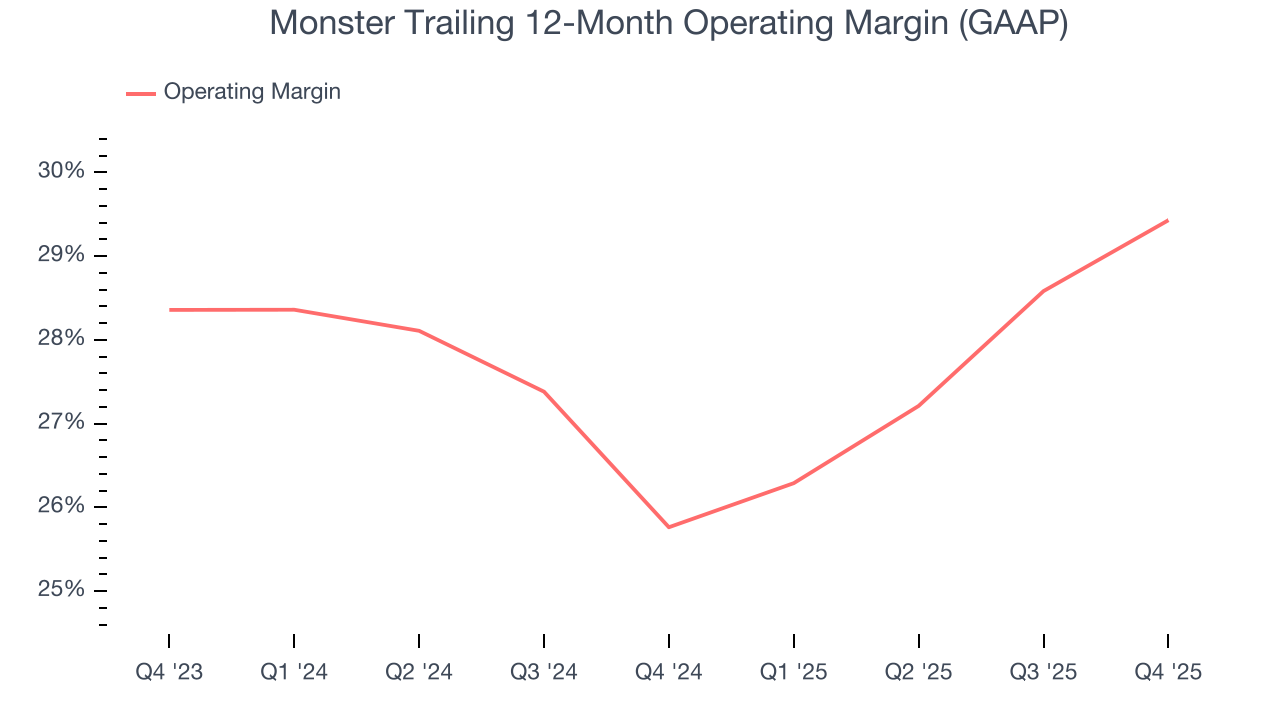
This quarter, Monster generated an operating margin profit margin of 25.5%, up 4.4 percentage points year on year. The increase was encouraging, and because its operating margin rose more than its gross margin, we can infer it was more efficient with expenses such as marketing, and administrative overhead.
8. Earnings Per Share
Revenue trends explain a company’s historical growth, but the long-term change in earnings per share (EPS) points to the profitability of that growth – for example, a company could inflate its sales through excessive spending on advertising and promotions.
Monster’s EPS grew at a spectacular 21.7% compounded annual growth rate over the last three years, higher than its 9.5% annualized revenue growth. However, this alone doesn’t tell us much about its business quality because its operating margin didn’t improve.
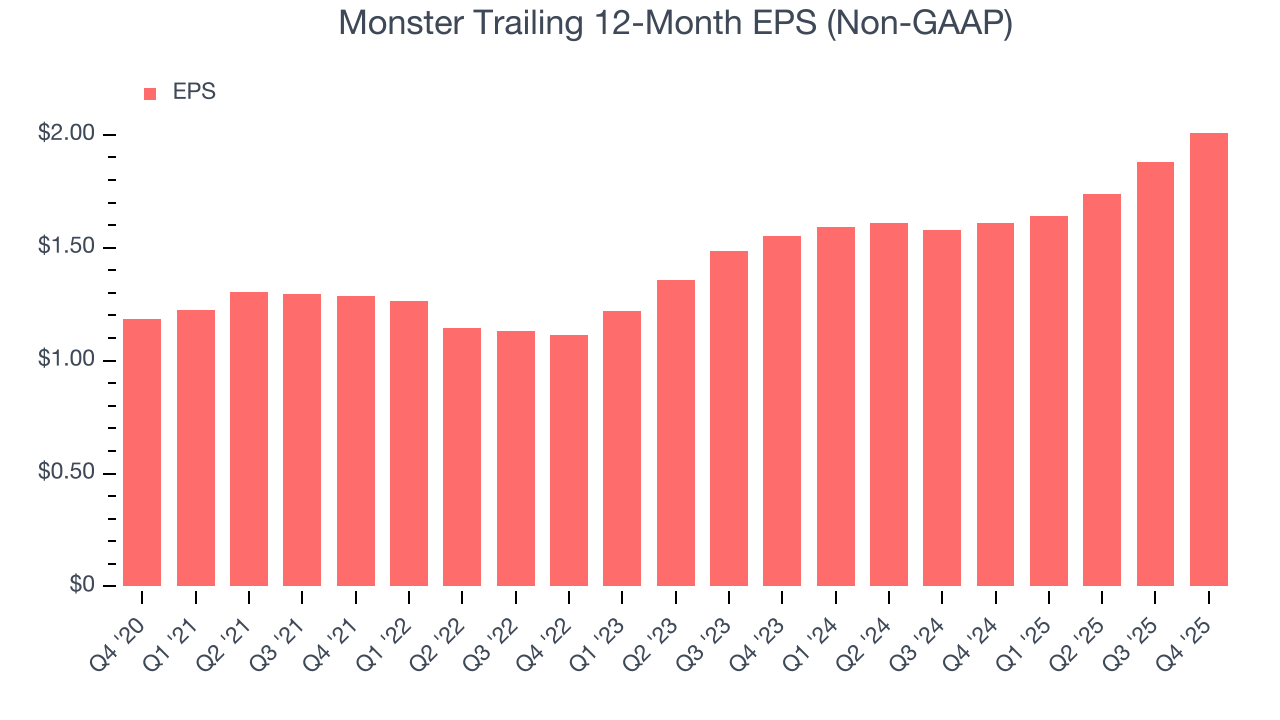
In Q4, Monster reported adjusted EPS of $0.51, up from $0.38 in the same quarter last year. This print beat analysts’ estimates by 4.7%. Over the next 12 months, Wall Street expects Monster’s full-year EPS of $2.01 to grow 12.9%.
9. Cash Is King
Free cash flow isn't a prominently featured metric in company financials and earnings releases, but we think it's telling because it accounts for all operating and capital expenses, making it tough to manipulate. Cash is king.
Monster has shown terrific cash profitability, driven by its lucrative business model that enables it to reinvest, return capital to investors, and stay ahead of the competition. The company’s free cash flow margin was among the best in the consumer staples sector, averaging 24% over the last two years.
10. Return on Invested Capital (ROIC)
EPS and free cash flow tell us whether a company was profitable while growing its revenue. But was it capital-efficient? A company’s ROIC explains this by showing how much operating profit it makes compared to the money it has raised (debt and equity).
Monster’s five-year average ROIC was 35.8%, placing it among the best consumer staples companies. This illustrates its management team’s ability to invest in highly profitable ventures and produce tangible results for shareholders.
11. Balance Sheet Assessment
One of the best ways to mitigate bankruptcy risk is to hold more cash than debt.
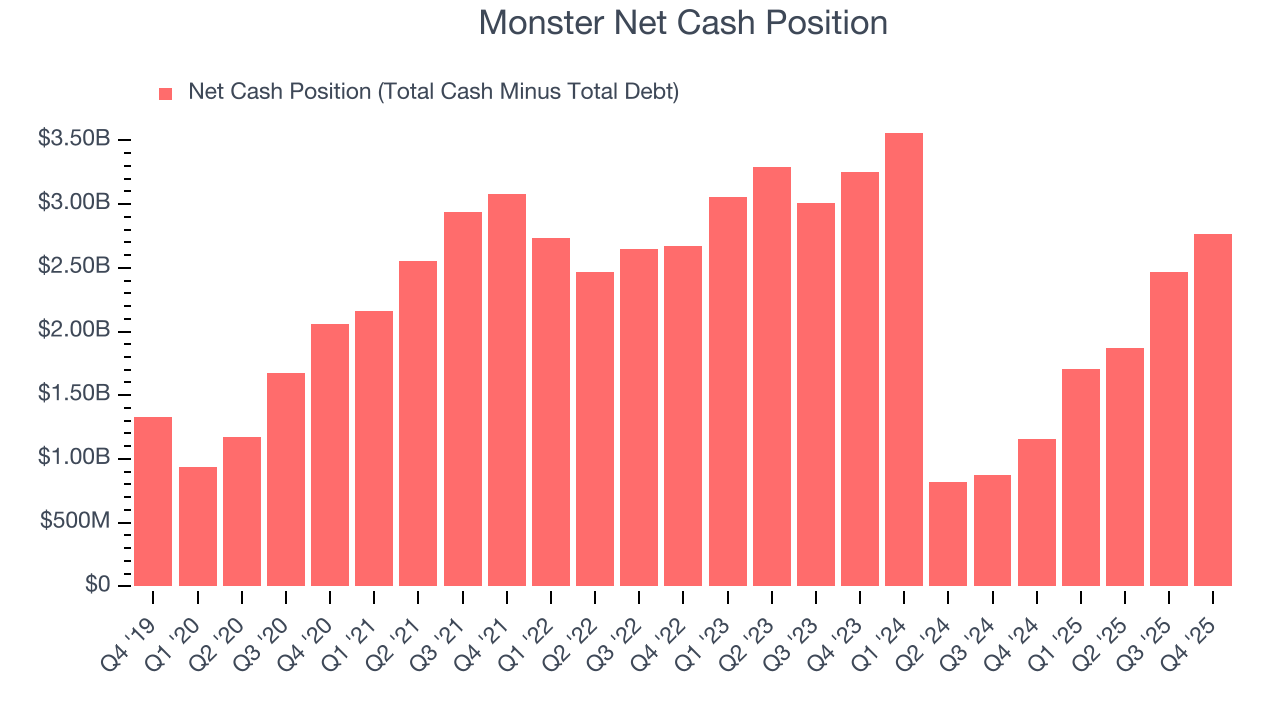
Monster is a profitable, well-capitalized company with $2.77 billion of cash and no debt. This position is 3.3% of its market cap and gives it the freedom to borrow money, return capital to shareholders, or invest in growth initiatives. Leverage is not an issue here.
12. Key Takeaways from Monster’s Q4 Results
We enjoyed seeing Monster beat analysts’ revenue expectations this quarter. We were also glad its EPS outperformed Wall Street’s estimates. On the other hand, its gross margin slightly missed. Overall, we think this was a decent quarter with some key metrics above expectations. The market seemed to be hoping for more, and the stock traded down 3% to $84.13 immediately after reporting.
13. Is Now The Time To Buy Monster?
Updated: March 19, 2026 at 11:06 PM EDT
We think that the latest earnings result is only one piece of the bigger puzzle. If you’re deciding whether to own Monster, you should also grasp the company’s longer-term business quality and valuation.
Monster is an amazing business ranking highly on our list. To begin with, its revenue growth was solid over the last three years, and its growth over the next 12 months is expected to accelerate. On top of that, its impressive operating margins show it has a highly efficient business model, and its powerful free cash flow generation enables it to stay ahead of the competition through consistent reinvestment of profits.
Monster’s P/E ratio based on the next 12 months is 32.8x. Some good news is baked into the stock given its multiple, but we’ll happily own what we believe is one of the best businesses in our coverage. We’re in the camp that investments like this should be held for at least three to five years to negate the short-term price volatility that can come with relatively high valuations.
Wall Street analysts have a consensus one-year price target of $87.46 on the company (compared to the current share price of $74.30).