AbbVie (ABBV)
AbbVie is interesting. Its robust cash flows and returns on capital showcase its management team’s strong investing abilities.― StockStory Analyst Team


1. News




2. Summary
Why AbbVie Is Interesting
Born from a 2013 spinoff of Abbott Laboratories' pharmaceutical business, AbbVie (NYSE:ABBV) is a biopharmaceutical company that develops and markets medications for autoimmune diseases, cancer, neurological disorders, and other complex health conditions.
- Disciplined cost controls and effective management have materialized in a strong adjusted operating margin
- Strong free cash flow margin of 36.3% gives it the option to reinvest, repurchase shares, or pay dividends
- On the flip side, its performance over the past five years shows its incremental sales were less profitable as its earnings per share were flat
AbbVie is solid, but not perfect. If you believe in the company, the price seems fair.
Why Is Now The Time To Buy AbbVie?




AbbVie is trading at $206.10 per share, or 14.2x forward P/E. AbbVie’s current valuation is below that of most healthcare companies, but this doesn’t make it a bargain. Instead, the price is warranted for the quality you get.
Now could be a good time to invest if you believe in the story.
3. AbbVie (ABBV) Research Report: Q4 CY2025 Update
Pharmaceutical company AbbVie (NYSE:ABBV) announced better-than-expected revenue in Q4 CY2025, with sales up 10% year on year to $16.62 billion. Its non-GAAP profit of $2.71 per share was 2.2% above analysts’ consensus estimates.
AbbVie (ABBV) Q4 CY2025 Highlights:
- Revenue: $16.62 billion vs analyst estimates of $16.25 billion (10% year-on-year growth, 2.3% beat)
- Adjusted EPS: $2.71 vs analyst estimates of $2.65 (2.2% beat)
- Adjusted EPS guidance for the upcoming financial year 2026 is $14.47 at the midpoint, beating analyst estimates by 1.7%
- Operating Margin: 27.3%, up from -9.9% in the same quarter last year
- Constant Currency Revenue rose 9.5% year on year (6.1% in the same quarter last year)
- Market Capitalization: $398.8 billion
Company Overview
Born from a 2013 spinoff of Abbott Laboratories' pharmaceutical business, AbbVie (NYSE:ABBV) is a biopharmaceutical company that develops and markets medications for autoimmune diseases, cancer, neurological disorders, and other complex health conditions.
AbbVie's portfolio spans several therapeutic areas, with particular strength in immunology where its flagship products include Humira, Skyrizi, and Rinvoq. These medications treat conditions like rheumatoid arthritis, psoriasis, Crohn's disease, and ulcerative colitis by targeting specific pathways in the immune system that drive inflammation.
In oncology, AbbVie offers treatments like Imbruvica and Venclexta for blood cancers such as chronic lymphocytic leukemia. The company's neuroscience division produces Botox Therapeutic for migraines and muscle spasticity, Vraylar for psychiatric disorders, and medications for Parkinson's disease and migraines.
AbbVie expanded its reach significantly in 2020 by acquiring Allergan, adding an aesthetics business that includes Botox Cosmetic and the Juvederm collection of dermal fillers. This acquisition also brought in eye care products like Restasis for dry eyes and medications for glaucoma.
A physician might prescribe AbbVie's Skyrizi to a patient with severe plaque psoriasis who hasn't responded to conventional treatments. The patient would receive two initial doses followed by quarterly injections that target a specific inflammatory protein, potentially clearing their skin condition.
The company generates revenue through prescription medication sales to wholesalers, healthcare facilities, and specialty pharmacies. AbbVie invests heavily in research and development to create new therapies and extend existing product lines. The company maintains a robust patent portfolio to protect its innovations, with key patents extending into the 2030s for some of its newer medications.
AbbVie operates globally, with a significant presence in North America, Europe, and Asia, working within various healthcare systems to secure reimbursement for its products.
4. Therapeutics
Over the next few years, therapeutic companies, which develop a wide variety of treatments for diseases and disorders, face strong tailwinds from advancements in precision medicine (including the use of AI to improve hit rates) and growing demand for treatments targeting rare diseases. However, headwinds such as rising scrutiny over drug pricing, regulatory unknowns, and competition from larger, more resourced pharmaceutical companies could weigh on growth.
AbbVie's main competitors include other large pharmaceutical companies such as Johnson & Johnson (NYSE:JNJ), Pfizer (NYSE:PFE), Novartis (NYSE:NVS), and Amgen (NASDAQ:AMGN). In the immunology space, it also competes with Bristol Myers Squibb (NYSE:BMY) and in aesthetics with Revance Therapeutics (NASDAQ:RVNC).
5. Economies of Scale
Larger companies benefit from economies of scale, where fixed costs like infrastructure, technology, and administration are spread over a higher volume of goods or services, reducing the cost per unit. Scale can also lead to bargaining power with suppliers, greater brand recognition, and more investment firepower. A virtuous cycle can ensue if a scaled company plays its cards right.
With $61.16 billion in revenue over the past 12 months, AbbVie is one of the most scaled enterprises in healthcare. This is particularly important because therapeutics companies are volume-driven businesses due to their low margins.
6. Revenue Growth
Examining a company’s long-term performance can provide clues about its quality. Any business can experience short-term success, but top-performing ones enjoy sustained growth for years. Regrettably, AbbVie’s sales grew at a mediocre 6% compounded annual growth rate over the last five years. This was below our standard for the healthcare sector and is a poor baseline for our analysis.
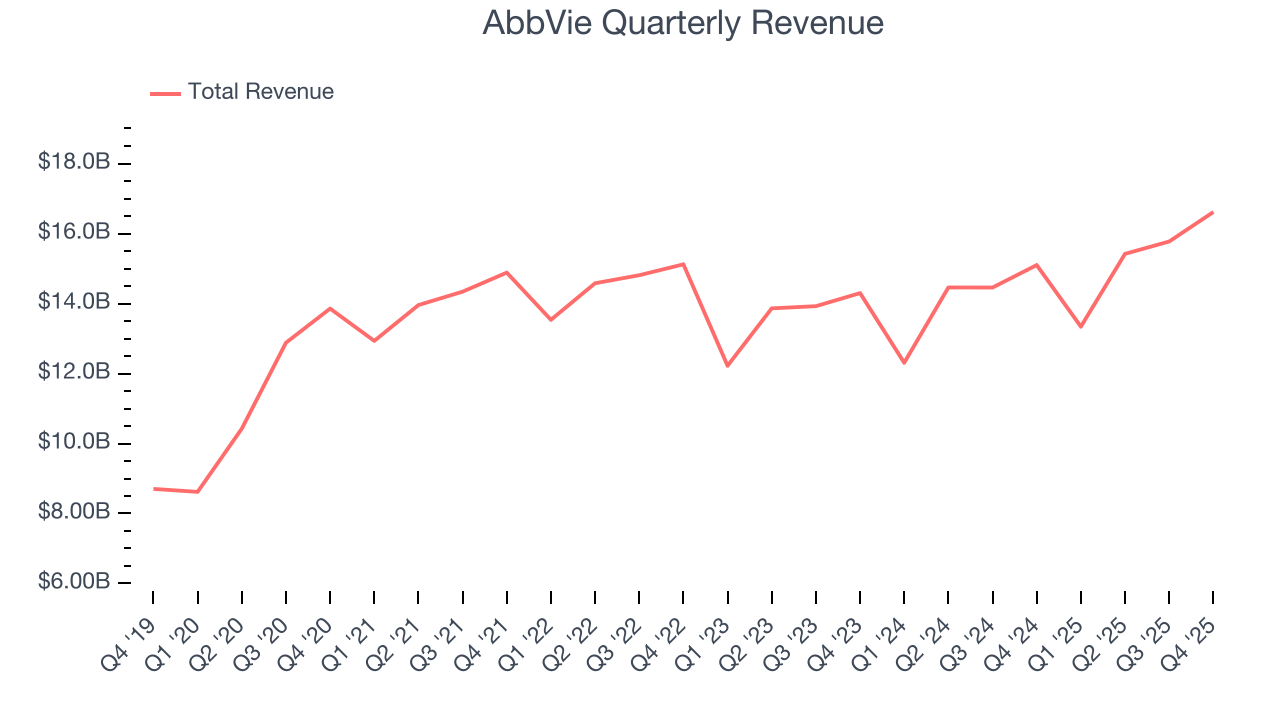
We at StockStory place the most emphasis on long-term growth, but within healthcare, a half-decade historical view may miss recent innovations or disruptive industry trends. AbbVie’s annualized revenue growth of 6.1% over the last two years aligns with its five-year trend, suggesting its demand was consistently weak. 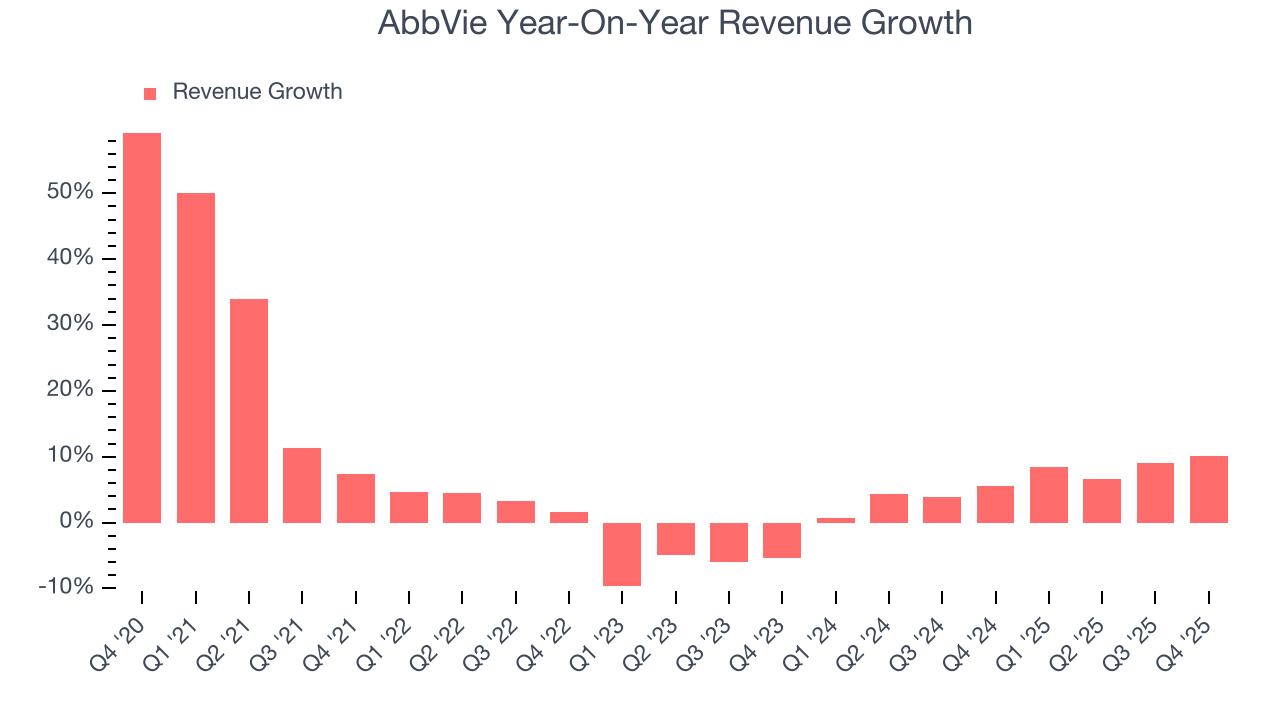
AbbVie also reports sales performance excluding currency movements, which are outside the company’s control and not indicative of demand. Over the last two years, its constant currency sales averaged 6.6% year-on-year growth. Because this number aligns with its normal revenue growth, we can see that AbbVie has properly hedged its foreign currency exposure. 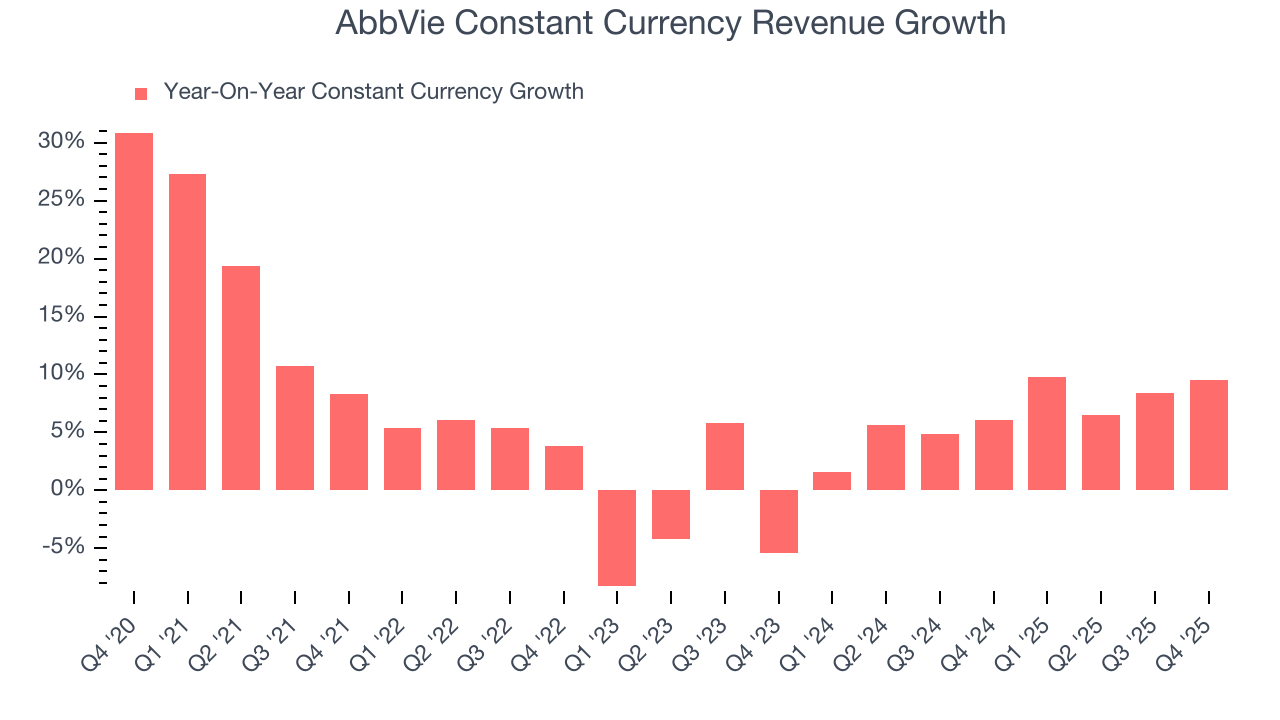
This quarter, AbbVie reported year-on-year revenue growth of 10%, and its $16.62 billion of revenue exceeded Wall Street’s estimates by 2.3%.
Looking ahead, sell-side analysts expect revenue to grow 8.6% over the next 12 months, an improvement versus the last two years. This projection is particularly noteworthy for a company of its scale and suggests its newer products and services will fuel better top-line performance.
7. Operating Margin
Operating margin is an important measure of profitability as it shows the portion of revenue left after accounting for all core expenses – everything from the cost of goods sold to advertising and wages. It’s also useful for comparing profitability across companies with different levels of debt and tax rates because it excludes interest and taxes.
AbbVie has been an efficient company over the last five years. It was one of the more profitable businesses in the healthcare sector, boasting an average operating margin of 25.5%.
Analyzing the trend in its profitability, AbbVie’s operating margin decreased by 7.3 percentage points over the last five years, but it rose by 1.2 percentage points on a two-year basis. We like AbbVie and hope it can right the ship.
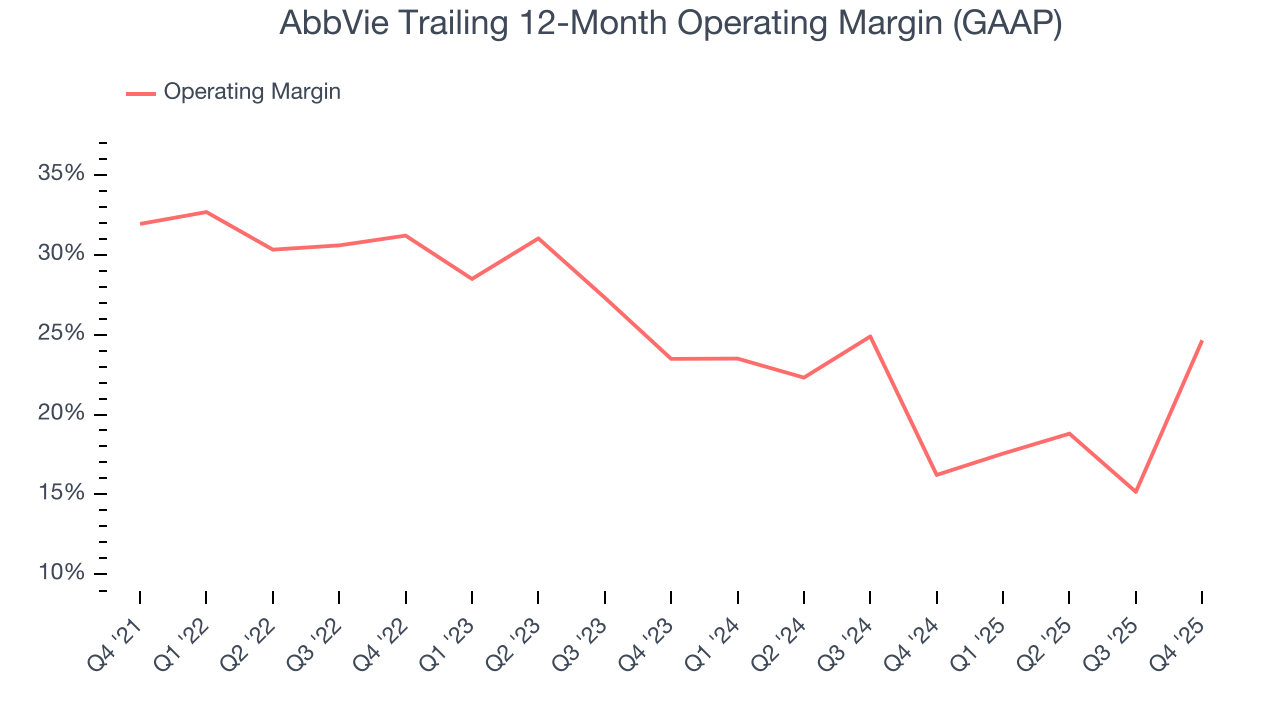
In Q4, AbbVie generated an operating margin profit margin of 27.3%, up 37.2 percentage points year on year. This increase was a welcome development and shows it was more efficient.
8. Earnings Per Share
We track the long-term change in earnings per share (EPS) for the same reason as long-term revenue growth. Compared to revenue, however, EPS highlights whether a company’s growth is profitable.
Sadly for AbbVie, its EPS declined by 1.1% annually over the last five years while its revenue grew by 6%. This tells us the company became less profitable on a per-share basis as it expanded.
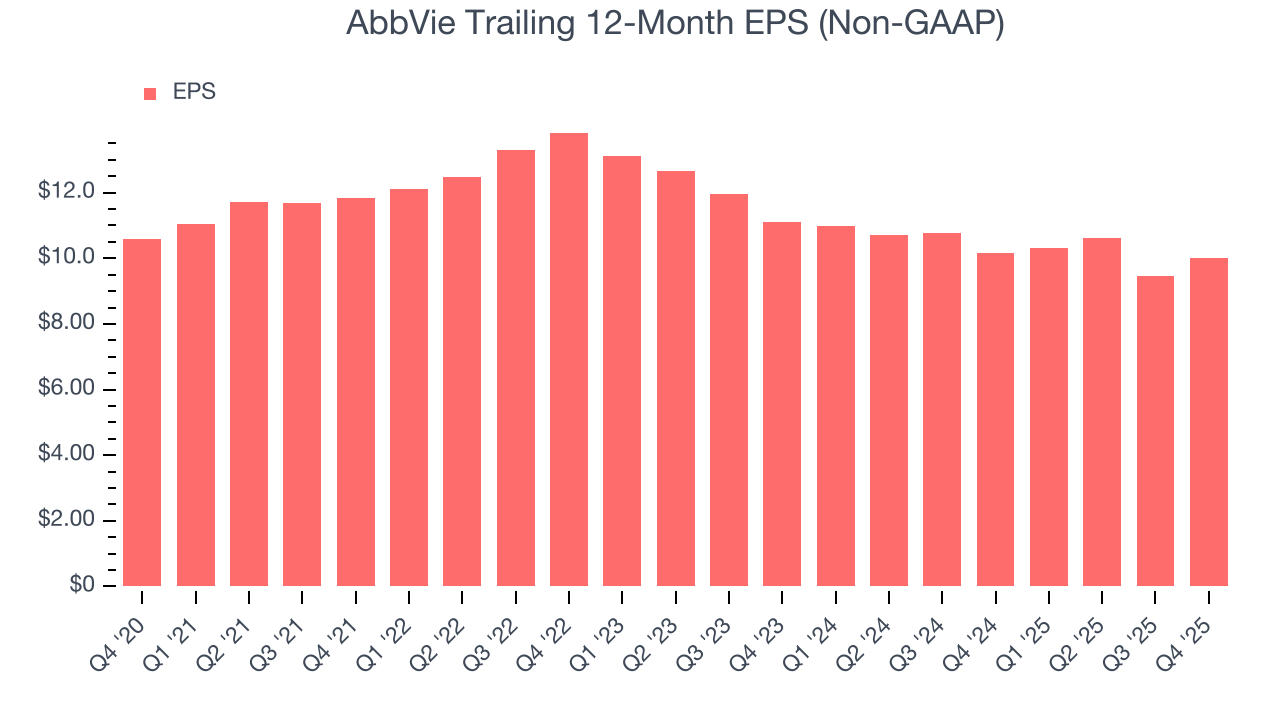
Diving into the nuances of AbbVie’s earnings can give us a better understanding of its performance. As we mentioned earlier, AbbVie’s operating margin expanded this quarter but declined by 7.3 percentage points over the last five years. This was the most relevant factor (aside from the revenue impact) behind its lower earnings; interest expenses and taxes can also affect EPS but don’t tell us as much about a company’s fundamentals.
In Q4, AbbVie reported adjusted EPS of $2.71, up from $2.17 in the same quarter last year. This print beat analysts’ estimates by 2.2%. Over the next 12 months, Wall Street expects AbbVie’s full-year EPS of $10.00 to grow 43.3%.
9. Cash Is King
If you’ve followed StockStory for a while, you know we emphasize free cash flow. Why, you ask? We believe that in the end, cash is king, and you can’t use accounting profits to pay the bills.
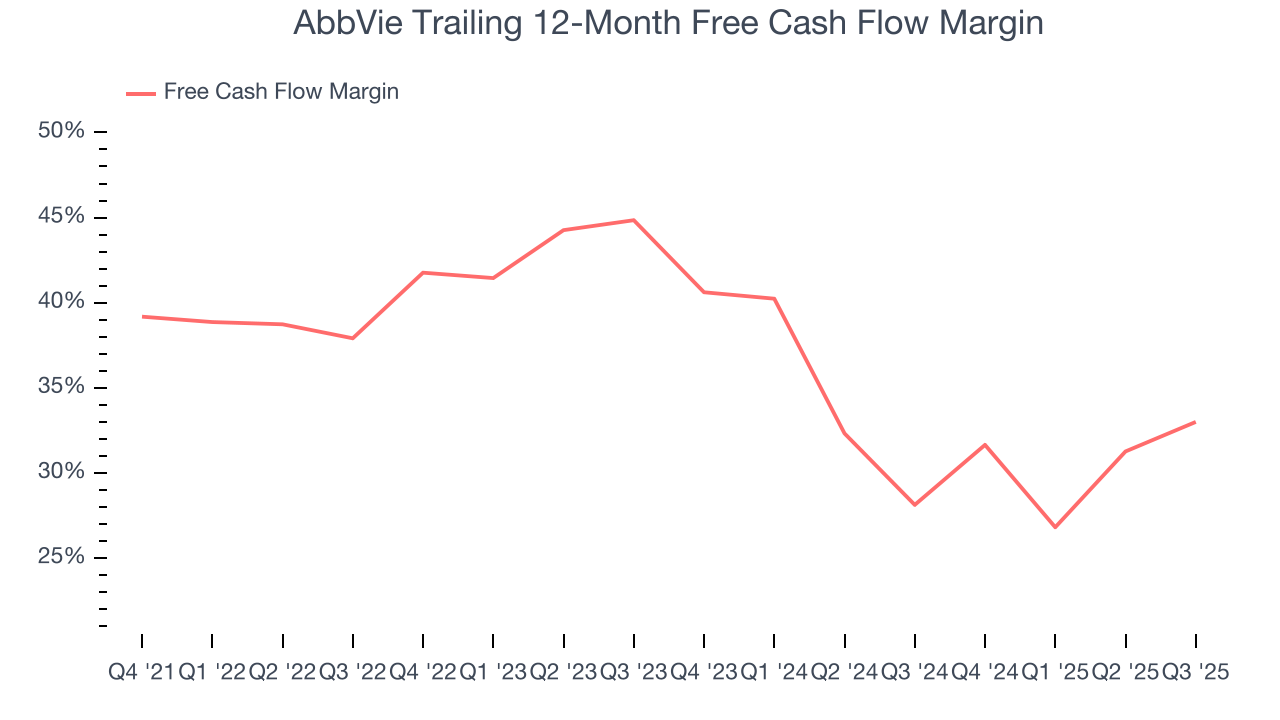
AbbVie has shown terrific cash profitability, enabling it to reinvest, return capital to investors, and stay ahead of the competition while maintaining an ample cushion. The company’s free cash flow margin was among the best in the healthcare sector, averaging an eye-popping 36.8% over the last five years.
Taking a step back, we can see that AbbVie’s margin dropped by 12.5 percentage points during that time. If its declines continue, it could signal increasing investment needs and capital intensity.
10. Return on Invested Capital (ROIC)
EPS and free cash flow tell us whether a company was profitable while growing its revenue. But was it capital-efficient? Enter ROIC, a metric showing how much operating profit a company generates relative to the money it has raised (debt and equity).
Although AbbVie hasn’t been the highest-quality company lately because of its poor bottom-line (EPS) performance, it historically found a few growth initiatives that worked out well. Its five-year average ROIC was 16.5%, impressive for a healthcare business.
We like to invest in businesses with high returns, but the trend in a company’s ROIC is what often surprises the market and moves the stock price. Unfortunately, AbbVie’s ROIC has decreased over the last few years. We like what management has done in the past, but its declining returns are perhaps a symptom of fewer profitable growth opportunities.
11. Balance Sheet Assessment
AbbVie reported $7.73 billion of cash and $68.36 billion of debt on its balance sheet in the most recent quarter. As investors in high-quality companies, we primarily focus on two things: 1) that a company’s debt level isn’t too high and 2) that its interest payments are not excessively burdening the business.
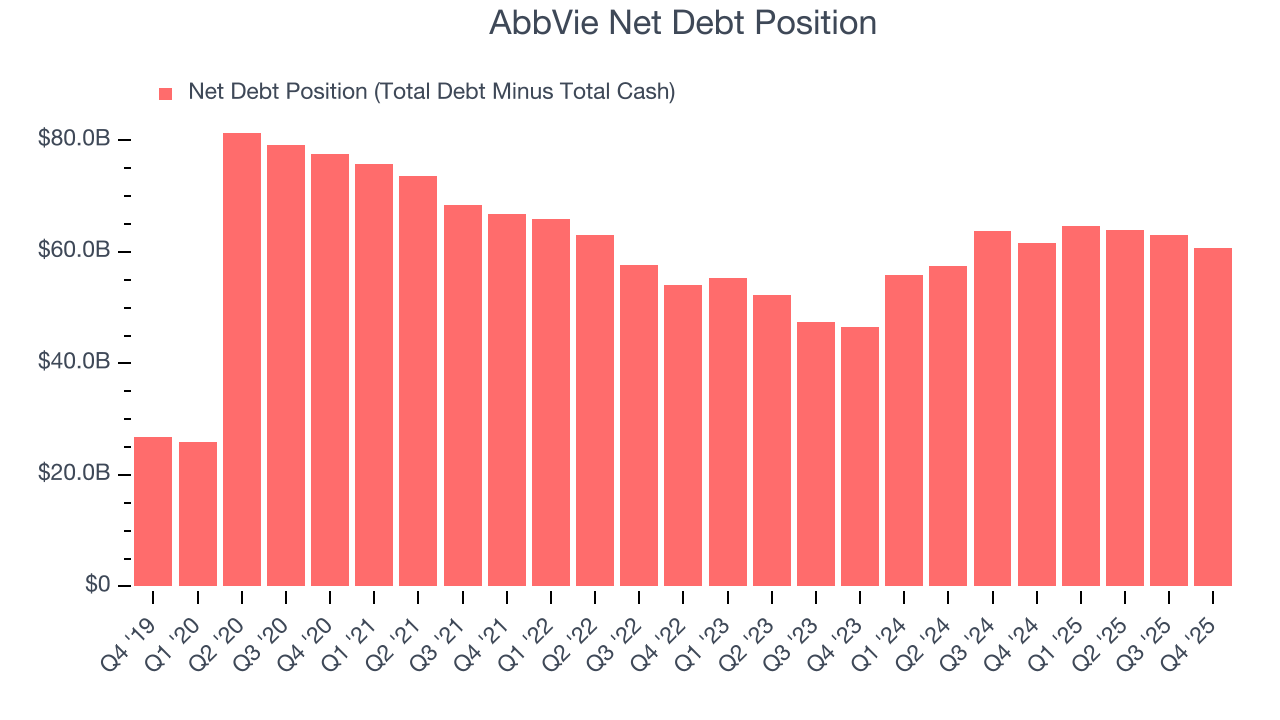
With $24.51 billion of EBITDA over the last 12 months, we view AbbVie’s 2.5× net-debt-to-EBITDA ratio as safe. We also see its $2.63 billion of annual interest expenses as appropriate. The company’s profits give it plenty of breathing room, allowing it to continue investing in growth initiatives.
12. Key Takeaways from AbbVie’s Q4 Results
We enjoyed seeing AbbVie beat analysts’ constant currency revenue expectations this quarter. We were also happy its revenue outperformed Wall Street’s estimates. Overall, we think this was a solid quarter with some key areas of upside. Investors were likely hoping for more, and shares traded down 1.8% to $221.60 immediately after reporting.
13. Is Now The Time To Buy AbbVie?
Updated: March 20, 2026 at 11:50 PM EDT
Before investing in or passing on AbbVie, we urge you to understand the company’s business quality (or lack thereof), valuation, and the latest quarterly results - in that order.
AbbVie possesses a number of positive attributes. Although its revenue growth was mediocre over the last five years, its growth over the next 12 months is expected to be higher. And while AbbVie’s weak EPS growth over the last five years shows it’s failed to produce meaningful profits for shareholders, its scale makes it a trusted partner with negotiating leverage. On top of that, its powerful free cash flow generation enables it to stay ahead of the competition through consistent reinvestment of profits.
AbbVie’s P/E ratio based on the next 12 months is 14.2x. When scanning the healthcare space, AbbVie trades at a fair valuation. If you trust the business and its direction, this is an ideal time to buy.
Wall Street analysts have a consensus one-year price target of $249.14 on the company (compared to the current share price of $206.10), implying they see 20.9% upside in buying AbbVie in the short term.