
Jackson Financial (JXN)
Jackson Financial doesn’t impress us. Its revenue growth has been weak and its profitability has caved, showing it’s struggling to adapt.― StockStory Analyst Team


1. News







2. Summary
Why Jackson Financial Is Not Exciting
Spun off from British insurer Prudential plc in 2021 after more than 60 years as its U.S. subsidiary, Jackson Financial (NYSE:JXN) offers annuity products and retirement solutions that help Americans grow and protect their retirement savings and income.
- Day-to-day expenses have swelled compared to its revenue over the last four years as its pre-tax profit margin fell by 26.1 percentage points
- Falling earnings per share over the last four years has some investors worried as stock prices ultimately follow EPS over the long term
- On the plus side, its market-beating return on equity illustrates that management has a knack for investing in profitable ventures
Jackson Financial lacks the business quality we seek. We believe there are better businesses elsewhere.
Why There Are Better Opportunities Than Jackson Financial







Jackson Financial is trading at $113.21 per share, or 0.6x forward P/B. This is a cheap valuation multiple, but for good reason. You get what you pay for.
Cheap stocks can look like a great deal at first glance, but they can be value traps. They often have less earnings power, meaning there is more reliance on a re-rating to generate good returns - an unlikely scenario for low-quality companies.
3. Jackson Financial (JXN) Research Report: Q3 CY2025 Update
Retirement solutions provider Jackson Financial (NYSE:JXN) fell short of the markets revenue expectations in Q3 CY2025, with sales falling 19.1% year on year to $1.42 billion. Its non-GAAP profit of $6.16 per share was 13% above analysts’ consensus estimates.
Jackson Financial (JXN) Q3 CY2025 Highlights:
Company Overview
Spun off from British insurer Prudential plc in 2021 after more than 60 years as its U.S. subsidiary, Jackson Financial (NYSE:JXN) offers annuity products and retirement solutions that help Americans grow and protect their retirement savings and income.
Jackson Financial operates primarily through its main subsidiary, Jackson National Life Insurance Company, offering a diverse suite of annuity products across all 50 states. The company's product lineup includes variable annuities, fixed index annuities, fixed annuities, and registered index-linked annuities (RILAs), each designed to address different retirement planning needs and risk tolerances.
Variable annuities, Jackson's flagship product, allow customers to participate in market returns through a broad selection of investment funds while offering optional benefits that provide guaranteed minimum protection. Fixed index annuities offer a guaranteed minimum crediting rate with potential for additional growth based on market index performance. Traditional fixed annuities provide guaranteed interest rates typically higher than bank savings accounts, while RILAs offer customizable market exposure with downside protection through "floors" or "buffers."
The company distributes its products through an extensive network of financial professionals, including independent broker-dealers, wirehouses, banks, and registered investment advisors. A typical customer might be a 55-year-old professional looking to secure guaranteed lifetime income while maintaining growth potential for a portion of their retirement savings.
Jackson generates revenue primarily through investment spread income (the difference between what it earns on investments and what it pays to customers) and fees charged on variable annuity account values. The company also offers institutional products like guaranteed investment contracts and funding agreements to corporate and institutional investors, providing an additional source of investment spread-based income.
Jackson's operations are supported by its in-house policy administration platform, which handles approximately 79% of its in-force policies, giving the company flexibility to administer multiple product types efficiently.
4. Life Insurance
Life insurance companies collect premiums from policyholders in exchange for providing a future death benefit or retirement income stream. Interest rates matter for the sector (and make it cyclical), with higher rates allowing insurers to reinvest their fixed-income portfolios at more attractive yields and vice versa. Additionally, favorable demographic shifts, such as an aging population, are driving strong demand for retirement products while AI and data analytics offer significant opportunities to improve underwriting accuracy and operational efficiency. Conversely, the industry faces headwinds from persistent competition from agile insurtechs that threaten traditional distribution models.
Jackson Financial competes with other major annuity providers including Prudential Financial (NYSE:PRU), Lincoln National (NYSE:LNC), Brighthouse Financial (NASDAQ:BHF), and Equitable Holdings (NYSE:EQH), as well as diversified insurers like AIG (NYSE:AIG) that offer retirement products.
5. Revenue Growth
Big picture, insurers generate revenue from three key sources. The first is the core business of underwriting policies. The second source is income from investing the “float” (premiums collected upfront not yet paid out as claims) in assets such as fixed-income assets and equities. The third is fees from various sources such as policy administration, annuities, or other value-added services. Unfortunately, Jackson Financial struggled to consistently increase demand as its $6.75 billion of revenue for the trailing 12 months was close to its revenue five years ago. This wasn’t a great result and is a sign of lacking business quality.
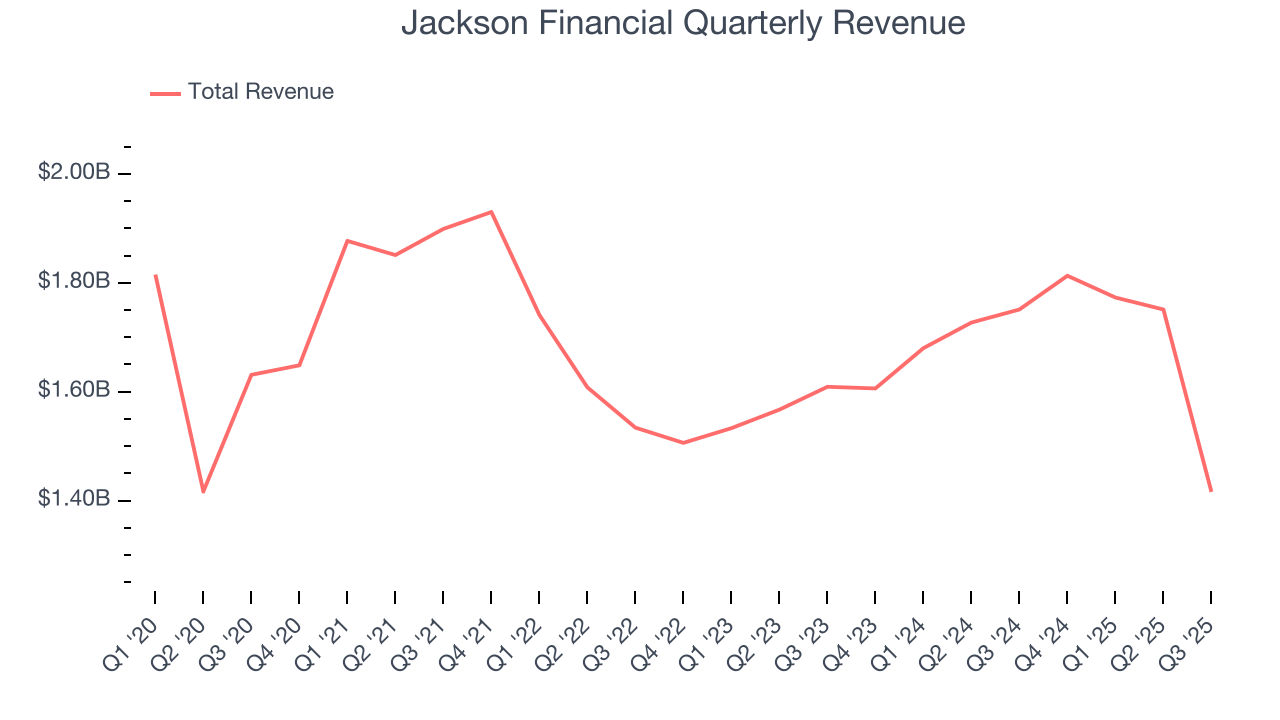
We at StockStory place the most emphasis on long-term growth, but within financials, a half-decade historical view may miss recent interest rate changes, market returns, and industry trends. Jackson Financial’s annualized revenue growth of 4.2% over the last two years is above its five-year trend, but we were still disappointed by the results. 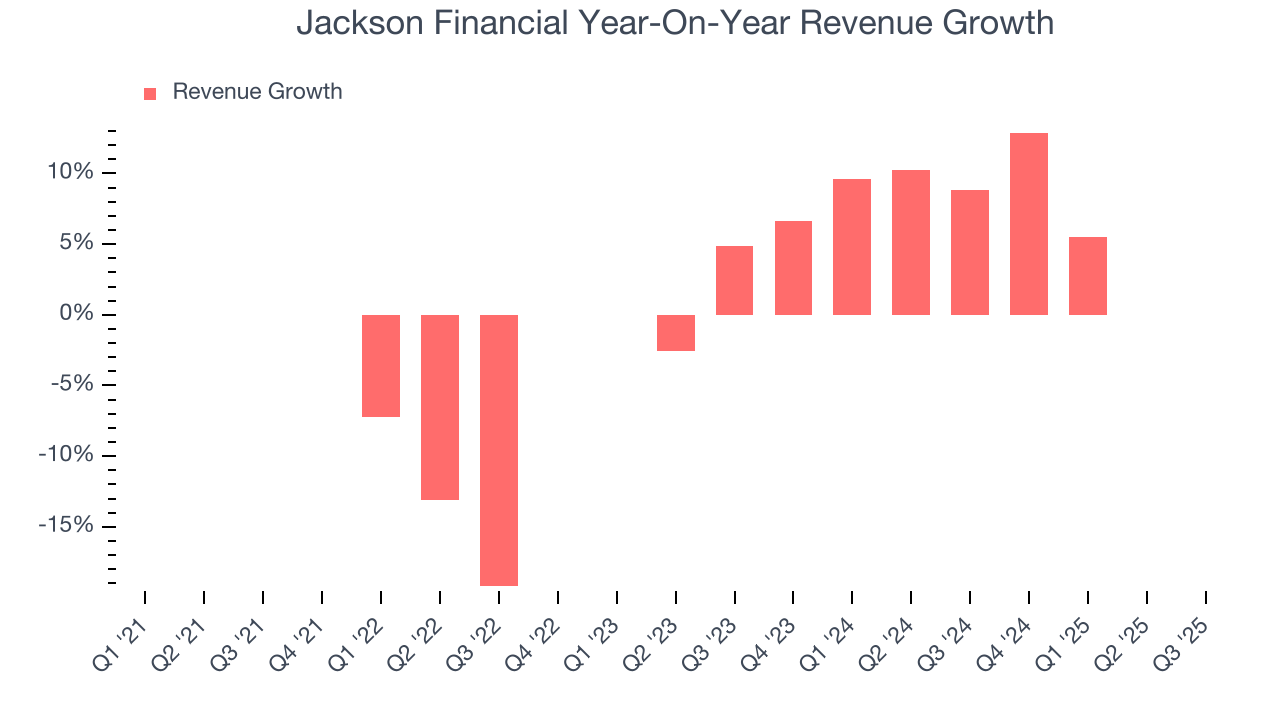 Note: Quarters not shown were determined to be outliers, impacted by outsized investment gains/losses that are not indicative of the recurring fundamentals of the business.
This quarter, Jackson Financial missed Wall Street’s estimates and reported a rather uninspiring 19.1% year-on-year revenue decline, generating $1.42 billion of revenue.
Since the company recorded losses on certain securities, it generated more net premiums earned than revenue (a 1.2x multiple of its revenue to be exact) during the last five years, meaning Jackson Financial lives and dies by its underwriting activities because non-insurance operations barely move the needle.
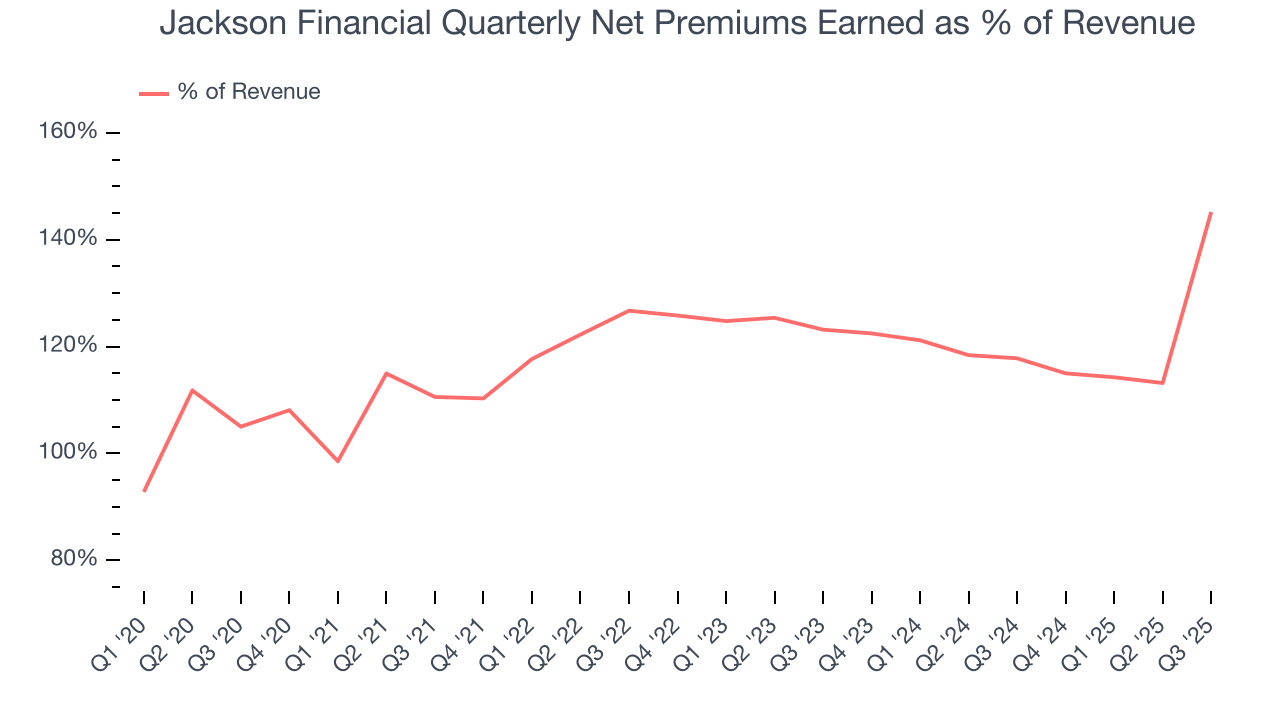
While insurers generate revenue from multiple sources, investors view net premiums earned as the cornerstone - its direct link to core operations stands in sharp contrast to the unpredictability of investment returns and fees.
6. Net Premiums Earned
Insurers sell policies then use reinsurance (insurance for insurance companies) to protect themselves from large losses. Net premiums earned are therefore what's collected from selling policies less what’s paid to reinsurers as a risk mitigation tool.
Jackson Financial’s net premiums earned has grown at a 4% annualized rate over the last five years, worse than the broader insurance industry but faster than its total revenue.
When analyzing Jackson Financial’s net premiums earned over the last two years, we can see that growth decelerated to 2.5% annually. Since two-year net premiums earned grew slower than total revenue over this period, it’s implied that other line items such as investment income grew at a faster rate. These additional streams do play a key role in the bottom line, but their impact can vary. While some firms have excelled in consistently investing their float, sudden shifts in the fixed income and equity markets can heavily sway short-term performance.
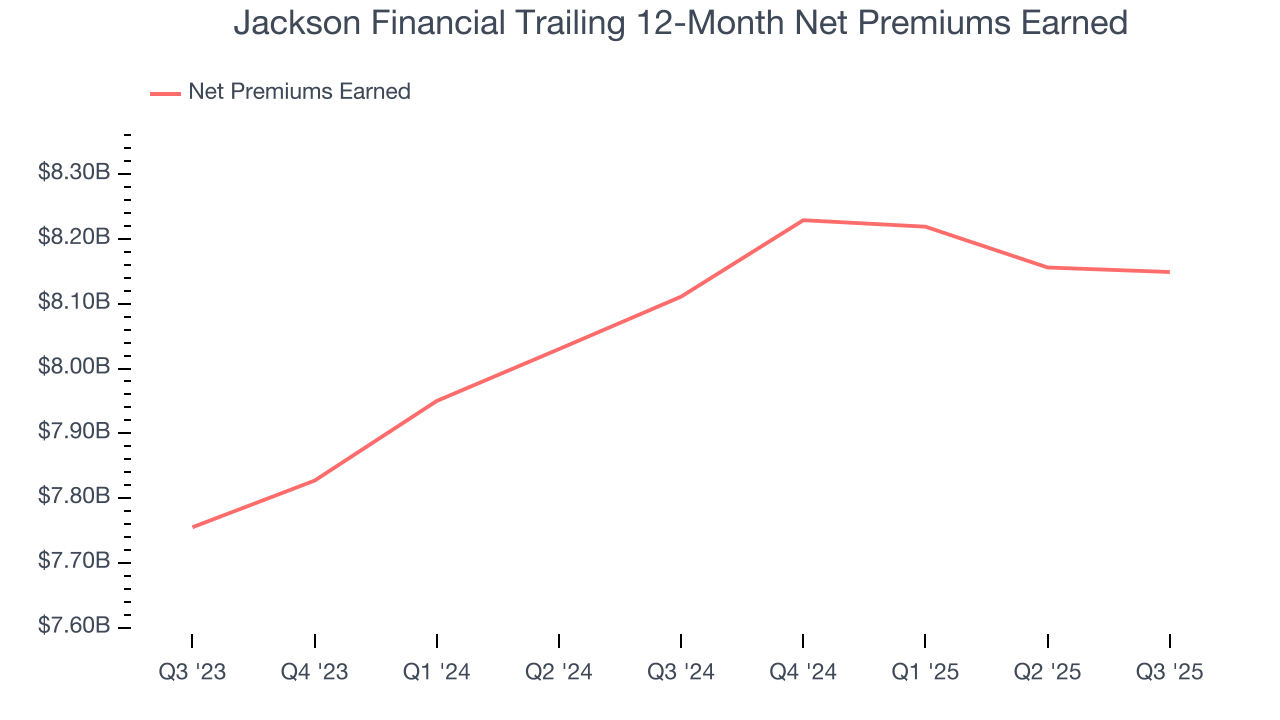
In Q3, Jackson Financial produced $2.06 billion of net premiums earned, flat year on year.
7. Pre-Tax Profit Margin
Revenue growth is one major determinant of business quality, and the efficiency of operations is another. For insurance companies, we look at pre-tax profit rather than the operating margin that defines sectors such as consumer, tech, and industrials.
Insurance companies are balance sheet businesses, where assets and liabilities define the economics. Interest income and expense should therefore be factored into the definition of profit but taxes - which are largely out of a company’s control - should not. This is pre-tax profit by definition.
Over the last four years, Jackson Financial’s pre-tax profit margin has risen by 33.9 percentage points, going from 43.1% to 9.2%. It has also declined by 12.8 percentage points on a two-year basis, showing its expenses have consistently increased at a faster rate than revenue. This usually raises questions unless the company is in high-growth mode and reinvesting its profits into attractive ventures.
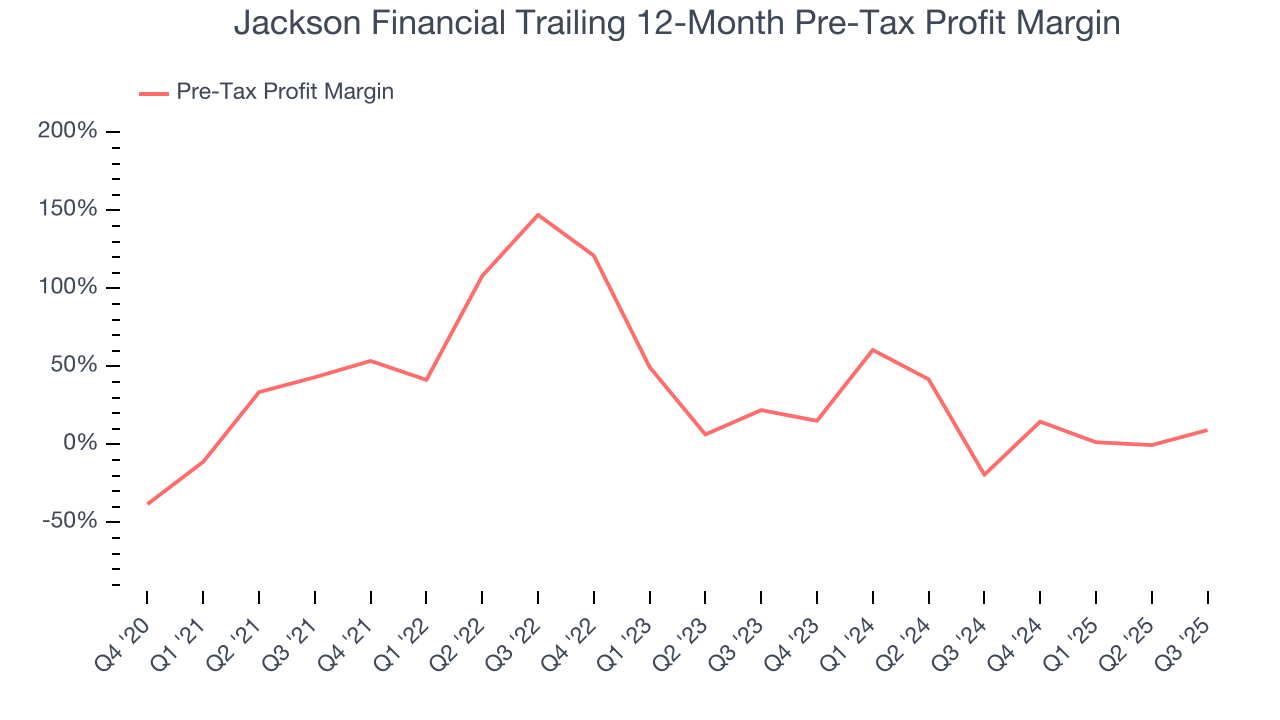
In Q3, Jackson Financial’s pre-tax profit margin was 5.1%. This result was 38.2 percentage points better than the same quarter last year.
8. Earnings Per Share
We track the long-term change in earnings per share (EPS) for the same reason as long-term revenue growth. Compared to revenue, however, EPS highlights whether a company’s growth is profitable.
Jackson Financial’s full-year EPS dropped 7.7%, or 1.9% annually, over the last four years. We tend to steer our readers away from companies with falling revenue and EPS, where diminishing earnings could imply changing secular trends and preferences. If the tide turns unexpectedly, Jackson Financial’s low margin of safety could leave its stock price susceptible to large downswings.
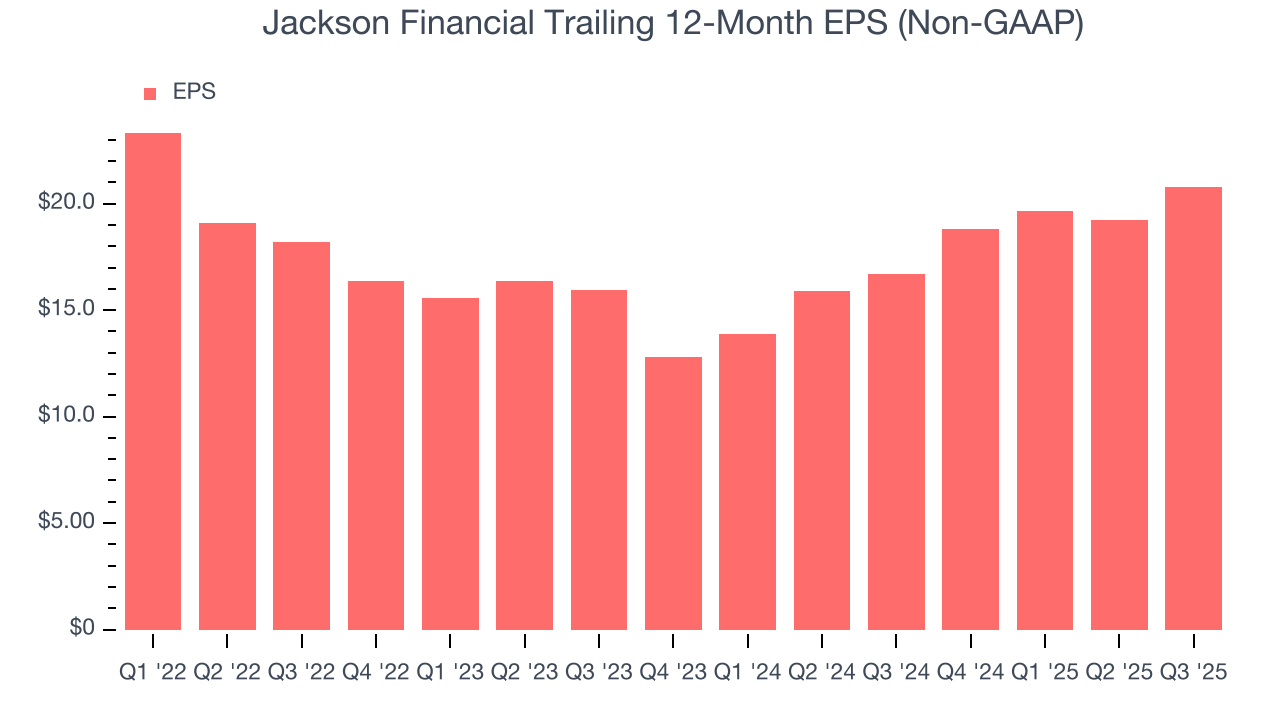
Like with revenue, we analyze EPS over a shorter period to see if we are missing a change in the business.
Jackson Financial’s EPS grew at an unimpressive 14.1% compounded annual growth rate over the last two years. On the bright side, this performance was higher than its 4.2% annualized revenue growth and tells us the company became more profitable on a per-share basis as it expanded.
Diving into the nuances of Jackson Financial’s earnings can give us a better understanding of its performance. A two-year view shows that Jackson Financial has repurchased its stock, shrinking its share count by 15.1%. This tells us its EPS outperformed its revenue not because of increased operational efficiency but financial engineering, as buybacks boost per share earnings. 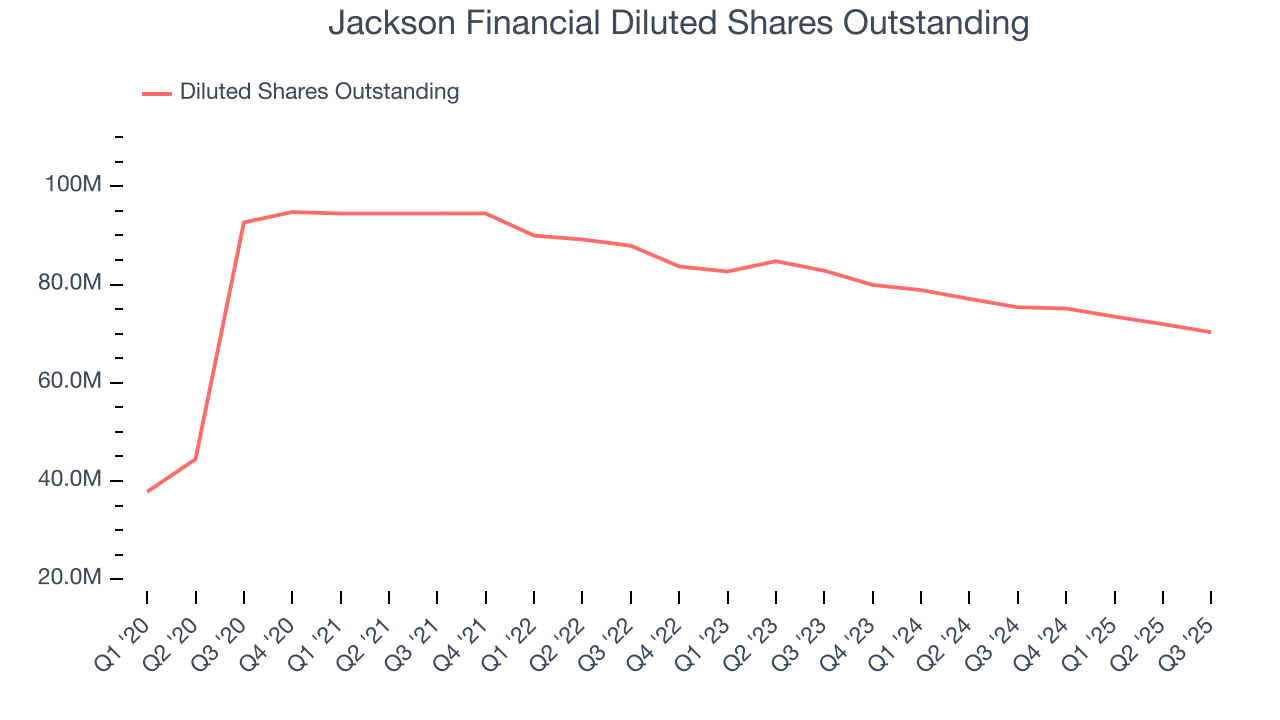
In Q3, Jackson Financial reported adjusted EPS of $6.16, up from $4.60 in the same quarter last year. This print easily cleared analysts’ estimates, and shareholders should be content with the results. Over the next 12 months, Wall Street expects Jackson Financial’s full-year EPS of $20.78 to grow 12.7%.
9. Book Value Per Share (BVPS)
Insurance companies are balance sheet businesses, collecting premiums upfront and paying out claims over time. The float–premiums collected but not yet paid out–are invested, creating an asset base supported by a liability structure. Book value per share (BVPS) captures this dynamic by measuring these assets (investment portfolio, cash, reinsurance recoverables) less liabilities (claim reserves, debt, future policy benefits). BVPS is essentially the residual value for shareholders.
We therefore consider BVPS very important to track for insurers and a metric that sheds light on business quality because it reflects long-term capital growth and is harder to manipulate than more commonly-used metrics like EPS.
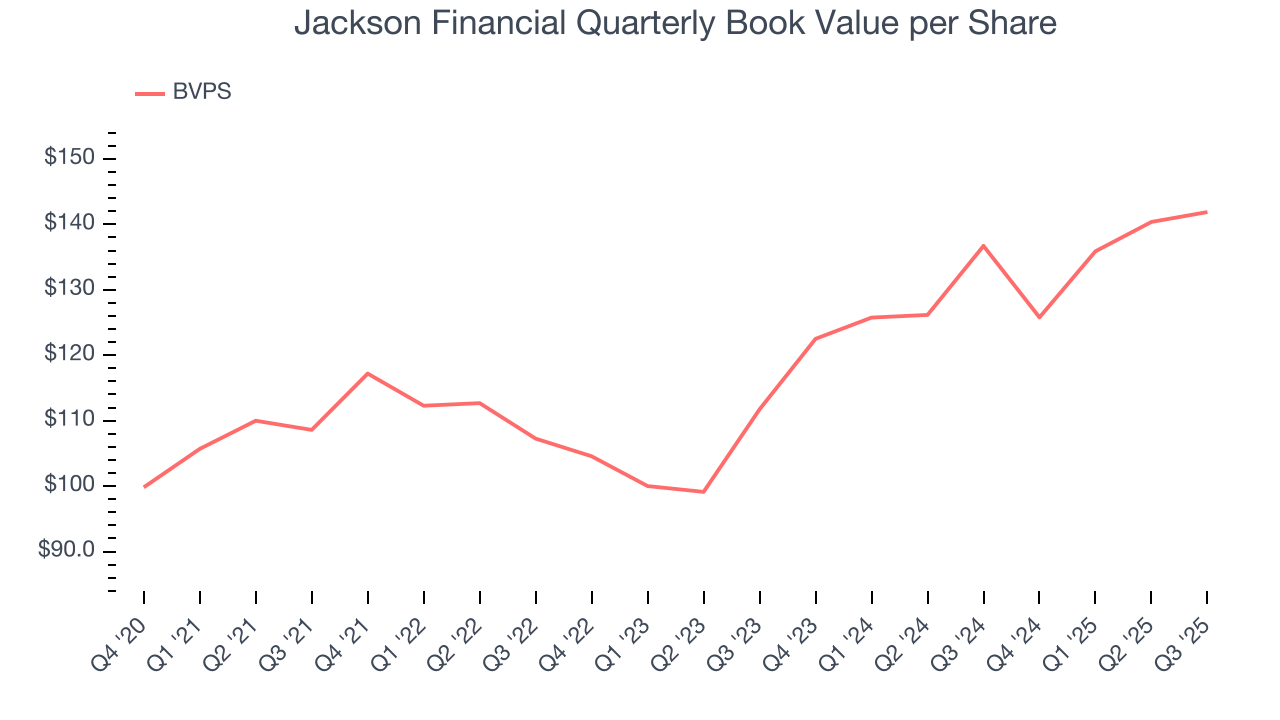
Jackson Financial’s BVPS grew at a mediocre 6.9% annual clip over the last four years. However, BVPS growth has accelerated recently, growing by 12.7% annually over the last two years from $111.74 to $141.89 per share.
10. Balance Sheet Assessment
The debt-to-equity ratio is a widely used measure to assess a company's balance sheet health. A higher ratio means that a business aggressively financed its growth with debt. This can result in higher earnings (if the borrowed funds are invested profitably) but also increases risk.
If debt levels are too high, there could be difficulties in meeting obligations, especially during economic downturns or periods of rising interest rates if the debt has variable-rate payments.
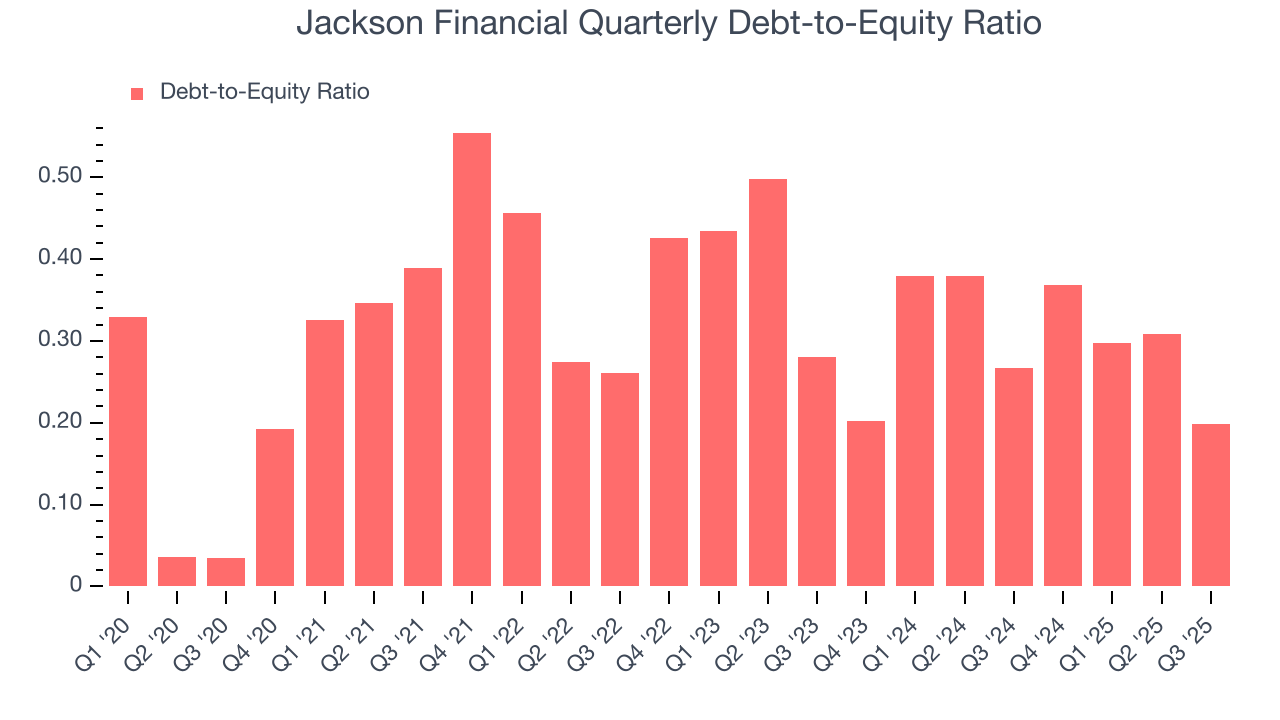
Jackson Financial currently has $2.03 billion of debt and $10.23 billion of shareholder's equity on its balance sheet, and over the past four quarters, has averaged a debt-to-equity ratio of 0.3×. We think this is safe and raises no red flags. In general, we’re comfortable with any ratio below 1.0× for an insurance business. Anything below 0.5× is a bonus.
11. Return on Equity
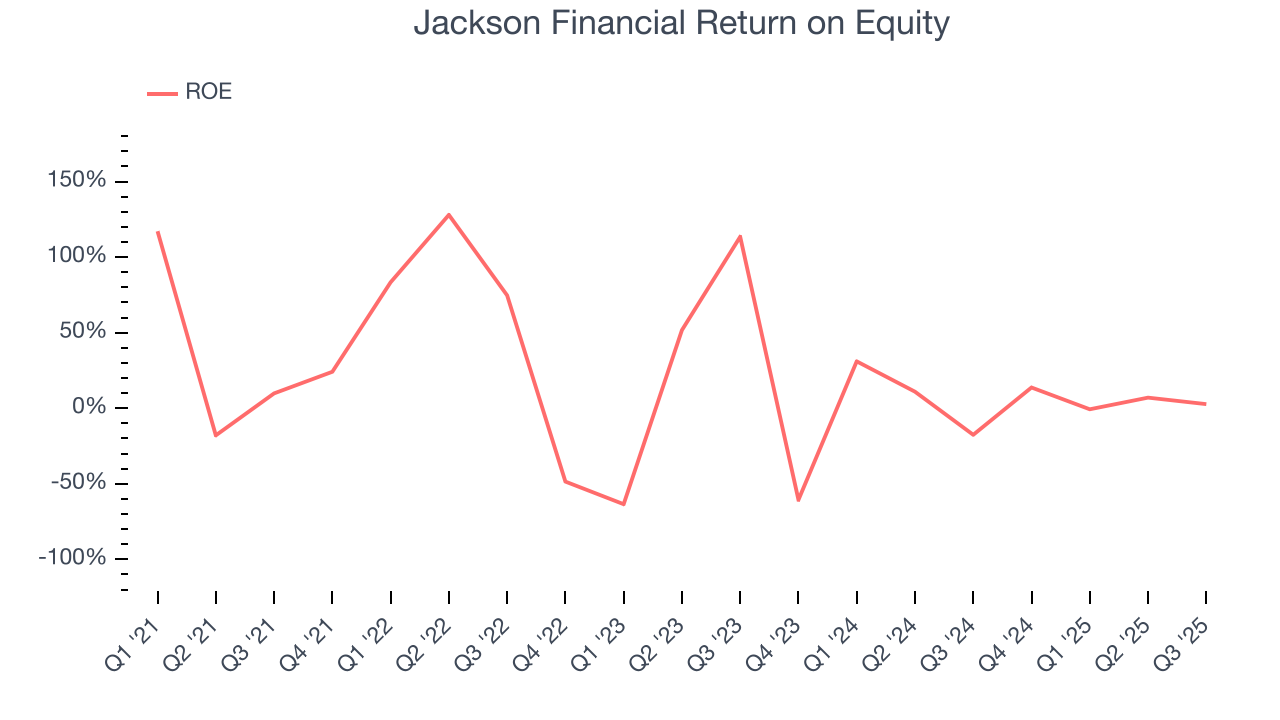
Return on Equity, or ROE, ties everything together and is a vital metric. It tells us how much profit the insurer generates for each dollar of shareholder equity entrusted to management. Over a long period, insurers with higher ROEs tend to compound shareholder wealth faster through retained earnings, buybacks, and dividends.
Over the last five years, Jackson Financial has averaged an ROE of 24.1%, exceptional for a company operating in a sector where the average shakes out around 12.5% and those putting up 20%+ are greatly admired. This is a bright spot for Jackson Financial.
12. Key Takeaways from Jackson Financial’s Q3 Results
It was good to see Jackson Financial beat analysts’ EPS expectations this quarter. On the other hand, its revenue missed. Zooming out, we think this was a mixed quarter. The stock remained flat at $100.88 immediately following the results.
13. Is Now The Time To Buy Jackson Financial?
Updated: January 25, 2026 at 11:18 PM EST
Before making an investment decision, investors should account for Jackson Financial’s business fundamentals and valuation in addition to what happened in the latest quarter.
Jackson Financial has some positive attributes, but it isn’t one of our picks. Although its revenue growth was uninspiring over the last five years and analysts expect growth to slow over the next 12 months, its stellar ROE suggests it has been a well-run company historically. Be wary, however, as Jackson Financial’s declining EPS over the last four years makes it a less attractive asset to the public markets.
Jackson Financial’s P/B ratio based on the next 12 months is 0.6x. While this valuation is fair, the upside isn’t great compared to the potential downside. We're fairly confident there are better stocks to buy right now.
Wall Street analysts have a consensus one-year price target of $118.33 on the company (compared to the current share price of $113.21).