Packaging Corporation of America (PKG)
We aren’t fans of Packaging Corporation of America. Its weak sales growth and declining returns on capital show its demand and profits are shrinking.― StockStory Analyst Team


1. News
2. Summary
Why Packaging Corporation of America Is Not Exciting
Founded in 1959, Packaging Corporation of America (NYSE: PKG) produces containerboard and corrugated packaging products as well as displays and package protection.
- Gross margin of 22.8% is below its competitors, leaving less money to invest in areas like marketing and R&D
- Muted 5.7% annual revenue growth over the last five years shows its demand lagged behind its industrials peers
- On the plus side, its demand for the next 12 months is expected to accelerate above its two-year trend as Wall Street forecasts robust revenue growth of 14.4%
Packaging Corporation of America doesn’t meet our quality standards. There are more profitable opportunities elsewhere.
Why There Are Better Opportunities Than Packaging Corporation of America







At $221.87 per share, Packaging Corporation of America trades at 21.3x forward P/E. Packaging Corporation of America’s multiple may seem like a great deal among industrials peers, but we think there are valid reasons why it’s this cheap.
Our advice is to pay up for elite businesses whose advantages are tailwinds to earnings growth. Don’t get sucked into lower-quality businesses just because they seem like bargains. These mediocre businesses often never achieve a higher multiple as hoped, a phenomenon known as a “value trap”.
3. Packaging Corporation of America (PKG) Research Report: Q4 CY2025 Update
Packaging Corporation of America (NYSE:PKG) fell short of the markets revenue expectations in Q4 CY2025, but sales rose 10.1% year on year to $2.36 billion. Its non-GAAP profit of $2.32 per share was 3.9% below analysts’ consensus estimates.
Packaging Corporation of America (PKG) Q4 CY2025 Highlights:
- Revenue: $2.36 billion vs analyst estimates of $2.44 billion (10.1% year-on-year growth, 2.9% miss)
- Adjusted EPS: $2.32 vs analyst expectations of $2.41 (3.9% miss)
- Adjusted EBITDA: $486.3 million vs analyst estimates of $503.7 million (20.6% margin, 3.5% miss)
- Operating Margin: 7.1%, down from 14.1% in the same quarter last year
- Sales Volumes rose 7.4% year on year, in line with the same quarter last year
- Market Capitalization: $19.83 billion
Company Overview
Founded in 1959, Packaging Corporation of America (NYSE: PKG) produces containerboard and corrugated packaging products as well as displays and package protection.
Packaging Corporation of America originally started as a single facility and has expanded through strategic acquisitions and organic growth. Packaging Corporation of America offers products including standard corrugated boxes, multi-color retail displays, and heavy-duty containers for industrial products. These packaging solutions cater to sectors such as food and beverage, manufacturing, and e-commerce, providing essential packaging for shipping and displaying products. The company also owns Boise Paper, a subsidiary that produces a variety of printing and office papers.
The company's revenue primarily stems from its corrugated packaging products and paper solutions. Its product portfolio can logically be broken down into packaging and paper, which are marketed directly to manufacturers, distributors, and retailers.
Packaging Corporation of America's cost structure incorporates fixed costs related to its manufacturing operations and variable costs linked to raw materials and distribution. The company benefits from recurring revenue streams due to consistent customer demand for packaging products and ongoing supply contracts, providing a stable financial base.
4. Industrial Packaging
Industrial packaging companies have built competitive advantages from economies of scale that lead to advantaged purchasing and capital investments that are difficult and expensive to replicate. Recently, eco-friendly packaging and conservation are driving customers preferences and innovation. For example, plastic is not as desirable a material as it once was. Despite being integral to consumer goods ranging from beer to toothpaste to laundry detergent, these companies are still at the whim of the macro, especially consumer health and consumer willingness to spend.
Competitors in the packaging industry include Crown Holdings (NYSE:CCK), Ardagh Group (NYSE:ARD), and Silgan Holdings (NASDAQ:SLGN)
5. Revenue Growth
Reviewing a company’s long-term sales performance reveals insights into its quality. Any business can experience short-term success, but top-performing ones enjoy sustained growth for years. Over the last five years, Packaging Corporation of America grew its sales at a mediocre 6.2% compounded annual growth rate. This was below our standard for the industrials sector and is a poor baseline for our analysis.
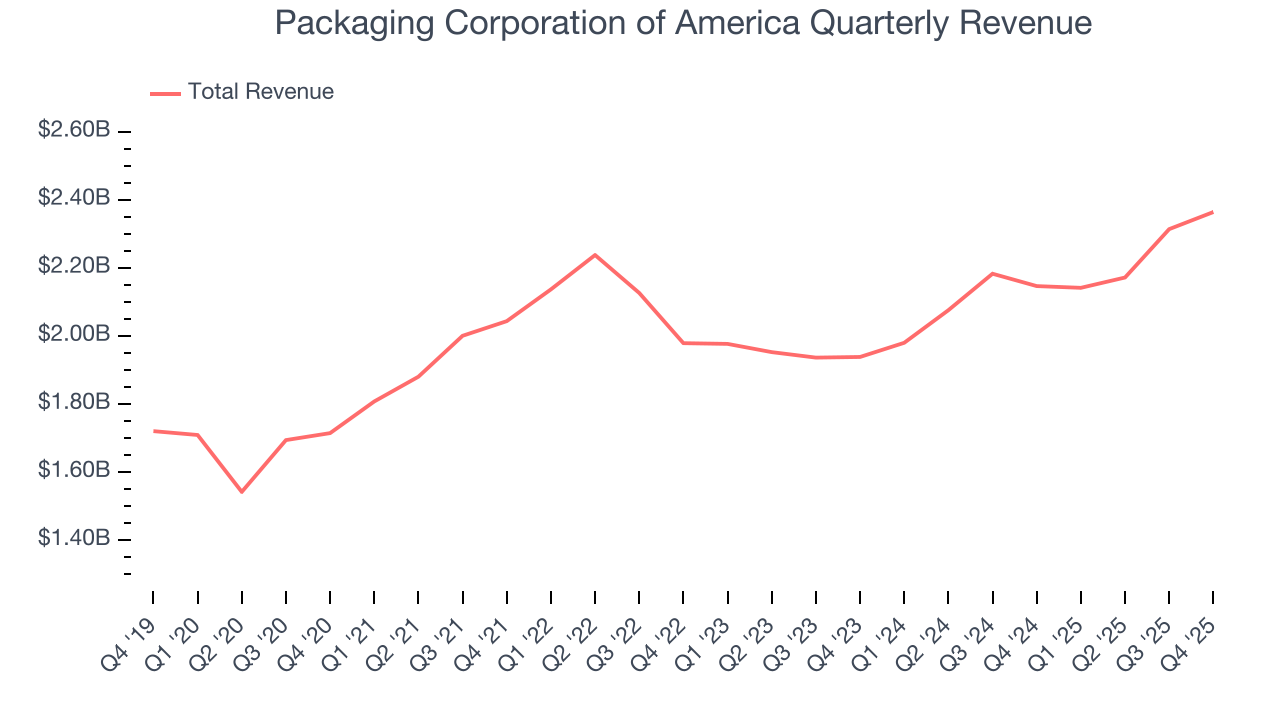
Long-term growth is the most important, but within industrials, a half-decade historical view may miss new industry trends or demand cycles. Packaging Corporation of America’s annualized revenue growth of 7.3% over the last two years is above its five-year trend, but we were still disappointed by the results. 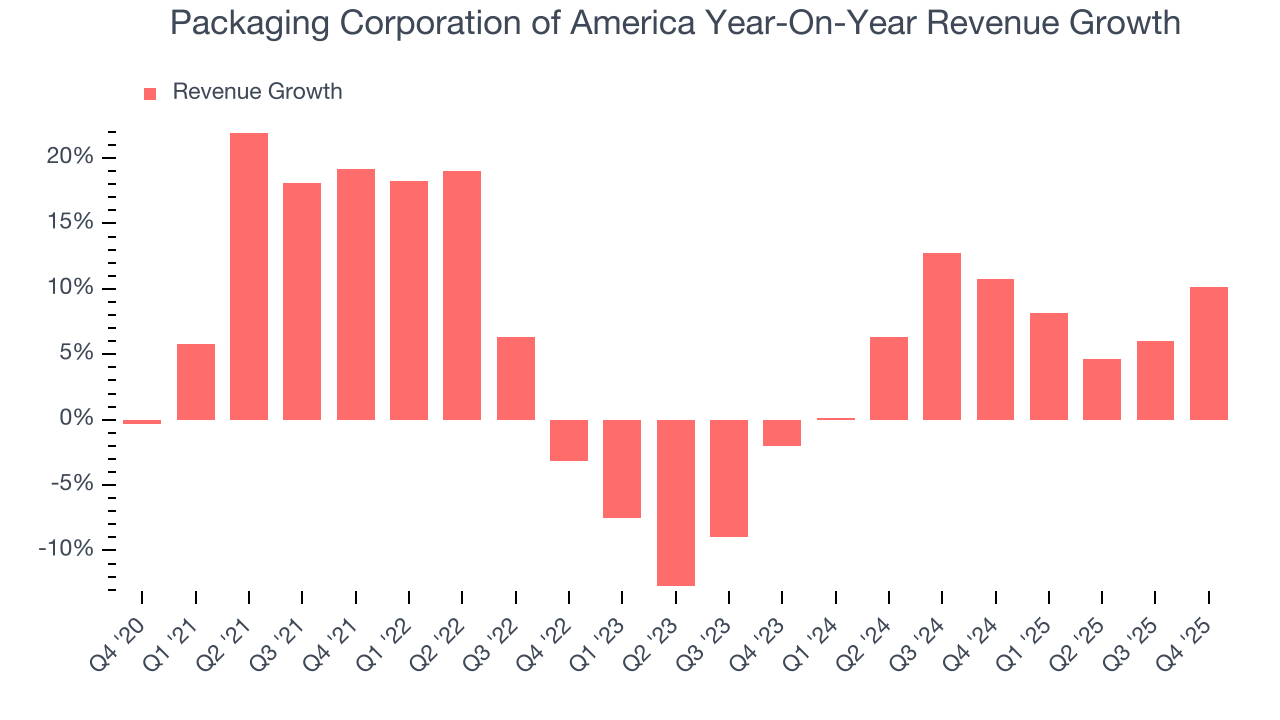
We can dig further into the company’s revenue dynamics by analyzing its number of units sold, which reached 1.41 million in the latest quarter. Over the last two years, Packaging Corporation of America’s units sold averaged 6.9% year-on-year growth. Because this number is in line with its revenue growth, we can see the company kept its prices fairly consistent. 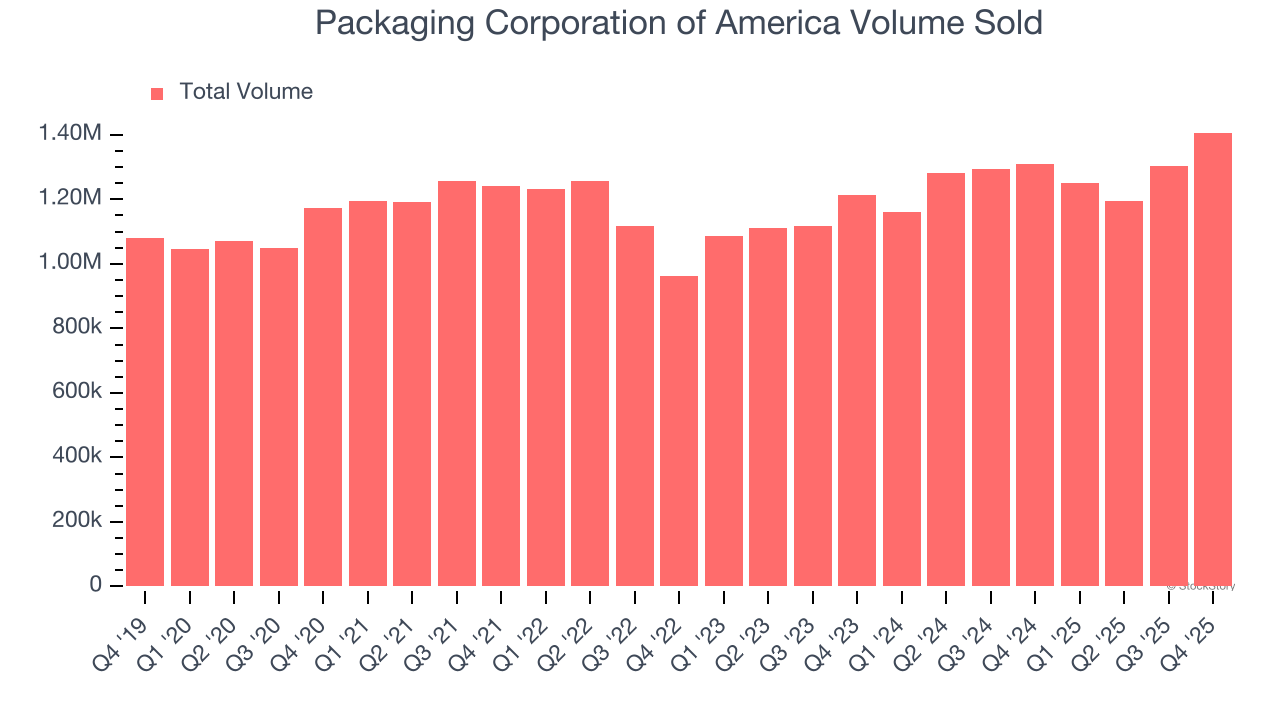
This quarter, Packaging Corporation of America’s revenue grew by 10.1% year on year to $2.36 billion but fell short of Wall Street’s estimates.
Looking ahead, sell-side analysts expect revenue to grow 13% over the next 12 months, an improvement versus the last two years. This projection is healthy and suggests its newer products and services will fuel better top-line performance.
6. Gross Margin & Pricing Power
Packaging Corporation of America has bad unit economics for an industrials company, giving it less room to reinvest and develop new offerings. As you can see below, it averaged a 22.7% gross margin over the last five years. That means Packaging Corporation of America paid its suppliers a lot of money ($77.31 for every $100 in revenue) to run its business. 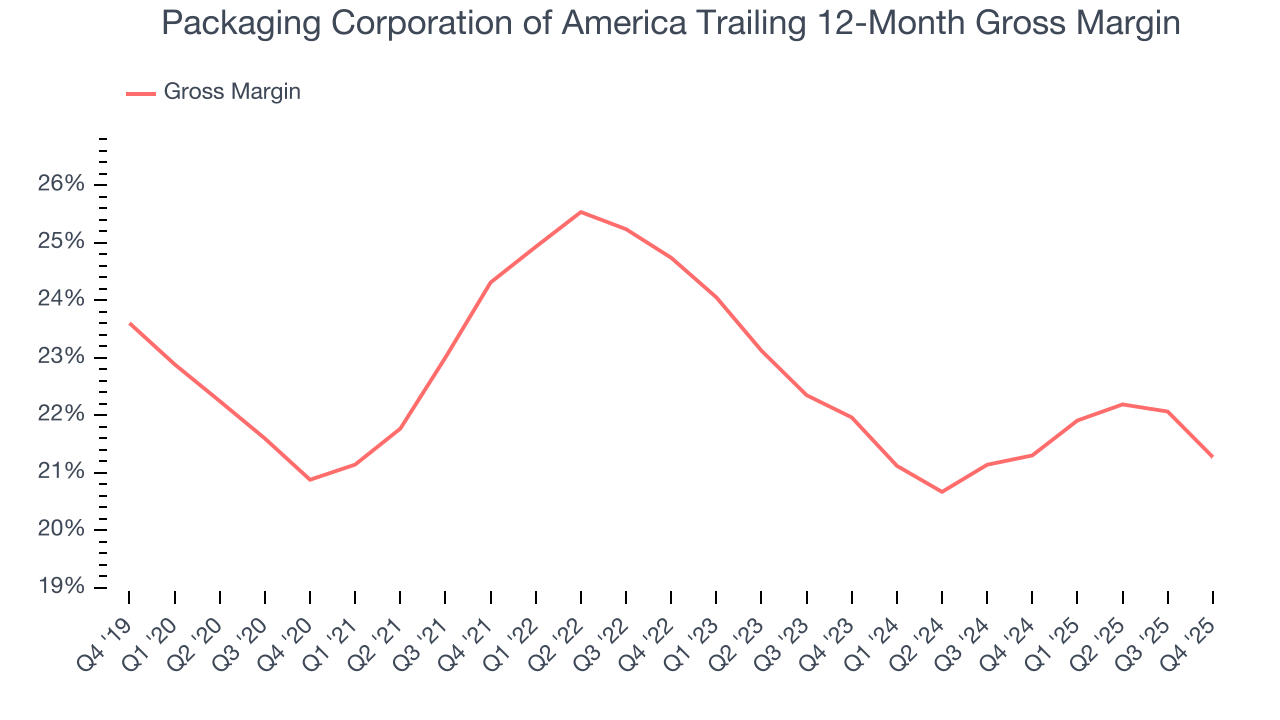
In Q4, Packaging Corporation of America produced a 18.9% gross profit margin, marking a 3 percentage point decrease from 21.9% in the same quarter last year. On a wider time horizon, the company’s full-year margin has remained steady over the past four quarters, suggesting its input costs (such as raw materials and manufacturing expenses) have been stable and it isn’t under pressure to lower prices.
7. Operating Margin
Packaging Corporation of America has been an efficient company over the last five years. It was one of the more profitable businesses in the industrials sector, boasting an average operating margin of 14.4%. This result was particularly impressive because of its low gross margin, which is mostly a factor of what it sells and takes huge shifts to move meaningfully. Companies have more control over their operating margins, and it’s a show of well-managed operations if they’re high when gross margins are low.
Analyzing the trend in its profitability, Packaging Corporation of America’s operating margin decreased by 3.7 percentage points over the last five years. This raises questions about the company’s expense base because its revenue growth should have given it leverage on its fixed costs, resulting in better economies of scale and profitability.
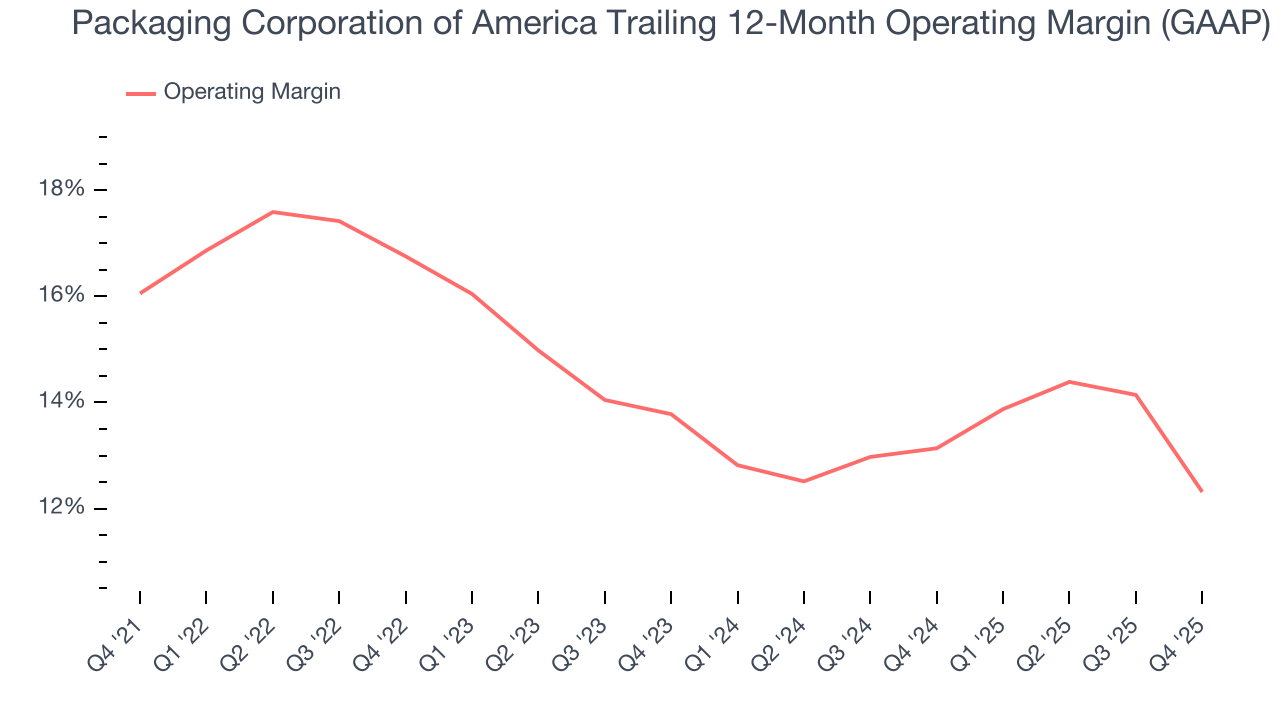
In Q4, Packaging Corporation of America generated an operating margin profit margin of 7.1%, down 7 percentage points year on year. Since Packaging Corporation of America’s operating margin decreased more than its gross margin, we can assume it was less efficient because expenses such as marketing, R&D, and administrative overhead increased.
8. Earnings Per Share
Revenue trends explain a company’s historical growth, but the long-term change in earnings per share (EPS) points to the profitability of that growth – for example, a company could inflate its sales through excessive spending on advertising and promotions.
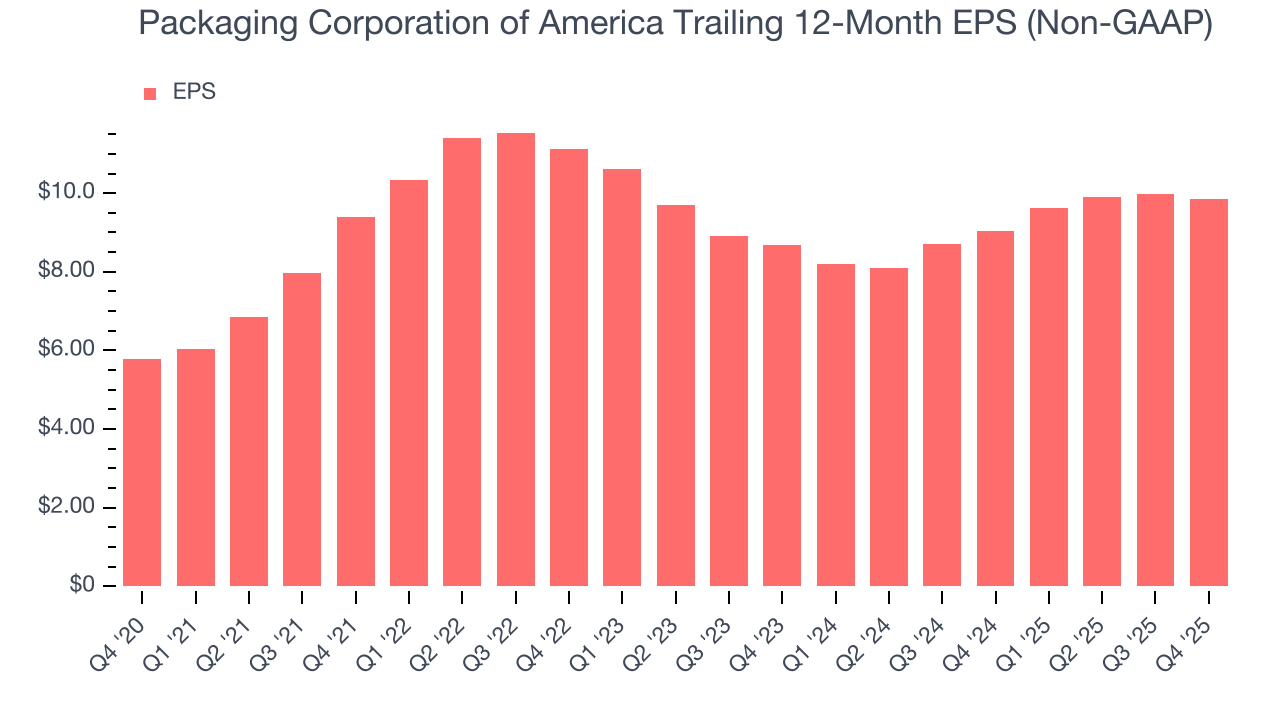
Packaging Corporation of America’s EPS grew at a solid 11.2% compounded annual growth rate over the last five years, higher than its 6.2% annualized revenue growth. However, this alone doesn’t tell us much about its business quality because its operating margin didn’t improve.
We can take a deeper look into Packaging Corporation of America’s earnings to better understand the drivers of its performance. A five-year view shows that Packaging Corporation of America has repurchased its stock, shrinking its share count by 4.7%. This tells us its EPS outperformed its revenue not because of increased operational efficiency but financial engineering, as buybacks boost per share earnings. 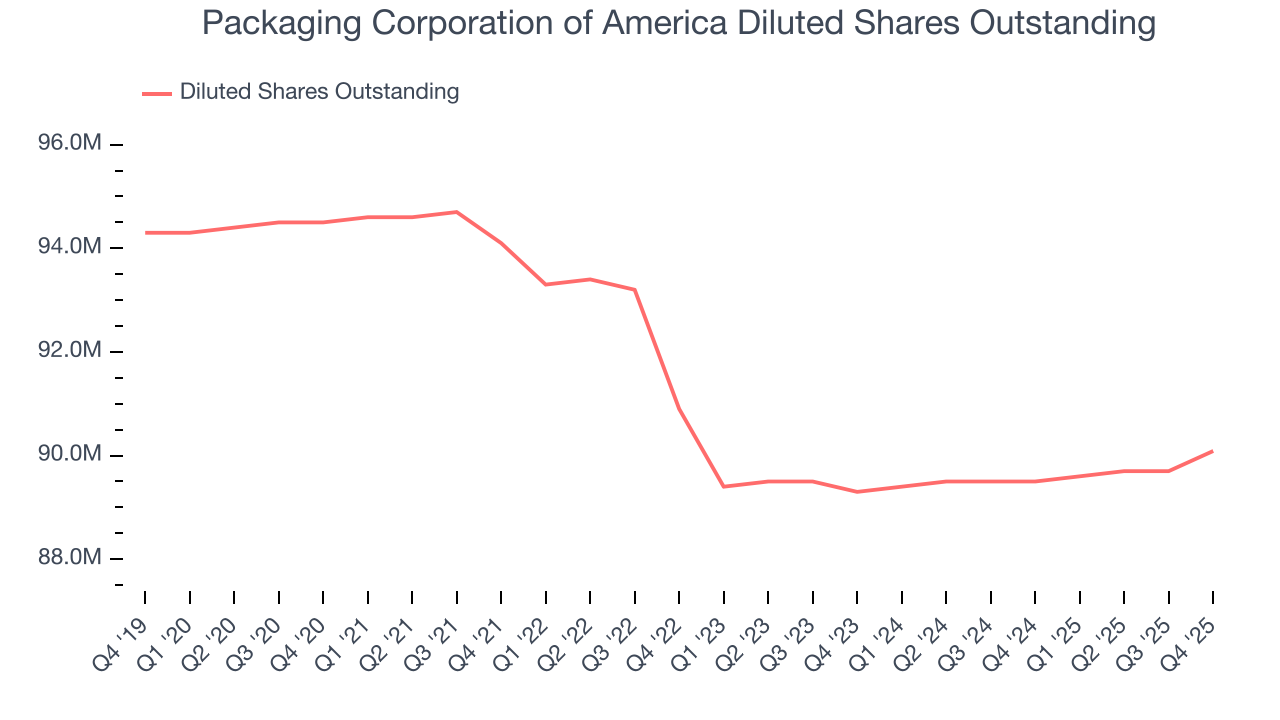
Like with revenue, we analyze EPS over a shorter period to see if we are missing a change in the business.
For Packaging Corporation of America, its two-year annual EPS growth of 6.4% was lower than its five-year trend. We hope its growth can accelerate in the future.
In Q4, Packaging Corporation of America reported adjusted EPS of $2.32, down from $2.47 in the same quarter last year. This print missed analysts’ estimates, but we care more about long-term adjusted EPS growth than short-term movements. Over the next 12 months, Wall Street expects Packaging Corporation of America’s full-year EPS of $9.84 to grow 12.2%.
9. Cash Is King
Although earnings are undoubtedly valuable for assessing company performance, we believe cash is king because you can’t use accounting profits to pay the bills.
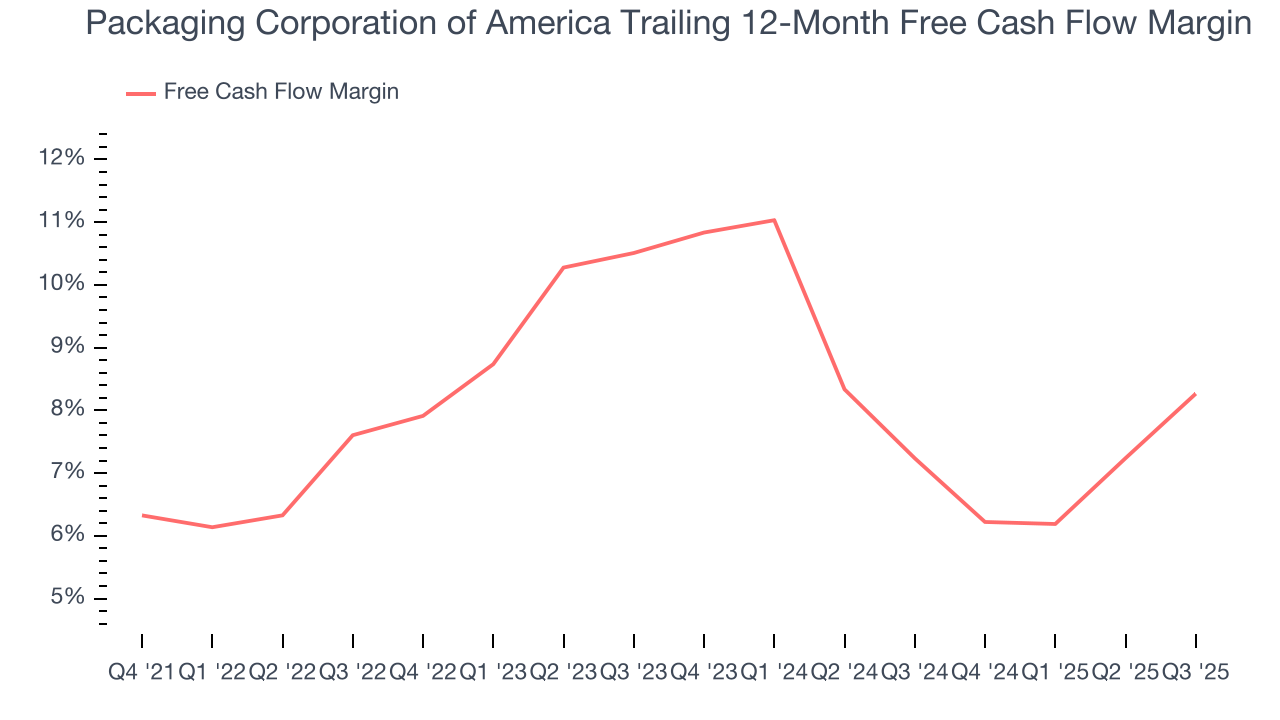
Packaging Corporation of America has shown impressive cash profitability, enabling it to ride out cyclical downturns more easily while maintaining its investments in new and existing offerings. The company’s free cash flow margin averaged 8% over the last five years, better than the broader industrials sector.
Taking a step back, we can see that Packaging Corporation of America’s margin expanded by 3.1 percentage points during that time. This shows the company is heading in the right direction, and we can see it became a less capital-intensive business because its free cash flow profitability rose while its operating profitability fell.
10. Return on Invested Capital (ROIC)
EPS and free cash flow tell us whether a company was profitable while growing its revenue. But was it capital-efficient? A company’s ROIC explains this by showing how much operating profit it makes compared to the money it has raised (debt and equity).
Although Packaging Corporation of America hasn’t been the highest-quality company lately, it historically found a few growth initiatives that worked out well. Its five-year average ROIC was 17.2%, impressive for an industrials business.
We like to invest in businesses with high returns, but the trend in a company’s ROIC is what often surprises the market and moves the stock price. Unfortunately, Packaging Corporation of America’s ROIC averaged 4.1 percentage point decreases over the last few years. We like what management has done in the past, but its declining returns are perhaps a symptom of fewer profitable growth opportunities.
11. Key Takeaways from Packaging Corporation of America’s Q4 Results
We struggled to find many positives in these results. Its revenue missed and its EPS fell short of Wall Street’s estimates. Overall, this quarter could have been better. The stock traded down 2.2% to $218.75 immediately after reporting.
12. Is Now The Time To Buy Packaging Corporation of America?
Updated: January 27, 2026 at 5:30 PM EST
Are you wondering whether to buy Packaging Corporation of America or pass? We urge investors to not only consider the latest earnings results but also longer-term business quality and valuation as well.
Packaging Corporation of America isn’t a terrible business, but it isn’t one of our picks. For starters, its revenue growth was mediocre over the last five years. And while its market-beating ROIC suggests it has been a well-managed company historically, the downside is its diminishing returns show management's prior bets haven't worked out. On top of that, its declining operating margin shows the business has become less efficient.
Packaging Corporation of America’s P/E ratio based on the next 12 months is 20.2x. This valuation multiple is fair, but we don’t have much faith in the company. We're pretty confident there are superior stocks to buy right now.
Wall Street analysts have a consensus one-year price target of $228.70 on the company (compared to the current share price of $218.75).