
Laureate Education (LAUR)
Laureate Education keeps us up at night. Its weak sales growth and low returns on capital show it struggled to generate demand and profits.― StockStory Analyst Team


1. News




2. Summary
Why We Think Laureate Education Will Underperform
Founded in 1998 by Douglas L. Becker and based in Miami, Laureate Education (NASDAQ:LAUR) is a global network of higher education institutions.
- Annual revenue growth of 7.7% over the last five years was below our standards for the consumer discretionary sector
- Earnings per share fell by 9% annually over the last five years while its revenue grew, showing its incremental sales were much less profitable
- Low free cash flow margin gives it little breathing room, constraining its ability to self-fund growth or return capital to shareholders
Laureate Education doesn’t meet our quality standards. We’re on the lookout for more interesting opportunities.
Why There Are Better Opportunities Than Laureate Education




Laureate Education is trading at $35.11 per share, or 17.8x forward P/E. Yes, this valuation multiple is lower than that of other consumer discretionary peers, but we’ll remind you that you often get what you pay for.
Cheap stocks can look like great bargains at first glance, but you often get what you pay for. These mediocre businesses often have less earnings power, meaning there is more reliance on a re-rating to generate good returns - an unlikely scenario for low-quality companies.
3. Laureate Education (LAUR) Research Report: Q4 CY2025 Update
Higher education company Laureate Education (NASDAQ:LAUR) reported Q4 CY2025 results topping the market’s revenue expectations, with sales up 27.9% year on year to $541.4 million. The company’s full-year revenue guidance of $1.90 billion at the midpoint came in 2.2% above analysts’ estimates. Its GAAP profit of $1.17 per share was 48.5% above analysts’ consensus estimates.
Laureate Education (LAUR) Q4 CY2025 Highlights:
- Revenue: $541.4 million vs analyst estimates of $526.7 million (27.9% year-on-year growth, 2.8% beat)
- EPS (GAAP): $1.17 vs analyst estimates of $0.79 (48.5% beat)
- Adjusted EBITDA: $204.3 million vs analyst estimates of $199.1 million (37.7% margin, 2.6% beat)
- EBITDA guidance for the upcoming financial year 2026 is $588 million at the midpoint, above analyst estimates of $576.9 million
- Operating Margin: 33.2%, up from 29.3% in the same quarter last year
- Free Cash Flow Margin: 4.9%, up from 2.4% in the same quarter last year
- Enrolled Students: 497,700, up 25,700 year on year
- Market Capitalization: $5.17 billion
Company Overview
Founded in 1998 by Douglas L. Becker and based in Miami, Laureate Education (NASDAQ:LAUR) is a global network of higher education institutions.
Laureate Education has both traditional campus-based learning and online offerings. The company's institutions offer undergraduate, master's, and doctoral degree programs in disciplines such as business, healthcare, engineering, and education.
A focus of Laureate Education is the internationalization of its curriculum and student body. Many of its institutions hold a diverse mix of local and international students, fostering a multicultural learning environment.
Laureate Education also offers opportunities for student exchanges and global learning experiences across its network, which includes universities in Mexico and Peru.
We note the company's historical financials are distorted because it conducted several divestitures between 2018 and 2019. Divested assets include Kendall College, University of St. Augustine for Health Sciences, Universidad Europea de Madrid, and many others.
4. Consumer Discretionary - Education Services
The Consumer Discretionary sector, by definition, is made up of companies selling non-essential goods and services. When economic conditions deteriorate or tastes shift, consumers can easily cut back or eliminate these purchases. For long-term investors with five-year holding periods, this creates a structural challenge: the sector is inherently hit-driven, with low switching costs and fickle customers. As a result, only a handful of companies can reliably grow demand and compound earnings over long periods, which is why our bar is high and High Quality ratings are rare.
Education services companies provide postsecondary instruction, professional certifications, test preparation, and corporate training, both online and in-person. Tailwinds include lifelong-learning demand driven by rapid technological change, employer-sponsored upskilling programs, and growing acceptance of online credentials. Headwinds are substantial: heavy regulatory oversight—particularly around student-loan eligibility and enrollment practices—can abruptly alter business models. Reputational risk from scrutiny over student outcomes and debt burdens constrains marketing strategies. Competition from free or low-cost digital alternatives (MOOCs, employer-built academies) pressures pricing.
Laureate Education's primary competitors include Strategic Education (NASDAQ:STRA), Adtalem Global Education (NYSE:ATGE), and Grand Canyon Education (NASDAQ:LOPE).
5. Revenue Growth
Examining a company’s long-term performance can provide clues about its quality. Any business can put up a good quarter or two, but the best consistently grow over the long haul. Over the last five years, Laureate Education grew its sales at a 10.7% annual rate. Though this growth is acceptable on an absolute basis, we need to see more than just topline growth for the consumer discretionary sector, which can display significant earnings volatility. This means our bar for the sector is particularly high, reflecting the non-essential and hit-driven nature of the products and services offered. Additionally, five-year CAGR starts around Covid, when revenue was depressed then rebounded.
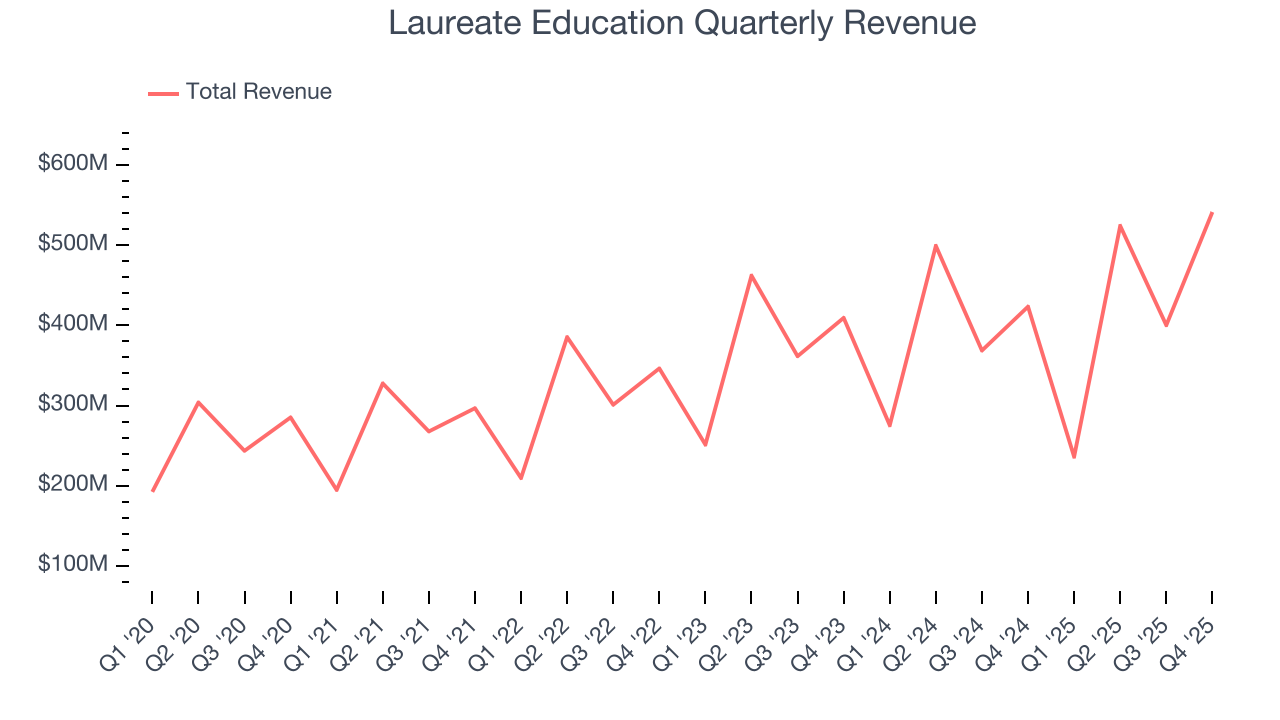
We at StockStory place the most emphasis on long-term growth, but within consumer discretionary, a stretched historical view may miss a company riding a successful new product or trend. Laureate Education’s recent performance shows its demand has slowed as its annualized revenue growth of 7.1% over the last two years was below its five-year trend. We’re wary when companies in the sector see decelerations in revenue growth, as it could signal changing consumer tastes aided by low switching costs. 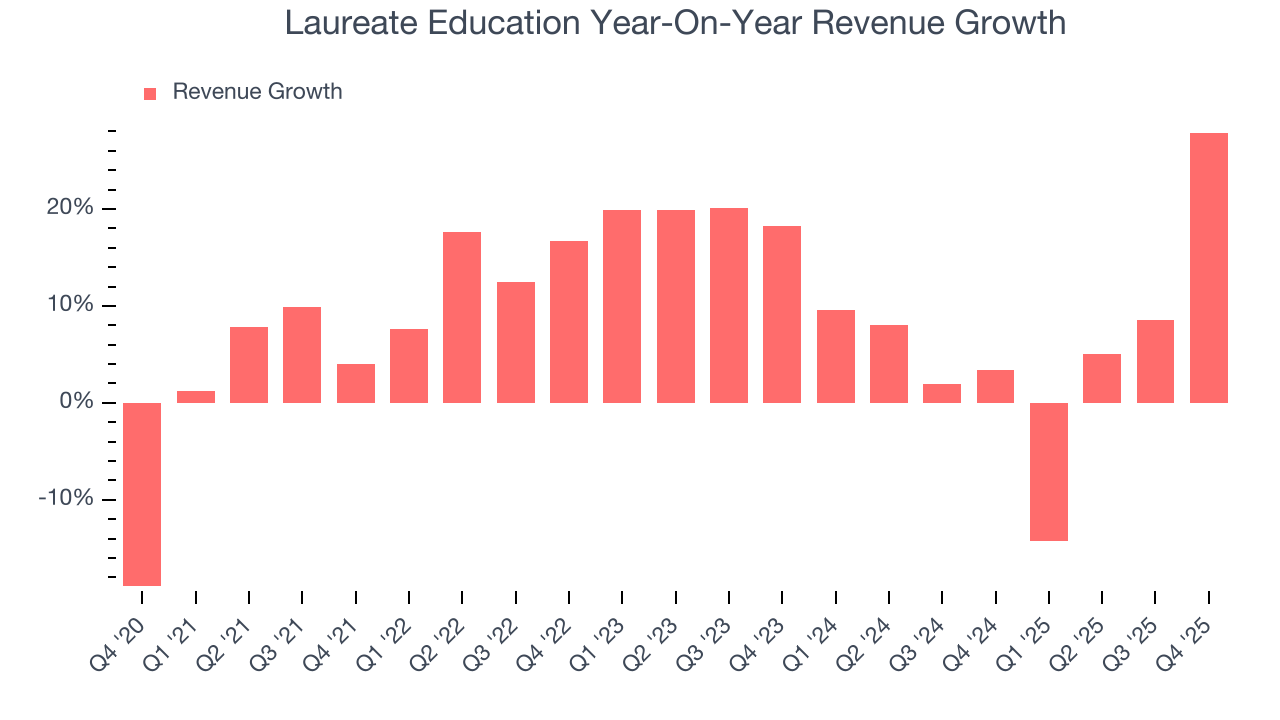
Laureate Education also discloses its number of enrolled students, which reached 497,700 in the latest quarter. Over the last two years, Laureate Education’s enrolled students averaged 5.3% year-on-year growth. Because this number is lower than its revenue growth during the same period, we can see the company’s monetization has risen. 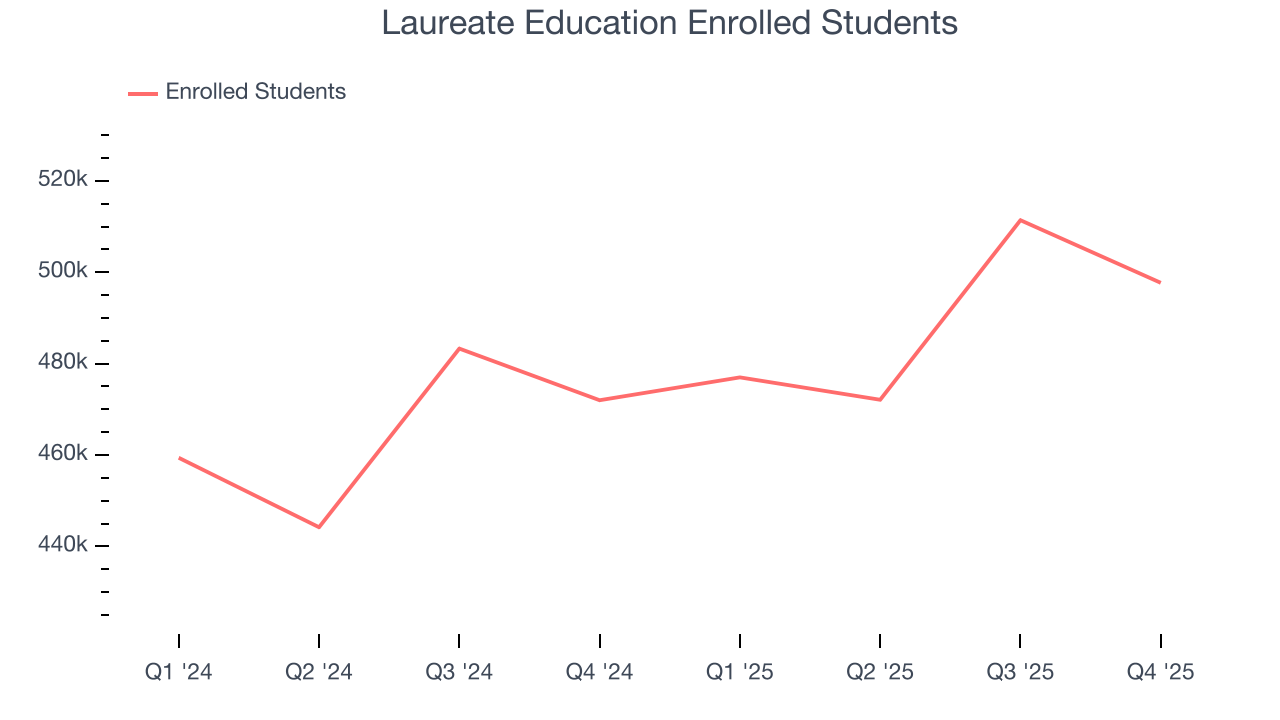
This quarter, Laureate Education reported robust year-on-year revenue growth of 27.9%, and its $541.4 million of revenue topped Wall Street estimates by 2.8%.
Looking ahead, sell-side analysts expect revenue to grow 9.5% over the next 12 months. While this projection suggests its newer products and services will catalyze better top-line performance, it is still below the sector average.
6. Operating Margin
Laureate Education’s operating margin has been trending up over the last 12 months and averaged 24.6% over the last two years. The company’s higher efficiency is a breath of fresh air, but its suboptimal cost structure means it still sports lousy profitability for a consumer discretionary business.
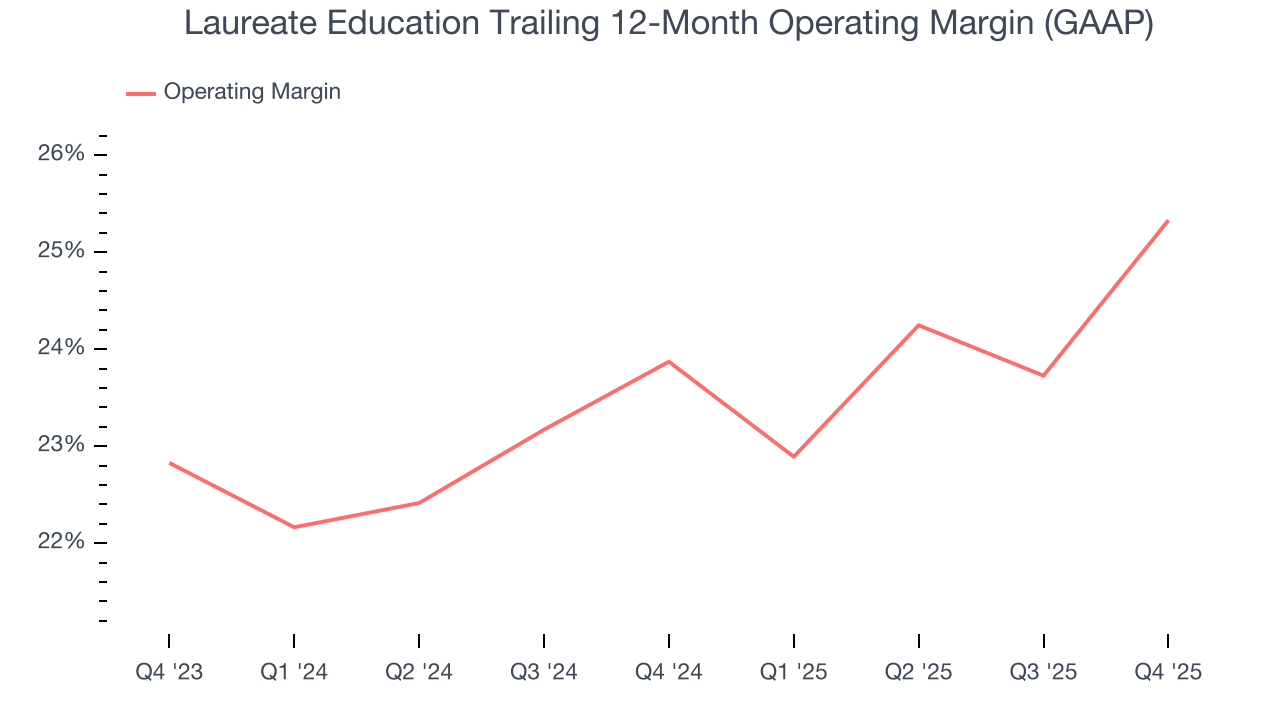
In Q4, Laureate Education generated an operating margin profit margin of 33.2%, up 3.8 percentage points year on year. This increase was a welcome development and shows it was more efficient.
7. Earnings Per Share
Revenue trends explain a company’s historical growth, but the long-term change in earnings per share (EPS) points to the profitability of that growth – for example, a company could inflate its sales through excessive spending on advertising and promotions.
Laureate Education’s full-year EPS flipped from negative to positive over the last five years. This is encouraging and shows it’s at a critical moment in its life.
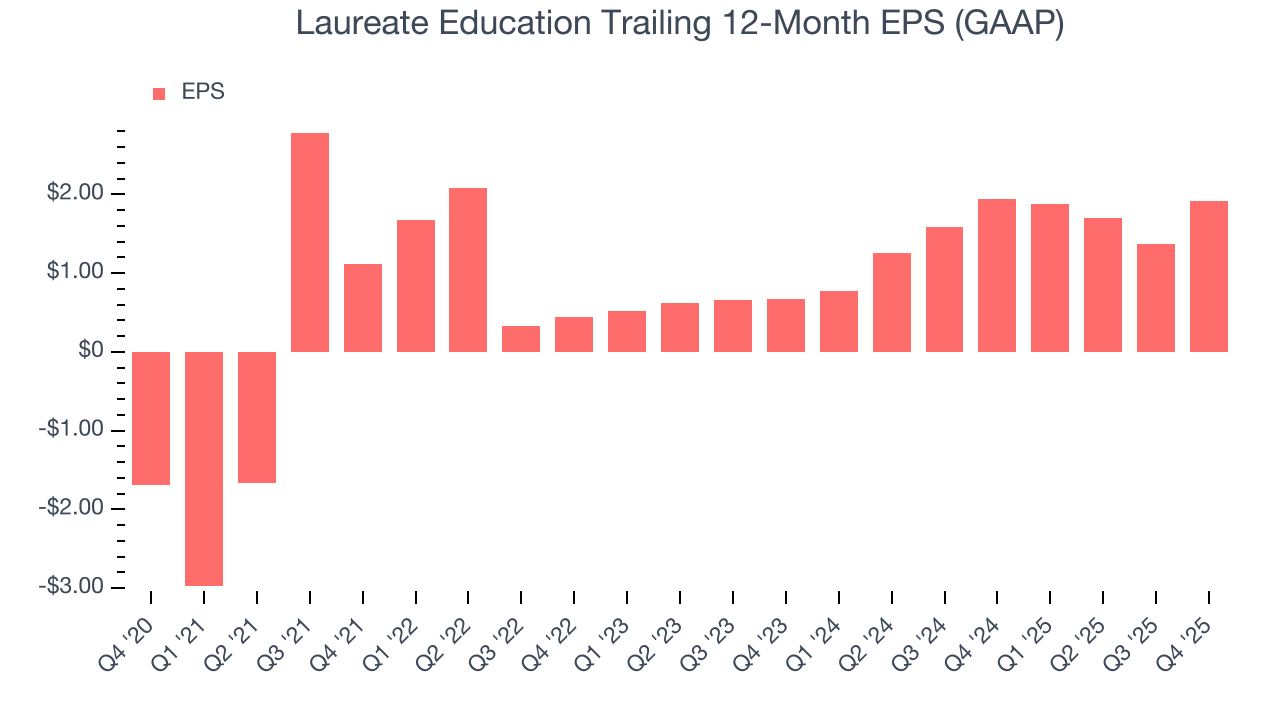
In Q4, Laureate Education reported EPS of $1.17, up from $0.62 in the same quarter last year. This print easily cleared analysts’ estimates, and shareholders should be content with the results. Over the next 12 months, Wall Street expects Laureate Education’s full-year EPS of $1.92 to grow 7.3%.
8. Cash Is King
If you’ve followed StockStory for a while, you know we emphasize free cash flow. Why, you ask? We believe that in the end, cash is king, and you can’t use accounting profits to pay the bills.
Laureate Education has shown poor cash profitability over the last two years, giving the company limited opportunities to return capital to shareholders. Its free cash flow margin averaged 13.3%, lousy for a consumer discretionary business.
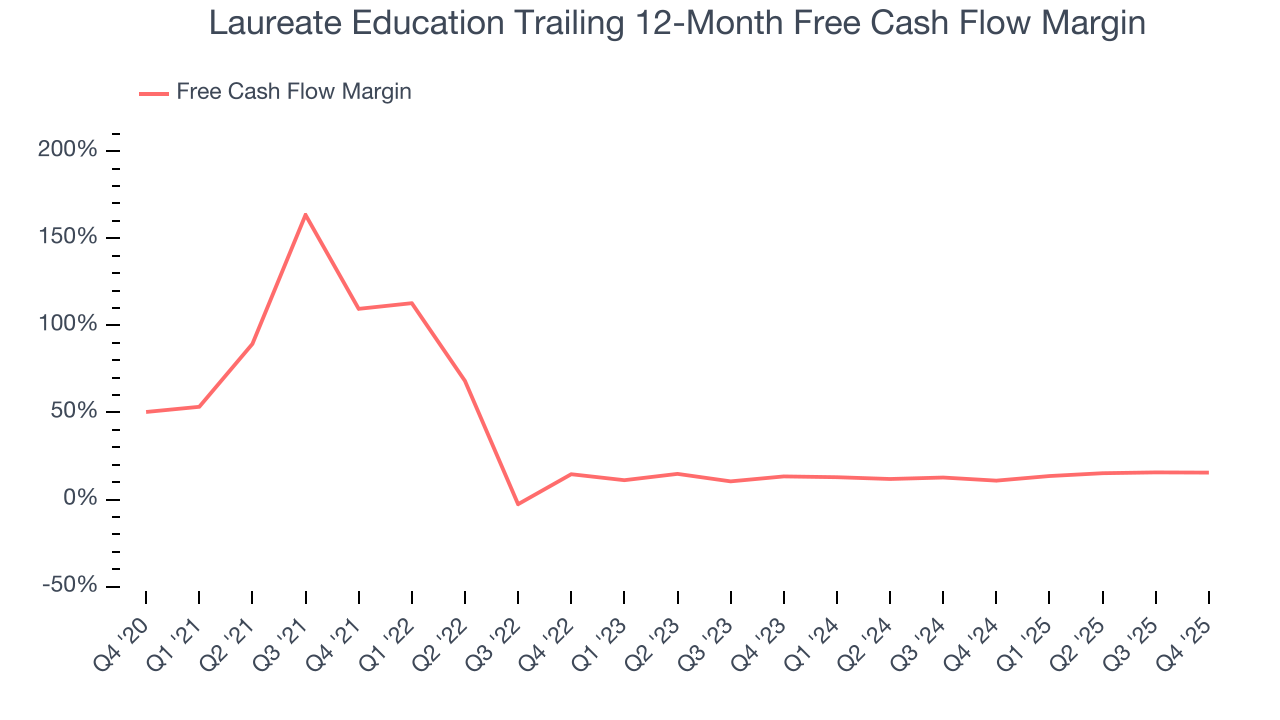
Laureate Education’s free cash flow clocked in at $26.5 million in Q4, equivalent to a 4.9% margin. This result was good as its margin was 2.5 percentage points higher than in the same quarter last year, but we wouldn’t read too much into the short term because investment needs can be seasonal, leading to temporary swings. Long-term trends carry greater meaning.
9. Return on Invested Capital (ROIC)
EPS and free cash flow tell us whether a company was profitable while growing its revenue. But was it capital-efficient? Enter ROIC, a metric showing how much operating profit a company generates relative to the money it has raised (debt and equity).
Laureate Education historically did a mediocre job investing in profitable growth initiatives. Its five-year average ROIC was 14.4%, somewhat low compared to the best consumer discretionary companies that consistently pump out 25%+.
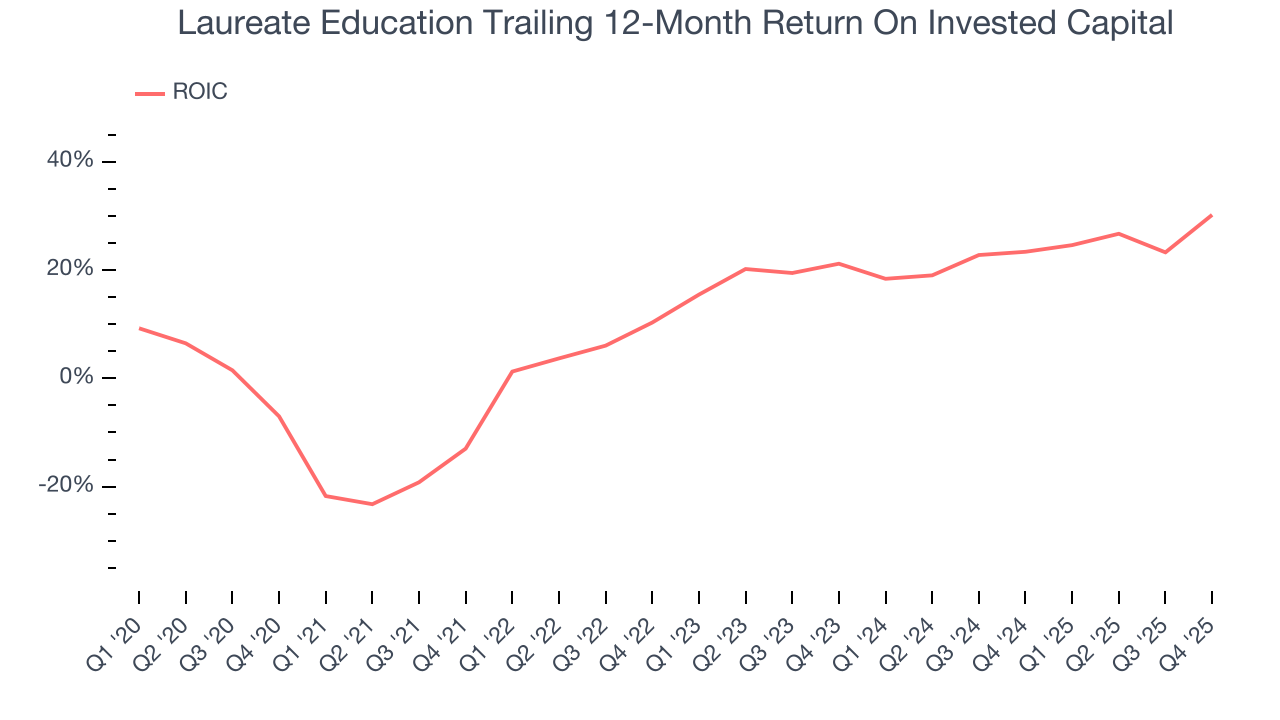
We like to invest in businesses with high returns, but the trend in a company’s ROIC is what often surprises the market and moves the stock price. Laureate Education’s ROIC has increased significantly over the last few years. This is a good sign, and we hope the company can continue improving.
10. Balance Sheet Assessment
Laureate Education reported $146.7 million of cash and $515.5 million of debt on its balance sheet in the most recent quarter. As investors in high-quality companies, we primarily focus on two things: 1) that a company’s debt level isn’t too high and 2) that its interest payments are not excessively burdening the business.
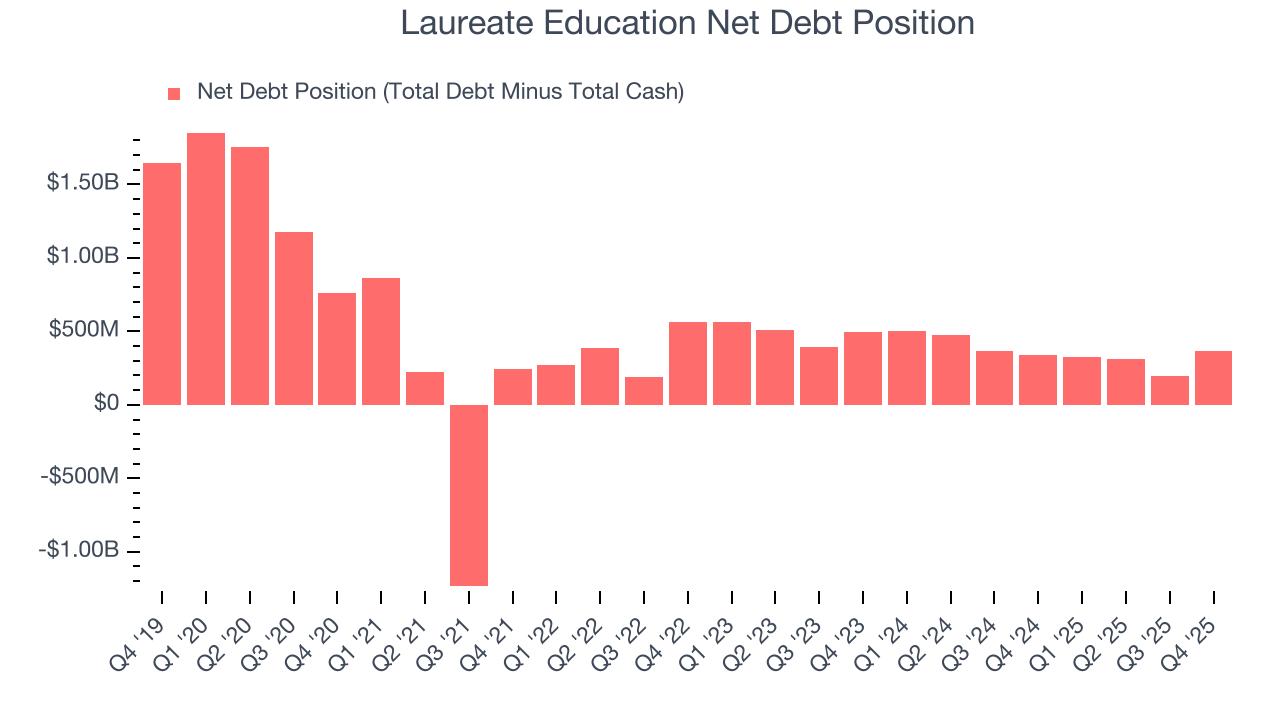
With $519 million of EBITDA over the last 12 months, we view Laureate Education’s 0.7× net-debt-to-EBITDA ratio as safe. We also see its $3.52 million of annual interest expenses as appropriate. The company’s profits give it plenty of breathing room, allowing it to continue investing in growth initiatives.
11. Key Takeaways from Laureate Education’s Q4 Results
It was good to see Laureate Education beat analysts’ EPS expectations this quarter. We were also glad its full-year revenue guidance exceeded Wall Street’s estimates. Overall, we think this was a solid quarter with some key areas of upside. The stock traded up 3.1% to $36.18 immediately after reporting.
12. Is Now The Time To Buy Laureate Education?
Updated: February 19, 2026 at 7:40 AM EST
Before deciding whether to buy Laureate Education or pass, we urge investors to consider business quality, valuation, and the latest quarterly results.
We see the value of companies helping consumers, but in the case of Laureate Education, we’re out. On top of that, Laureate Education’s number of enrolled students has disappointed, and its projected EPS for the next year is lacking.
Laureate Education’s P/E ratio based on the next 12 months is 17.3x. This valuation multiple is fair, but we don’t have much confidence in the company. There are better stocks to buy right now.
Wall Street analysts have a consensus one-year price target of $38.92 on the company (compared to the current share price of $36.18).