
Skyward Specialty Insurance (SKWD)
Skyward Specialty Insurance is a compelling stock. Its revenue and EPS are projected to skyrocket next year, an optimistic sign for its share price.― StockStory Analyst Team


1. News


2. Summary
Why We Like Skyward Specialty Insurance
Founded in 2006 to serve markets where standard insurance coverage falls short, Skyward Specialty Insurance (NASDAQ:SKWD) provides customized commercial property, casualty, and health insurance solutions for underserved or specialized market niches.
- Impressive 26.7% annual revenue growth over the last four years indicates it’s winning market share this cycle
- Incremental sales over the last two years have been highly profitable as its earnings per share increased by 38.2% annually, topping its revenue gains
- Market penetration was impressive this cycle as its net premiums earned expanded by 27.1% annually over the last four years
We’re optimistic about Skyward Specialty Insurance. The price seems reasonable in light of its quality, so this might be a good time to buy some shares.
Why Is Now The Time To Buy Skyward Specialty Insurance?








At $45.01 per share, Skyward Specialty Insurance trades at 1.6x forward P/B. This price is justified - even cheap depending on how much you believe in the bull case - for the business fundamentals.
Where you buy a stock impacts returns. Our analysis shows that business quality is a much bigger determinant of market outperformance over the long term compared to entry price, but getting a good deal on a stock certainly isn’t a bad thing.
3. Skyward Specialty Insurance (SKWD) Research Report: Q4 CY2025 Update
Specialty insurance provider Skyward Specialty Insurance (NASDAQ:SKWD) reported revenue ahead of Wall Street’s expectations in Q4 CY2025, with sales up 26.7% year on year to $385.6 million. Its non-GAAP profit of $1.17 per share was 14.9% above analysts’ consensus estimates.
Skyward Specialty Insurance (SKWD) Q4 CY2025 Highlights:
- Net Premiums Earned: $356.8 million vs analyst estimates of $356.5 million (21.7% year-on-year growth, in line)
- Revenue: $385.6 million vs analyst estimates of $380.5 million (26.7% year-on-year growth, 1.3% beat)
- Combined Ratio: 88.5% vs analyst estimates of 90.9% (241.4 basis point beat)
- Adjusted EPS: $1.17 vs analyst estimates of $1.02 (14.9% beat)
- Book Value per Share: $24.92 vs analyst estimates of $23.51 (25.9% year-on-year growth, 6% beat)
- Market Capitalization: $2.07 billion
Company Overview
Founded in 2006 to serve markets where standard insurance coverage falls short, Skyward Specialty Insurance (NASDAQ:SKWD) provides customized commercial property, casualty, and health insurance solutions for underserved or specialized market niches.
Skyward operates through eight distinct underwriting divisions, each targeting specific industry segments that require tailored insurance approaches. These divisions include Accident & Health, which offers medical stop-loss solutions for small and medium-sized businesses; Global Property, serving large entities with complex property exposures; and Professional Lines, providing liability coverage for management, professionals, and allied health organizations.
The company differentiates itself by developing specialized expertise in markets that larger insurers might overlook or find too complex to serve efficiently. For example, a mid-sized construction company with unique risk exposures might work with Skyward's Industry Solutions division to obtain customized general liability, excess liability, and workers' compensation coverage that addresses their specific operational challenges.
Skyward distributes its products through multiple channels, including retail agents, wholesale brokers, program administrators, and captive managers. This multi-channel approach allows the company to efficiently reach its target markets. The business model balances exposure across both excess and surplus (E&S) markets, which handle non-standard risks, and admitted markets, where insurance products are regulated by state insurance departments.
Revenue is generated through premium payments for the various insurance coverages provided. The company's diversified portfolio spans multiple lines of business including general liability, excess liability, professional liability, commercial auto, property, surety, and workers' compensation, helping to spread risk across different industry sectors and liability durations.
4. Property & Casualty Insurance
Property & Casualty (P&C) insurers protect individuals and businesses against financial loss from damage to property or from legal liability. This is a cyclical industry, and the sector benefits when there is 'hard market', characterized by strong premium rate increases that outpace loss and cost inflation, resulting in robust underwriting margins. The opposite is true in a 'soft market'. Interest rates also matter, as they determine the yields earned on fixed-income portfolios. On the other hand, P&C insurers face a major secular headwind from the increasing frequency and severity of catastrophe losses due to climate change. Furthermore, the liability side of the business is pressured by 'social inflation'—the trend of rising litigation costs and larger jury awards.
Skyward Specialty Insurance competes with other specialty insurers such as Kinsale Capital Group (NYSE:KNSL), RLI Corp (NYSE:RLI), and James River Group Holdings (NASDAQ:JRVR), as well as larger commercial insurers that offer specialty lines like Travelers (NYSE:TRV) and Chubb (NYSE:CB).
5. Revenue Growth
Insurers earn revenue three ways. The core insurance business itself, often called underwriting and represented in the income statement as premiums earned, is one way. Investment income from investing the “float” (premiums collected upfront not yet paid out as claims) in assets such as fixed-income assets and equities is the second way. Fees from various sources such as policy administration, annuities, or other value-added services is the third. Thankfully, Skyward Specialty Insurance’s 26.7% annualized revenue growth over the last four years was incredible. Its growth surpassed the average insurance company and shows its offerings resonate with customers, a great starting point for our analysis.
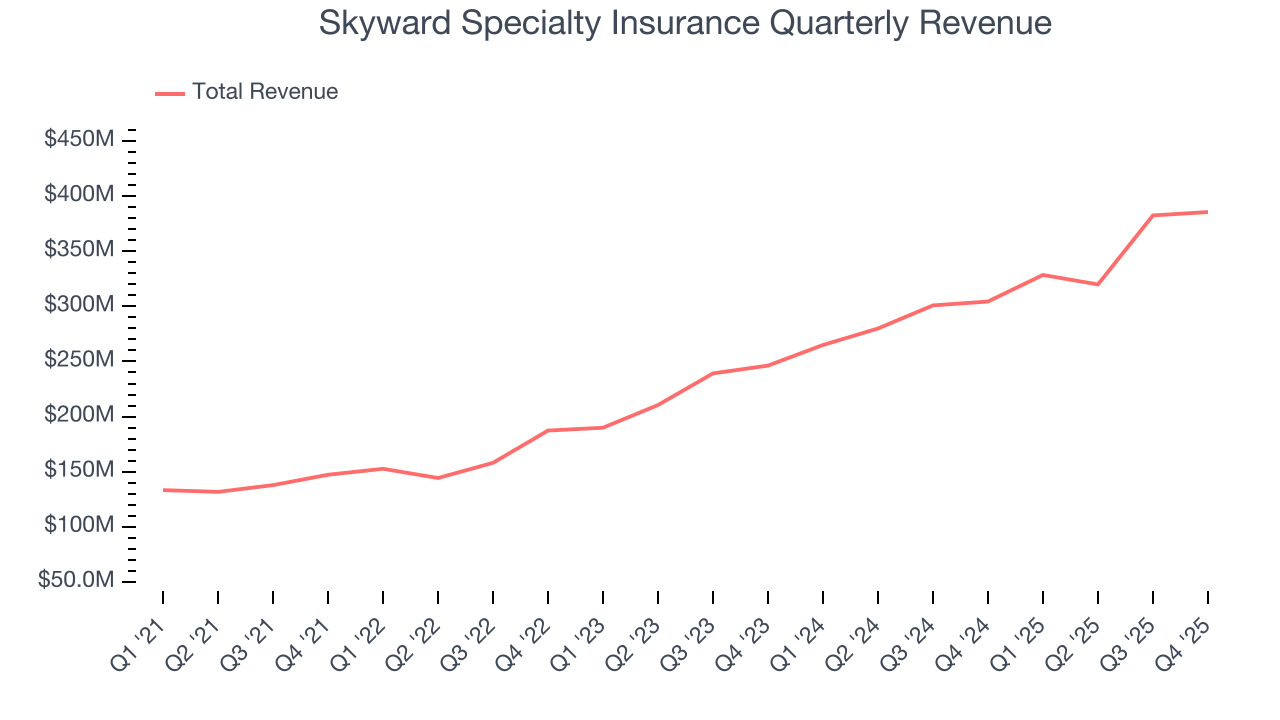
We at StockStory place the most emphasis on long-term growth, but within financials, a stretched historical view may miss recent interest rate changes, market returns, and industry trends. Skyward Specialty Insurance’s annualized revenue growth of 26.4% over the last two years aligns with its four-year trend, suggesting its demand was predictably strong. 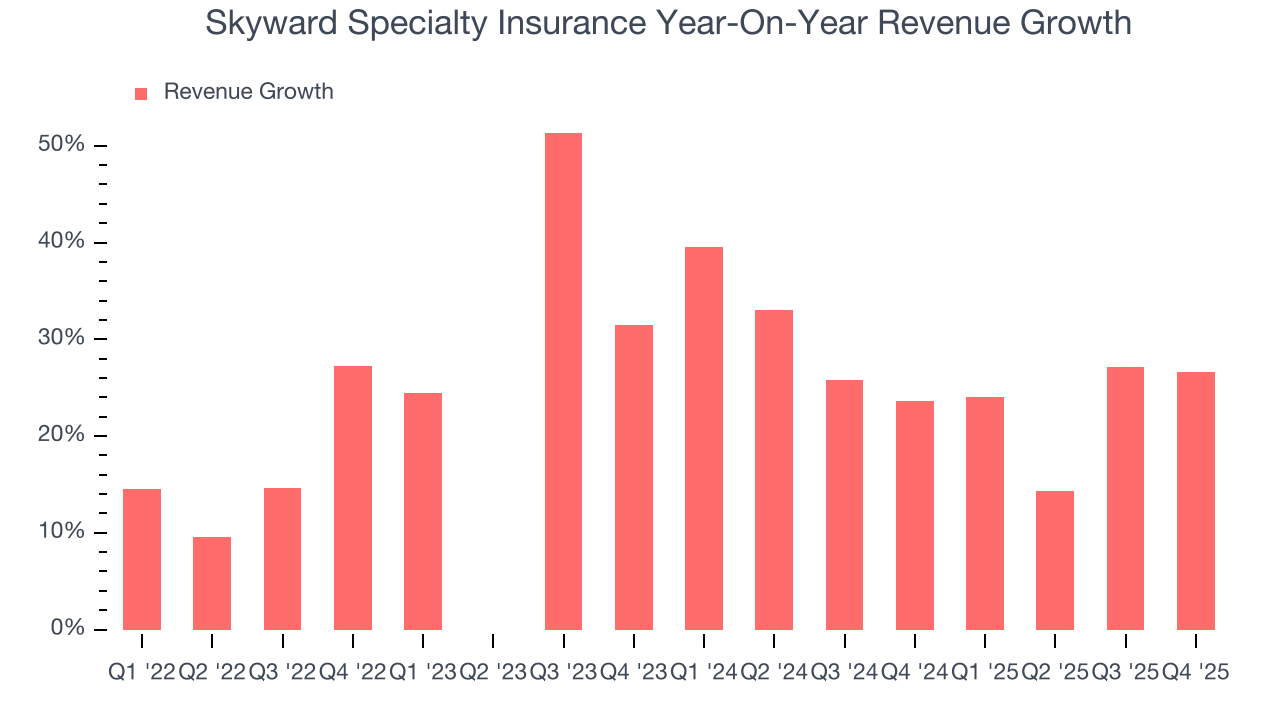 Note: Quarters not shown were determined to be outliers, impacted by outsized investment gains/losses that are not indicative of the recurring fundamentals of the business.
This quarter, Skyward Specialty Insurance reported robust year-on-year revenue growth of 26.7%, and its $385.6 million of revenue topped Wall Street estimates by 1.3%.
Net premiums earned made up 92.7% of the company’s total revenue during the last five years, meaning Skyward Specialty Insurance lives and dies by its underwriting activities because non-insurance operations barely move the needle.
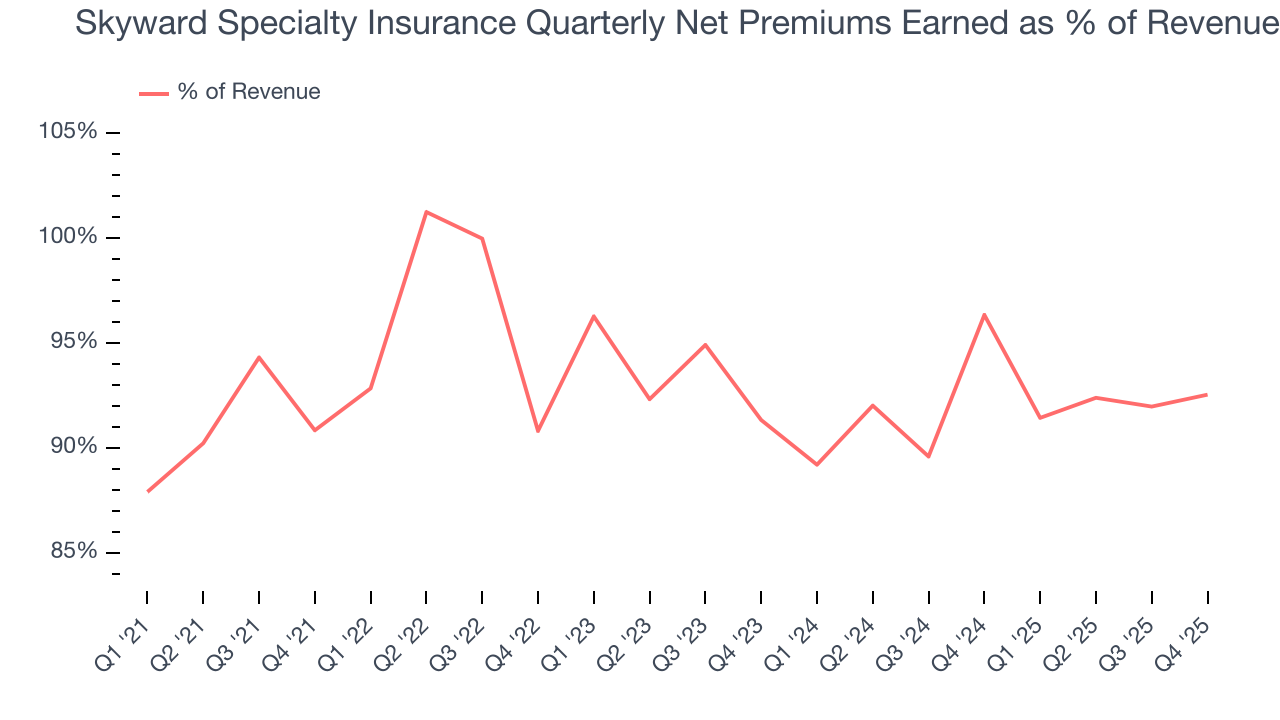
While insurers generate revenue from multiple sources, investors view net premiums earned as the cornerstone - its direct link to core operations stands in sharp contrast to the unpredictability of investment returns and fees.
6. Net Premiums Earned
When insurers sell policies, they protect themselves from extremely large losses or an outsized accumulation of losses with reinsurance (insurance for insurance companies). Net premiums earned are therefore net of what’s ceded to reinsurers as a risk mitigation and transfer strategy.
Skyward Specialty Insurance’s net premiums earned has grown at a 27.1% annualized rate over the last four years, much better than the broader insurance industry and in line with its total revenue.
When analyzing Skyward Specialty Insurance’s net premiums earned over the last two years, we can see that growth decelerated to 25.4% annually. Since two-year net premiums earned grew slower than total revenue over this period, it’s implied that other line items such as investment income grew at a faster rate. These extra revenue streams are important to the bottom line, yet their performance can be inconsistent. Some firms have been more successful and consistent in managing their float, but sharp fluctuations in the fixed income and equity markets can dramatically affect short-term results.
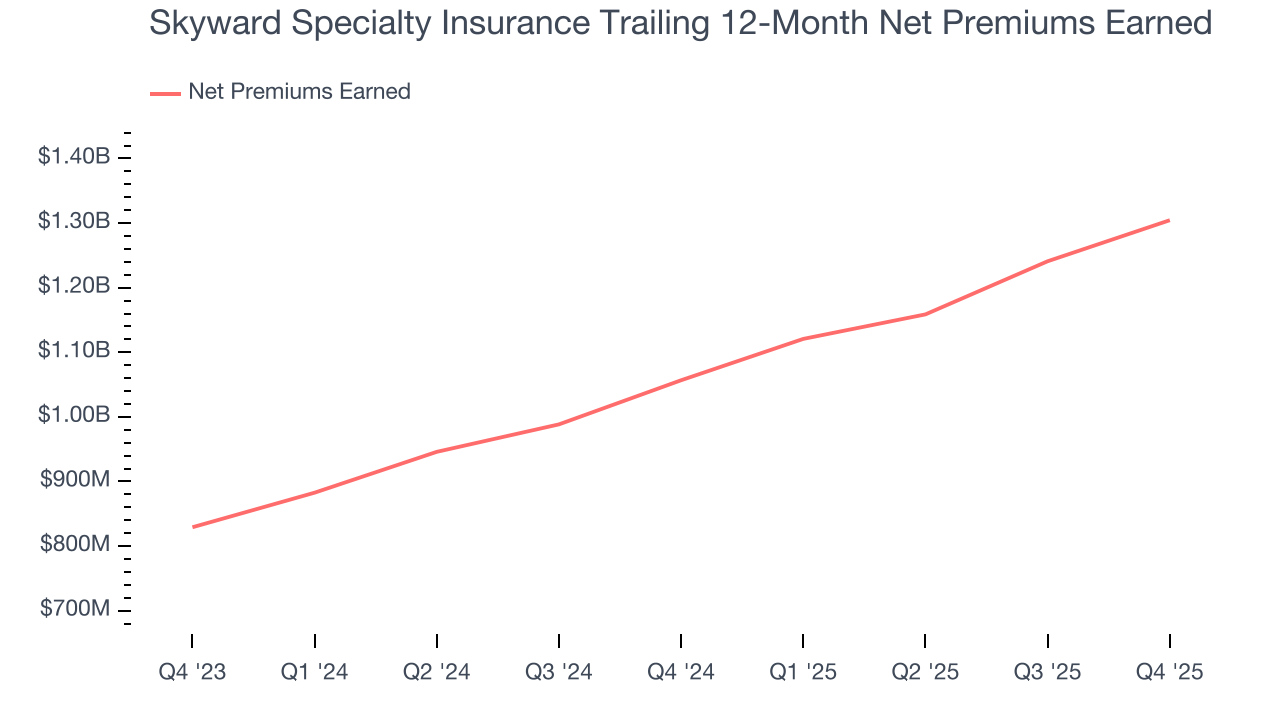
In Q4, Skyward Specialty Insurance produced $356.8 million of net premiums earned, up a hearty 21.7% year on year and in line with Wall Street Consensus estimates.
7. Pre-Tax Profit Margin
Revenue growth is one major determinant of business quality, and the efficiency of operations is another. For insurance companies, we look at pre-tax profit rather than the operating margin that defines sectors such as consumer, tech, and industrials.
This is because insurers are balance sheet businesses, where assets and liabilities define the core economics. This means that interest income and expense should be factored into the definition of profit but taxes - which are largely out of a company’s control - should not.
Over the last four years, Skyward Specialty Insurance’s pre-tax profit margin has fallen by 6.5 percentage points, going from 8.8% to 15.3%. It has also expanded by 2.9 percentage points on a two-year basis, showing its expenses have consistently grown at a slower rate than revenue. This typically signals prudent management.
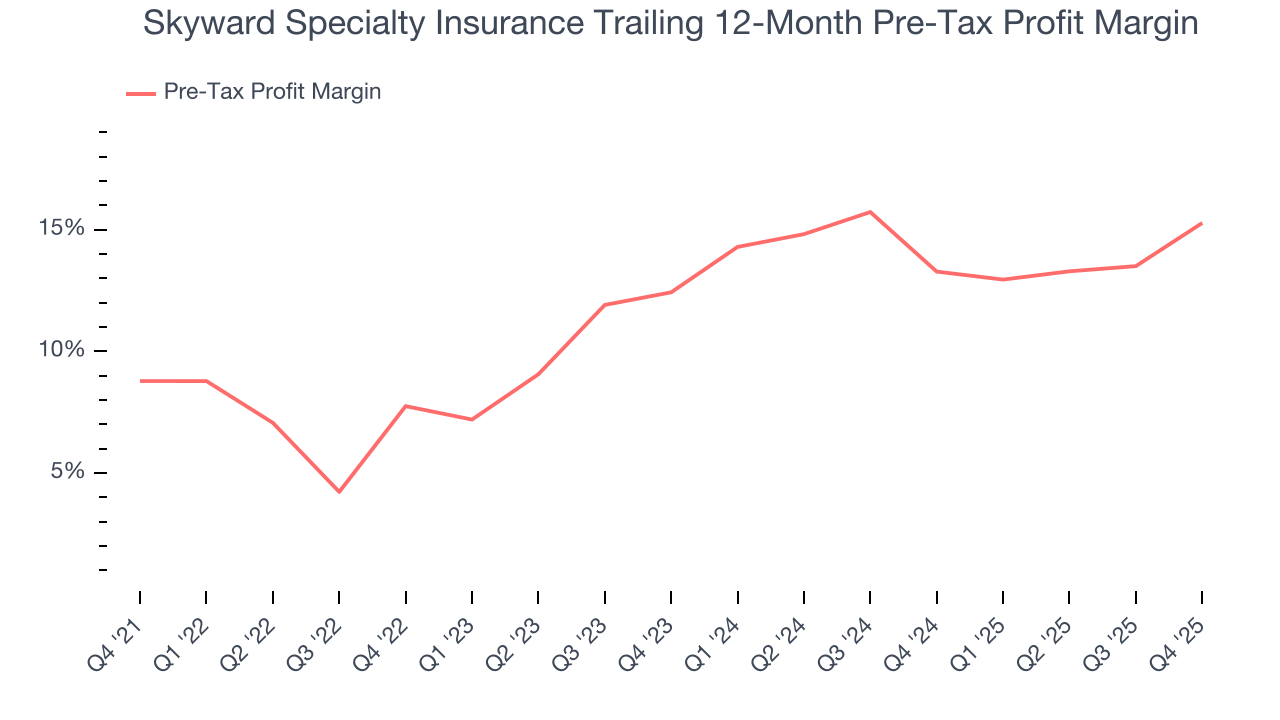
In Q4, Skyward Specialty Insurance’s pre-tax profit margin was 14.2%. This result was 8.1 percentage points better than the same quarter last year.
8. Book Value Per Share (BVPS)
Insurance companies are balance sheet businesses, collecting premiums upfront and paying out claims over time. The float – premiums collected but not yet paid out – are invested, creating an asset base supported by a liability structure. Book value captures this dynamic by measuring:
- Assets (investment portfolio, cash, reinsurance recoverables) - liabilities (claim reserves, debt, future policy benefits)
BVPS is essentially the residual value for shareholders.
We therefore consider BVPS very important to track for insurers and a metric that sheds light on business quality because it reflects long-term capital growth and is harder to manipulate than more commonly-used metrics like EPS.
Skyward Specialty Insurance’s BVPS was flat over the last four years. However, BVPS growth has accelerated recently, growing by 22.6% annually over the last two years from $16.58 to $24.92 per share.
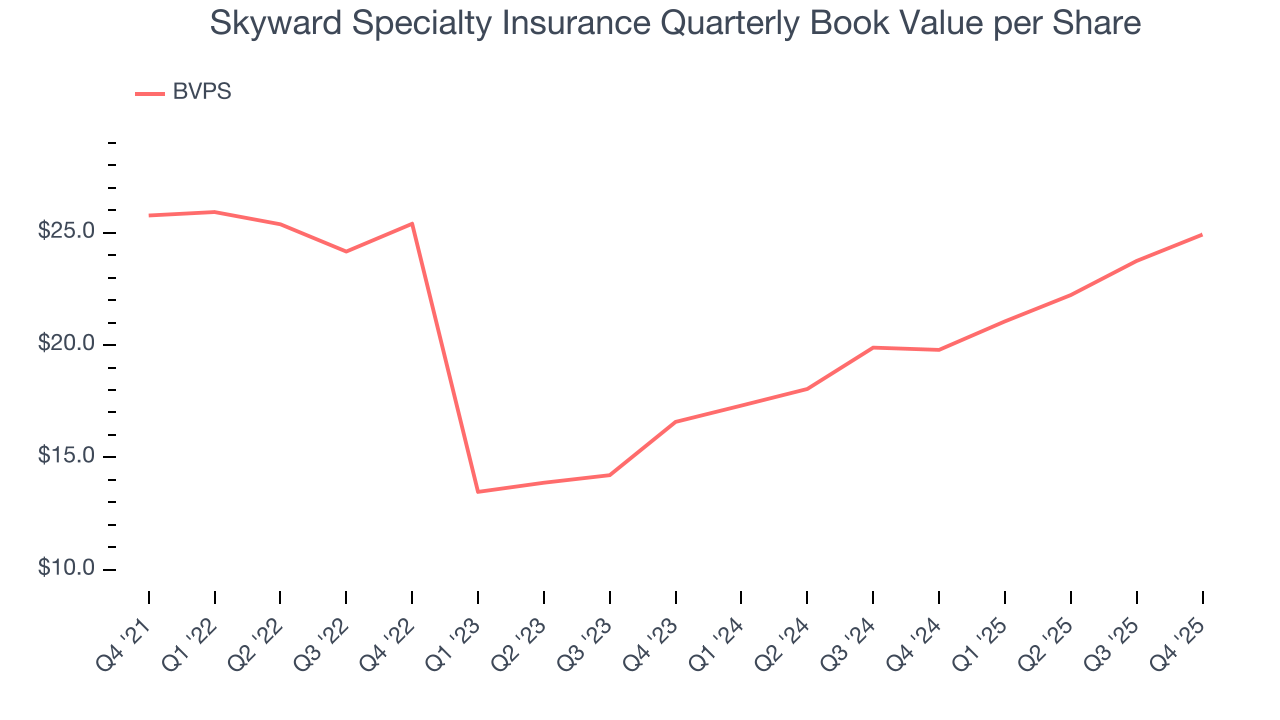
Over the next 12 months, Consensus estimates call for Skyward Specialty Insurance’s BVPS to grow by 21.3% to $23.51, elite growth rate.
9. Balance Sheet Assessment
The debt-to-equity ratio is a widely used measure to assess a company's balance sheet health. A higher ratio means that a business aggressively financed its growth with debt. This can result in higher earnings (if the borrowed funds are invested profitably) but also increases risk.
If debt levels are too high, there could be difficulties in meeting obligations, especially during economic downturns or periods of rising interest rates if the debt has variable-rate payments.
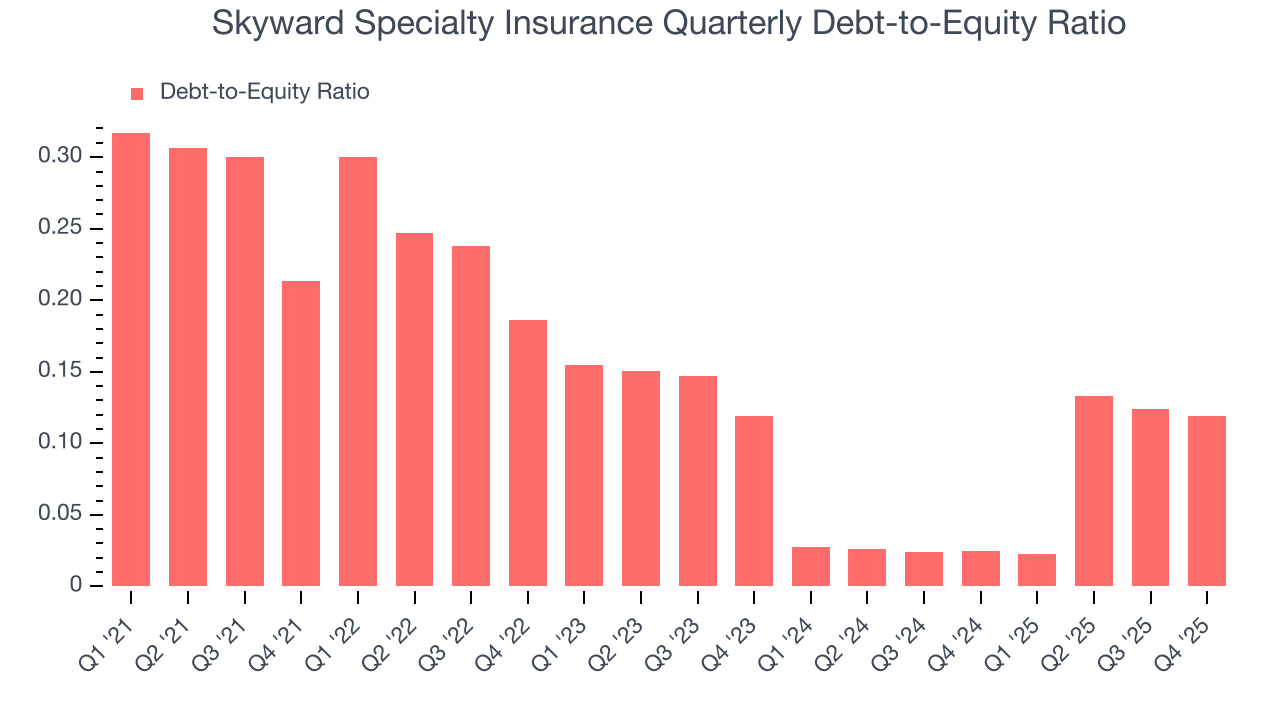
Skyward Specialty Insurance currently has $120 million of debt and $1.01 billion of shareholder's equity on its balance sheet, and over the past four quarters, has averaged a debt-to-equity ratio of 0.1×. We think this is safe and raises no red flags. In general, we’re comfortable with any ratio below 1.0× for an insurance business. Anything below 0.5× is a bonus.
10. Return on Equity
Return on equity (ROE) serves as a comprehensive measure of an insurer's performance, showing how efficiently it converts shareholder capital into profits. Strong ROE performance typically translates to better returns for investors through a combination of earnings retention, share repurchases, and dividend distributions.
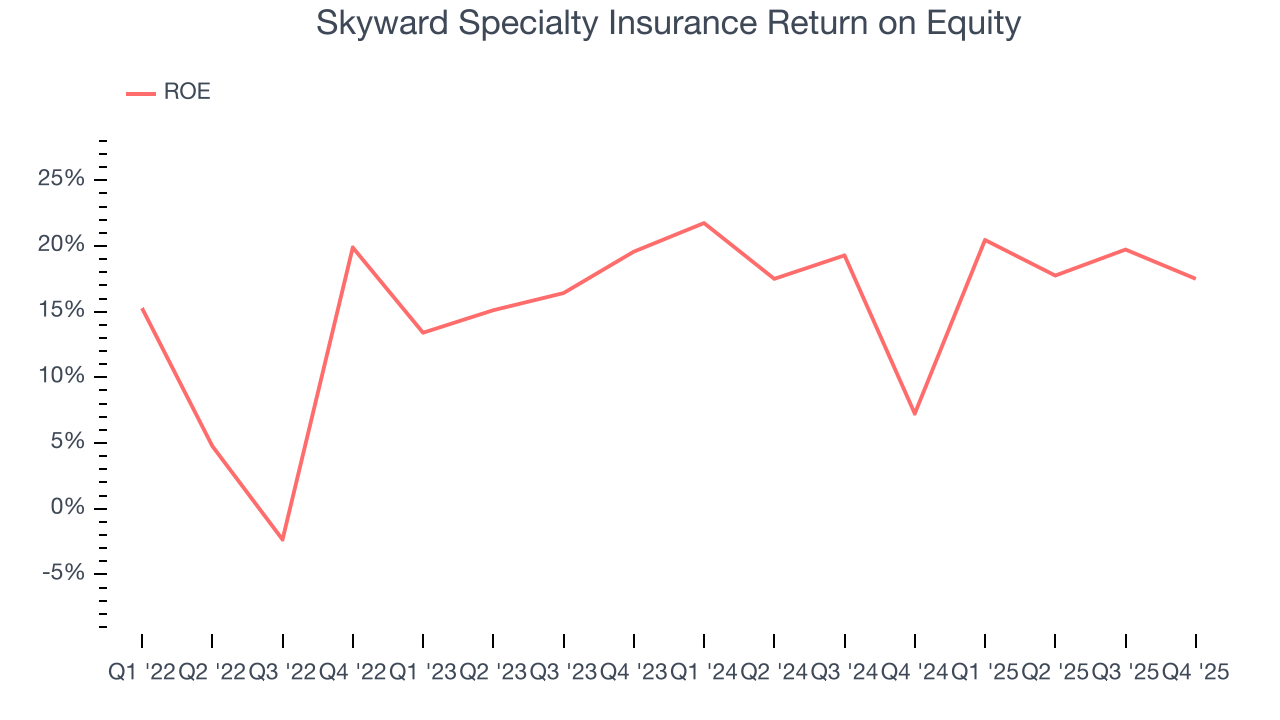
Over the last five years, Skyward Specialty Insurance has averaged an ROE of 15.2%, healthy for a company operating in a sector where the average shakes out around 12.5% and those putting up 20%+ are greatly admired. This shows Skyward Specialty Insurance has a decent competitive moat.
11. Key Takeaways from Skyward Specialty Insurance’s Q4 Results
We were impressed by how significantly Skyward Specialty Insurance blew past analysts’ book value per share expectations this quarter. We were also glad its EPS outperformed Wall Street’s estimates. Zooming out, we think this was a good print with some key areas of upside. The stock remained flat at $47.50 immediately following the results.
12. Is Now The Time To Buy Skyward Specialty Insurance?
Updated: March 18, 2026 at 1:08 AM EDT
Are you wondering whether to buy Skyward Specialty Insurance or pass? We urge investors to not only consider the latest earnings results but also longer-term business quality and valuation as well.
There are multiple reasons why we think Skyward Specialty Insurance is an amazing business. For starters, its revenue growth was exceptional over the last four years and is expected to accelerate over the next 12 months. And while its BVPS growth was weak over the last four years, its net premiums earned growth was exceptional over the last four years. On top of that, Skyward Specialty Insurance’s astounding EPS growth over the last two years shows its profits are trickling down to shareholders.
Skyward Specialty Insurance’s P/B ratio based on the next 12 months is 1.6x. Analyzing the insurance landscape today, Skyward Specialty Insurance’s positive attributes shine bright. We like the stock at this price.
Wall Street analysts have a consensus one-year price target of $60.27 on the company (compared to the current share price of $45.01), implying they see 33.9% upside in buying Skyward Specialty Insurance in the short term.