
Assured Guaranty (AGO)
Assured Guaranty keeps us up at night. Not only are its sales cratering but also its low returns on capital suggest it struggles to generate profits.― StockStory Analyst Team


1. News


2. Summary
Why We Think Assured Guaranty Will Underperform
Serving as a financial safety net for over $11 trillion in debt service payments since its founding in 2003, Assured Guaranty (NYSE:AGO) provides credit protection products that guarantee scheduled payments on municipal bonds, infrastructure projects, and structured finance obligations.
- Sales were flat over the last five years, indicating it’s failed to expand this cycle
- Earnings per share have dipped by 8.7% annually over the past two years, which is concerning because stock prices follow EPS over the long term
- Forecasted revenue decline of 29.2% for the upcoming 12 months implies demand will fall even further
Assured Guaranty is skating on thin ice. We’re redirecting our focus to better businesses.
Why There Are Better Opportunities Than Assured Guaranty







Assured Guaranty is trading at $79.34 per share, or 0.6x forward P/B. This is a cheap valuation multiple, but for good reason. You get what you pay for.
Cheap stocks can look like great bargains at first glance, but you often get what you pay for. These mediocre businesses often have less earnings power, meaning there is more reliance on a re-rating to generate good returns - an unlikely scenario for low-quality companies.
3. Assured Guaranty (AGO) Research Report: Q4 CY2025 Update
Financial guaranty insurer Assured Guaranty (NYSE:AGO) reported Q4 CY2025 results beating Wall Street’s revenue expectations, with sales up 77.6% year on year to $277 million. Its non-GAAP profit of $2.32 per share was 48.4% above analysts’ consensus estimates.
Assured Guaranty (AGO) Q4 CY2025 Highlights:
- Net Premiums Earned: $94 million vs analyst estimates of $93.85 million (8.7% year-on-year decline, in line)
- Revenue: $277 million vs analyst estimates of $198.4 million (77.6% year-on-year growth, 39.6% beat)
- Pre-tax Profit: $165 million (59.6% margin)
- Adjusted EPS: $2.32 vs analyst estimates of $1.56 (48.4% beat)
- Book Value per Share: $126.78 (16.5% year-on-year growth)
- Market Capitalization: $3.97 billion
Company Overview
Serving as a financial safety net for over $11 trillion in debt service payments since its founding in 2003, Assured Guaranty (NYSE:AGO) provides credit protection products that guarantee scheduled payments on municipal bonds, infrastructure projects, and structured finance obligations.
Assured Guaranty operates primarily through its insurance subsidiaries, which apply their credit underwriting expertise to offer financial guaranty insurance. This insurance serves as a safety net for bondholders—if an issuer fails to make scheduled principal or interest payments, Assured Guaranty steps in to cover the shortfall. This protection benefits both issuers and investors: issuers can often achieve lower borrowing costs, while investors gain certainty that they'll receive promised payments.
The company's business spans several key markets. In U.S. public finance, Assured Guaranty insures various municipal obligations including general obligation bonds, tax-backed bonds, utility bonds, transportation infrastructure, healthcare facilities, and higher education institutions. Its non-U.S. business focuses on infrastructure projects, regulated utilities, and renewable energy facilities, with significant operations in the United Kingdom and Europe.
For example, when a municipality issues bonds to finance a new water treatment facility, Assured Guaranty might guarantee those bonds, enabling the municipality to secure better financing terms while providing investors with peace of mind. Similarly, when a public-private partnership develops a toll road, Assured Guaranty's guarantee can make the project's bonds more marketable.
The company generates revenue primarily through insurance premiums, which it collects upfront but recognizes over the life of the insured obligations. It invests these premiums in a portfolio of fixed-income securities and alternative investments to support future claims-paying obligations. Since July 2023, Assured Guaranty has also participated in asset management through its ownership interest in Sound Point Capital Management, which manages credit strategies including collateralized loan obligations and various credit funds.
4. Property & Casualty Insurance
Property & Casualty (P&C) insurers protect individuals and businesses against financial loss from damage to property or from legal liability. This is a cyclical industry, and the sector benefits when there is 'hard market', characterized by strong premium rate increases that outpace loss and cost inflation, resulting in robust underwriting margins. The opposite is true in a 'soft market'. Interest rates also matter, as they determine the yields earned on fixed-income portfolios. On the other hand, P&C insurers face a major secular headwind from the increasing frequency and severity of catastrophe losses due to climate change. Furthermore, the liability side of the business is pressured by 'social inflation'—the trend of rising litigation costs and larger jury awards.
Assured Guaranty's primary competitor in the U.S. public finance financial guaranty business is Build America Mutual Assurance Company (BAM), a mutual insurance company that began operations in 2012. In the broader financial services sector, Assured Guaranty also competes with large bond insurers and financial institutions that provide credit enhancement products.
5. Revenue Growth
In general, insurance companies earn revenue from three primary sources. The first is the core insurance business itself, often called underwriting and represented in the income statement as premiums earned. The second source is investment income from investing the “float” (premiums collected upfront not yet paid out as claims) in assets such as fixed-income assets and equities. The third is fees from various sources such as policy administration, annuities, or other value-added services. Unfortunately, Assured Guaranty struggled to consistently increase demand as its $1.11 billion of revenue for the trailing 12 months was close to its revenue five years ago. This wasn’t a great result and suggests it’s a low quality business.
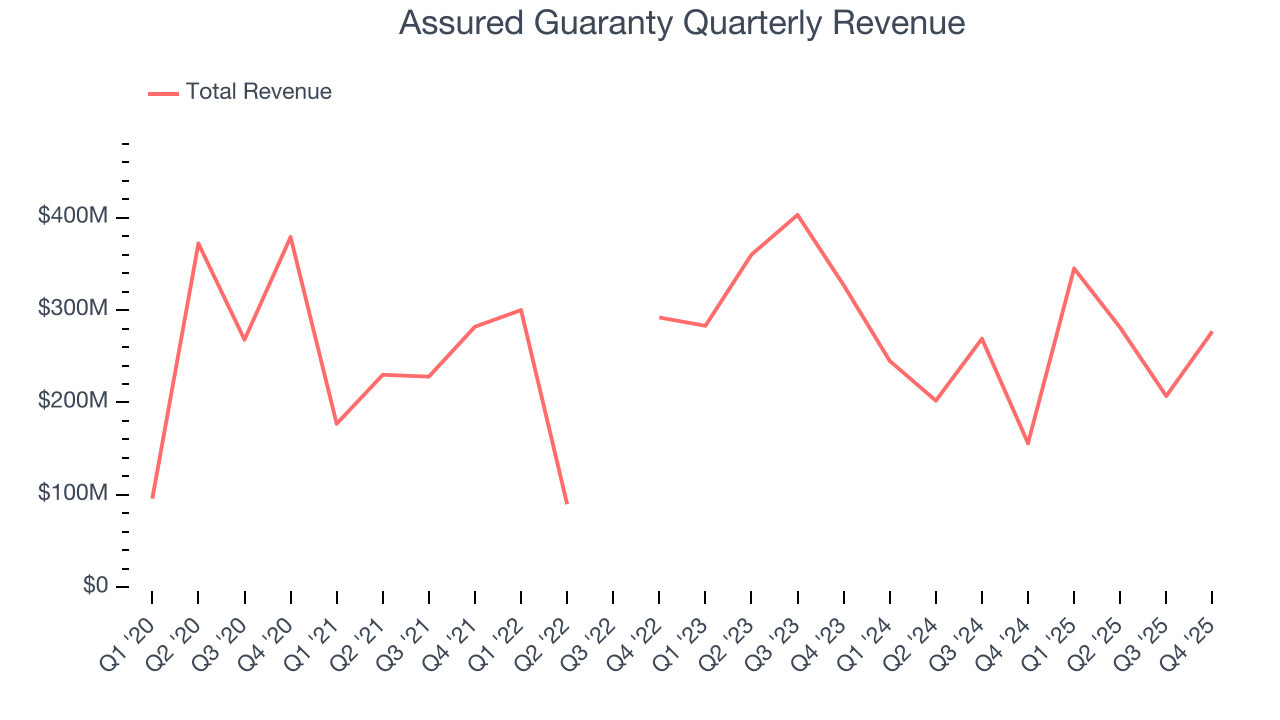 Note: Quarters not shown were determined to be outliers, impacted by outsized investment gains/losses that are not indicative of the recurring fundamentals of the business.
We at StockStory place the most emphasis on long-term growth, but within financials, a half-decade historical view may miss recent interest rate changes, market returns, and industry trends. Assured Guaranty’s recent performance shows its demand remained suppressed as its revenue has declined by 10.1% annually over the last two years. 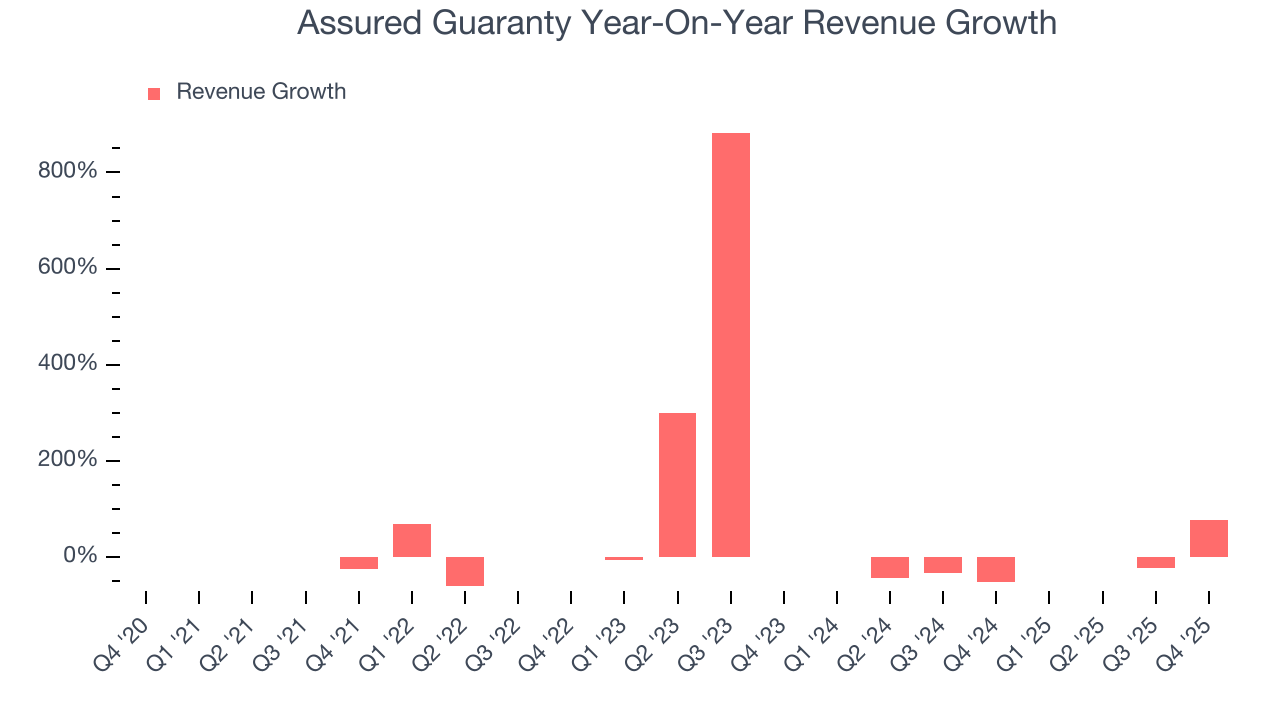 Note: Quarters not shown were determined to be outliers, impacted by outsized investment gains/losses that are not indicative of the recurring fundamentals of the business.
This quarter, Assured Guaranty reported magnificent year-on-year revenue growth of 77.6%, and its $277 million of revenue beat Wall Street’s estimates by 39.6%.
Net premiums earned made up 40.5% of the company’s total revenue during the last five years, meaning Assured Guaranty’s growth drivers strike a balance between insurance and non-insurance activities.
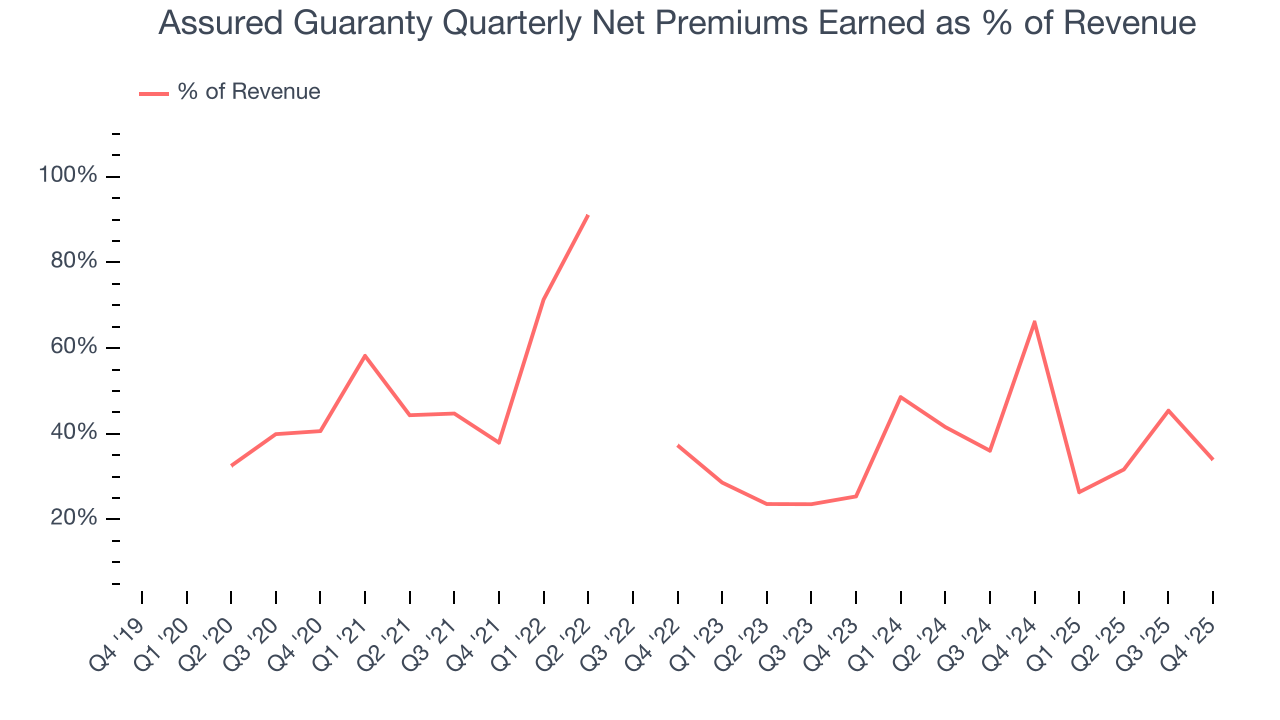 Note: Quarters not shown were determined to be outliers, impacted by outsized investment gains/losses that are not indicative of the recurring fundamentals of the business.
Net premiums earned commands greater market attention due to its reliability and consistency, whereas investment and fee income are often seen as more volatile revenue streams that fluctuate with market conditions.
6. Net Premiums Earned
When insurers sell policies, they protect themselves from extremely large losses or an outsized accumulation of losses with reinsurance (insurance for insurance companies). Net premiums earned are:
- Gross premiums - what’s ceded to reinsurers as a risk mitigation and transfer strategy
Assured Guaranty’s net premiums earned has declined by 5.4% annually over the last five years, much worse than the broader insurance industry. This shows that policy underwriting underperformed its other business lines.
When analyzing Assured Guaranty’s net premiums earned over the last two years, we can see that growth accelerated to 3.4% annually. Since two-year net premiums earned grew faster than total revenue over this period, it's implied that other line items such as investment income grew at a slower rate. While these additional streams certainly contribute to the bottom line, their impact can vary. Some firms have shown greater success and long-term consistency in investing their float compared to peers. However, sharp fluctuations in the fixed income and equity markets can significantly affect short-term performance.
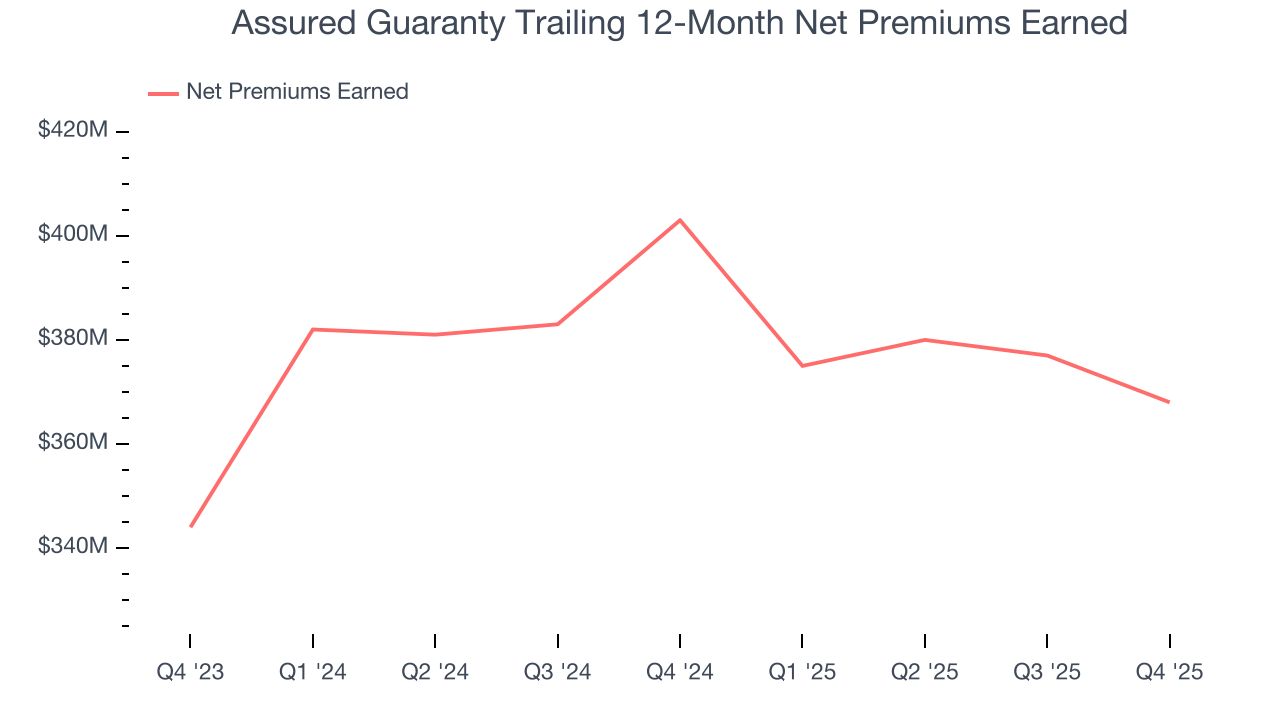
Assured Guaranty’s net premiums earned came in at $94 million this quarter, down 8.7% year on year. But this was still enough to meet Wall Street Consensus estimates.
7. Pre-Tax Profit Margin
Revenue growth is one major determinant of business quality, and the efficiency of operations is another. For insurance companies, we look at pre-tax profit rather than the operating margin that defines sectors such as consumer, tech, and industrials.
The economics of insurers are driven by their balance sheets, where assets (investing the float + premiums receivable) and liabilities (claims to pay) define the fundamentals. Interest income and expense should therefore be factored into the definition of profit but taxes - which are largely out of a company’s control - should not.
Over the last five years, Assured Guaranty’s pre-tax profit margin has fallen by 22.6 percentage points, going from 52% to 59.6%. It has also expanded by 11 percentage points on a two-year basis, showing its expenses have consistently grown at a slower rate than revenue. This typically signals prudent management.
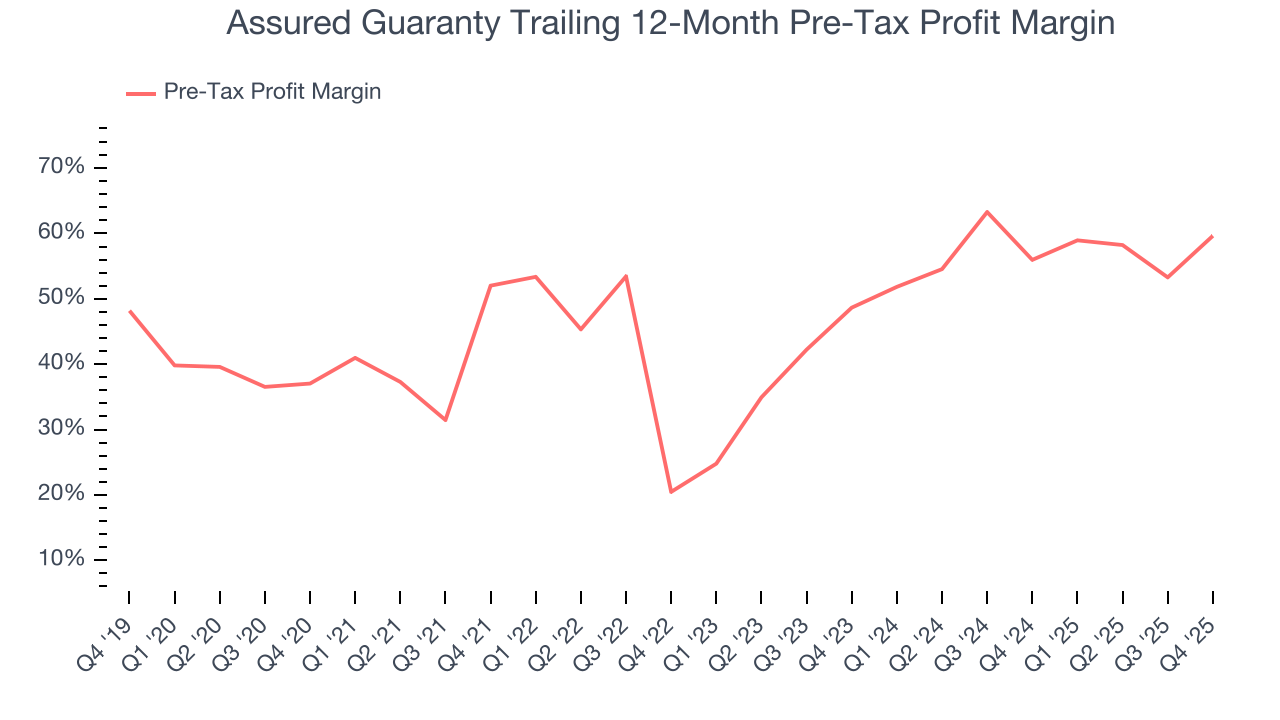
In Q4, Assured Guaranty’s pre-tax profit margin was 59.6%. This result was 40.3 percentage points better than the same quarter last year.
8. Earnings Per Share
Revenue trends explain a company’s historical growth, but the long-term change in earnings per share (EPS) points to the profitability of that growth – for example, a company could inflate its sales through excessive spending on advertising and promotions.
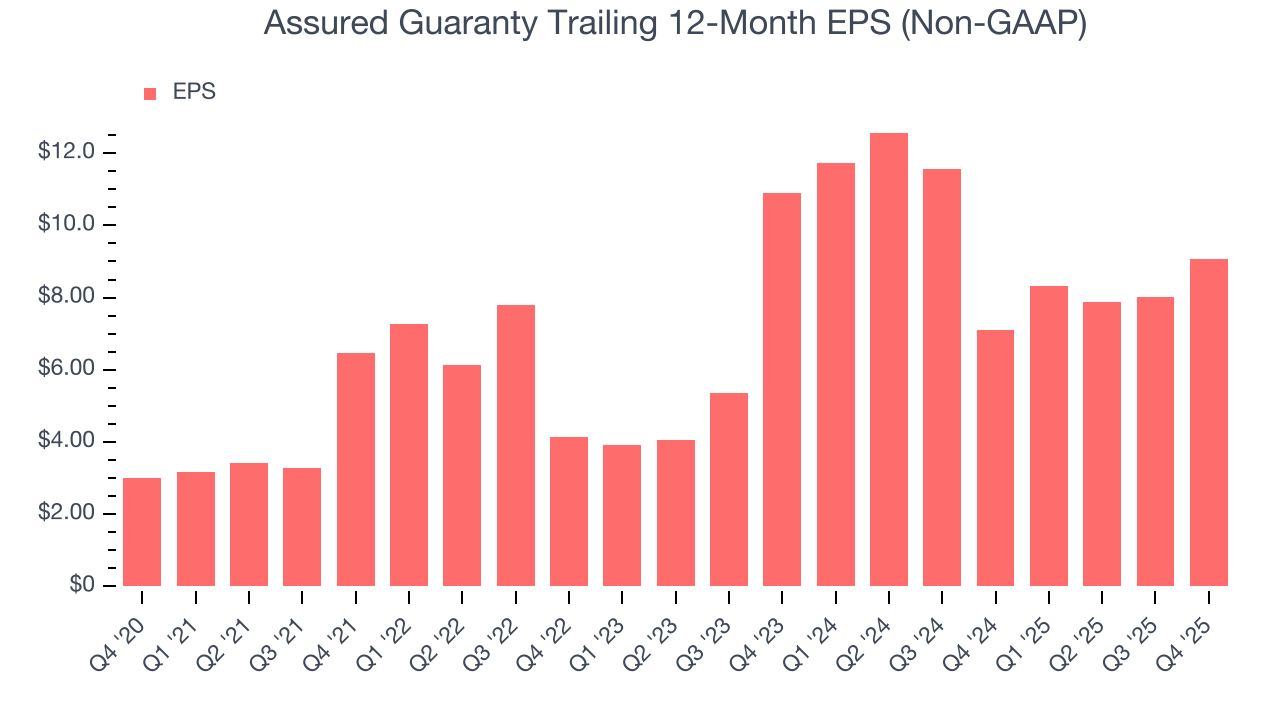
Assured Guaranty’s EPS grew at a spectacular 24.9% compounded annual growth rate over the last five years, higher than its flat revenue. This tells us management responded to softer demand by adapting its cost structure.
We can take a deeper look into Assured Guaranty’s earnings quality to better understand the drivers of its performance. As we mentioned earlier, Assured Guaranty’s pre-tax profit margin expanded by 22.6 percentage points over the last five years. This was the most relevant factor (aside from the revenue impact) behind its higher earnings; taxes can also affect EPS but don’t tell us as much about a company’s fundamentals.
Like with revenue, we analyze EPS over a shorter period to see if we are missing a change in the business.
For Assured Guaranty, its two-year annual EPS declines of 8.7% mark a reversal from its (seemingly) healthy five-year trend. We hope Assured Guaranty can return to earnings growth in the future.
In Q4, Assured Guaranty reported adjusted EPS of $2.32, up from $1.27 in the same quarter last year. This print easily cleared analysts’ estimates, and shareholders should be content with the results. Over the next 12 months, Wall Street expects Assured Guaranty’s full-year EPS of $9.08 to shrink by 20.9%.
9. Book Value Per Share (BVPS)
Insurance companies are balance sheet businesses, collecting premiums upfront and paying out claims over time. The float–premiums collected but not yet paid out–are invested, creating an asset base supported by a liability structure. Book value per share (BVPS) captures this dynamic by measuring these assets (investment portfolio, cash, reinsurance recoverables) less liabilities (claim reserves, debt, future policy benefits). BVPS is essentially the residual value for shareholders.
We therefore consider BVPS very important to track for insurers and a metric that sheds light on business quality. While other (and more commonly known) per-share metrics like EPS can sometimes be lumpy due to reserve releases or one-time items and can be managed or skewed while still following accounting rules, BVPS reflects long-term capital growth and is harder to manipulate.
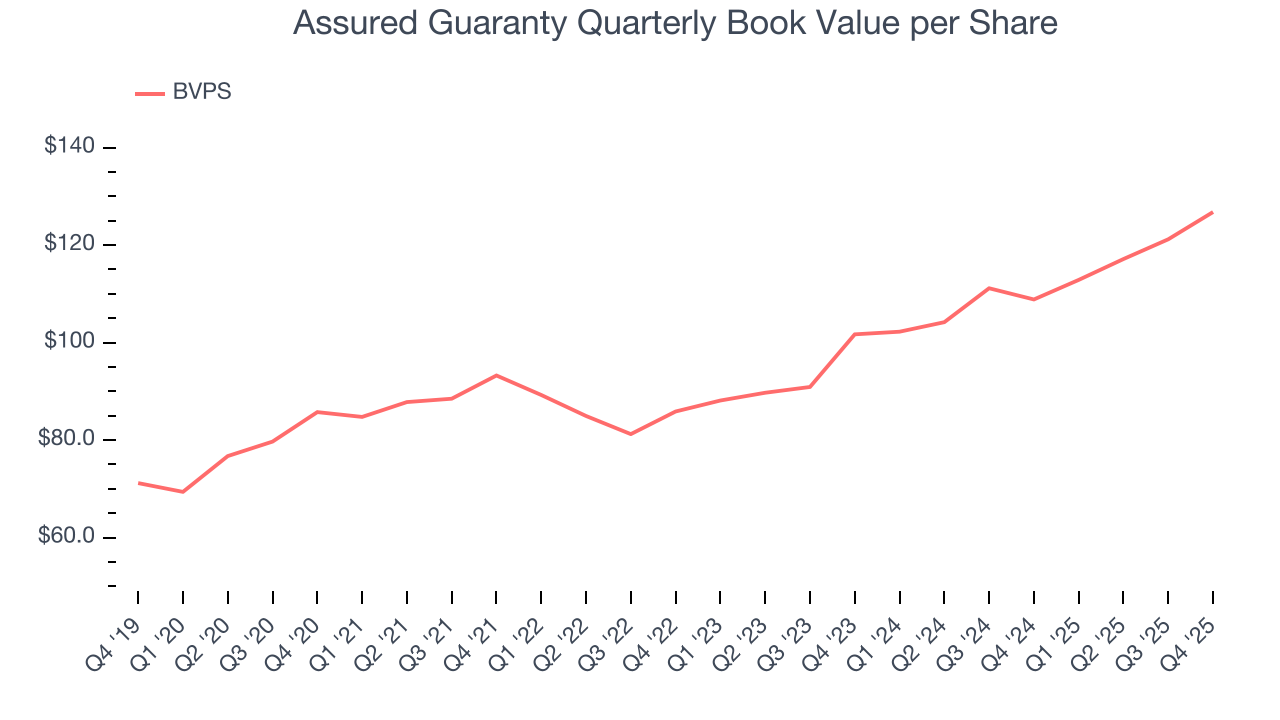
Assured Guaranty’s BVPS grew at a decent 8.1% annual clip over the last five years. BVPS growth has accelerated recently, growing by 11.7% annually over the last two years from $101.69 to $126.78 per share.
10. Balance Sheet Assessment
The debt-to-equity ratio is a widely used measure to assess a company's balance sheet health. A higher ratio means that a business aggressively financed its growth with debt. This can result in higher earnings (if the borrowed funds are invested profitably) but also increases risk.
If debt levels are too high, there could be difficulties in meeting obligations, especially during economic downturns or periods of rising interest rates if the debt has variable-rate payments.
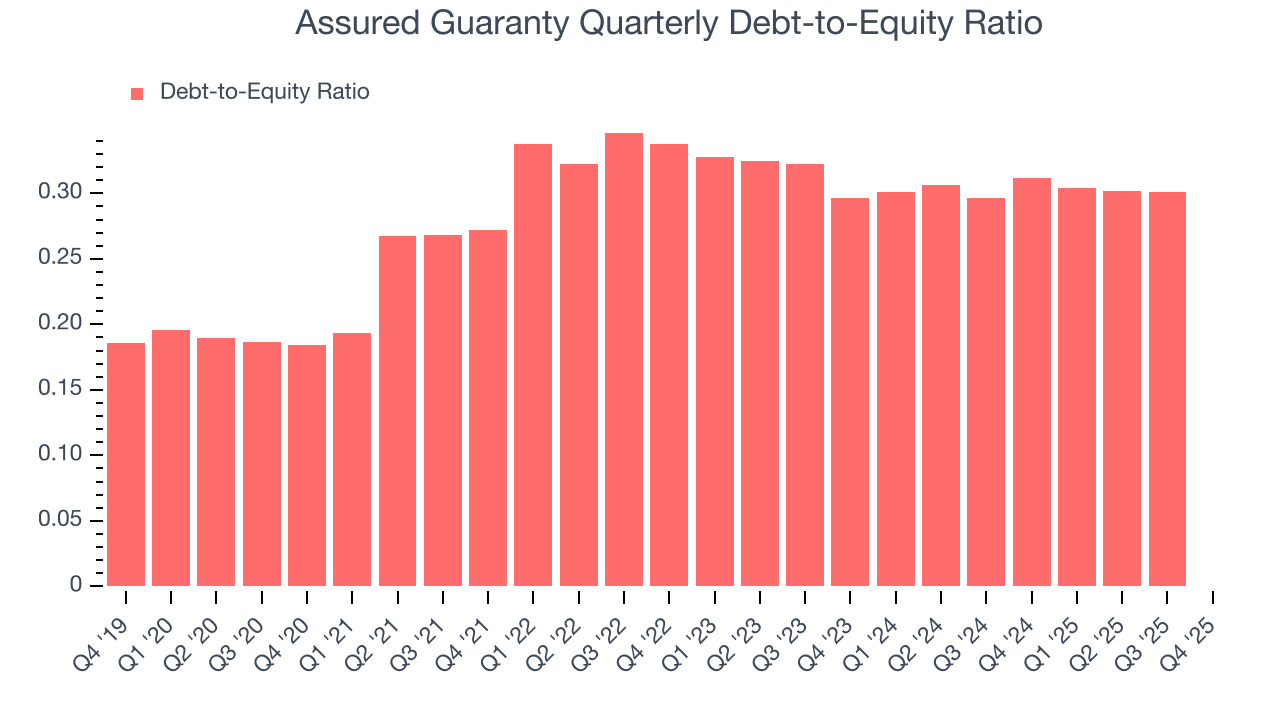
Assured Guaranty currently has $1.70 million of debt and $5.79 billion of shareholder's equity on its balance sheet, and over the past four quarters, has averaged a debt-to-equity ratio of 0.2×. We think this is safe and raises no red flags. In general, we’re comfortable with any ratio below 1.0× for an insurance business. Anything below 0.5× is a bonus.
11. Return on Equity
Return on equity (ROE) is a crucial yardstick for insurance companies, measuring their ability to generate returns on the capital provided by shareholders. Insurers that consistently deliver superior ROE tend to create more value for their investors over time through strategic capital allocation and shareholder-friendly policies.
Over the last five years, Assured Guaranty has averaged an ROE of 7.8%, uninspiring for a company operating in a sector where the average shakes out around 12.5%.
12. Key Takeaways from Assured Guaranty’s Q4 Results
It was good to see Assured Guaranty beat analysts’ EPS expectations this quarter. We were also excited its revenue outperformed Wall Street’s estimates by a wide margin. Zooming out, we think this was a good print with some key areas of upside. The stock traded up 2.3% to $88.62 immediately following the results.
13. Is Now The Time To Buy Assured Guaranty?
Updated: March 28, 2026 at 12:39 AM EDT
We think that the latest earnings result is only one piece of the bigger puzzle. If you’re deciding whether to own Assured Guaranty, you should also grasp the company’s longer-term business quality and valuation.
Assured Guaranty doesn’t pass our quality test. First off, its revenue growth was weak over the last five years, and analysts expect its demand to deteriorate over the next 12 months. While its expanding pre-tax profit margin shows the business has become more efficient, the downside is its projected EPS for the next year is lacking. On top of that, its net premiums earned has declined over the last five years.
Assured Guaranty’s P/B ratio based on the next 12 months is 0.6x. While this valuation is optically cheap, the potential downside is huge given its shaky fundamentals. There are better investments elsewhere.
Wall Street analysts have a consensus one-year price target of $105.75 on the company (compared to the current share price of $79.34).
Although the price target is bullish, readers should exercise caution because analysts tend to be overly optimistic. The firms they work for, often big banks, have relationships with companies that extend into fundraising, M&A advisory, and other rewarding business lines. As a result, they typically hesitate to say bad things for fear they will lose out. We at StockStory do not suffer from such conflicts of interest, so we’ll always tell it like it is.