Lumen (LUMN)
Lumen keeps us up at night. Not only did its demand evaporate but also its negative returns on capital show it destroyed shareholder value.― StockStory Analyst Team


1. News
2. Summary
Why We Think Lumen Will Underperform
With approximately 350,000 route miles of fiber optic cable spanning North America and the Asia Pacific, Lumen Technologies (NYSE:LUMN) operates a vast fiber optic network that provides communications, cloud connectivity, security, and IT solutions to businesses and consumers.
- Annual sales declines of 9.8% for the past five years show its products and services struggled to connect with the market during this cycle
- Historically negative EPS raises concerns for risk-averse investors and makes its earnings potential harder to gauge
- 5× net-debt-to-EBITDA ratio makes lenders less willing to extend additional capital, potentially necessitating dilutive equity offerings
Lumen’s quality isn’t up to par. There are better opportunities in the market.
Why There Are Better Opportunities Than Lumen





Lumen’s stock price of $8.15 implies a valuation ratio of 0.8x forward price-to-sales. The market typically values companies like Lumen based on their anticipated profits for the next 12 months, but there aren’t enough published estimates to arrive at a reliable number. You should avoid this stock for now - better opportunities lie elsewhere.
Paying a premium for high-quality companies with strong long-term earnings potential is preferable to owning challenged businesses with questionable prospects.
3. Lumen (LUMN) Research Report: Q4 CY2025 Update
Telecommunications infrastructure company Lumen Technologies (NYSE:LUMN) met Wall Streets revenue expectations in Q4 CY2025, but sales fell by 8.7% year on year to $3.04 billion. Its non-GAAP profit of $0.23 per share was significantly above analysts’ consensus estimates.
Lumen (LUMN) Q4 CY2025 Highlights:
- Revenue: $3.04 billion vs analyst estimates of $3.04 billion (8.7% year-on-year decline, in line)
- Adjusted EPS: $0.23 vs analyst estimates of -$0.27 (significant beat)
- Adjusted EBITDA: $767 million vs analyst estimates of $784.8 million (25.2% margin, 2.3% miss)
- EBITDA guidance for the upcoming financial year 2026 is $3.2 billion at the midpoint, below analyst estimates of $3.37 billion
- Operating Margin: -6.6%, down from 4.6% in the same quarter last year
- Free Cash Flow was -$765 million compared to -$174 million in the same quarter last year
- Market Capitalization: $8.68 billion
Company Overview
With approximately 350,000 route miles of fiber optic cable spanning North America and the Asia Pacific, Lumen Technologies (NYSE:LUMN) operates a vast fiber optic network that provides communications, cloud connectivity, security, and IT solutions to businesses and consumers.
Lumen's network infrastructure serves as the backbone for its diverse portfolio of services. The company connects approximately 170,000 buildings directly to its fiber network, enabling high-speed, secure data transmission for enterprise customers. For residential and small business customers, Lumen offers internet connectivity through both fiber (branded as Quantum Fiber) and copper-based networks (under the CenturyLink brand).
Beyond basic connectivity, Lumen provides a comprehensive suite of technology solutions. Its edge computing services allow businesses to process data closer to where it's created, reducing latency for time-sensitive applications. A manufacturing company might use Lumen's edge computing to analyze production line data in real-time, enabling immediate adjustments to prevent defects. The company also offers cybersecurity services, helping organizations protect against increasingly sophisticated threats.
Lumen generates revenue through subscription-based service models, with pricing typically based on bandwidth, service level agreements, and additional features. Enterprise customers range from small businesses to global corporations requiring complex network solutions, while mass market customers include millions of residential internet subscribers.
The company organizes its business into strategic categories: "Grow" (emerging services like edge cloud and security), "Nurture" (established services like ethernet), and "Harvest" (legacy offerings like traditional voice). This approach allows Lumen to balance investment in future growth areas while maximizing returns from mature technologies.
Lumen faces ongoing challenges in transitioning from legacy copper networks to fiber infrastructure, particularly in rural areas where deployment costs are higher. The company must also navigate a complex regulatory environment, as telecommunications services are subject to oversight by the Federal Communications Commission and state regulatory commissions.
4. Terrestrial Telecommunication Services
Terrestrial telecommunication companies face an uphill battle, as they mostly sell into a deflationary market, where the price of moving a bit tends to decrease over time with better technology. Without dependable volume growth, revenue growth could be challenged. Unfortunately, broadband penetration in their core US market is quite high already. On the other hand, data consumption from streaming entertainment and 5G expansion could provide a floor on growth for the next number of years. As if that wasn't enough to worry about, competition is intense, with larger telecom providers and hyperscalers expanding their own networks.
Lumen Technologies competes with major telecommunications providers including AT&T (NYSE:T), Verizon (NYSE:VZ), and Comcast (NASDAQ:CMCSA), as well as fiber infrastructure specialists like Crown Castle (NYSE:CCI) and specialized enterprise service providers such as Zayo Group (private).
5. Revenue Growth
A company’s long-term sales performance is one signal of its overall quality. Any business can put up a good quarter or two, but many enduring ones grow for years.
With $12.4 billion in revenue over the past 12 months, Lumen is larger than most business services companies and benefits from economies of scale, enabling it to gain more leverage on its fixed costs than smaller competitors. This also gives it the flexibility to offer lower prices. However, its scale is a double-edged sword because it’s harder to find incremental growth when you’ve penetrated most of the market. For Lumen to boost its sales, it likely needs to adjust its prices, launch new offerings, or lean into foreign markets.
As you can see below, Lumen’s revenue declined by 9.7% per year over the last five years, a tough starting point for our analysis.
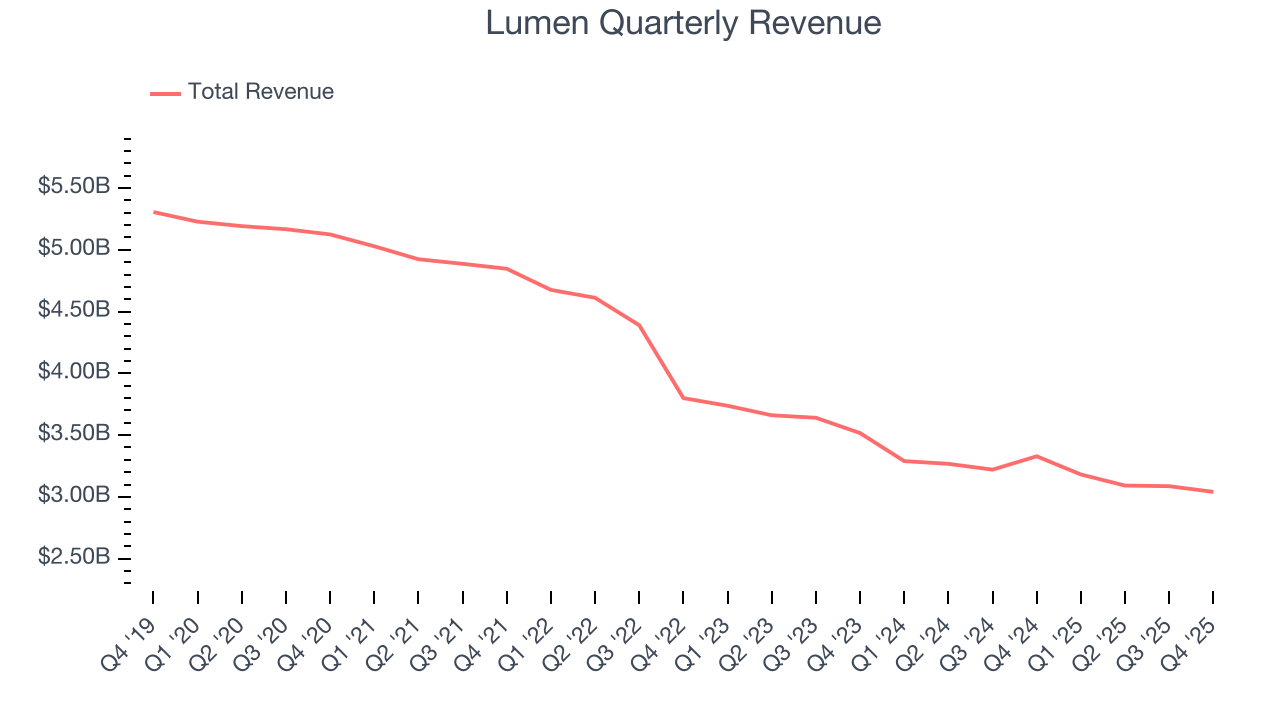
We at StockStory place the most emphasis on long-term growth, but within business services, a half-decade historical view may miss recent innovations or disruptive industry trends. Lumen’s annualized revenue declines of 7.7% over the last two years suggest its demand continued shrinking. 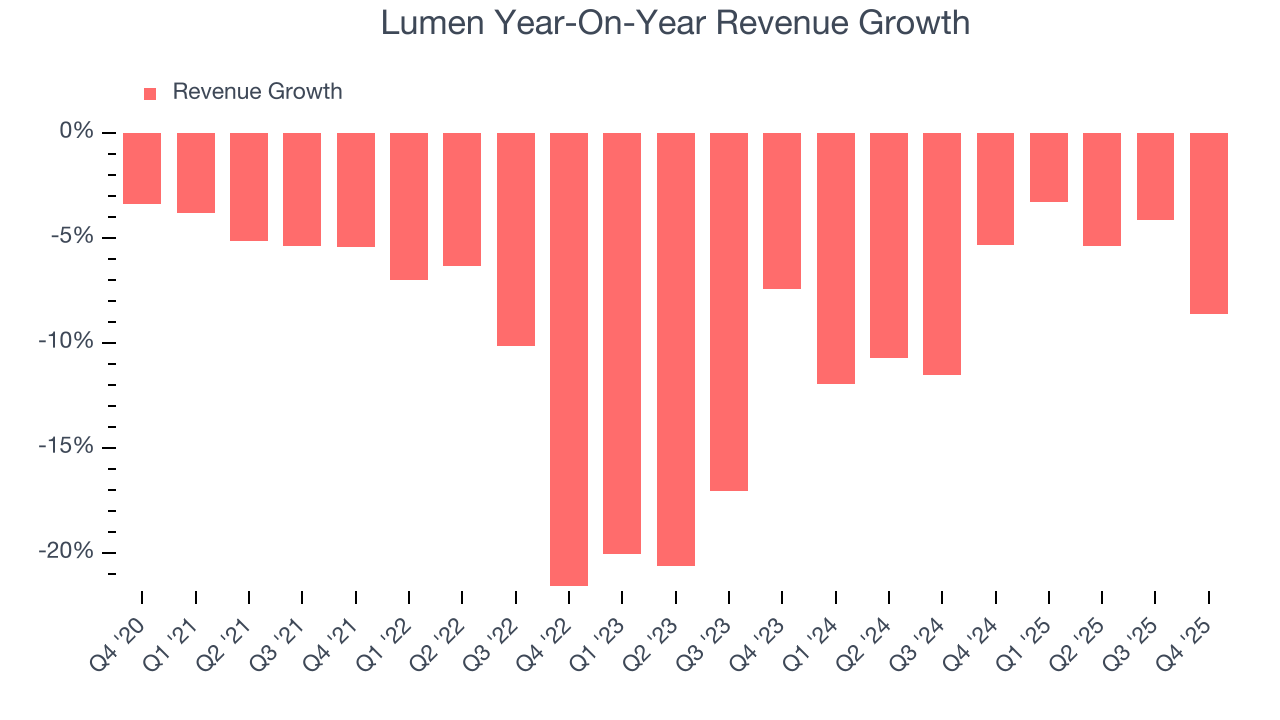
We can better understand the company’s revenue dynamics by analyzing its most important segment, Large Enterprise. Over the last two years, Lumen’s Large Enterprise revenue (services provided to businesses) averaged 9% year-on-year declines. This segment has lagged the company’s overall sales. 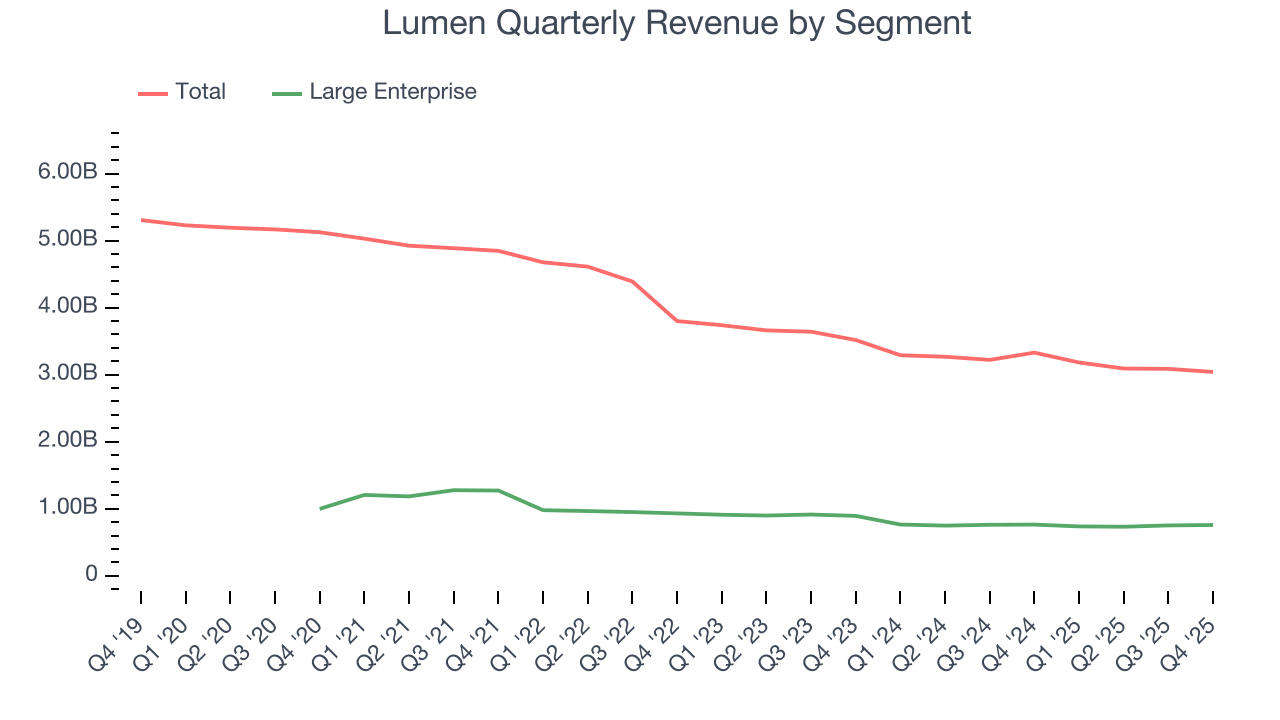
This quarter, Lumen reported a rather uninspiring 8.7% year-on-year revenue decline to $3.04 billion of revenue, in line with Wall Street’s estimates.
Looking ahead, sell-side analysts expect revenue to decline by 12.4% over the next 12 months, a deceleration versus the last two years. This projection doesn't excite us and implies its products and services will face some demand challenges.
6. Adjusted Operating Margin
Adjusted operating margin is a key measure of profitability. Think of it as net income (the bottom line) excluding the impact of non-recurring expenses, taxes, and interest on debt - metrics less connected to business fundamentals.
Lumen’s high expenses have contributed to an average adjusted operating margin of negative 7.2% over the last five years. Unprofitable business services companies require extra attention because they could get caught swimming naked when the tide goes out. It’s hard to trust that the business can endure a full cycle.
Analyzing the trend in its profitability, Lumen’s adjusted operating margin decreased by 28.3 percentage points over the last five years. Lumen’s performance was poor no matter how you look at it - it shows that costs were rising and it couldn’t pass them onto its customers.
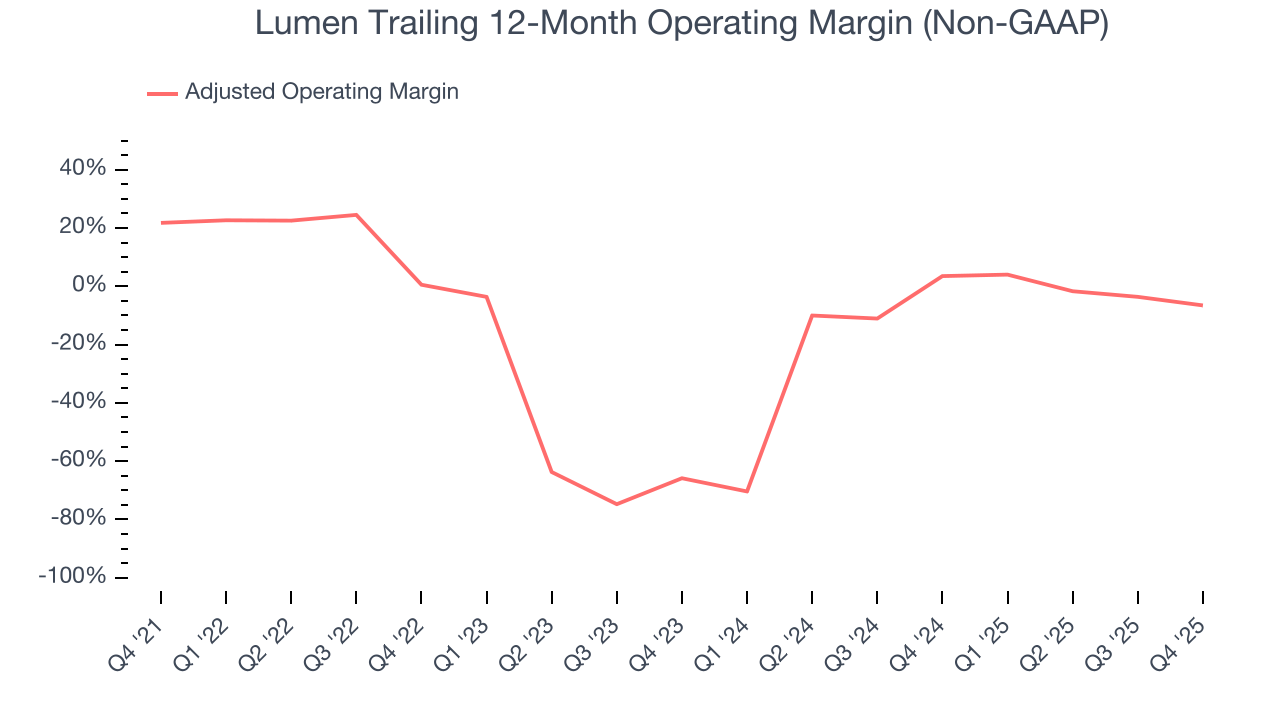
This quarter, Lumen generated a negative 6.6% adjusted operating margin. The company's consistent lack of profits raise a flag.
7. Earnings Per Share
We track the long-term change in earnings per share (EPS) for the same reason as long-term revenue growth. Compared to revenue, however, EPS highlights whether a company’s growth is profitable.
Sadly for Lumen, its EPS declined by 15.8% annually over the last five years, more than its revenue. We can see the difference stemmed from higher interest expenses or taxes as the company actually improved its adjusted operating margin and repurchased its shares during this time.
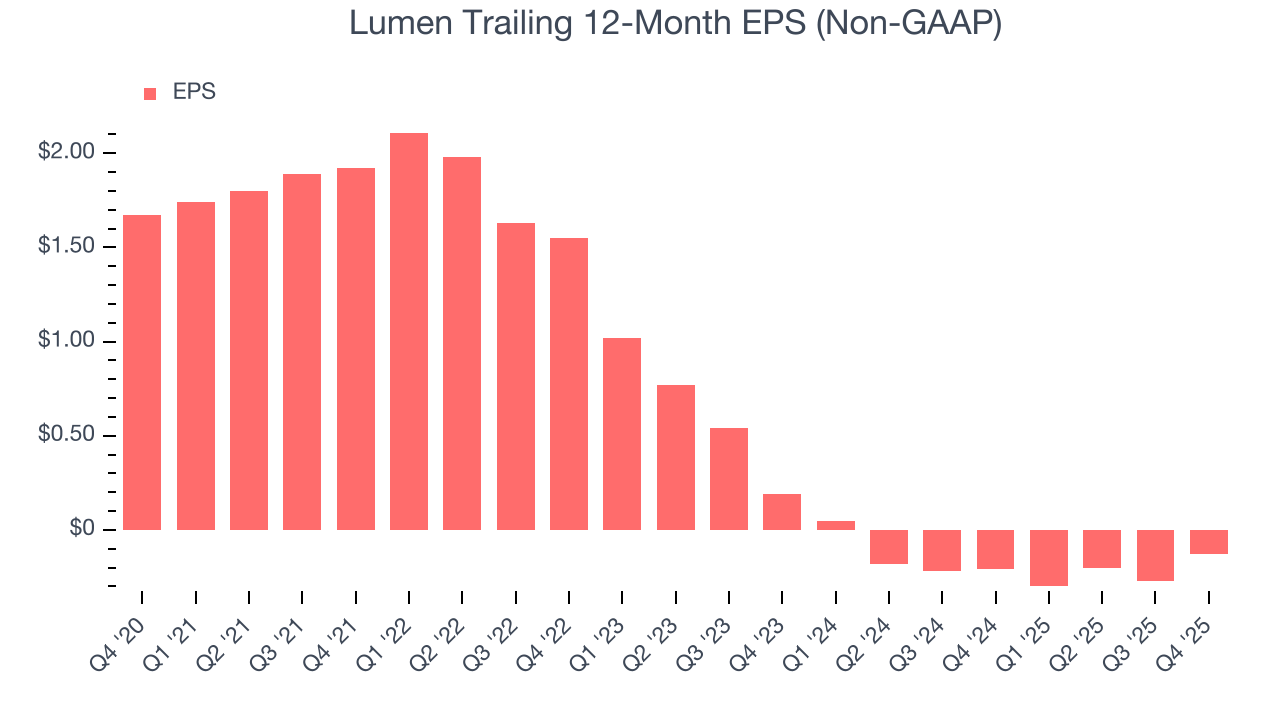
We can take a deeper look into Lumen’s earnings to better understand the drivers of its performance. As we mentioned earlier, Lumen’s adjusted operating margin declined by 28.3 percentage points over the last five years. This was the most relevant factor (aside from the revenue impact) behind its lower earnings; interest expenses and taxes can also affect EPS but don’t tell us as much about a company’s fundamentals.
Like with revenue, we analyze EPS over a more recent period because it can provide insight into an emerging theme or development for the business.
Lumen’s two-year annual EPS declines of 63.8% were bad and lower than its two-year revenue losses.
In Q4, Lumen reported adjusted EPS of $0.23, up from $0.09 in the same quarter last year. This print easily cleared analysts’ estimates, and shareholders should be content with the results. Over the next 12 months, Wall Street expects Lumen to perform poorly. Analysts forecast its full-year EPS of negative $0.13 will tumble to negative $0.53.
8. Cash Is King
Free cash flow isn't a prominently featured metric in company financials and earnings releases, but we think it's telling because it accounts for all operating and capital expenses, making it tough to manipulate. Cash is king.
Lumen has shown robust cash profitability, giving it an edge over its competitors and the ability to reinvest or return capital to investors. The company’s free cash flow margin averaged 9.8% over the last five years, quite impressive for a business services business.
Taking a step back, we can see that Lumen’s margin dropped by 10.5 percentage points during that time. Continued declines could signal it is in the middle of an investment cycle.
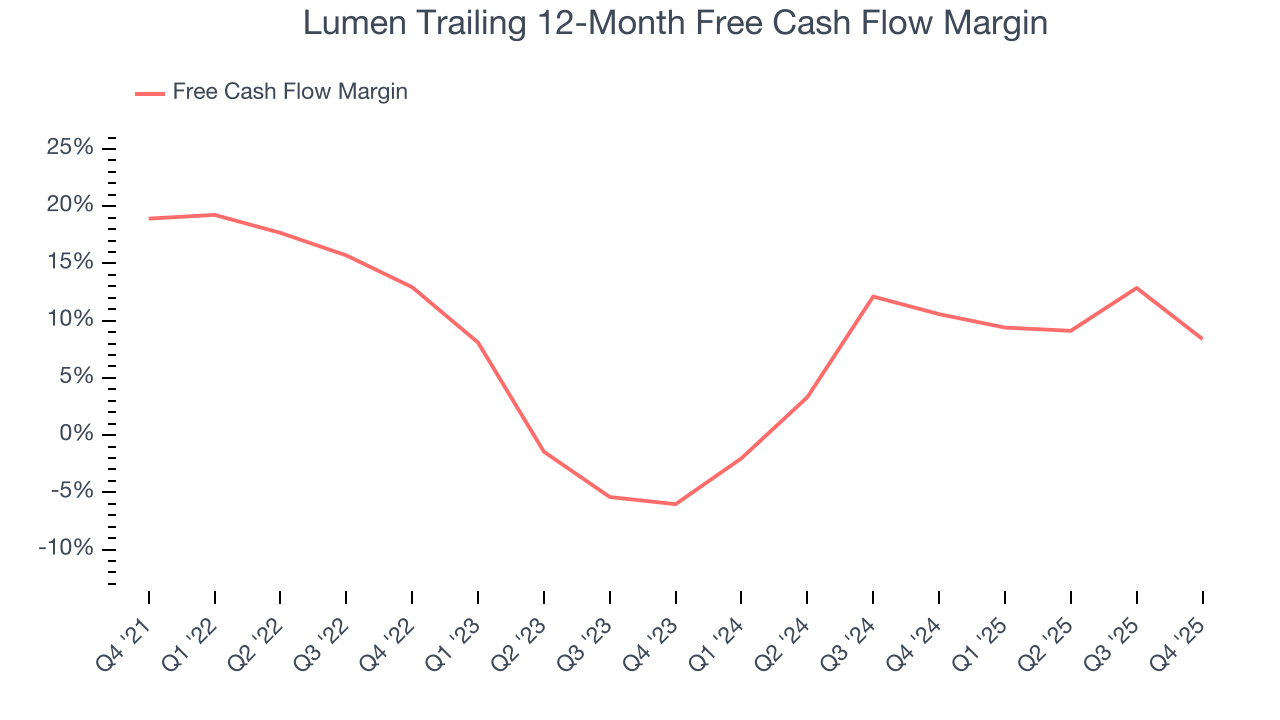
Lumen burned through $765 million of cash in Q4, equivalent to a negative 25.2% margin. The company’s cash burn increased from $174 million of lost cash in the same quarter last year. These numbers deviate from its longer-term margin, indicating it is a seasonal business that must build up inventory during certain quarters.
9. Return on Invested Capital (ROIC)
EPS and free cash flow tell us whether a company was profitable while growing its revenue. But was it capital-efficient? Enter ROIC, a metric showing how much operating profit a company generates relative to the money it has raised (debt and equity).
Lumen’s five-year average ROIC was negative 5.9%, meaning management lost money while trying to expand the business. Its returns were among the worst in the business services sector.
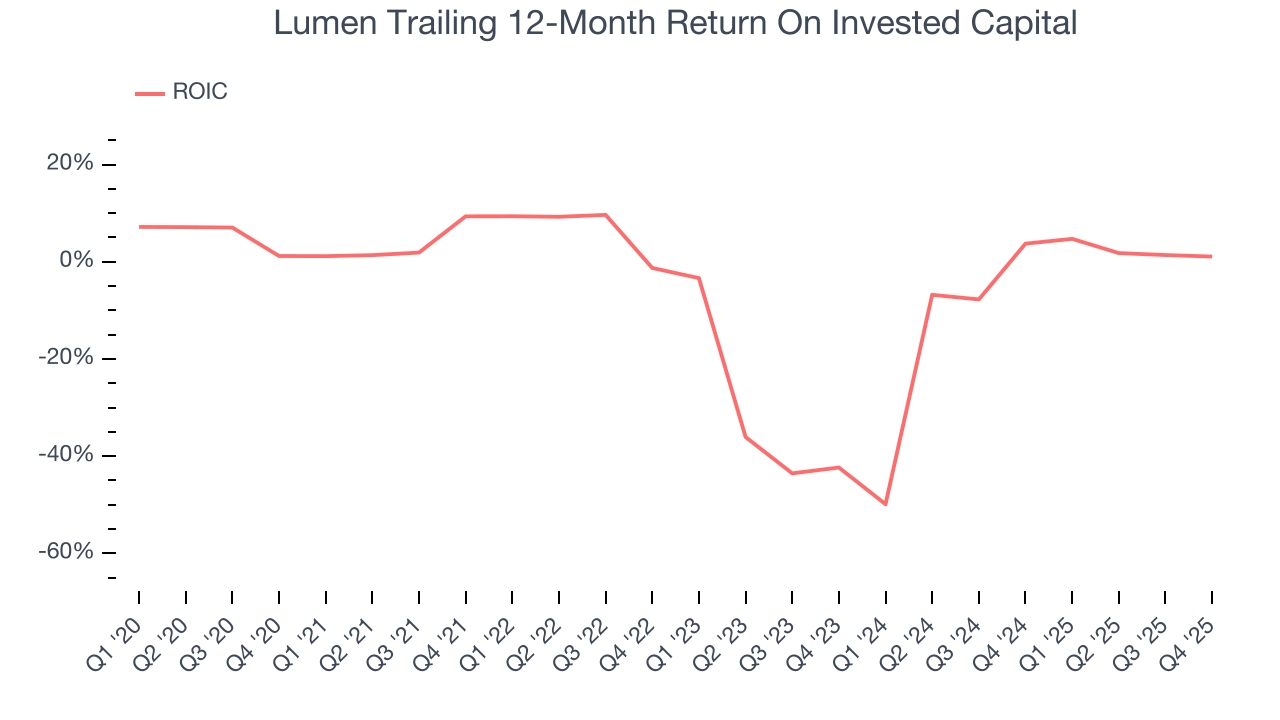
We like to invest in businesses with high returns, but the trend in a company’s ROIC is what often surprises the market and moves the stock price. Unfortunately, Lumen’s ROIC averaged 1.6 percentage point decreases over the last few years. Paired with its already low returns, these declines suggest its profitable growth opportunities are few and far between.
10. Balance Sheet Assessment
Lumen reported $1 billion of cash and $17.44 billion of debt on its balance sheet in the most recent quarter. As investors in high-quality companies, we primarily focus on two things: 1) that a company’s debt level isn’t too high and 2) that its interest payments are not excessively burdening the business.
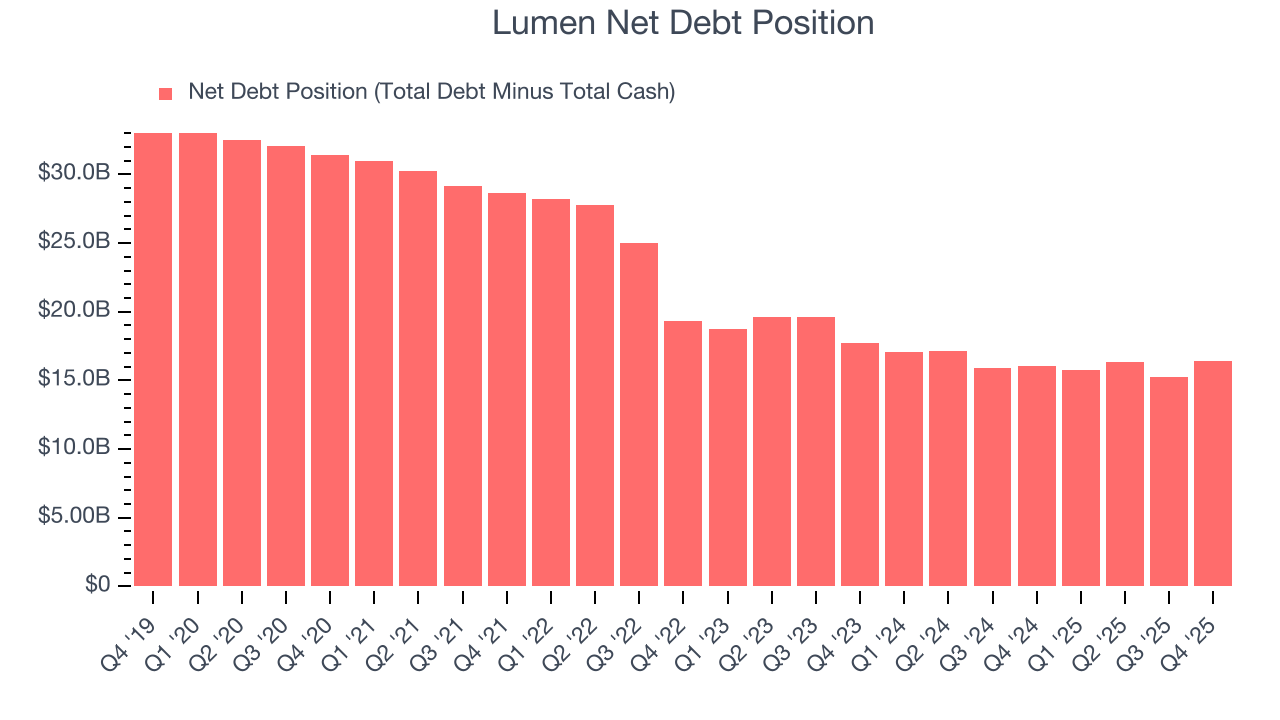
With $3.36 billion of EBITDA over the last 12 months, we view Lumen’s 4.9× net-debt-to-EBITDA ratio as safe. We also see its $1.23 billion of annual interest expenses as appropriate. The company’s profits give it plenty of breathing room, allowing it to continue investing in growth initiatives.
11. Key Takeaways from Lumen’s Q4 Results
It was good to see Lumen beat analysts’ EPS expectations this quarter. Zooming out, we think this quarter featured some important positives. The stock remained flat at $8.45 immediately after reporting.
12. Is Now The Time To Buy Lumen?
We think that the latest earnings result is only one piece of the bigger puzzle. If you’re deciding whether to own Lumen, you should also grasp the company’s longer-term business quality and valuation.
Lumen doesn’t pass our quality test. To kick things off, its revenue has declined over the last five years, and analysts expect its demand to deteriorate over the next 12 months. And while its scale makes it a trusted partner with negotiating leverage, the downside is its relatively low ROIC suggests management has struggled to find compelling investment opportunities. On top of that, its projected EPS for the next year is lacking.
Lumen’s EV-to-EBITDA ratio based on the next 12 months is 7.5x. At this valuation, there’s a lot of good news priced in - we think there are better stocks to buy right now.
Wall Street analysts have a consensus one-year price target of $7.80 on the company (compared to the current share price of $8.45), implying they don’t see much short-term potential in Lumen.