
Penumbra (PEN)
We’re not sold on Penumbra. Its weak returns on capital indicate management was inefficient with its resources and missed opportunities.― StockStory Analyst Team


1. News





2. Summary
Why Penumbra Is Not Exciting
Founded in 2004 to address challenging medical conditions with significant unmet needs, Penumbra (NYSE:PEN) develops and manufactures innovative medical devices for treating vascular diseases and providing immersive healthcare rehabilitation solutions.
- Smaller revenue base of $1.40 billion means it hasn’t achieved the economies of scale that some industry juggernauts enjoy
- Below-average returns on capital indicate management struggled to find compelling investment opportunities
- On the plus side, its incremental sales significantly boosted profitability as its annual earnings per share growth of 84.4% over the last five years outstripped its revenue performance
Penumbra doesn’t pass our quality test. We see more lucrative opportunities elsewhere.
Why There Are Better Opportunities Than Penumbra







Penumbra is trading at $337.84 per share, or 66.7x forward P/E. This valuation multiple seems a bit much considering the quality you get.
There are stocks out there similarly priced with better business quality. We prefer owning these.
3. Penumbra (PEN) Research Report: Q4 CY2025 Update
Medical device company Penumbra (NYSE:PEN) reported Q4 CY2025 results beating Wall Street’s revenue expectations, with sales up 22.1% year on year to $385.4 million. Its non-GAAP profit of $1.18 per share was 6.1% above analysts’ consensus estimates.
Penumbra (PEN) Q4 CY2025 Highlights:
- Revenue: $385.4 million vs analyst estimates of $367.7 million (22.1% year-on-year growth, 4.8% beat)
- Adjusted EPS: $1.18 vs analyst estimates of $1.11 (6.1% beat)
- Adjusted EBITDA: $79.13 million vs analyst estimates of $66.32 million (20.5% margin, 19.3% beat)
- Operating Margin: 15.4%, up from 13.6% in the same quarter last year
- Constant Currency Revenue rose 20.9% year on year (13% in the same quarter last year)
- Market Capitalization: $13.3 billion
Company Overview
Founded in 2004 to address challenging medical conditions with significant unmet needs, Penumbra (NYSE:PEN) develops and manufactures innovative medical devices for treating vascular diseases and providing immersive healthcare rehabilitation solutions.
Penumbra's product portfolio spans three main categories: thrombectomy, embolization and access, and immersive healthcare. The company's thrombectomy devices remove blood clots from vessels throughout the body, addressing conditions like pulmonary embolism, deep vein thrombosis, and ischemic stroke. These systems use vacuum-based aspiration technology to extract clots, with products like the Indigo System for peripheral and coronary vessels and the Penumbra System for neurovascular applications.
In the embolization and access category, Penumbra offers devices that treat aneurysms and occlude vessels. The Ruby Coil System and POD (Penumbra Occlusion Device) are designed for peripheral applications, while the Penumbra Coil 400 and SMART COIL families target neurovascular lesions. The company also produces specialized catheters like the Neuron family and BENCHMARK systems that provide access to difficult-to-reach vascular areas.
Penumbra's newest market is immersive healthcare, where its REAL Immersive System uses proprietary 3D virtual reality technology for rehabilitation and mental well-being applications. This platform includes the REAL i-Series for cognitive applications and the REAL y-Series for physical rehabilitation, with sensors that allow clinicians to track patient movements in real time.
The company sells its products primarily through a direct sales force to specialist physicians, including interventional radiologists, neurosurgeons, and vascular surgeons. These healthcare professionals use Penumbra's devices in hospital and clinical settings to perform minimally invasive procedures. In the United States and most of Europe, Canada, and Australia, Penumbra sells directly to healthcare providers, while using distributors in other international markets.
Penumbra invests significantly in research and development to expand its product offerings and enhance existing technologies. The company's innovations are protected by a substantial intellectual property portfolio including patents covering its key technologies and product designs.
4. Medical Devices & Supplies - Cardiology, Neurology, Vascular
The medical devices and supplies industry, particularly in the fields of cardiology, neurology, and vascular care, benefits from a business model that balances innovation with relatively predictable revenue streams. These companies focus on developing life-saving devices such as stents, pacemakers, neurostimulation implants, and vascular access tools, which address critical and often chronic conditions. The recurring need for these devices, coupled with growing global demand for advanced treatments, provides stability and opportunities for long-term growth. However, the industry faces hurdles such as high research and development costs, rigorous regulatory approval processes, and reliance on reimbursement from healthcare systems, which can exert downward pressure on pricing. Looking ahead, the industry is positioned to benefit from tailwinds such as aging populations (which tend to have higher rates of disease) and technological advancements like minimally invasive procedures and connected devices that improve patient monitoring and outcomes. Innovations in robotic-assisted surgery and AI-driven diagnostics are also expected to accelerate adoption and expand treatment capabilities. However, potential headwinds include pricing pressures stemming from value-based care models and continued complexity changing from navigating regulatory frameworks that may prioritize further lowering healthcare costs.
Penumbra competes with several large medical device manufacturers including Boston Scientific (NYSE:BSX), Medtronic (NYSE:MDT), and Stryker (NYSE:SYK), as well as specialized companies like Inari Medical (NASDAQ:NARI) in the thrombectomy space and Terumo Corporation (OTC:TRUMY) in vascular devices.
5. Revenue Scale
Larger companies benefit from economies of scale, where fixed costs like infrastructure, technology, and administration are spread over a higher volume of goods or services, reducing the cost per unit. Scale can also lead to bargaining power with suppliers, greater brand recognition, and more investment firepower. A virtuous cycle can ensue if a scaled company plays its cards right.
With just $1.4 billion in revenue over the past 12 months, Penumbra is a small company in an industry where scale matters. This makes it difficult to build trust with customers because healthcare is heavily regulated, complex, and resource-intensive.
6. Revenue Growth
Examining a company’s long-term performance can provide clues about its quality. Any business can put up a good quarter or two, but many enduring ones grow for years. Luckily, Penumbra’s sales grew at an impressive 20.2% compounded annual growth rate over the last five years. Its growth beat the average healthcare company and shows its offerings resonate with customers.
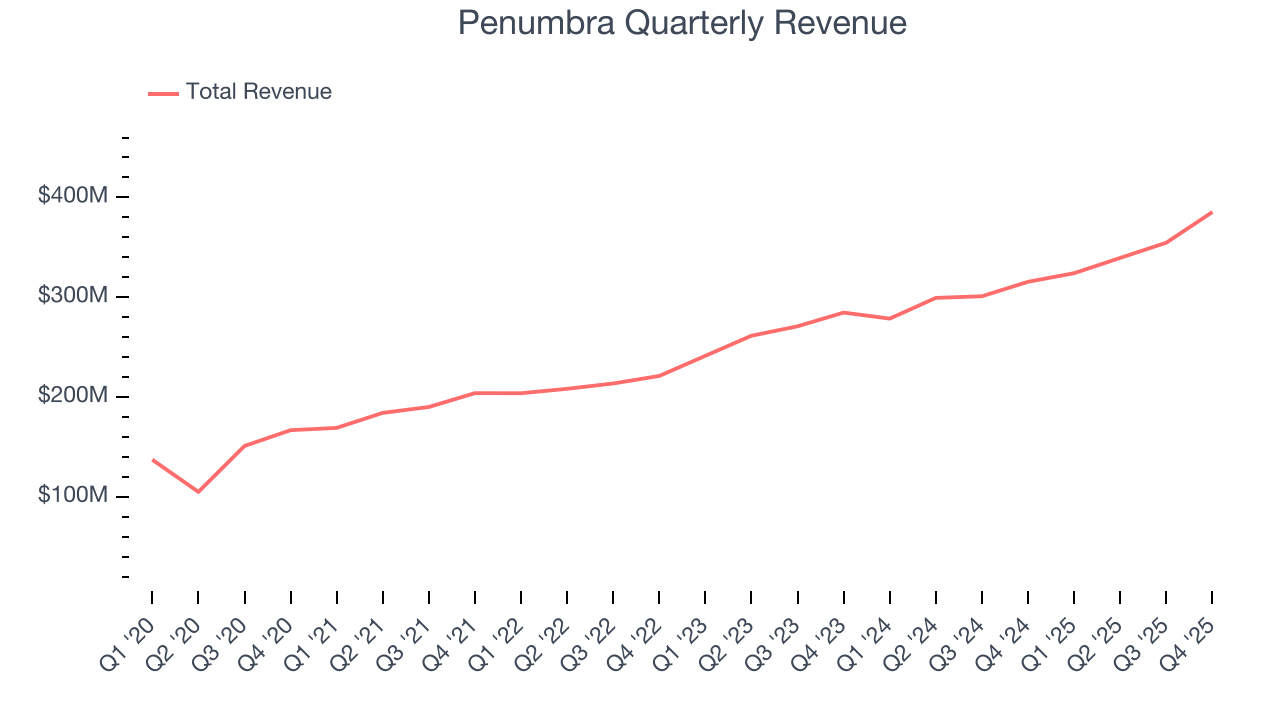
We at StockStory place the most emphasis on long-term growth, but within healthcare, a half-decade historical view may miss recent innovations or disruptive industry trends. Penumbra’s annualized revenue growth of 15.2% over the last two years is below its five-year trend, but we still think the results suggest healthy demand. 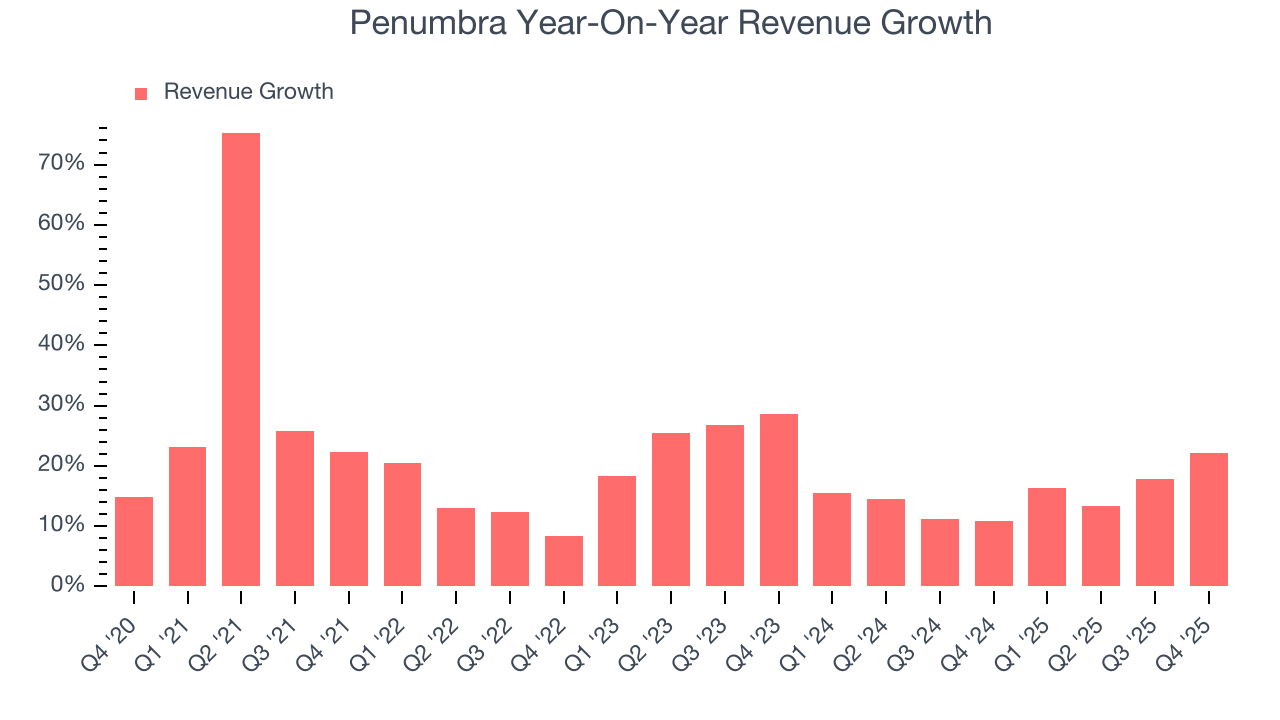
We can better understand the company’s sales dynamics by analyzing its constant currency revenue, which excludes currency movements that are outside their control and not indicative of demand. Over the last two years, its constant currency sales averaged 15.2% year-on-year growth. Because this number aligns with its normal revenue growth, we can see that Penumbra has properly hedged its foreign currency exposure. 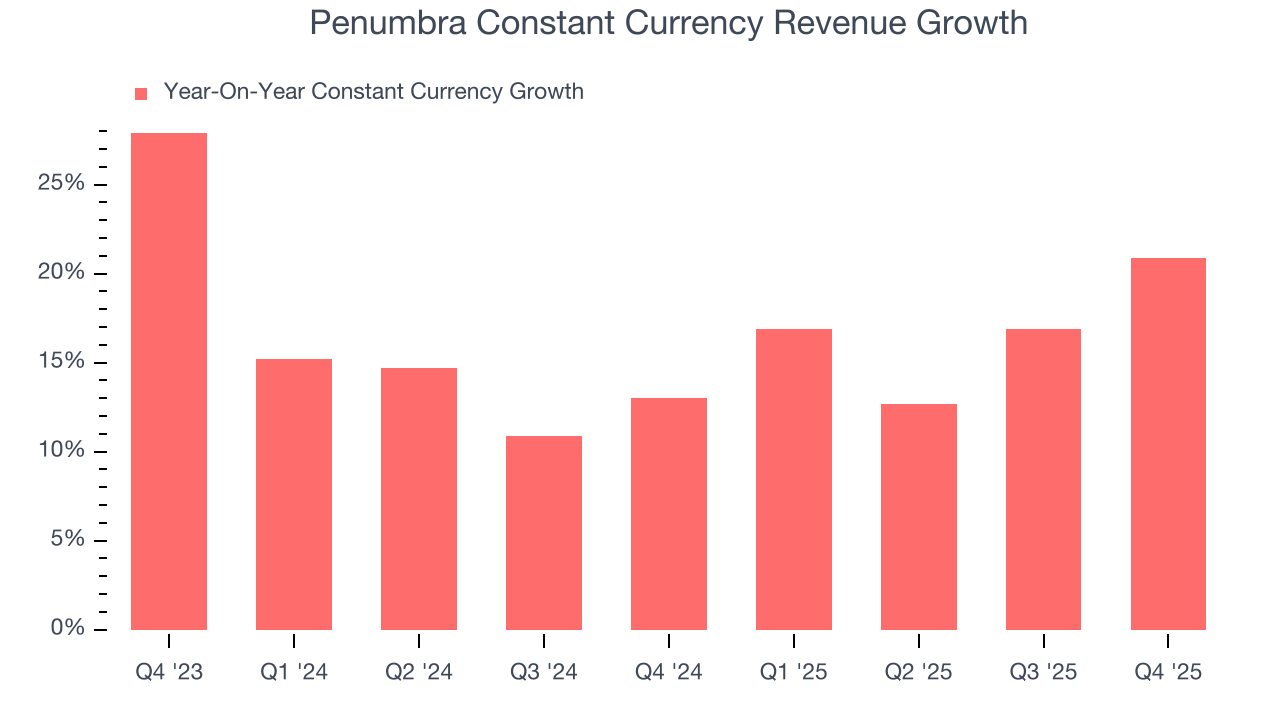
This quarter, Penumbra reported robust year-on-year revenue growth of 22.1%, and its $385.4 million of revenue topped Wall Street estimates by 4.8%.
Looking ahead, sell-side analysts expect revenue to grow 12.7% over the next 12 months, a slight deceleration versus the last two years. Still, this projection is noteworthy and implies the market is baking in success for its products and services.
7. Operating Margin
Operating margin is one of the best measures of profitability because it tells us how much money a company takes home after subtracting all core expenses, like marketing and R&D.
Penumbra was profitable over the last five years but held back by its large cost base. Its average operating margin of 5.2% was weak for a healthcare business.
On the plus side, Penumbra’s operating margin rose by 14.5 percentage points over the last five years, as its sales growth gave it operating leverage. Zooming in on its more recent performance, we can see the company’s trajectory is intact as its margin has also increased by 6.5 percentage points on a two-year basis.
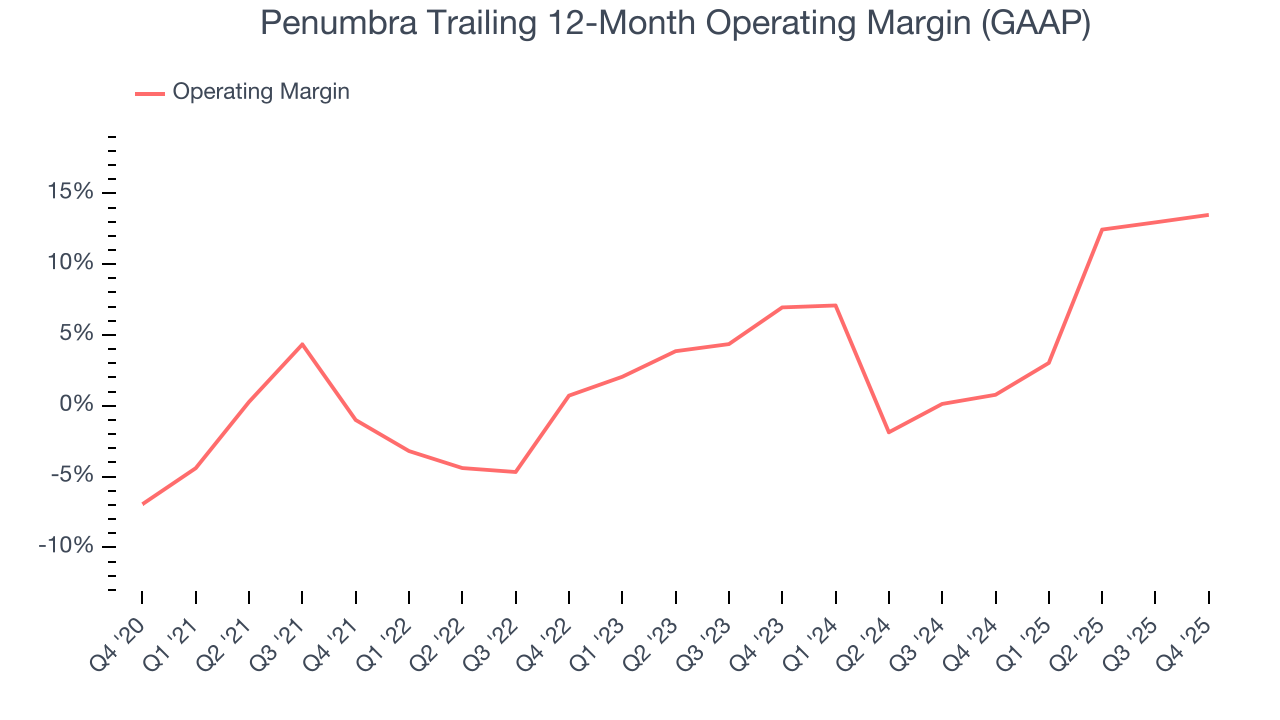
In Q4, Penumbra generated an operating margin profit margin of 15.4%, up 1.8 percentage points year on year. This increase was a welcome development and shows it was more efficient.
8. Earnings Per Share
Revenue trends explain a company’s historical growth, but the long-term change in earnings per share (EPS) points to the profitability of that growth – for example, a company could inflate its sales through excessive spending on advertising and promotions.
Penumbra’s EPS grew at an astounding 84.4% compounded annual growth rate over the last five years, higher than its 20.2% annualized revenue growth. This tells us the company became more profitable on a per-share basis as it expanded.
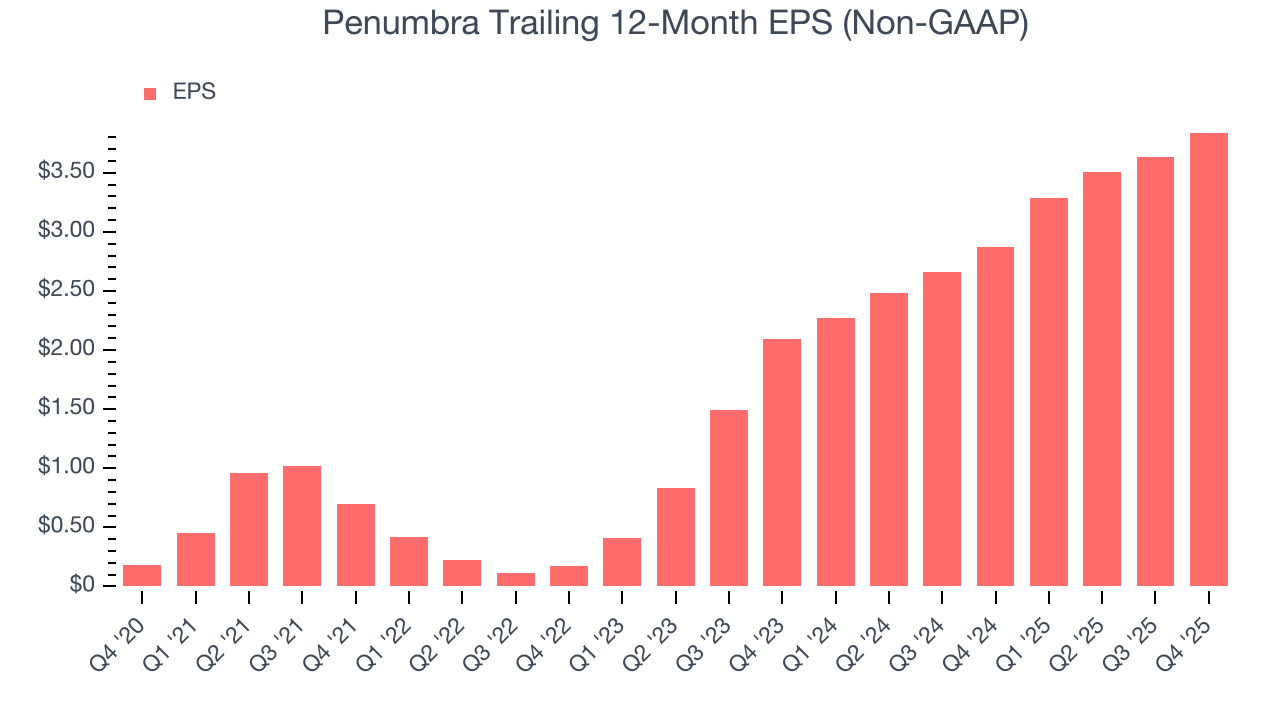
Diving into the nuances of Penumbra’s earnings can give us a better understanding of its performance. As we mentioned earlier, Penumbra’s operating margin expanded by 14.5 percentage points over the last five years. This was the most relevant factor (aside from the revenue impact) behind its higher earnings; interest expenses and taxes can also affect EPS but don’t tell us as much about a company’s fundamentals.
In Q4, Penumbra reported adjusted EPS of $1.18, up from $0.97 in the same quarter last year. This print beat analysts’ estimates by 6.1%. Over the next 12 months, Wall Street expects Penumbra’s full-year EPS of $3.84 to grow 32.7%.
9. Cash Is King
If you’ve followed StockStory for a while, you know we emphasize free cash flow. Why, you ask? We believe that in the end, cash is king, and you can’t use accounting profits to pay the bills.
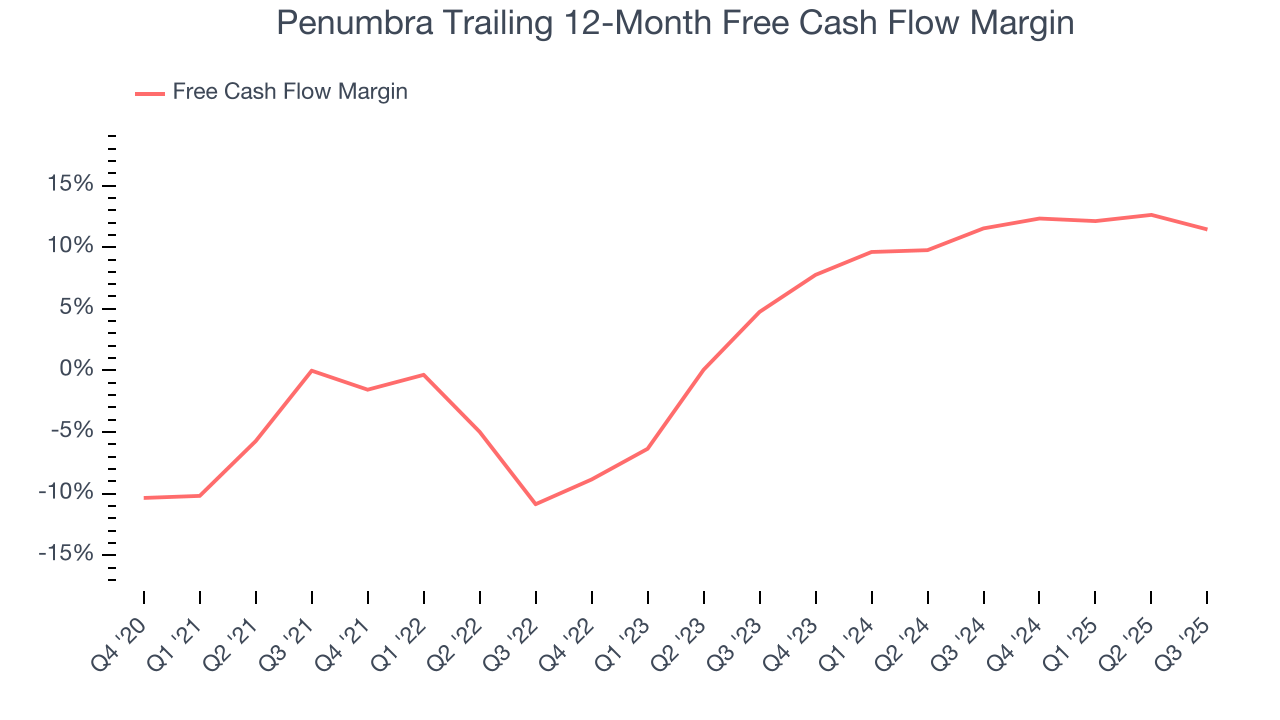
Penumbra has shown decent cash profitability, giving it some flexibility to reinvest or return capital to investors. The company’s free cash flow margin averaged 5.1% over the last five years, slightly better than the broader healthcare sector.
Taking a step back, we can see that Penumbra’s margin expanded by 9.5 percentage points during that time. This is encouraging because it gives the company more optionality.
10. Return on Invested Capital (ROIC)
EPS and free cash flow tell us whether a company was profitable while growing its revenue. But was it capital-efficient? Enter ROIC, a metric showing how much operating profit a company generates relative to the money it has raised (debt and equity).
Penumbra historically did a mediocre job investing in profitable growth initiatives. Its five-year average ROIC was 2.6%, lower than the typical cost of capital (how much it costs to raise money) for healthcare companies.
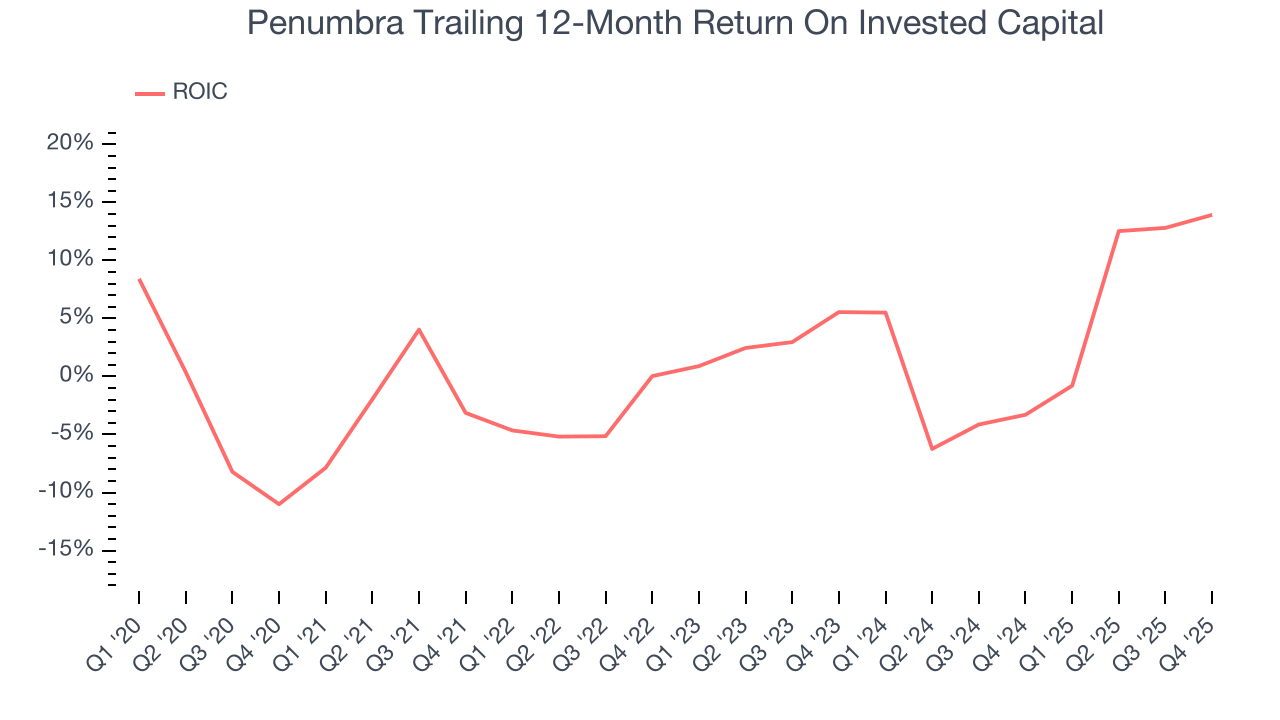
We like to invest in businesses with high returns, but the trend in a company’s ROIC is what often surprises the market and moves the stock price. Penumbra’s ROIC has increased over the last few years. This is a good sign, and if its returns keep rising, there’s a chance it could evolve into an investable business.
11. Balance Sheet Assessment
Businesses that maintain a cash surplus face reduced bankruptcy risk.
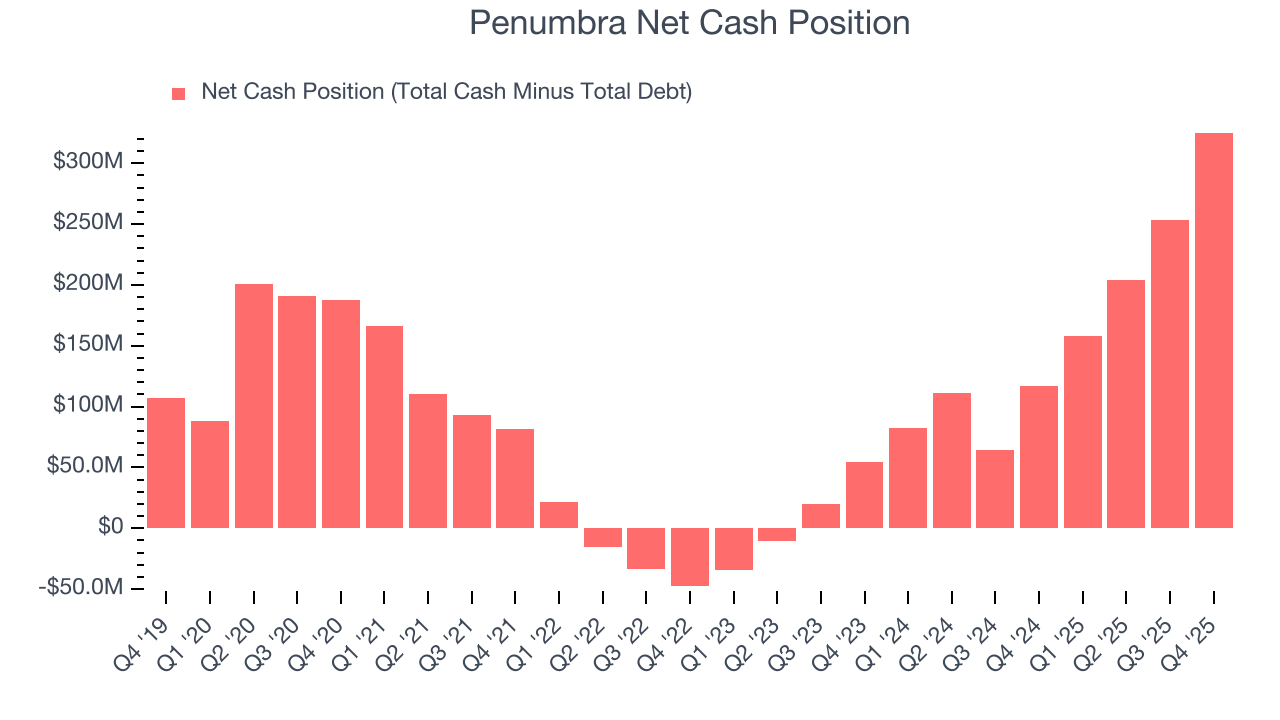
Penumbra is a profitable, well-capitalized company with $544.8 million of cash and $219.7 million of debt on its balance sheet. This $325.1 million net cash position is 2.5% of its market cap and gives it the freedom to borrow money, return capital to shareholders, or invest in growth initiatives. Leverage is not an issue here.
12. Key Takeaways from Penumbra’s Q4 Results
We enjoyed seeing Penumbra beat analysts’ revenue expectations this quarter. We were also glad its EPS outperformed Wall Street’s estimates. Zooming out, we think this was a solid print. The stock remained flat at $338.70 immediately after reporting.
13. Is Now The Time To Buy Penumbra?
Updated: March 19, 2026 at 12:01 AM EDT
The latest quarterly earnings matters, sure, but we actually think longer-term fundamentals and valuation matter more. Investors should consider all these pieces before deciding whether or not to invest in Penumbra.
Penumbra doesn’t top our investment wishlist, but we understand that it’s not a bad business. First off, its revenue growth was impressive over the last five years. And while Penumbra’s subscale operations give it fewer distribution channels than its larger rivals, its rising cash profitability gives it more optionality.
Penumbra’s P/E ratio based on the next 12 months is 66.7x. This multiple tells us a lot of good news is priced in - you can find more timely opportunities elsewhere.
Wall Street analysts have a consensus one-year price target of $360.13 on the company (compared to the current share price of $337.84).