
Parker-Hannifin (PH)
Parker-Hannifin piques our interest. Although its forecasted growth is weak, its strong margins enable it to navigate pockets of soft demand.― StockStory Analyst Team


1. News



2. Summary
Why Parker-Hannifin Is Interesting
Founded in 1917, Parker Hannifin (NYSE:PH) is a manufacturer of motion and control systems for a wide variety of mobile, industrial and aerospace markets.
- Healthy operating margin shows it’s a well-run company with efficient processes, and its profits increased over the last five years as it scaled
- Performance over the past five years shows its incremental sales were extremely profitable, as its annual earnings per share growth of 19.7% outpaced its revenue gains
- On a dimmer note, its organic sales performance over the past two years indicates the company may need to make strategic adjustments or rely on M&A to catalyze faster growth
Parker-Hannifin almost passes our quality test. This company has a place on your watchlist.
Why Should You Watch Parker-Hannifin







Parker-Hannifin is trading at $909.49 per share, or 27.6x forward P/E. This multiple is higher than most industrials companies.
Parker-Hannifin can improve its fundamentals over time by putting up good numbers quarter after quarter, year after year. Once that happens, we’ll be happy to recommend the stock.
3. Parker-Hannifin (PH) Research Report: Q4 CY2025 Update
Industrial machinery company Parker-Hannifin (NYSE:PH) reported Q4 CY2025 results exceeding the market’s revenue expectations, with sales up 9.1% year on year to $5.17 billion. Its non-GAAP profit of $7.65 per share was 6.8% above analysts’ consensus estimates.
Parker-Hannifin (PH) Q4 CY2025 Highlights:
- Revenue: $5.17 billion vs analyst estimates of $5.07 billion (9.1% year-on-year growth, 2.1% beat)
- Adjusted EPS: $7.65 vs analyst estimates of $7.17 (6.8% beat)
- Adjusted EBITDA: $1.36 billion vs analyst estimates of $1.37 billion (26.2% margin, 1% miss)
- Management raised its full-year Adjusted EPS guidance to $30.70 at the midpoint, a 2.3% increase
- Operating Margin: 21.1%, up from 19.8% in the same quarter last year
- Free Cash Flow Margin: 14.8%, down from 17.2% in the same quarter last year
- Organic Revenue rose 6.6% year on year (beat)
- Market Capitalization: $115.6 billion
Company Overview
Founded in 1917, Parker Hannifin (NYSE:PH) is a manufacturer of motion and control systems for a wide variety of mobile, industrial and aerospace markets.
Initially, the company developed pneumatic brake systems for trucks, trains, buses, and industrial equipment, along with leak-proof fittings for early airplanes. Today, Parker Hannifin is a global motion and control technologies company, providing a variety of products across two main categories: industrial products and aerospace systems.
These products come either standard or custom-engineered and include high-temperature metal seals, valves, fluid connectors, natural gas filters, sensors, and brake control systems. They are typically sold to OEMs and distributors who serve various industries including manufacturing, packaging, processing, and transportation. For the aerospace industry, products are sold to both the commercial and military markets.
Parker-Hannifin primarily generates revenue from the one-time sale of its goods, with the majority of revenue coming from its industrial products segment. The company also delivers aftermarket services for its aerospace products through regional sales organizations, creating additional revenue streams. It goes to market globally through field sales employees and independent distributors.
Due to the many products and industries the company serves, Parker-Hannifin employs a decentralized business model, where its brands are given autonomy. This allows the company to react faster to market changes and stay nimble.
The company utilizes an M&A strategy focused on selective, targeted acquisitions rather than a mass acquisition approach. For instance, Parker purchased Meggitt, an aerospace company, in 2021 for $8.8 billion.
4. Gas and Liquid Handling
Gas and liquid handling companies possess the technical know-how and specialized equipment to handle valuable (and sometimes dangerous) substances. Lately, water conservation and carbon capture–which requires hydrogen and other gasses as well as specialized infrastructure–have been trending up, creating new demand for products such as filters, pumps, and valves. On the other hand, gas and liquid handling companies are at the whim of economic cycles. Consumer spending and interest rates, for example, can greatly impact the industrial production that drives demand for these companies’ offerings.
Competitors offering similar products include Eaton Corporation (NYSE:ETN), Emerson Electric (NYSE:EMR), Honeywell (NYSE:HON), Danaher (NYSE:DHR), and 3M (NYSE:MMM).
5. Revenue Growth
Reviewing a company’s long-term sales performance reveals insights into its quality. Any business can put up a good quarter or two, but the best consistently grow over the long haul. Luckily, Parker-Hannifin’s sales grew at a decent 8.7% compounded annual growth rate over the last five years. Its growth was slightly above the average industrials company and shows its offerings resonate with customers.
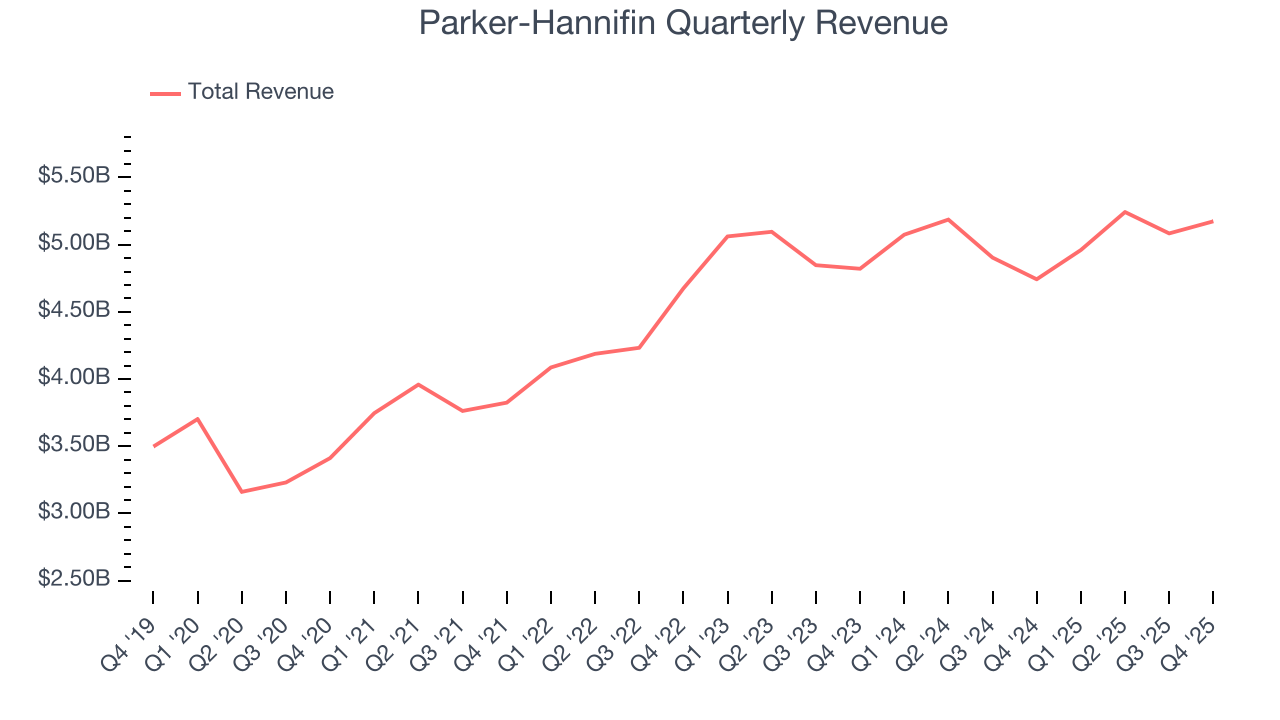
We at StockStory place the most emphasis on long-term growth, but within industrials, a half-decade historical view may miss cycles, industry trends, or a company capitalizing on catalysts such as a new contract win or a successful product line. Parker-Hannifin’s recent performance shows its demand has slowed as its annualized revenue growth of 1.6% over the last two years was below its five-year trend. 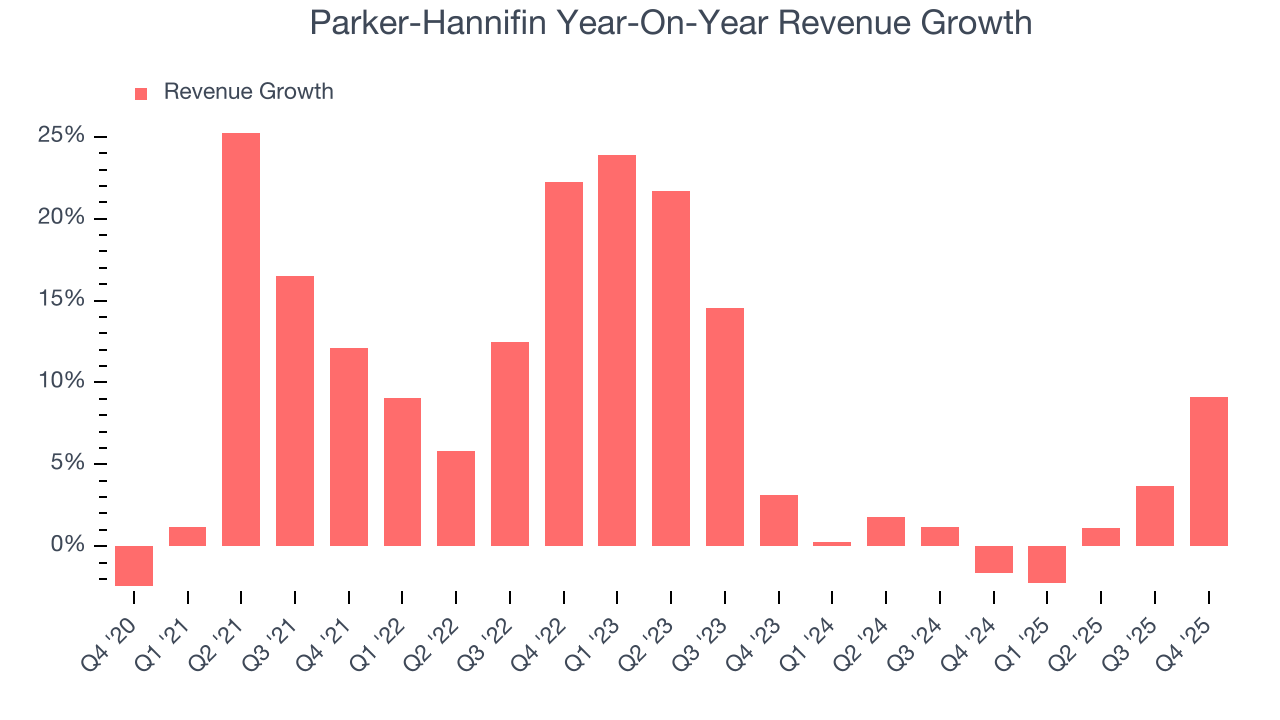
We can better understand the company’s sales dynamics by analyzing its organic revenue, which strips out one-time events like acquisitions and currency fluctuations that don’t accurately reflect its fundamentals. Over the last two years, Parker-Hannifin’s organic revenue averaged 2.6% year-on-year growth. Because this number aligns with its two-year revenue growth, we can see the company’s core operations (not acquisitions and divestitures) drove most of its results. 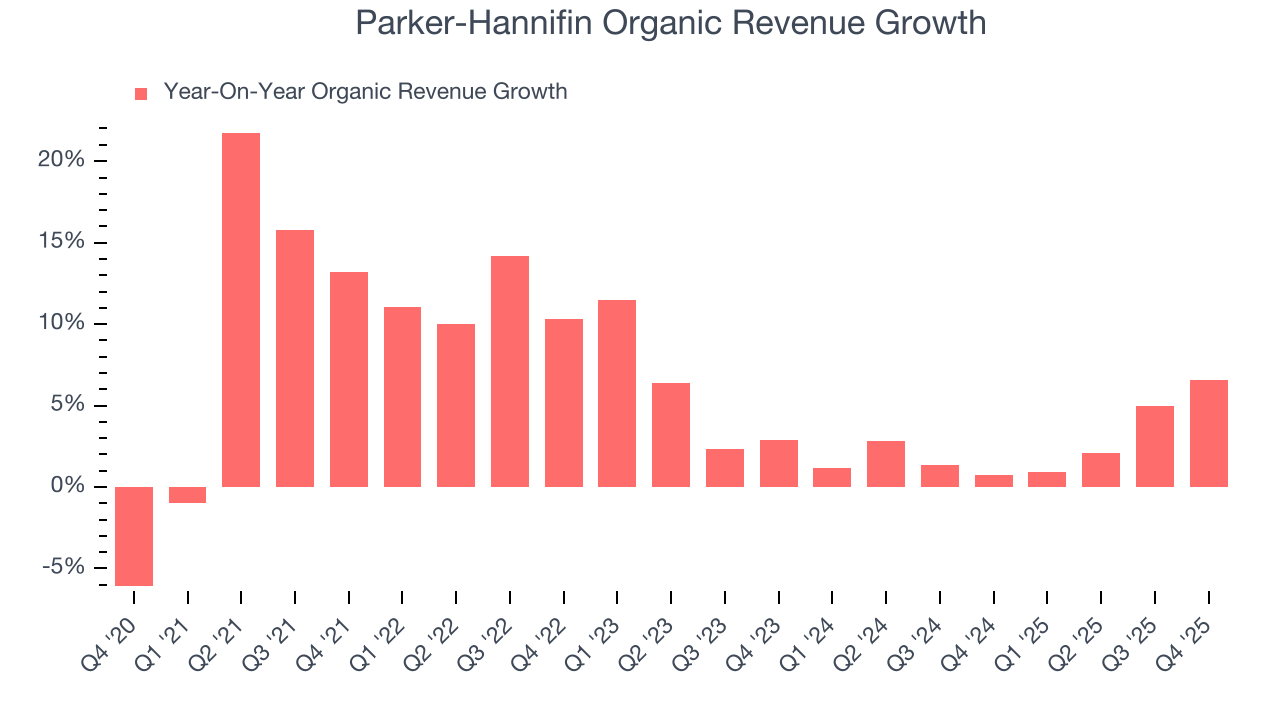
This quarter, Parker-Hannifin reported year-on-year revenue growth of 9.1%, and its $5.17 billion of revenue exceeded Wall Street’s estimates by 2.1%.
Looking ahead, sell-side analysts expect revenue to grow 6% over the next 12 months. Although this projection suggests its newer products and services will catalyze better top-line performance, it is still below average for the sector. At least the company is tracking well in other measures of financial health.
6. Gross Margin & Pricing Power
Parker-Hannifin’s gross margin is good compared to other industrials businesses and signals it sells differentiated products, not commodities. As you can see below, it averaged an impressive 35% gross margin over the last five years. That means for every $100 in revenue, roughly $34.97 was left to spend on selling, marketing, R&D, and general administrative overhead. 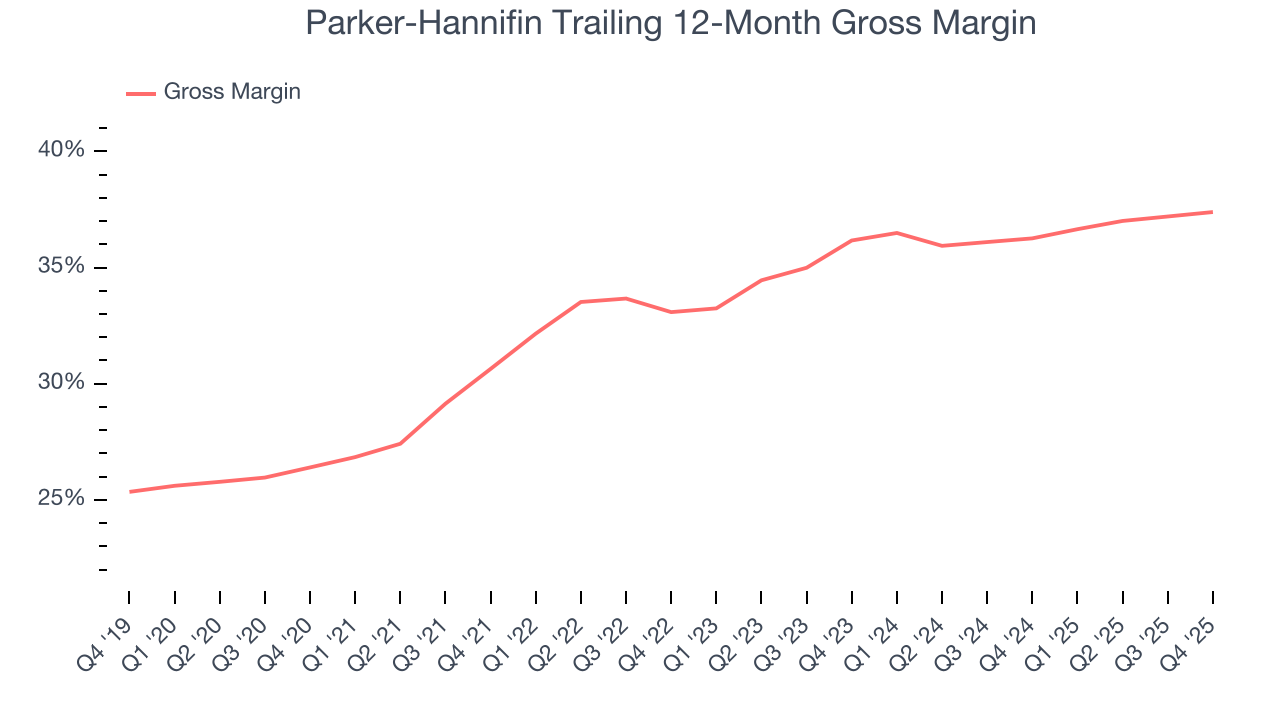
This quarter, Parker-Hannifin’s gross profit margin was 37.3%, in line with the same quarter last year. On a wider time horizon, Parker-Hannifin’s full-year margin has been trending up over the past 12 months, increasing by 1.1 percentage points. If this move continues, it could suggest better unit economics due to more leverage from its growing sales on the fixed portion of its cost of goods sold (such as manufacturing expenses).
7. Operating Margin
Operating margin is a key measure of profitability. Think of it as net income - the bottom line - excluding the impact of taxes and interest on debt, which are less connected to business fundamentals.
Parker-Hannifin has been a well-oiled machine over the last five years. It demonstrated elite profitability for an industrials business, boasting an average operating margin of 18.5%. This result isn’t too surprising as its gross margin gives it a favorable starting point.
Looking at the trend in its profitability, Parker-Hannifin’s operating margin rose by 4.3 percentage points over the last five years, as its sales growth gave it operating leverage.
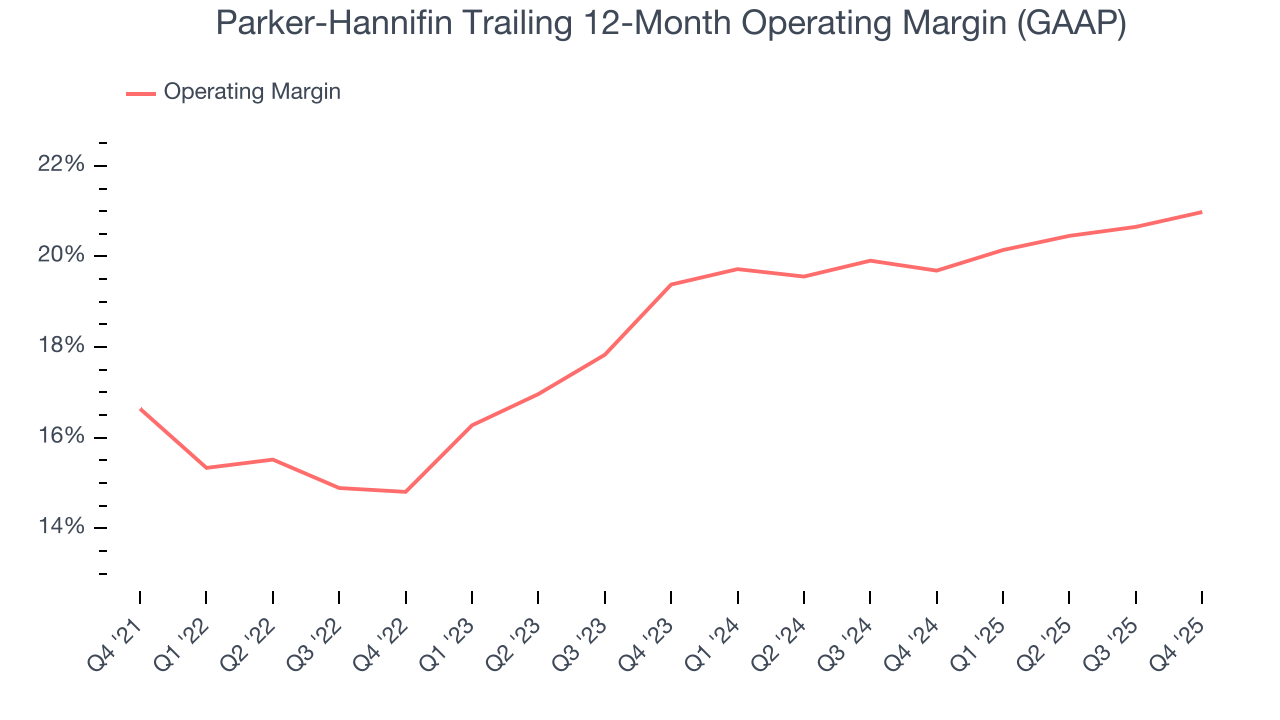
This quarter, Parker-Hannifin generated an operating margin profit margin of 21.1%, up 1.4 percentage points year on year. The increase was encouraging, and because its operating margin rose more than its gross margin, we can infer it was more efficient with expenses such as marketing, R&D, and administrative overhead.
8. Earnings Per Share
We track the long-term change in earnings per share (EPS) for the same reason as long-term revenue growth. Compared to revenue, however, EPS highlights whether a company’s growth is profitable.
Parker-Hannifin’s EPS grew at an astounding 19.7% compounded annual growth rate over the last five years, higher than its 8.7% annualized revenue growth. This tells us the company became more profitable on a per-share basis as it expanded.
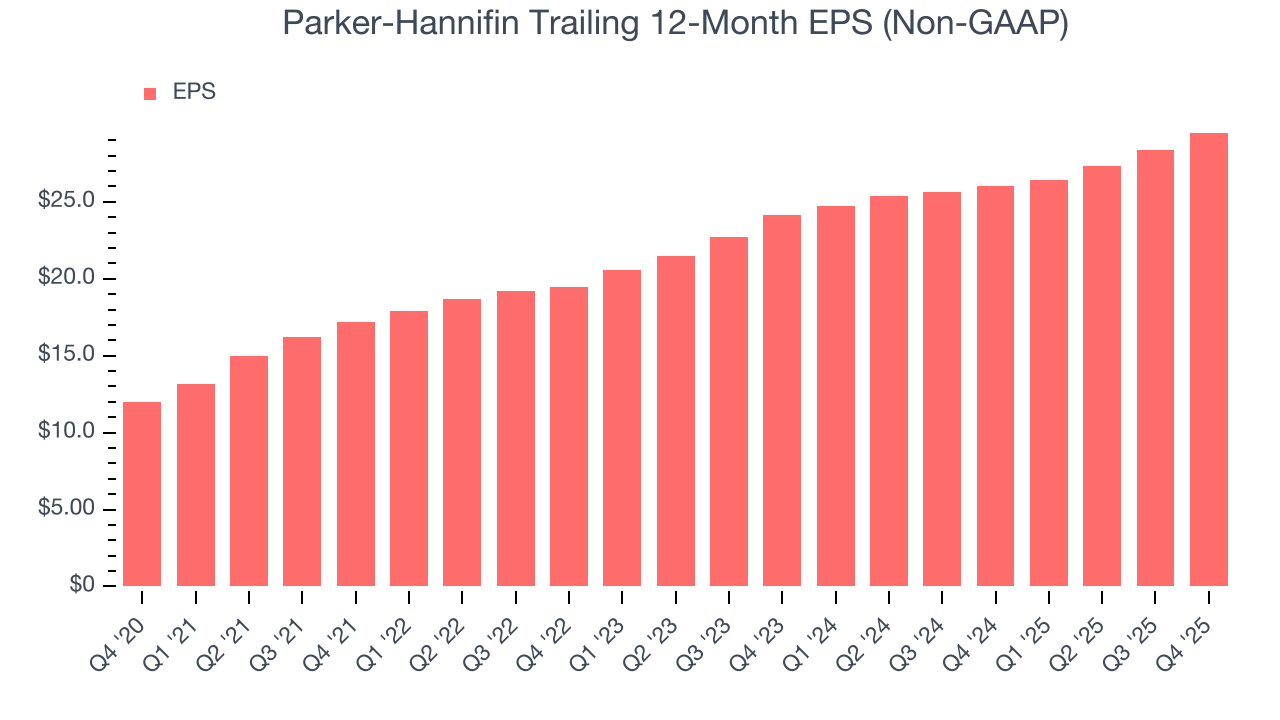
We can take a deeper look into Parker-Hannifin’s earnings to better understand the drivers of its performance. As we mentioned earlier, Parker-Hannifin’s operating margin expanded by 4.3 percentage points over the last five years. On top of that, its share count shrank by 2.3%. These are positive signs for shareholders because improving profitability and share buybacks turbocharge EPS growth relative to revenue growth. 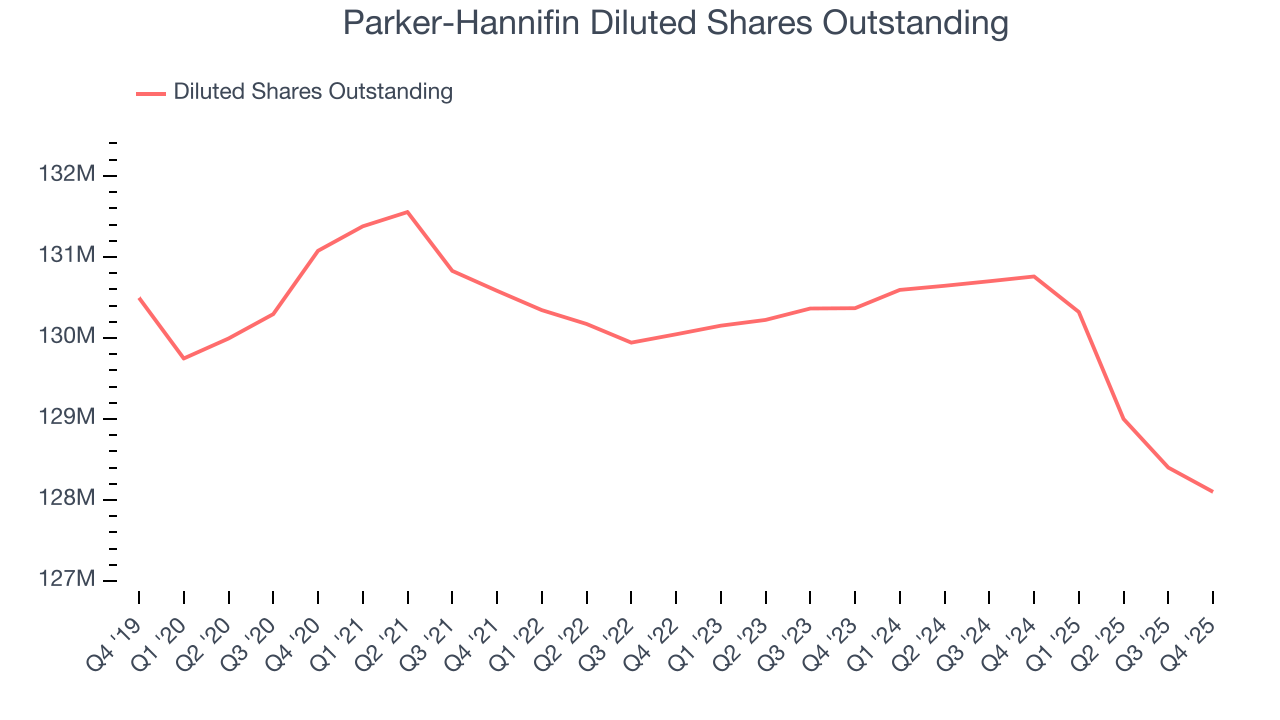
Like with revenue, we analyze EPS over a more recent period because it can provide insight into an emerging theme or development for the business.
For Parker-Hannifin, its two-year annual EPS growth of 10.6% was lower than its five-year trend. We still think its growth was good and hope it can accelerate in the future.
In Q4, Parker-Hannifin reported adjusted EPS of $7.65, up from $6.53 in the same quarter last year. This print beat analysts’ estimates by 6.8%. Over the next 12 months, Wall Street expects Parker-Hannifin’s full-year EPS of $29.50 to grow 7.5%.
9. Cash Is King
If you’ve followed StockStory for a while, you know we emphasize free cash flow. Why, you ask? We believe that in the end, cash is king, and you can’t use accounting profits to pay the bills.
Parker-Hannifin has shown terrific cash profitability, putting it in an advantageous position to invest in new products, return capital to investors, and consolidate the market during industry downturns. The company’s free cash flow margin was among the best in the industrials sector, averaging 14.8% over the last five years.
Taking a step back, we can see that Parker-Hannifin’s margin expanded by 3.2 percentage points during that time. This is encouraging because it gives the company more optionality.
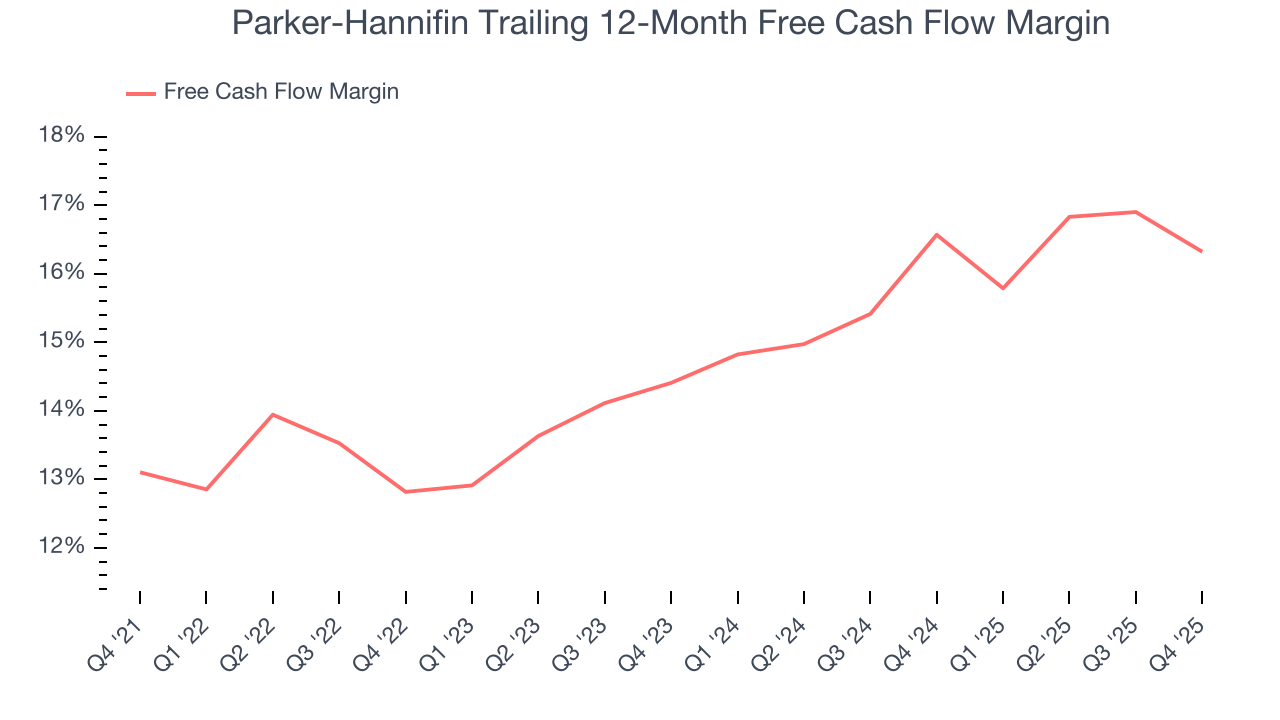
Parker-Hannifin’s free cash flow clocked in at $768 million in Q4, equivalent to a 14.8% margin. The company’s cash profitability regressed as it was 2.3 percentage points lower than in the same quarter last year, but we wouldn’t read too much into the short term because investment needs can be seasonal, causing temporary swings. Long-term trends trump fluctuations.
10. Return on Invested Capital (ROIC)
EPS and free cash flow tell us whether a company was profitable while growing its revenue. But was it capital-efficient? Enter ROIC, a metric showing how much operating profit a company generates relative to the money it has raised (debt and equity).
Parker-Hannifin’s five-year average ROIC was 12.8%, higher than most industrials businesses. This illustrates its management team’s ability to invest in profitable growth opportunities and generate value for shareholders.
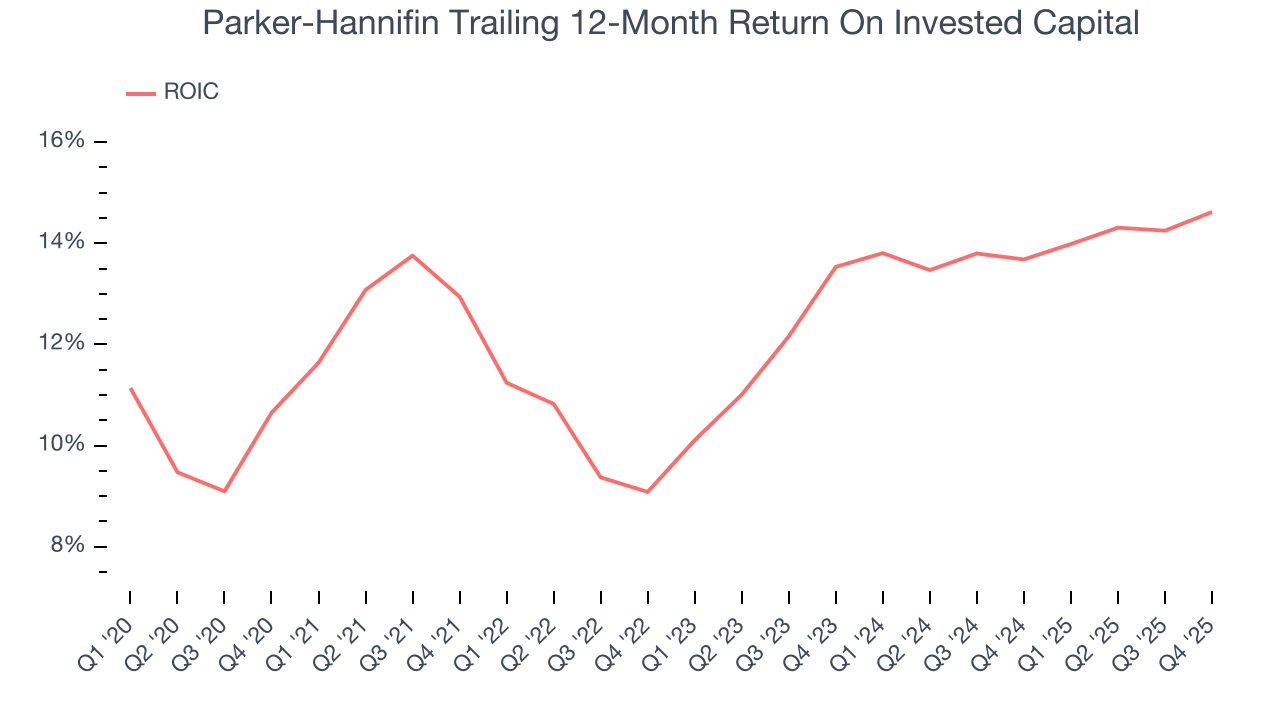
We like to invest in businesses with high returns, but the trend in a company’s ROIC is what often surprises the market and moves the stock price. On average, Parker-Hannifin’s ROIC increased by 3.1 percentage points annually over the last few years. This is a great sign when paired with its already strong returns. It could suggest its competitive advantage or profitable growth opportunities are expanding.
11. Balance Sheet Assessment
Parker-Hannifin reported $427 million of cash and $9.87 billion of debt on its balance sheet in the most recent quarter. As investors in high-quality companies, we primarily focus on two things: 1) that a company’s debt level isn’t too high and 2) that its interest payments are not excessively burdening the business.
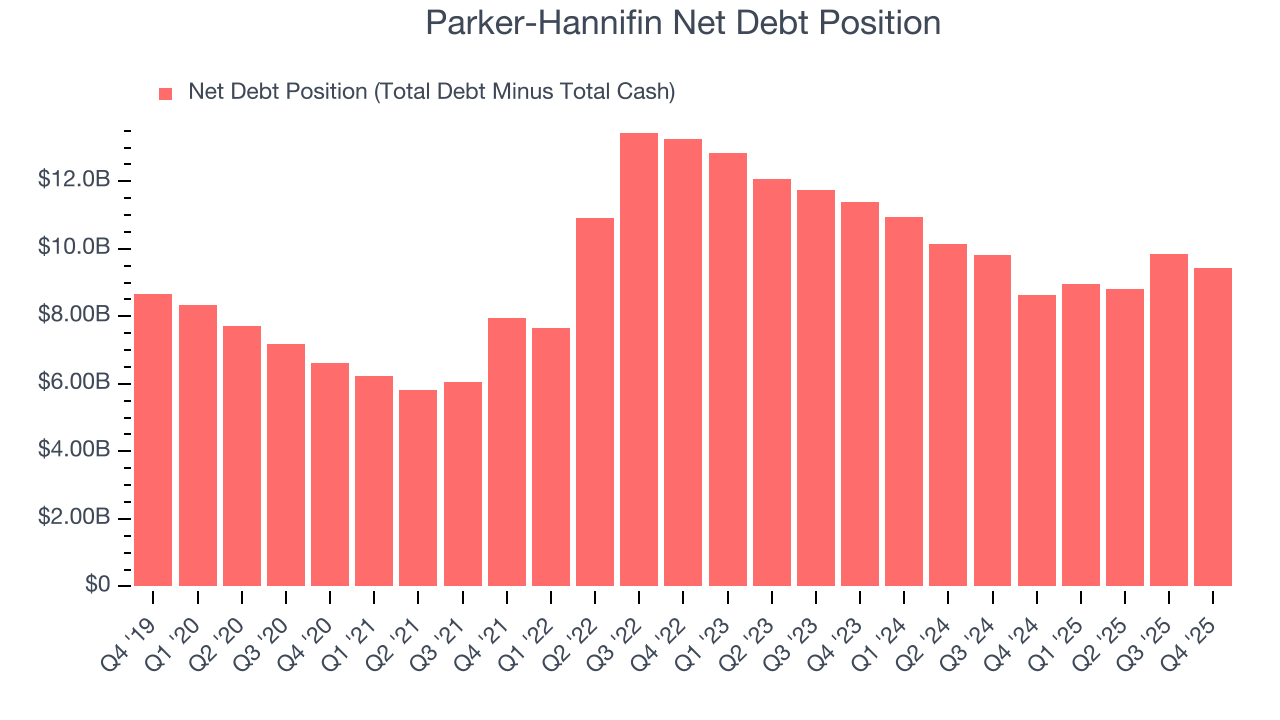
With $5.31 billion of EBITDA over the last 12 months, we view Parker-Hannifin’s 1.8× net-debt-to-EBITDA ratio as safe. We also see its $179.4 million of annual interest expenses as appropriate. The company’s profits give it plenty of breathing room, allowing it to continue investing in growth initiatives.
12. Key Takeaways from Parker-Hannifin’s Q4 Results
We enjoyed seeing Parker-Hannifin beat analysts’ organic revenue expectations this quarter. We were also glad its revenue outperformed Wall Street’s estimates. On the other hand, its EBITDA slightly missed. Overall, we think this was a decent quarter with some key metrics above expectations. The stock traded up 3% to $944 immediately following the results.
13. Is Now The Time To Buy Parker-Hannifin?
Updated: March 24, 2026 at 11:10 PM EDT
The latest quarterly earnings matters, sure, but we actually think longer-term fundamentals and valuation matter more. Investors should consider all these pieces before deciding whether or not to invest in Parker-Hannifin.
In our opinion, Parker-Hannifin is a good company. First off, its revenue growth was good over the last five years. And while its organic revenue growth has disappointed, its impressive operating margins show it has a highly efficient business model. On top of that, its astounding EPS growth over the last five years shows its profits are trickling down to shareholders.
Parker-Hannifin’s P/E ratio based on the next 12 months is 28x. This multiple tells us that a lot of good news is priced in. Parker-Hannifin is a good one to add to your watchlist - there are companies featuring superior fundamentals at the moment.
Wall Street analysts have a consensus one-year price target of $1,031 on the company (compared to the current share price of $927.33).