CrowdStrike (CRWD)
CrowdStrike is a great business. Its financials show it’s a customer acquisition machine that can expand both quickly and organically.― StockStory Analyst Team


1. News




2. Summary
Why We Like CrowdStrike
Known for detecting the massive SolarWinds hack in 2020 that compromised numerous government agencies, CrowdStrike (NASDAQ:CRWD) provides cloud-based cybersecurity solutions that protect endpoints, cloud workloads, identity, and data through its Falcon platform.
- Billings growth has averaged 26% over the last year, indicating a healthy pipeline of new contracts that should drive future revenue increases
- Sales outlook for the upcoming 12 months implies the business will stay on its desirable two-year growth trajectory
- Fast payback periods on sales and marketing expenses allow the company to invest heavily and onboard many customers concurrently
We have an affinity for CrowdStrike. The price seems reasonable when considering its quality, so this could be a prudent time to buy some shares.
Why Is Now The Time To Buy CrowdStrike?





CrowdStrike is trading at $423.85 per share, or 19.3x forward price-to-sales. Yes, the stock’s seemingly high valuation multiple could mean short-term volatility. But given its business quality, we think the multiple is justified.
Entry price may seem important in the moment, but our work shows that time and again, long-term market outperformance is determined by business quality rather than getting an absolute bargain on a stock.
3. CrowdStrike (CRWD) Research Report: Q4 CY2025 Update
Cybersecurity platform provider CrowdStrike (NASDAQ:CRWD) reported Q4 CY2025 results topping the market’s revenue expectations, with sales up 23.3% year on year to $1.31 billion. Guidance for next quarter’s revenue was better than expected at $1.36 billion at the midpoint, 0.6% above analysts’ estimates. Its non-GAAP profit of $1.12 per share was 1.6% above analysts’ consensus estimates.
CrowdStrike (CRWD) Q4 CY2025 Highlights:
- Revenue: $1.31 billion vs analyst estimates of $1.30 billion (23.3% year-on-year growth, 0.6% beat)
- Adjusted EPS: $1.12 vs analyst estimates of $1.10 (1.6% beat)
- Adjusted Operating Income: $325.8 million vs analyst estimates of $317.2 million (25% margin, 2.7% beat)
- Revenue Guidance for Q1 CY2026 is $1.36 billion at the midpoint, roughly in line with what analysts were expecting
- Adjusted EPS guidance for the upcoming financial year 2027 is $4.84 at the midpoint, in line with analyst estimates
- Operating Margin: -0.5%, up from -8.1% in the same quarter last year
- Free Cash Flow Margin: 28.8%, up from 24% in the previous quarter
- Annual Recurring Revenue: $5.25 billion (23.8% year-on-year growth, beat)
- Market Capitalization: $97.02 billion
Company Overview
Known for detecting the massive SolarWinds hack in 2020 that compromised numerous government agencies, CrowdStrike (NASDAQ:CRWD) provides cloud-based cybersecurity solutions that protect endpoints, cloud workloads, identity, and data through its Falcon platform.
CrowdStrike's Falcon platform uses a single lightweight agent installed on customer devices that collects and analyzes data to detect and prevent cyber threats in real-time. The platform leverages cloud-scale artificial intelligence and massive datasets to identify sophisticated attacks, including fileless malware that traditional security tools often miss. When the agent detects suspicious activity, it can automatically block the threat and alert security teams.
At the core of CrowdStrike's technology is its proprietary "Threat Graph" - a dynamic database that processes trillions of security events weekly to identify patterns of malicious behavior. For example, when a financial services company's employee clicks a phishing email, Threat Graph can instantly recognize the attack pattern and prevent the malware from executing based on behavioral indicators rather than relying on known signatures.
The company offers 27 integrated modules spanning endpoint security, cloud security, identity protection, and threat intelligence. Customers typically begin with core protection modules and add additional services over time. CrowdStrike also provides professional services including incident response for organizations experiencing active breaches.
CrowdStrike generates revenue through subscription-based pricing for its software modules. Enterprise customers ranging from Fortune 500 companies to government agencies make up its client base, with customers in sectors like finance, healthcare, and critical infrastructure that face sophisticated cyber threats. In recent years, CrowdStrike has expanded from its enterprise focus to also serve small and medium-sized businesses.
4. Endpoint Security
Almost every company is slowly finding itself becoming a technology company and facing cybersecurity risks. As the volume of internet enabled devices grows, every device that employees use to connect to business networks represents a potential risk. Endpoint security software enables businesses to protect devices (endpoints) that employees use for work purposes either on a network or in the cloud from cyber threats.
CrowdStrike competes with traditional endpoint security providers like Microsoft (NASDAQ:MSFT) with its Defender product, Palo Alto Networks (NASDAQ:PANW), SentinelOne (NYSE:S), and VMware's Carbon Black (now part of Broadcom, NASDAQ:AVGO). In the cloud security space, it faces competition from Wiz, Zscaler (NASDAQ:ZS), and Cisco (NASDAQ:CSCO).
5. Revenue Growth
A company’s long-term performance is an indicator of its overall quality. Any business can experience short-term success, but top-performing ones enjoy sustained growth for years. Thankfully, CrowdStrike’s 40.6% annualized revenue growth over the last five years was incredible. Its growth surpassed the average software company and shows its offerings resonate with customers, a great starting point for our analysis.
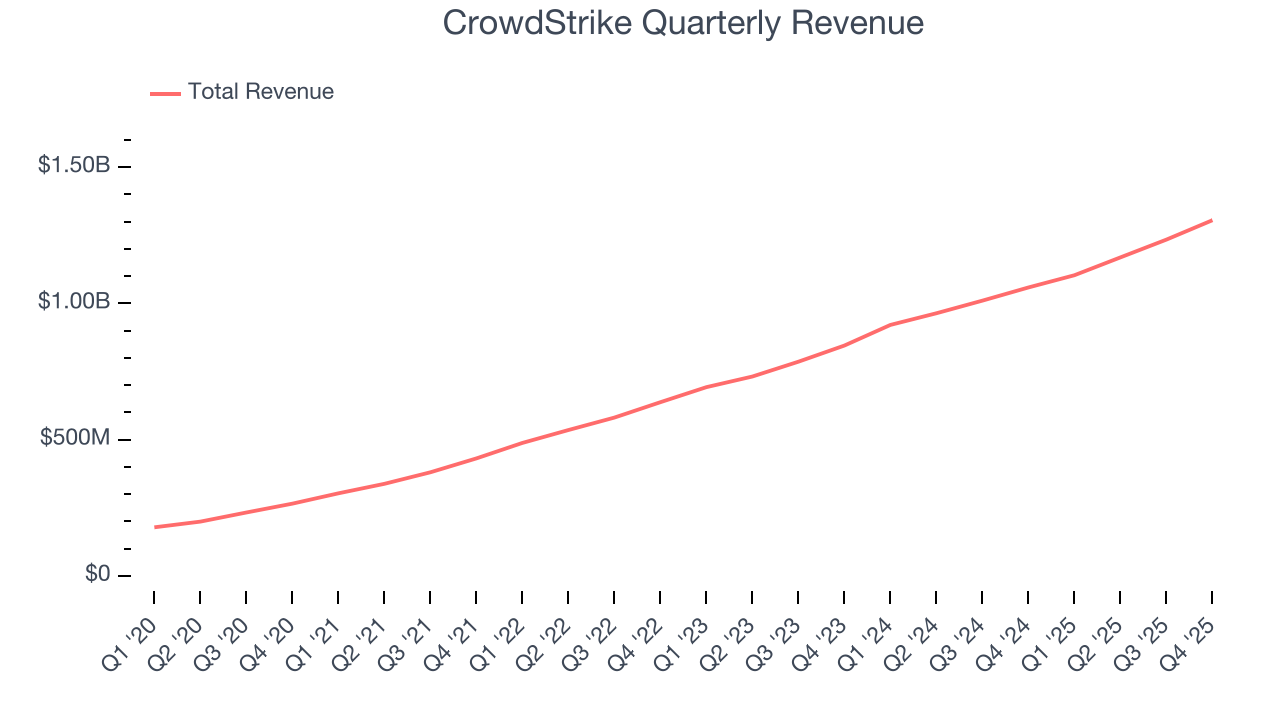
Long-term growth is the most important, but within software, a half-decade historical view may miss new innovations or demand cycles. CrowdStrike’s annualized revenue growth of 25.5% over the last two years is below its five-year trend, but we still think the results suggest healthy demand. 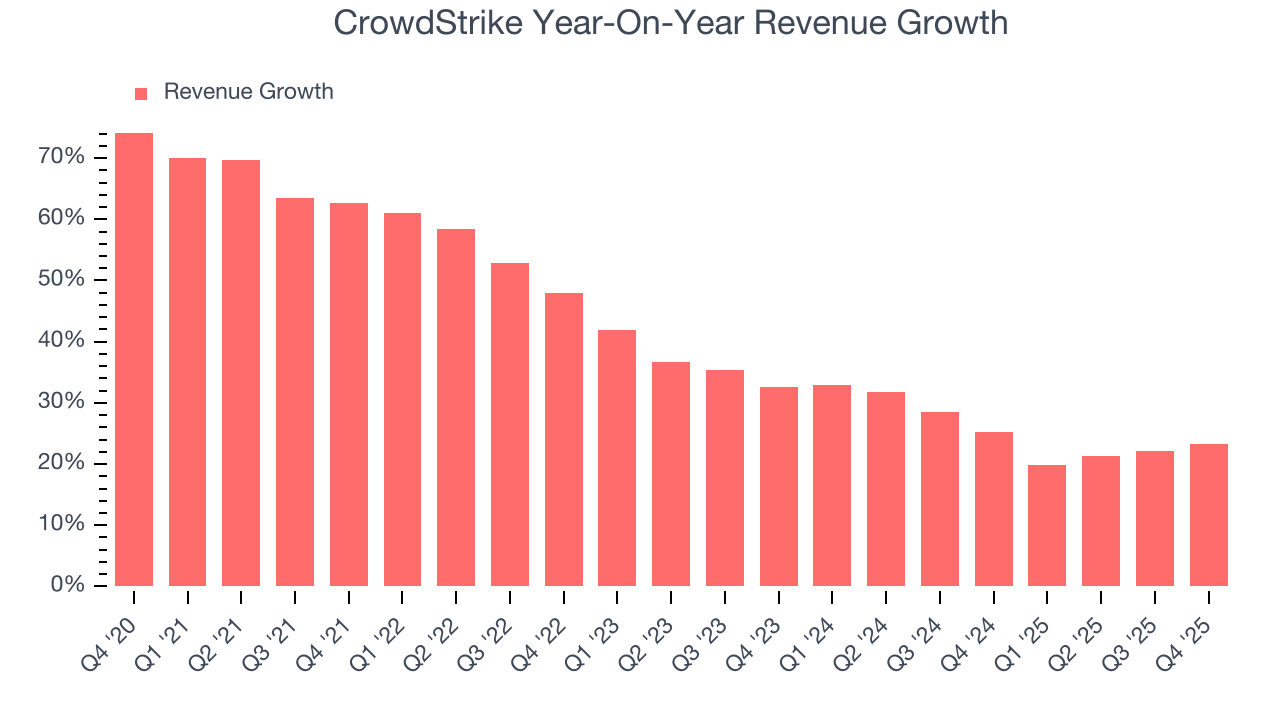
This quarter, CrowdStrike reported robust year-on-year revenue growth of 23.3%, and its $1.31 billion of revenue topped Wall Street estimates by 0.6%. Company management is currently guiding for a 23.4% year-on-year increase in sales next quarter.
Looking further ahead, sell-side analysts expect revenue to grow 21.7% over the next 12 months, a deceleration versus the last two years. Still, this projection is healthy and implies the market sees success for its products and services.
6. Annual Recurring Revenue
While reported revenue for a software company can include low-margin items like implementation fees, annual recurring revenue (ARR) is a sum of the next 12 months of contracted revenue purely from software subscriptions, or the high-margin, predictable revenue streams that make SaaS businesses so valuable.
CrowdStrike’s ARR punched in at $5.25 billion in Q4, and over the last four quarters, its growth was impressive as it averaged 22.1% year-on-year increases. This performance aligned with its total sales growth and shows that customers are willing to take multi-year bets on the company’s technology. Its growth also makes CrowdStrike a more predictable business, a tailwind for its valuation as investors typically prefer businesses with recurring revenue. 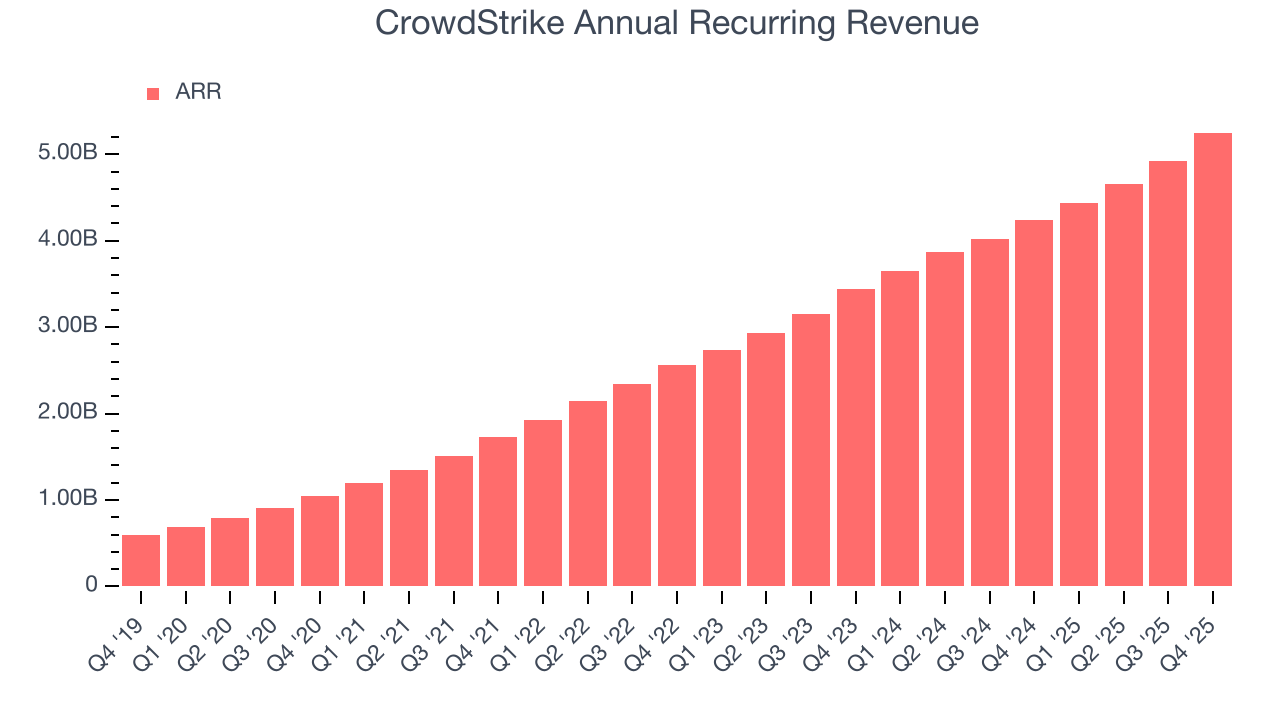
7. Customer Acquisition Efficiency
The customer acquisition cost (CAC) payback period measures the months a company needs to recoup the money spent on acquiring a new customer. This metric helps assess how quickly a business can break even on its sales and marketing investments.
CrowdStrike is very efficient at acquiring new customers, and its CAC payback period checked in at 29 months this quarter. The company’s rapid recovery of its customer acquisition costs indicates it has a highly differentiated product offering and a strong brand reputation. These dynamics give CrowdStrike more resources to pursue new product initiatives while maintaining the flexibility to increase its sales and marketing investments. 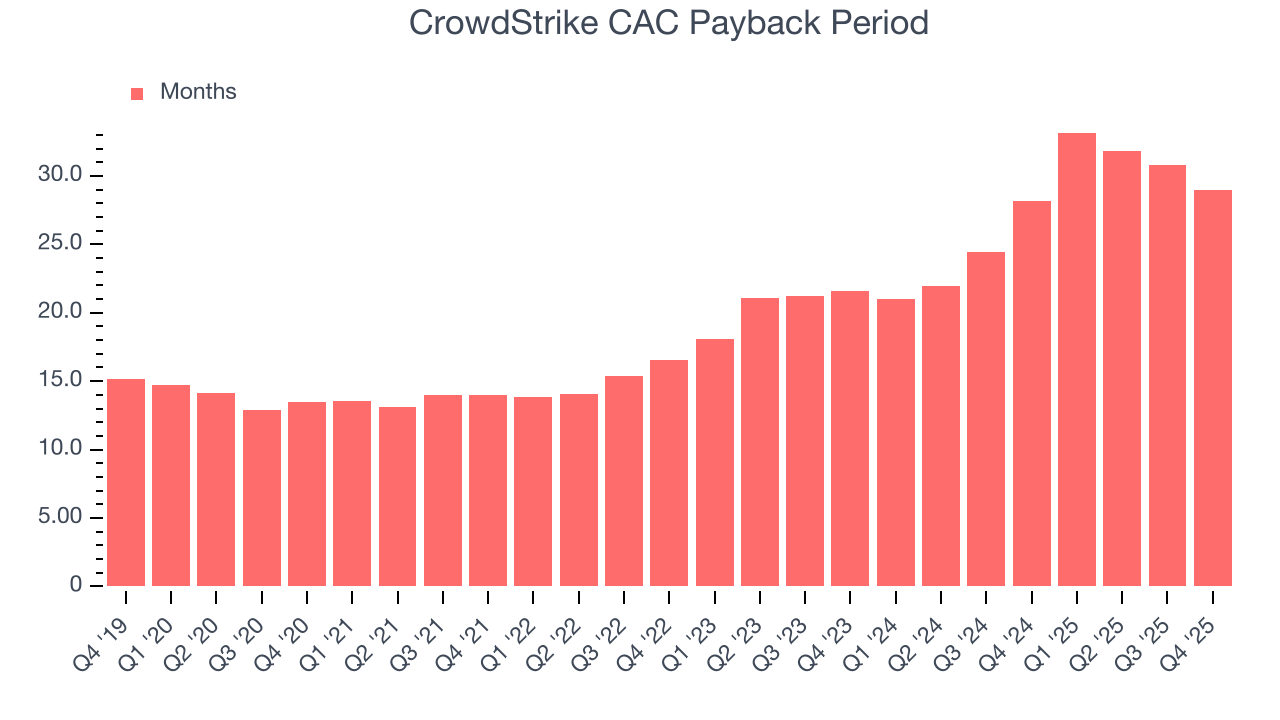
8. Gross Margin & Pricing Power
Software is eating the world. It’s one of our favorite business models because once you develop the product, it usually doesn’t cost much to provide it as an ongoing service. These minimal costs can include servers, licenses, and certain personnel.
CrowdStrike’s gross margin is better than the broader software industry and signals it has solid unit economics and competitive products. As you can see below, it averaged a decent 74.7% gross margin over the last year. That means for every $100 in revenue, roughly $74.73 was left to spend on selling, marketing, and R&D.
The market not only cares about gross margin levels but also how they change over time because expansion creates firepower for profitability and free cash generation. CrowdStrike has seen gross margins decline by 0.5 percentage points over the last 2 year, which is slightly worse than average for software.
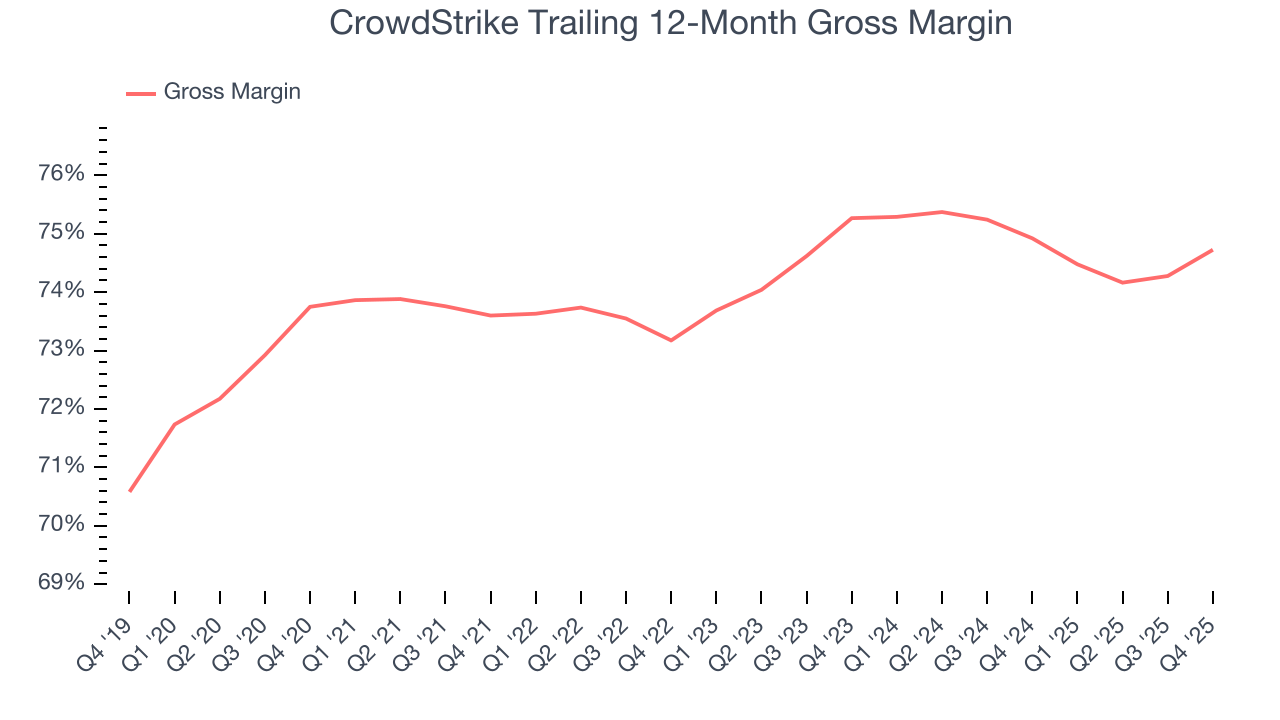
CrowdStrike produced a 75.8% gross profit margin in Q4, up 1.7 percentage points year on year. Zooming out, the company’s full-year margin has remained steady over the past 12 months, suggesting its input costs have been stable and it isn’t under pressure to lower prices.
9. Operating Margin
While many software businesses point investors to their adjusted profits, which exclude stock-based compensation (SBC), we prefer GAAP operating margin because SBC is a legitimate expense used to attract and retain talent. This is one of the best measures of profitability because it shows how much money a company takes home after developing, marketing, and selling its products.
Although CrowdStrike broke even this quarter from an operational perspective, it’s generally struggled over a longer time period. Its expensive cost structure has contributed to an average operating margin of negative 6.5% over the last year. Unprofitable, high-growth software companies require extra attention because they spend heaps of money to capture market share. This happened because the company spent loads of money to capture market share. As seen in its fast revenue growth, the aggressive strategy has paid off so far, and Wall Street’s estimates suggest the party will continue. We tend to agree and believe the business has a good chance of reaching profitability upon scale.
Analyzing the trend in its profitability, CrowdStrike’s operating margin decreased by 3.5 percentage points over the last two years. This raises questions about the company’s expense base because its revenue growth should have given it leverage on its fixed costs, resulting in better economies of scale and profitability. CrowdStrike’s performance was poor no matter how you look at it - it shows that costs were rising and it couldn’t pass them onto its customers.
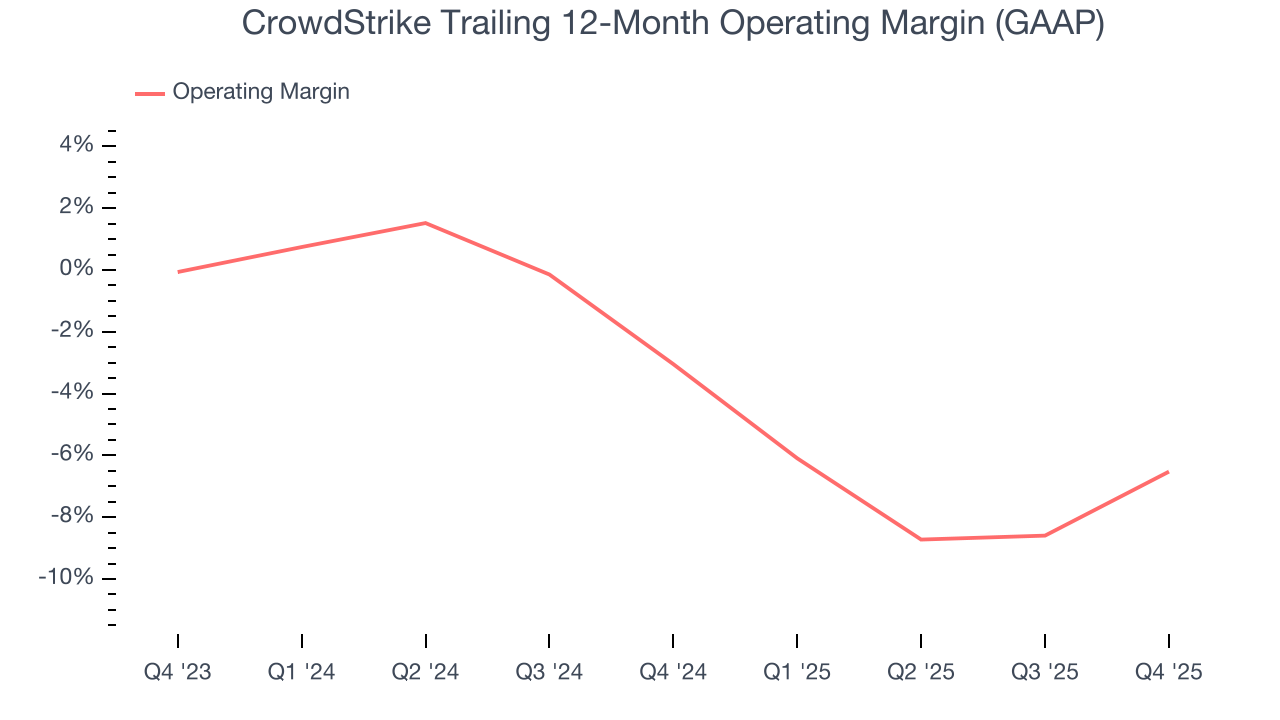
CrowdStrike’s operating margin was negative 0.5% this quarter.
10. Cash Is King
If you’ve followed StockStory for a while, you know we emphasize free cash flow. Why, you ask? We believe that in the end, cash is king, and you can’t use accounting profits to pay the bills.
CrowdStrike has shown robust cash profitability, driven by its cost-effective customer acquisition strategy that enables it to invest in new products and services rather than sales and marketing. The company’s free cash flow margin averaged 25.7% over the last year, quite impressive for a software business. CrowdStrike has shown robust cash profitability relative to peers over the last year, giving the company fewer opportunities to return capital to shareholders. The divergence from its underwhelming operating margin stems from the add-back of non-cash charges like depreciation and stock-based compensation. GAAP operating profit expenses these line items, but free cash flow does not.
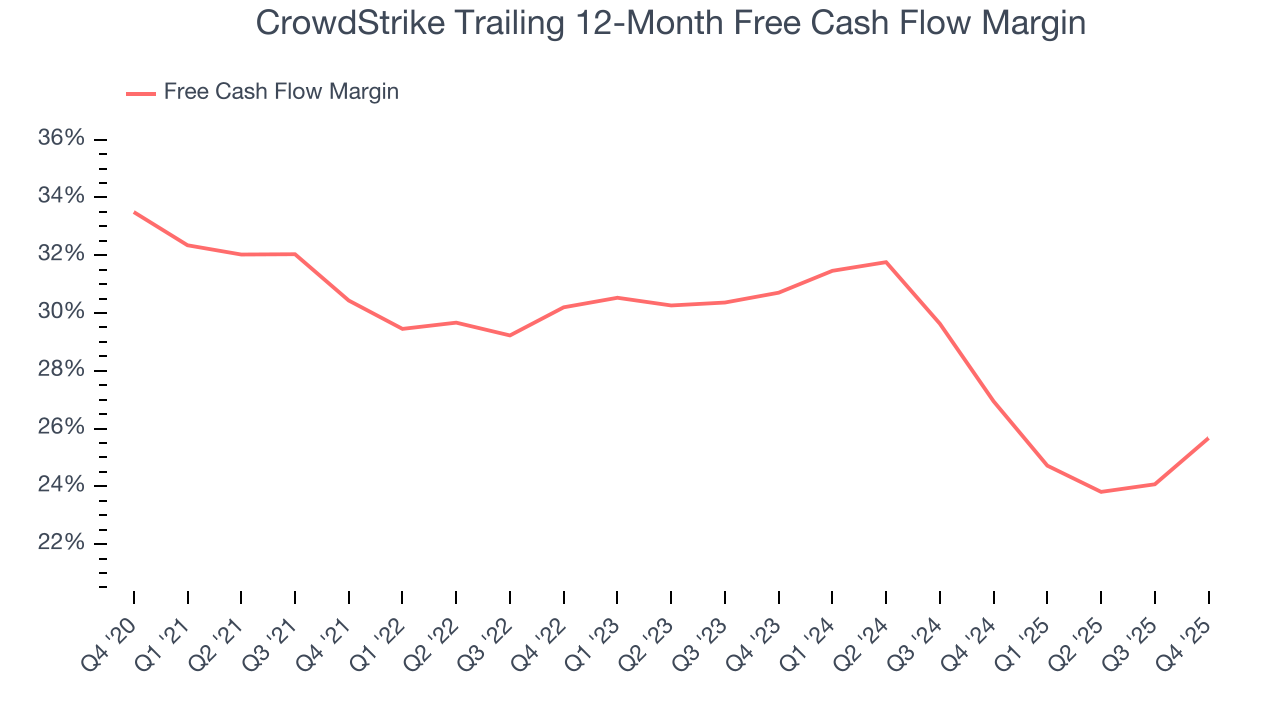
CrowdStrike’s free cash flow clocked in at $376.4 million in Q4, equivalent to a 28.8% margin. This result was good as its margin was 6.2 percentage points higher than in the same quarter last year. Its cash profitability was also above its one-year level, and we hope the company can build on this trend.
Over the next year, analysts predict CrowdStrike’s cash conversion will improve. Their consensus estimates imply its free cash flow margin of 25.7% for the last 12 months will increase to 29.6%, it options for capital deployment (investments, share buybacks, etc.).
11. Balance Sheet Assessment
One of the best ways to mitigate bankruptcy risk is to hold more cash than debt.
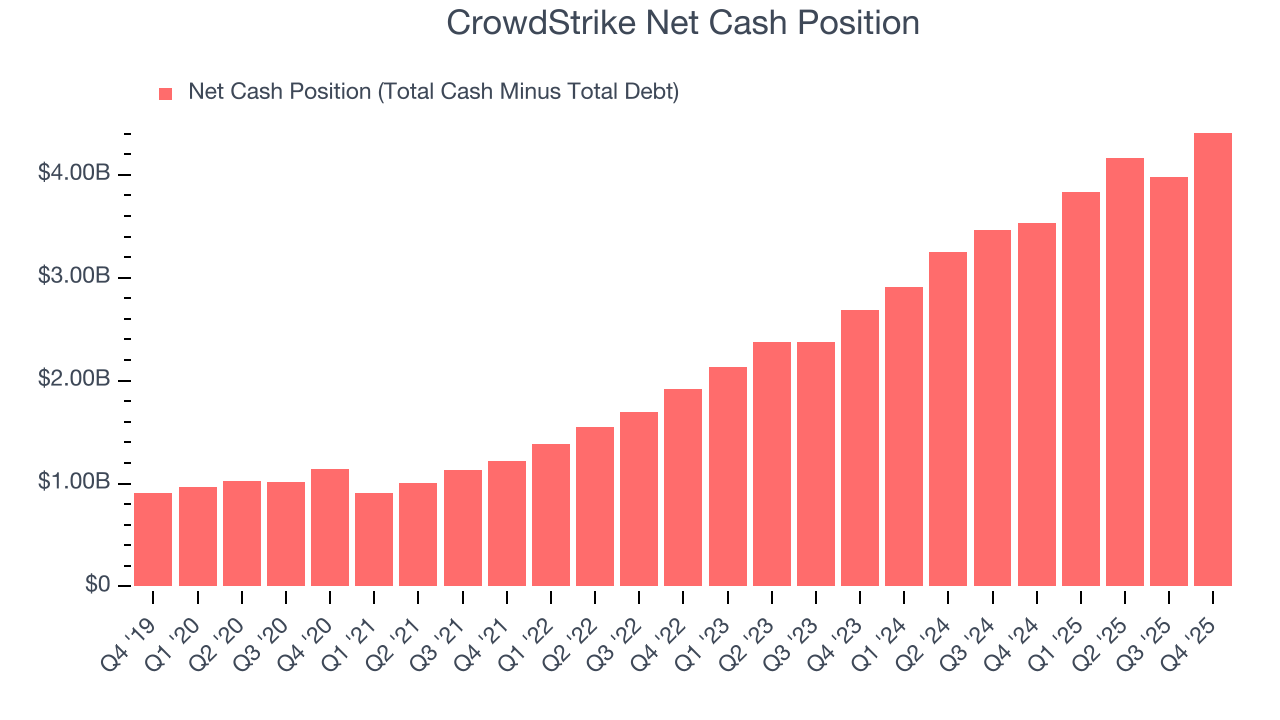
CrowdStrike is a well-capitalized company with $5.23 billion of cash and $820.1 million of debt on its balance sheet. This $4.41 billion net cash position is 4.5% of its market cap and gives it the freedom to borrow money, return capital to shareholders, or invest in growth initiatives. Leverage is not an issue here.
12. Key Takeaways from CrowdStrike’s Q4 Results
It was good to see CrowdStrike expecting revenue growth to continue next year. We were also happy its annual recurring revenue narrowly outperformed Wall Street’s estimates. Zooming out, we think this was a decent quarter. The stock remained flat at $393.06 immediately following the results.
13. Is Now The Time To Buy CrowdStrike?
Updated: March 16, 2026 at 10:01 PM EDT
A common mistake we notice when investors are deciding whether to buy a stock or not is that they simply look at the latest earnings results. Business quality and valuation matter more, so we urge you to understand these dynamics as well.
There are several reasons why we think CrowdStrike is a great business. First of all, the company’s revenue growth was exceptional over the last five years. And while its declining operating margin shows it’s becoming less efficient at building and selling its software, its splendid ARR growth shows it’s securing more long-term contracts and becoming a more predictable business. On top of that, CrowdStrike’s efficient sales strategy allows it to target and onboard new users at scale.
CrowdStrike’s price-to-sales ratio based on the next 12 months is 19.3x. This valuation may appear high at first glance, but the multiple is deserved because CrowdStrike’s fundamentals really stand out. We think the stock is attractive here.