
Addus HomeCare (ADUS)
Addus HomeCare has some minor positives, but it doesn’t impress. There are better stocks available in the market today.― StockStory Analyst Team


1. News
2. Summary
Why Addus HomeCare Is Not Exciting
Serving approximately 66,000 clients across 22 states with a focus on "dual eligible" Medicare and Medicaid beneficiaries, Addus HomeCare (NASDAQ:ADUS) provides in-home personal care, hospice, and home health services to elderly, chronically ill, and disabled individuals.
- Smaller revenue base of $1.42 billion means it hasn’t achieved the economies of scale that some industry juggernauts enjoy
- One positive is that its incremental sales over the last five years have been highly profitable as its earnings per share increased by 15.2% annually, topping its revenue gains
Addus HomeCare doesn’t meet our quality standards. We believe there are better businesses elsewhere.
Why There Are Better Opportunities Than Addus HomeCare







Addus HomeCare is trading at $101.35 per share, or 14.5x forward P/E. Yes, this valuation multiple is lower than that of other healthcare peers, but we’ll remind you that you often get what you pay for.
Cheap stocks can look like great bargains at first glance, but you often get what you pay for. These mediocre businesses often have less earnings power, meaning there is more reliance on a re-rating to generate good returns - an unlikely scenario for low-quality companies.
3. Addus HomeCare (ADUS) Research Report: Q4 CY2025 Update
Home healthcare provider Addus HomeCare (NASDAQ:ADUS) met Wall Street’s revenue expectations in Q4 CY2025, with sales up 25.6% year on year to $373.1 million. Its non-GAAP profit of $1.77 per share was 2.6% above analysts’ consensus estimates.
Addus HomeCare (ADUS) Q4 CY2025 Highlights:
- Revenue: $373.1 million vs analyst estimates of $372.9 million (25.6% year-on-year growth, in line)
- Adjusted EPS: $1.77 vs analyst estimates of $1.72 (2.6% beat)
- Adjusted EBITDA: $50.34 million vs analyst estimates of $49.12 million (13.5% margin, 2.5% beat)
- Operating Margin: 11.3%, up from 9.1% in the same quarter last year
- Sales Volumes were flat year on year (33.7% in the same quarter last year)
- Market Capitalization: $2.11 billion
Company Overview
Serving approximately 66,000 clients across 22 states with a focus on "dual eligible" Medicare and Medicaid beneficiaries, Addus HomeCare (NASDAQ:ADUS) provides in-home personal care, hospice, and home health services to elderly, chronically ill, and disabled individuals.
Addus HomeCare operates through three distinct service segments that form a comprehensive continuum of care. The Personal Care segment, which represents the company's largest service offering, provides non-medical assistance with daily living activities such as bathing, grooming, meal preparation, medication reminders, and transportation. These services help vulnerable individuals maintain independence while avoiding costly institutionalization.
The Hospice segment delivers end-of-life care for terminally ill patients, typically those with a life expectancy of six months or less. This includes palliative nursing care, spiritual counseling, social work, and bereavement support for families. Meanwhile, the Home Health segment provides medically-oriented services like skilled nursing and physical, occupational, and speech therapy, generally on a short-term basis for patients recovering from illness or injury.
Addus primarily generates revenue through contracts with government agencies, including state Medicaid programs, the Veterans Health Administration, and managed care organizations. The company receives client referrals through these agencies as well as from hospitals, physicians, nursing homes, and other healthcare providers. For example, a hospital discharge planner might refer an elderly patient recovering from surgery to Addus for in-home physical therapy and personal care assistance during recovery.
The company pursues growth through both organic expansion in existing markets and strategic acquisitions. In 2022, Addus acquired JourneyCare and Apple Home Healthcare, further expanding its service capabilities and geographic reach. The company strategically focuses on markets where it can offer its full continuum of care, providing clients with seamless transitions between service types as their needs change.
Addus operates in a highly regulated industry, with services subject to extensive federal and state oversight, including Medicare and Medicaid requirements, fraud and abuse laws, and patient privacy regulations.
4. Senior Health, Home Health & Hospice
The senior health, home care, and hospice care industries provide essential services to aging populations and patients with chronic or terminal conditions. These companies benefit from stable, recurring revenue driven by relationships with patients and families that can extend many months or even years. However, the labor-intensive nature of the business makes it vulnerable to rising labor costs and staffing shortages, while profitability is constrained by reimbursement rates from Medicare, Medicaid, and private insurers. Looking ahead, the industry is positioned for tailwinds from an aging population, increasing chronic disease prevalence, and a growing preference for personalized in-home care. Advancements in remote monitoring and telehealth are expected to enhance efficiency and care delivery. However, headwinds such as labor shortages, wage inflation, and regulatory uncertainty around reimbursement could pose challenges. Investments in digitization and technology-driven care will be critical for long-term success.
Addus HomeCare's competitors include other home healthcare providers such as Amedisys (NASDAQ:AMED), LHC Group (acquired by UnitedHealth Group's Optum), Encompass Health (NYSE:EHC), and Brookdale Senior Living (NYSE:BKD), as well as numerous regional and local home care agencies.
5. Revenue Scale
Larger companies benefit from economies of scale, where fixed costs like infrastructure, technology, and administration are spread over a higher volume of goods or services, reducing the cost per unit. Scale can also lead to bargaining power with suppliers, greater brand recognition, and more investment firepower. A virtuous cycle can ensue if a scaled company plays its cards right.
With just $1.42 billion in revenue over the past 12 months, Addus HomeCare is a small company in an industry where scale matters. This makes it difficult to build trust with customers because healthcare is heavily regulated, complex, and resource-intensive.
6. Revenue Growth
A company’s long-term sales performance can indicate its overall quality. Even a bad business can shine for one or two quarters, but a top-tier one grows for years. Luckily, Addus HomeCare’s sales grew at a solid 13.2% compounded annual growth rate over the last five years. Its growth beat the average healthcare company and shows its offerings resonate with customers.
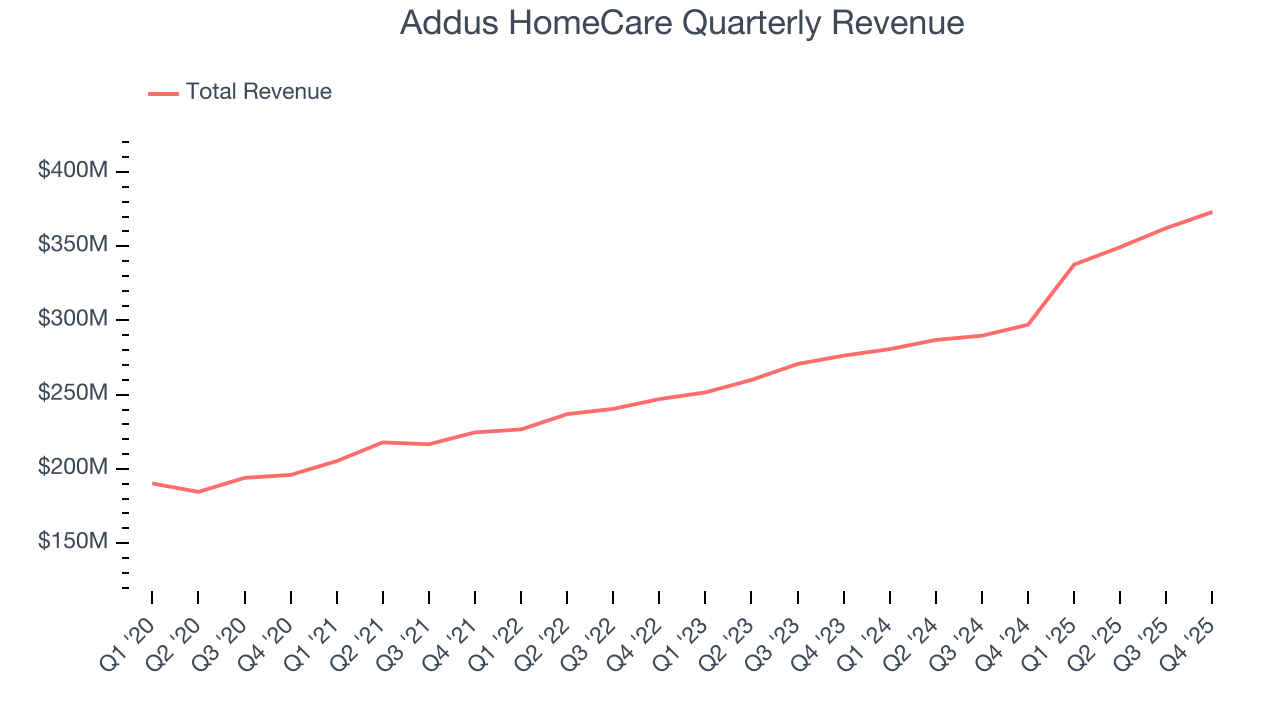
Long-term growth is the most important, but within healthcare, a half-decade historical view may miss new innovations or demand cycles. Addus HomeCare’s annualized revenue growth of 15.9% over the last two years is above its five-year trend, suggesting its demand was strong and recently accelerated. 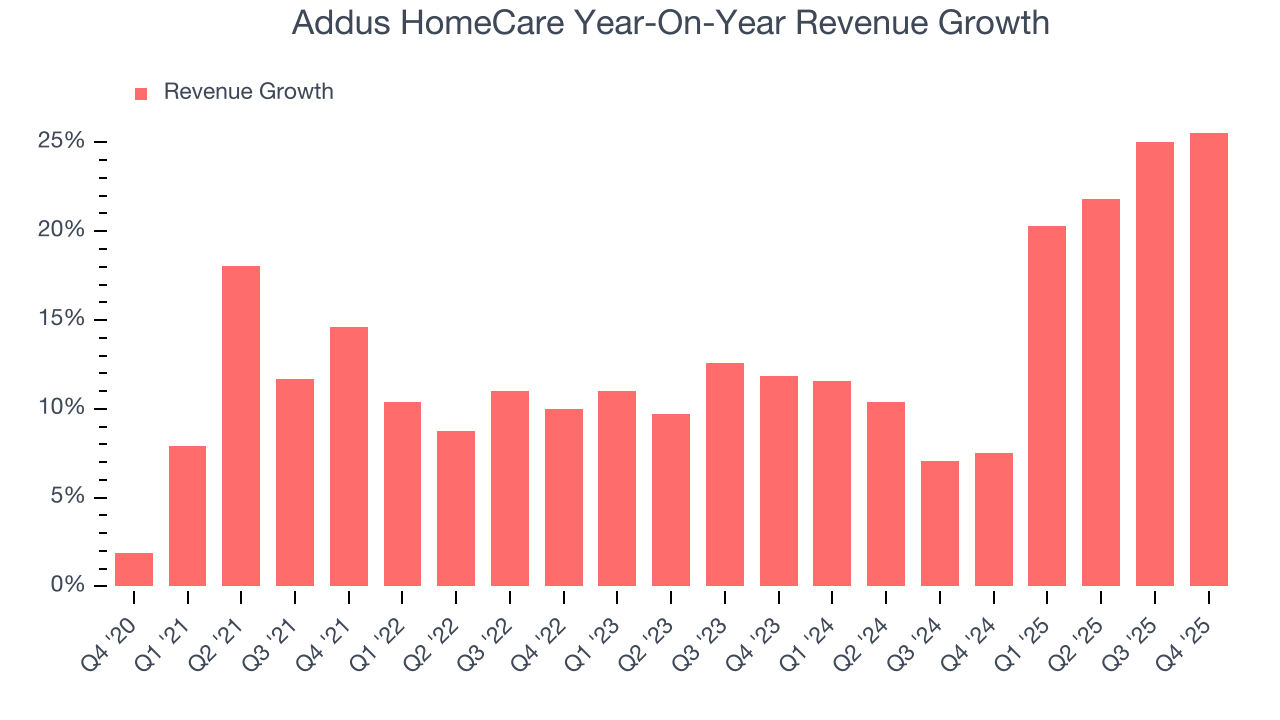
We can dig further into the company’s revenue dynamics by analyzing its number of average billable patients, which reached 50,971 in the latest quarter. Over the last two years, Addus HomeCare’s average billable patients averaged 26.8% year-on-year growth. Because this number is better than its revenue growth, we can see the company’s average selling price decreased. 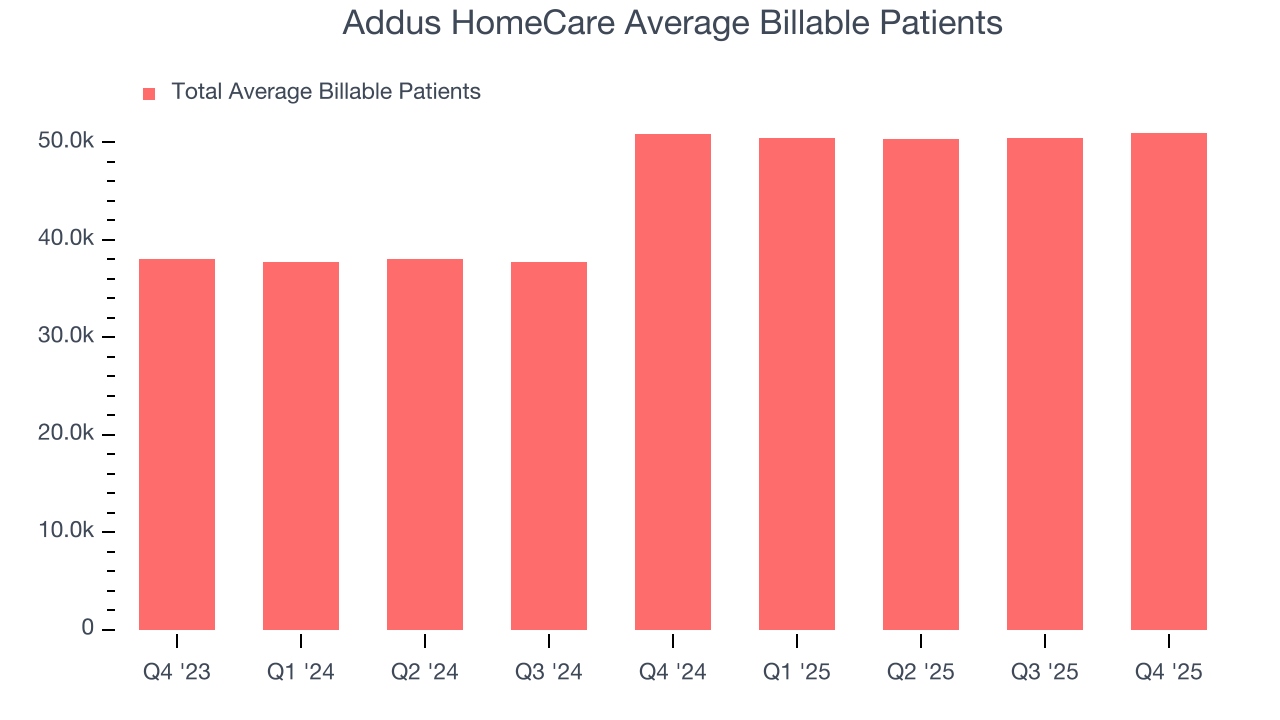
This quarter, Addus HomeCare’s year-on-year revenue growth of 25.6% was excellent, and its $373.1 million of revenue was in line with Wall Street’s estimates.
Looking ahead, sell-side analysts expect revenue to grow 7.1% over the next 12 months, a deceleration versus the last two years. Despite the slowdown, this projection is above the sector average and indicates the market is forecasting some success for its newer products and services.
7. Operating Margin
Addus HomeCare was profitable over the last five years but held back by its large cost base. Its average operating margin of 8.6% was weak for a healthcare business.
On the plus side, Addus HomeCare’s operating margin rose by 2.1 percentage points over the last five years, as its sales growth gave it operating leverage. The company’s two-year trajectory shows its performance was mostly driven by its recent improvements.
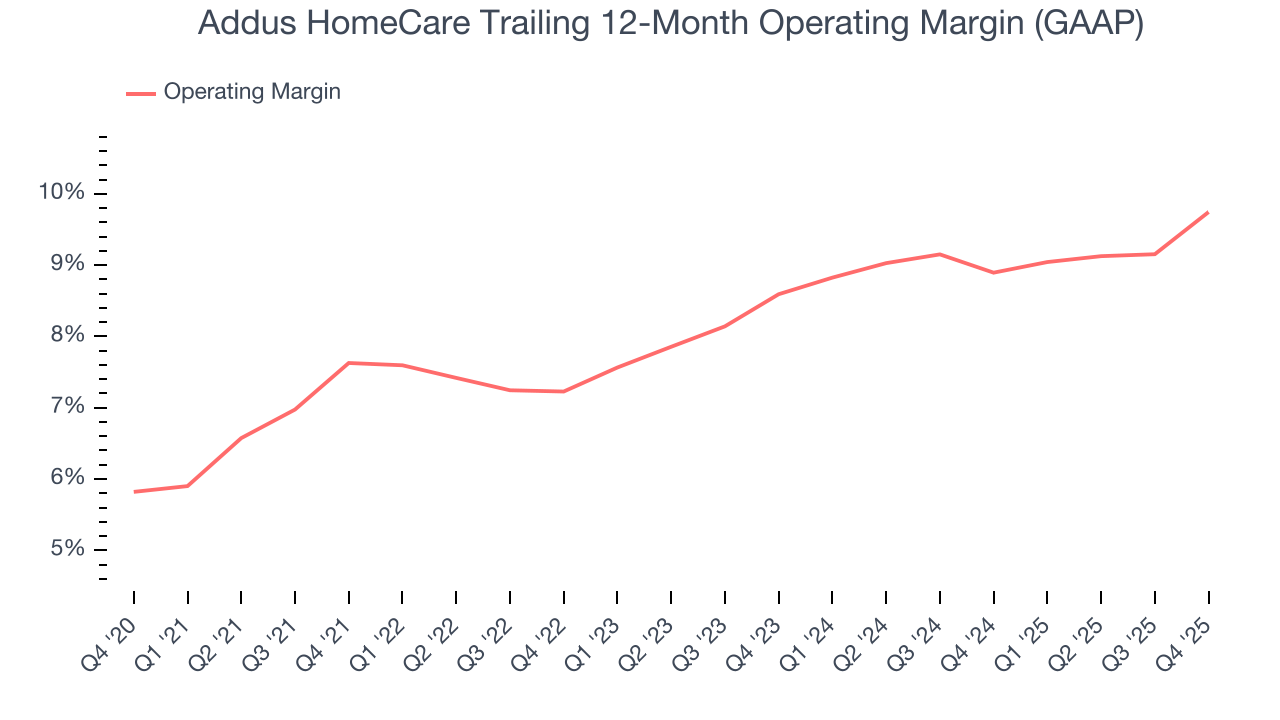
In Q4, Addus HomeCare generated an operating margin profit margin of 11.3%, up 2.3 percentage points year on year. This increase was a welcome development and shows it was more efficient.
8. Earnings Per Share
We track the long-term change in earnings per share (EPS) for the same reason as long-term revenue growth. Compared to revenue, however, EPS highlights whether a company’s growth is profitable.
Addus HomeCare’s astounding 15.2% annual EPS growth over the last five years aligns with its revenue performance. This tells us its incremental sales were profitable.
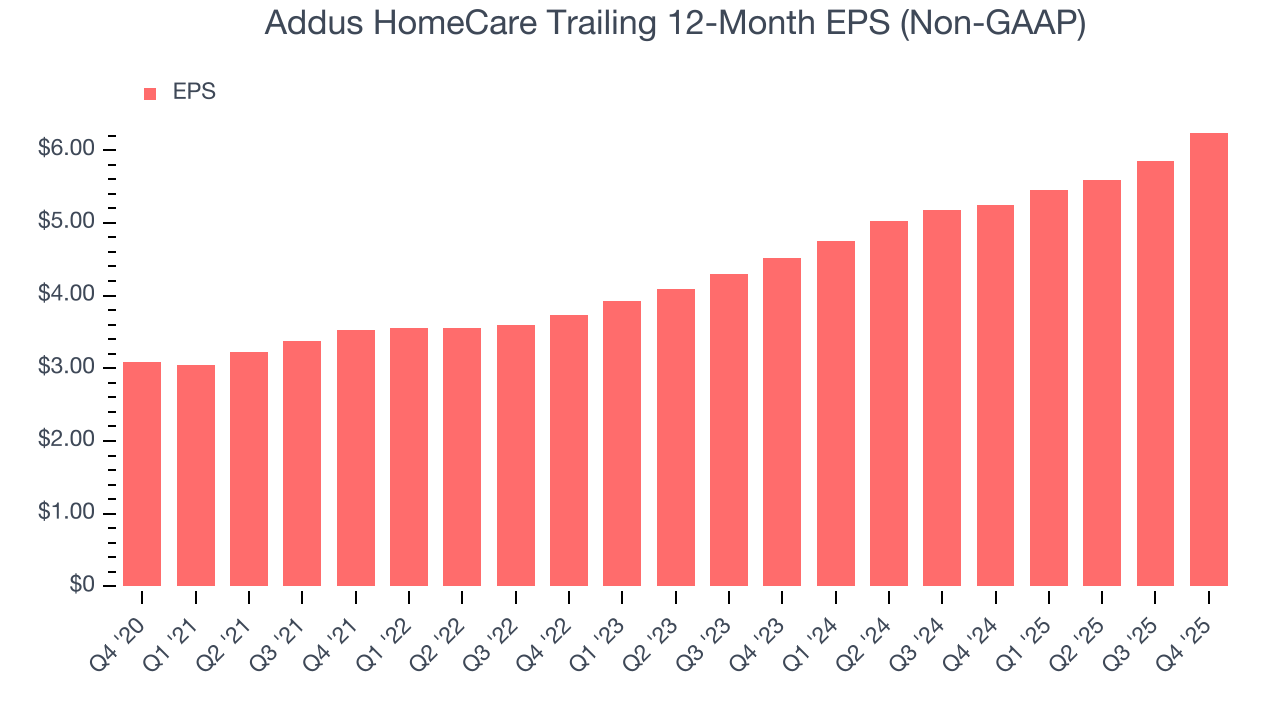
In Q4, Addus HomeCare reported adjusted EPS of $1.77, up from $1.38 in the same quarter last year. This print beat analysts’ estimates by 2.6%. Over the next 12 months, Wall Street expects Addus HomeCare’s full-year EPS of $6.24 to grow 10%.
9. Cash Is King
Although earnings are undoubtedly valuable for assessing company performance, we believe cash is king because you can’t use accounting profits to pay the bills.
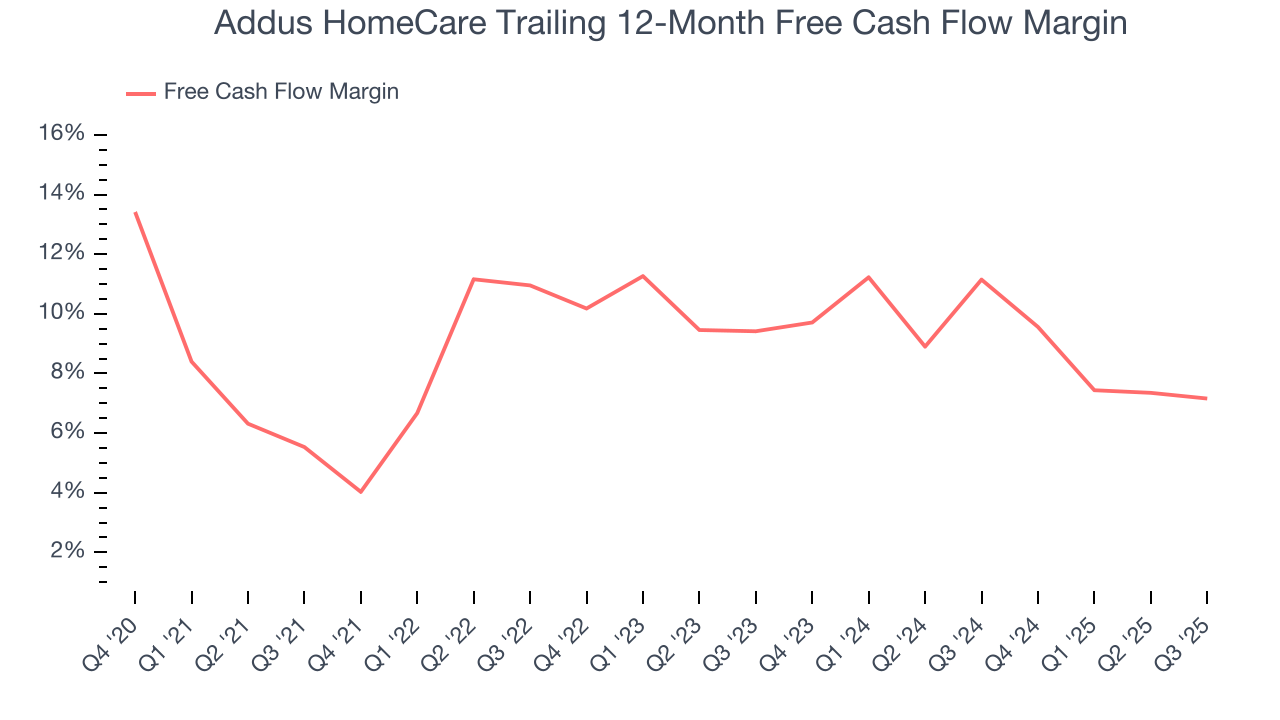
Addus HomeCare has shown decent cash profitability, giving it some flexibility to reinvest or return capital to investors. The company’s free cash flow margin averaged 8.5% over the last five years, slightly better than the broader healthcare sector.
Taking a step back, we can see that Addus HomeCare’s margin expanded by 6.6 percentage points during that time. This is encouraging, and we can see it became a less capital-intensive business because its free cash flow profitability rose more than its operating profitability.
10. Return on Invested Capital (ROIC)
EPS and free cash flow tell us whether a company was profitable while growing its revenue. But was it capital-efficient? A company’s ROIC explains this by showing how much operating profit it makes compared to the money it has raised (debt and equity).
Addus HomeCare’s management team makes decent investment decisions and generates value for shareholders. Its five-year average ROIC was 8.2%, slightly better than typical healthcare business.
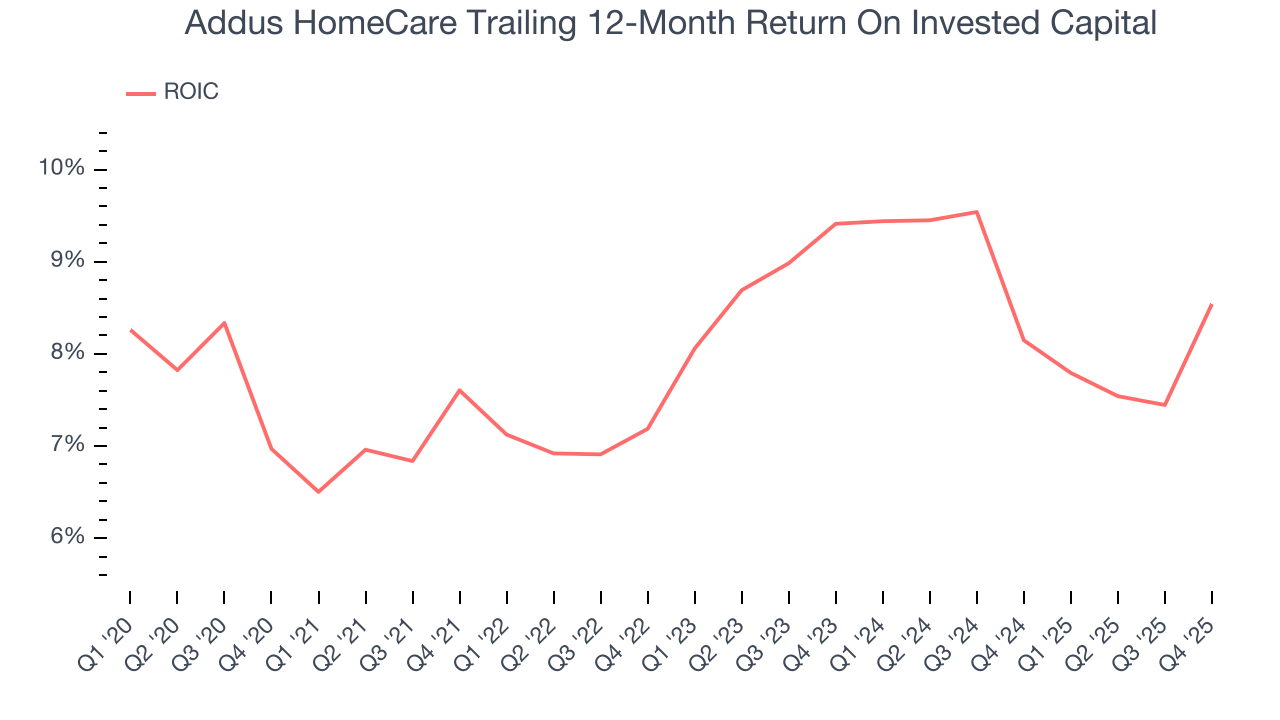
We like to invest in businesses with high returns, but the trend in a company’s ROIC is what often surprises the market and moves the stock price. Uneventfully, Addus HomeCare’s ROIC has stayed the same over the last few years. Given the company’s underwhelming financial performance in other areas, we’d like to see its returns improve before recommending the stock.
11. Balance Sheet Assessment
Addus HomeCare reported $81.62 million of cash and $171.4 million of debt on its balance sheet in the most recent quarter. As investors in high-quality companies, we primarily focus on two things: 1) that a company’s debt level isn’t too high and 2) that its interest payments are not excessively burdening the business.
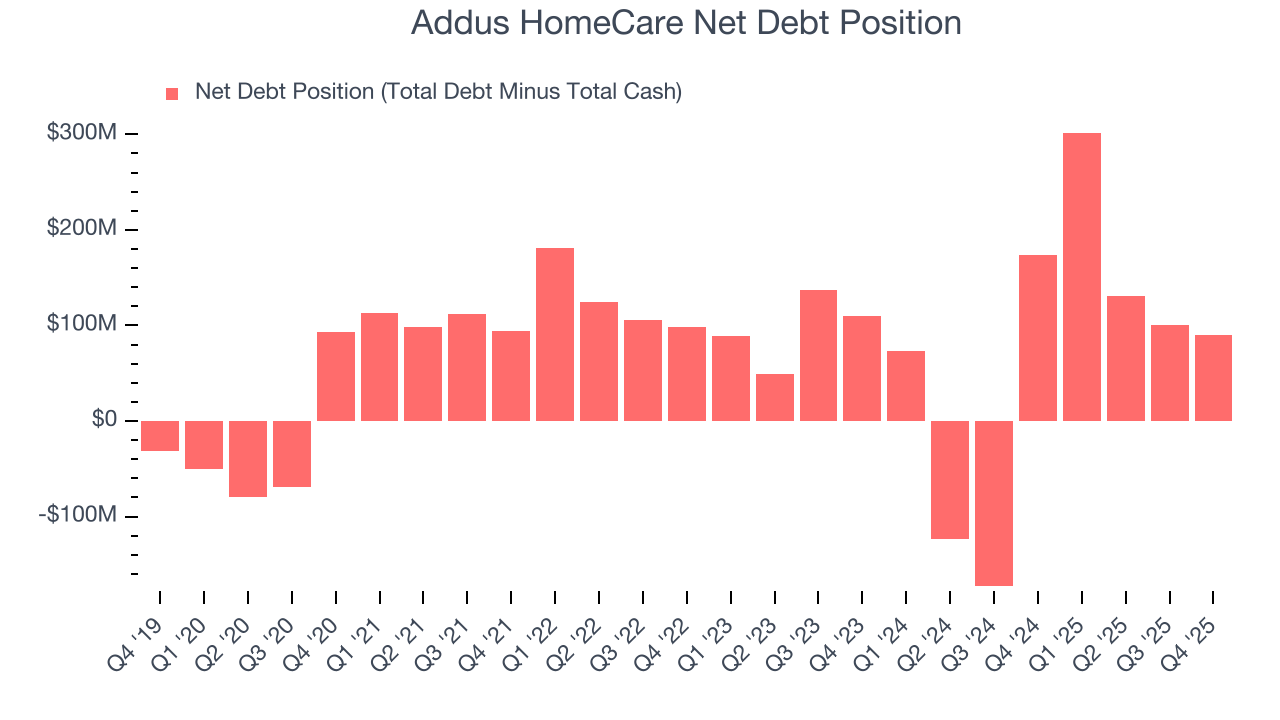
With $180 million of EBITDA over the last 12 months, we view Addus HomeCare’s 0.5× net-debt-to-EBITDA ratio as safe. We also see its $6.91 million of annual interest expenses as appropriate. The company’s profits give it plenty of breathing room, allowing it to continue investing in growth initiatives.
12. Key Takeaways from Addus HomeCare’s Q4 Results
It was good to see Addus HomeCare beat analysts’ EPS expectations this quarter. Zooming out, we think this was a decent quarter. The stock remained flat at $117.69 immediately following the results.
13. Is Now The Time To Buy Addus HomeCare?
Updated: March 16, 2026 at 12:05 AM EDT
Are you wondering whether to buy Addus HomeCare or pass? We urge investors to not only consider the latest earnings results but also longer-term business quality and valuation as well.
Addus HomeCare isn’t a terrible business, but it doesn’t pass our quality test. Although its revenue growth was solid over the last five years, it’s expected to deteriorate over the next 12 months and its subscale operations give it fewer distribution channels than its larger rivals.
Addus HomeCare’s P/E ratio based on the next 12 months is 14.5x. This valuation is reasonable, but the company’s shakier fundamentals present too much downside risk. We're fairly confident there are better investments elsewhere.
Wall Street analysts have a consensus one-year price target of $140.23 on the company (compared to the current share price of $101.35).
Although the price target is bullish, readers should exercise caution because analysts tend to be overly optimistic. The firms they work for, often big banks, have relationships with companies that extend into fundraising, M&A advisory, and other rewarding business lines. As a result, they typically hesitate to say bad things for fear they will lose out. We at StockStory do not suffer from such conflicts of interest, so we’ll always tell it like it is.